Trump weighs pulling some US troops from Europe amid NATO strains, official says一位官员称,由于北约局势紧张,特朗普正在考虑从欧洲撤出部分美军。
U.S. President Donald Trump has discussed with advisers the option of removing some U.S. troops from Europe, a senior White House official told Reuters.
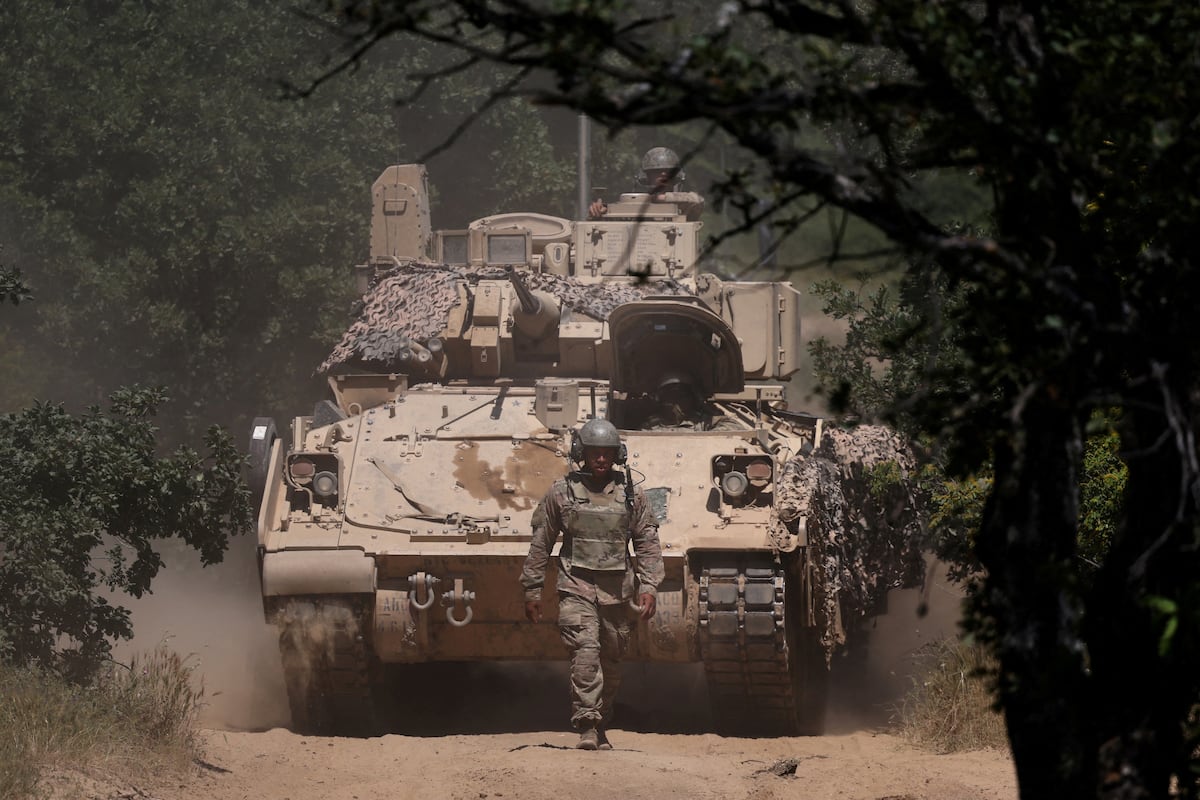
U.S. President Donald Trump, upset at NATO allies’ failure to help secure the Strait of Hormuz and angry that his plans to acquire Greenland have not advanced, has discussed with advisers the option of removing some U.S. troops from Europe, a senior White House official told Reuters on Thursday.
No decision has been made, and the White House has not directed the Pentagon to draw up concrete plans for a troop reduction on the continent, said the official, who requested anonymity to discuss internal deliberations.
But the discussions alone underscore how sharply relations between Washington and its European NATO allies have deteriorated in recent months. They also suggest that a visit to the White House on Wednesday by NATO Secretary General Mark Rutte failed to significantly improve transatlantic relations, which are arguably at their lowest point since NATO’s 1949 founding.
The White House has publicly said that Trump has considered withdrawing from the alliance altogether. Removing troops from Europe would allow Trump to dramatically lessen Washington’s security commitments on the continent, without formally withdrawing, a move that would test constitutional law.
The U.S. currently has more than 80,000 troops in Europe and has played a central role in Europe’s security architecture since World War Two. More than 30,000 of those troops are located in Germany, with sizeable numbers also stationed in Italy, the United Kingdom and Spain.
The official did not say which countries could be affected or how many troops might ultimately be withdrawn if Trump decides to move forward with the idea.
Asked for comment, a NATO spokesperson referred Reuters to Rutte’s interview with CNN on Wednesday.
In that interview, Rutte said that he understood Trump’s frustrations with the alliance, but that the “large majority of European nations” had been helpful to Washington’s war effort in Iran.
Following Rutte’s meeting with Trump, the secretary general told European governments that Trump wants concrete commitments to help secure the Strait of Hormuz within days, Reuters reported earlier on Thursday.
While Trump has long had a tumultuous relationship with NATO — for years accusing European capitals of skimping on defense spending — the last three months have been particularly rocky.
In January, Trump provoked a transatlantic crisis when he renewed longstanding threats to annex Greenland, an overseas territory of Denmark. Since the war with Iran broke out on Feb. 28, he has expressed deep frustration that NATO allies have not offered to help reopen the Strait of Hormuz, a vital route for global energy supplies that has remained largely closed despite a fragile ceasefire announced this week.
NATO diplomats have previously said the U.S. has not made clear if it expects any mission in the Strait of Hormuz to start during or after the conflict, and they have also said the U.S. has not specified what particular capabilities it expects of each NATO country.
The Wall Street Journal reported on Wednesday that senior administration officials were discussing moving troops stationed in Europe out of countries whose leaders had been critical of the U.S.-Israeli war on Iran and into European countries whose leaders had been more supportive.
The White House official told Reuters that Trump was specifically discussing bringing troops back to the U.S., rather than moving them to different foreign countries.
The official said Trump was particularly irked about what he perceives as Europe’s attempts to brush off his attempts to acquire Greenland.
After meeting with Rutte in Switzerland in January, Trump had suggested a deal was in sight to end the dispute over the Danish territory. No such agreement has come to fruition.
“He asked NATO specifically to come up with a plan when we were in Davos, and they’re sort of not taking it seriously,” the official said.
一位白宫高级官员周四告诉路透社,美国总统唐纳德·特朗普对北约盟国未能帮助确保霍尔木兹海峡的安全感到不满,并且对他的格陵兰岛收购计划没有取得进展感到愤怒,他已经与顾问讨论了从欧洲撤出部分美军的选项。
这位要求匿名讨论内部讨论的官员表示,目前尚未做出任何决定,白宫也没有指示五角大楼制定在北美大陆减少驻军的具体计划。
但仅这些讨论就足以凸显近几个月来华盛顿与其欧洲北约盟国之间的关系恶化程度之深。这也表明,北约秘书长马克·吕特周三对白宫的访问未能显著改善跨大西洋关系,而目前跨大西洋关系或许正处于北约1949年成立以来的最低点。
白宫曾公开表示,特朗普考虑过彻底退出美欧联盟。从欧洲撤军将使特朗普能够在不正式退出的情况下大幅削减华盛顿在欧洲大陆的安全承诺,而此举将考验宪法。
美国目前在欧洲驻扎着超过8万名士兵,自二战以来一直在欧洲安全体系中发挥着核心作用。其中超过3万名士兵驻扎在德国,另有相当数量的士兵驻扎在意大利、英国和西班牙。
这位官员没有说明哪些国家可能会受到影响,也没有说明如果特朗普决定推进这一想法,最终可能会撤出多少军队。
当被问及此事时,北约发言人建议路透社参考吕特周三接受 CNN 采访的内容。
在那次采访中,吕特表示他理解特朗普对联盟的失望,但“绝大多数欧洲国家”都对华盛顿在伊朗的战争努力提供了帮助。
据路透社周四早些时候报道,在吕特与特朗普会面后,这位秘书长告诉欧洲各国政府,特朗普希望在几天内做出具体承诺,以帮助确保霍尔木兹海峡的安全。
尽管特朗普与北约的关系一直动荡不安——多年来他一直指责欧洲各国首都削减国防开支——但最近三个月尤其动荡。
今年1月,特朗普重提吞并丹麦海外领地格陵兰岛的长期威胁,引发了跨大西洋危机。自2月28日美伊战争爆发以来,他对北约盟国未能协助重新开放霍尔木兹海峡深感不满。霍尔木兹海峡是全球能源供应的重要通道,尽管本周宣布了脆弱的停火协议,但该海峡仍基本处于关闭状态。
北约外交官此前曾表示,美国尚未明确表示是否希望在霍尔木兹海峡开展任何军事行动,无论是在冲突期间还是冲突之后;他们还表示,美国尚未具体说明希望每个北约国家具备哪些具体能力。
《华尔街日报》周三报道称,美国政府高级官员正在讨论将驻扎在欧洲的部队从那些领导人批评美以对伊朗发动战争的国家转移到那些领导人更加支持美以战争的欧洲国家。
白宫官员告诉路透社,特朗普特别指的是将军队撤回美国,而不是将他们转移到不同的外国。
这位官员表示,特朗普尤其恼火的是,他认为欧洲试图回避他收购格陵兰岛的企图。
今年1月在瑞士与吕特会晤后,特朗普曾暗示有望达成协议,结束丹麦领土争端。但此类协议至今仍未达成。
“他在达沃斯期间特意要求北约制定一项计划,但他们似乎并没有认真对待,”这位官员说。