Researchers propose ‘rewilding’ Europe’s borderlands to repel enemies研究人员提议“重新野化”欧洲边境地区以抵御敌人
Restored wetlands and peat bogs can create natural barriers for invading forces while contributing to climate resilience, according to a new report.
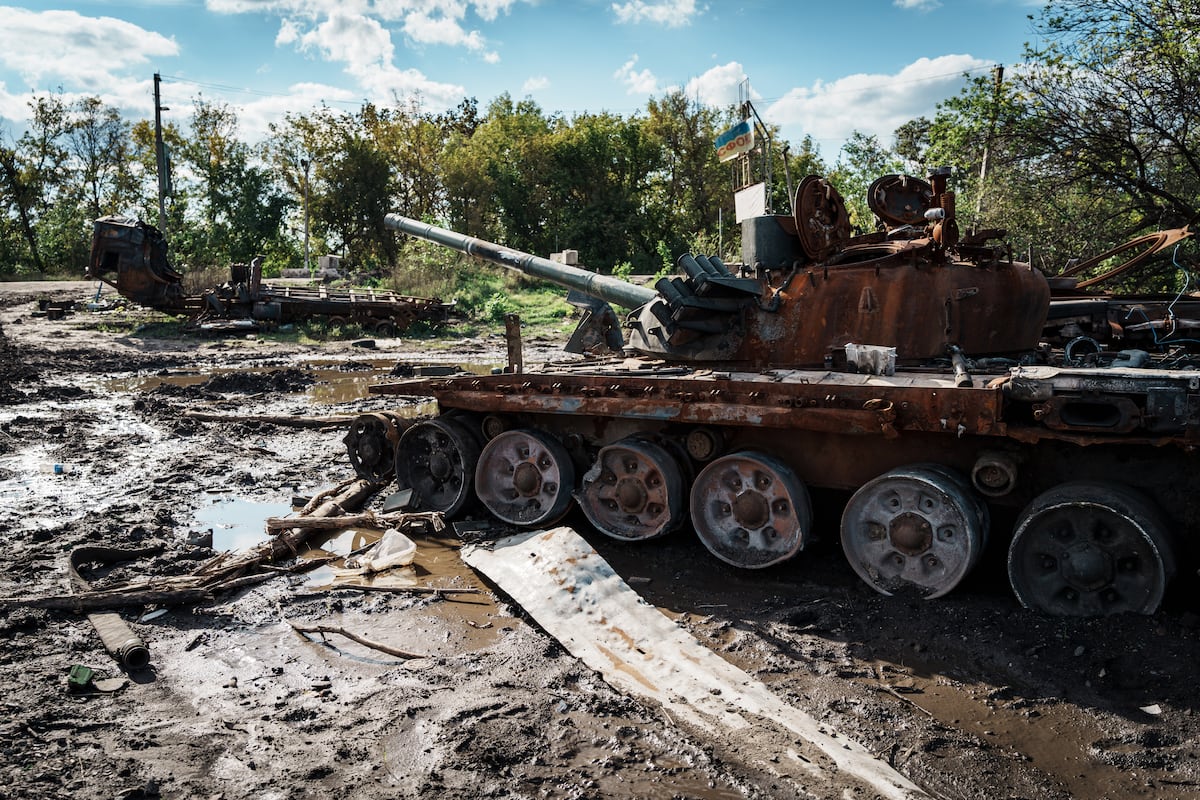
PARIS — Restoring wild forests, peat bogs and wetlands on Europe’s borders would establish defensive barriers that are hard to cross for enemy armored units, at a fraction of the cost of concrete anti-tank ditches while bringing environmental benefits, researchers said. For tropical coasts, re-establishing mangrove forests could play a similar role.
“Defensive rewilding” combines national security and climate resilience by strategically locating rewilding projects to create natural barriers that impede, delay or channel invading forces, researchers Sam Jelliman, Brian Schmidt and Alan Chandler wrote in an article for the RUSI Journal published on April 7. At the same time, rewilding allows for carbon storage and more biodiversity, they said.
Whereas tactical obstacles such as mine fields or field fortifications are local and temporary, defensive rewilding creates long-lasting “landscape-scale barriers that dictate the geometry of the battlefield before the first shot is fired,” the researchers said. They cited nearly a dozen historical examples of how terrain hinders offense, including during World War II as well as Russia’s invasion of Ukraine.
The concept of defensive rewilding is gaining traction among environmentalists but still needs a “military stamp of approval,” Jelliman, a researcher at the Sustainability Research Institute of the University of East London, told Defense News by phone. “The nearer you are to Russia, the more they think it’s a good idea.”
The researcher said he’s had a number of discussions, including with the U.K. Ministry of Defence, “to sell the idea to people in the military that it’s a viable, useful approach which can have military benefit and environmental benefits simultaneously.”
Defensive rewilding physically changes the geography of potential conflict zones, creating terrain impassible to mechanized forces or channeling them into kill zones, thereby raising the cost of aggression, the researchers said. Meanwhile, a restored peat land or dense forest won’t be seen as threatening and is a way to build up defense without escalating a regional arms race.
To establish a defensive strip of wetland would cost £90,000 to £540,000 ($120,000-$724,000) per kilometer, depending on width, compared to between £1 million and £3 million for a kilometer of concrete anti-tank ditch, according to the report.
Restoring wetlands creates soft ground with low bearing capacity that may not be able to support a main battle tank, while restored water depths would bog down logistics, the researchers said. The bearing capacity of restored wet peat lands is even lower, making them impassible even to light armored vehicles, they said.
The Pripet Marshes in Belarus and Ukraine were a major historical obstacle for German forces in 1941, and “the re-establishment of natural hydrology in peat lands along the Belarus-Ukraine border could be considered a permanent, self-repairing alternative to concrete anti-tank ditches,” the report said.
Troops of the Dutch 13th Light Brigade prepare for a river crossing on the Elbe River during the Bastion Lion military exercise near Tangermunde, Germany, April 2, 2025. (Sean Gallup/Getty Images)
Eastern Europe in that past had a lot more wetland, much of which has been drained for agriculture, including by the Soviet Union in Ukraine, Jelliman said. That means areas in the north of Ukraine are now drier than they would have naturally been, and easier to move on.
Dried peat bogs would be “quite easy” to re-wet by removing existing drainage channels, whereas then draining them again would only be possible by occupying the hard-to-access terrain, according to Jelliman. Within a year of blocking drainage channels, the water table in peat lands would rise and the ground would become much softer again, the researcher said.
Peat lands “are probably the most challenging to cross, and they’re also probably the most useful from a carbon-sequestration perspective,” Jelliman said. “They’re the primary focus, I would say.”
Rewilded forest creates obstacles that can impede tanks, natural forest clutter is effective against loitering munitions, while dense tree cover can make kinetic projectiles less effective and disrupt line-of-sight for anti-tank missiles. Those effects could “significantly” increase the survivability of defensive positions compared to open terrain, the researchers said.
The researchers cited the Battle of Hürtgen Forest in 1944 as a classic example of dense forest terrain negating the technological and numerical superiority of the U.S. Army.
For coastline defense in the Pacific region, restoring mangrove forests would be “really effective,” as landing craft would get stuck and not have anywhere to land, while the habitat also has high biodiversity value and protects coasts against tropical storms, Jelliman said.
Artificial reefs would be another element of coastal defense, with historical examples in the Pacific Theater during World War II where shallow reefs created obstacles for landing forces, according to Jelliman. Creating reefs would have value for biodiversity, carbon sequestration and storm protection, “and also making it really hard for landing.”
Rewilding rivers by restoring natural paths and softening banks can make them “significantly harder” to bridge with engineering assets, according to the researchers, who cited Ukrainian forces in 2022 using the meanders and forested banks of the Siverskyi Donets River to trap and destroy multiple Russian crossing attempts. Benefits include natural flood control and restoring habitat, they said.
The next step would be for research to demonstrate that defensive rewilding can be effective and practical, and countries such as Finland, Estonia and Poland “are a bit more advanced in looking at that,” said Jelliman.
Defense ministries tasked with contributing to national carbon-reduction objectives are expected to find value in rewilding besides the tactical military benefits, according to Jelliman.
“One of the best ways to do carbon offsetting is to restore peat lands, because they’re quite a good, stable, long-term way of locking carbon away,” Jelliman said. “If they could restore peat lands in locations that are useful defensively, so in large areas of Finland, Estonia, Poland, they could both be a defensive asset whilst contributing to net zero targets and achieving net zero goals.”
With plans for “huge defense budgets” over the next ten years, defensive rewilding allows for simultaneous spending on defense and the environment, according to the researcher. NATO defense spending targets include 1.5% of GDP for resilience, and while what counts as resilience is still being discussed, defensive rewilding might fit the bill, Jelliman said.
‘If there’s any way to make this a cheap way of making borders stronger and more resilient, then that would be good,” Jelliman said.
Rudy Ruitenberg is a Europe correspondent for Defense News. He started his career at Bloomberg News and has experience reporting on technology, commodity markets and politics.
巴黎——研究人员表示,在欧洲边境恢复原始森林、泥炭沼泽和湿地,可以建立起敌方装甲部队难以逾越的防御屏障,其成本远低于混凝土反坦克壕沟,同时还能带来环境效益。对于热带沿海地区而言,重建红树林也能发挥类似的作用。
研究人员萨姆·杰利曼、布莱恩·施密特和艾伦·钱德勒在4月7日发表于RUSI期刊的一篇文章中写道,“防御性野化”通过战略性地选址野化项目,形成天然屏障,阻碍、延缓或引导入侵力量,从而将国家安全和气候适应能力结合起来。他们表示,与此同时,野化还能实现碳储存和提高生物多样性。
研究人员指出,虽然雷区或野战工事等战术障碍具有地域性和临时性,但防御性野化却能形成持久的“景观尺度屏障,在第一枪打响之前就决定了战场的格局”。他们列举了近十几个历史案例,说明地形如何阻碍进攻,其中包括二战以及俄罗斯入侵乌克兰的战役。
东伦敦大学可持续发展研究所的研究员杰利曼在接受《防务新闻》电话采访时表示,防御性野化的概念在环保人士中越来越受欢迎,但仍需要“军方的认可”。“离俄罗斯越近,他们就越觉得这是个好主意。”
该研究人员表示,他已经与包括英国国防部在内的各方进行了多次讨论,“目的是向军方人士推销这一理念,让他们相信这是一个可行、有用的方法,可以同时带来军事利益和环境利益。”
研究人员表示,防御性荒野恢复从物理层面改变了潜在冲突地区的地理格局,创造出机械化部队无法通行的地形,或将其引导至杀伤区,从而提高侵略成本。同时,恢复后的泥炭地或茂密森林不会被视为威胁,这是一种在不加剧区域军备竞赛的情况下增强防御能力的方式。
报告称,根据宽度不同,建立一条防御性湿地带的成本为每公里 9 万至 54 万英镑(12 万至 72.4 万美元),而修建一公里混凝土反坦克壕的成本则在 100 万至 300 万英镑之间。
研究人员表示,恢复湿地会形成承载力低的松软地面,可能无法支撑主战坦克的通行,而恢复后的水深也会阻碍后勤补给。他们还指出,恢复后的湿泥炭地承载力更低,甚至轻型装甲车辆都无法通行。
报告称,白俄罗斯和乌克兰境内的普里佩特沼泽地在 1941 年是德军面临的一个重大历史障碍,“在白俄罗斯-乌克兰边境的泥炭地重建自然水文状况,可以被视为一种永久性的、自我修复的替代方案,以取代混凝土反坦克壕沟”。
2025年4月2日,在德国坦格明德附近举行的“堡垒雄狮”军事演习中,荷兰第13轻步兵旅的士兵们正在易北河上准备渡河。(Sean Gallup/Getty Images)
杰利曼说,过去东欧拥有更多的湿地,但其中大部分已被排干用于农业,包括苏联在乌克兰的扩张。这意味着乌克兰北部地区现在比自然状态下更加干燥,也更容易迁徙。
杰利曼表示,干涸的泥炭沼泽“很容易”通过移除现有的排水沟渠重新湿润,但之后要再次排水则只能通过占用难以进入的地形来实现。这位研究人员还指出,堵塞排水沟渠一年内,泥炭地的地下水位就会上升,土壤也会再次变得松软许多。
杰利曼说:“泥炭地可能是最难穿越的,但从碳封存的角度来看,它们也可能是最有用的。我认为,它们是主要的关注点。”
研究人员表示,重新野化的森林会形成阻碍坦克行进的障碍物,天然森林植被能有效拦截巡飞弹,而茂密的树冠则能降低动能弹的效能,并干扰反坦克导弹的视线。这些效应可以“显著”提高防御阵地的生存能力,使其优于开阔地形。
研究人员以 1944 年的许特根森林战役为例,指出茂密的森林地形抵消了美国陆军在技术和数量上的优势。
杰利曼表示,对于太平洋地区的海岸线防御而言,恢复红树林将“非常有效”,因为登陆艇会陷入困境而无处可去,同时这种栖息地也具有很高的生物多样性价值,并能保护海岸免受热带风暴的侵袭。
杰利曼表示,人工鱼礁是海岸防御的另一项重要组成部分,二战太平洋战场上就有利用浅礁阻碍登陆部队登陆的历史先例。建造鱼礁对生物多样性、碳封存和风暴防护都具有价值,“而且还能极大地增加登陆难度”。
研究人员表示,通过恢复河流的自然河道和软化河岸来“重新野化”河流,可以显著增加使用工程设施架桥的难度。他们举例说,2022年乌克兰军队利用西顿涅茨河的蜿蜒河道和林木茂密的河岸,拦截并摧毁了多起俄罗斯军队的渡河企图。他们指出,这样做的好处包括自然防洪和恢复栖息地。
下一步需要通过研究来证明防御性野化是有效且可行的,而芬兰、爱沙尼亚和波兰等国家“在这方面研究得更深入一些”,杰利曼说。
杰利曼表示,肩负着为国家减少碳排放目标做出贡献的国防部,除了战术军事利益之外,还会发现恢复自然生态的价值。
杰利曼表示:“碳抵消的最佳方法之一是恢复泥炭地,因为泥炭地是一种非常有效、稳定且长期的碳封存方式。如果能在具有防御作用的地区恢复泥炭地,例如芬兰、爱沙尼亚和波兰的大片区域,那么这些泥炭地既可以作为防御资产,又能为实现净零排放目标做出贡献。”
研究人员表示,鉴于未来十年“巨额国防预算”的计划,防御性自然恢复可以实现国防和环境保护的同步投入。北约的国防开支目标包括将国内生产总值的1.5%用于增强韧性,杰利曼指出,虽然韧性的具体定义仍在讨论中,但防御性自然恢复或许符合要求。
“如果有什么办法能以低成本的方式加强边境的防御能力,那就太好了,”杰利曼说。
鲁迪·鲁伊滕贝格是《防务新闻》的欧洲记者。他的职业生涯始于彭博新闻社,拥有报道科技、大宗商品市场和政治方面的经验。