An A-12 Oxcart Spyplane Crashed Near Area 51 In 1967. This Is How One Explorer Found It.1967年,一架A-12“牛车”侦察机在51区附近坠毁。一位探险家是这样发现它的。
Some people hunt for buried gold, a small number of others hunt for bits of titanium laced with aerospace history.
By Sarah Scoles—Popular Science
Published Jan 5, 2021 4:55 PM EST
Editor’s note: Our parent company is now the proud owner of the storied media outlet Popular Science! As such, we are eager to experiment with sharing select articles that The War Zone’s dedicated audience should find interesting. This is definitely one of those articles.
Until we have the infrastructure in place to seamlessly share these special pieces, we posted the opening passage from the article, written by Sarah Scoles, below. If you like what you see, you can read the rest over at Popular Science by clicking the link at the bottom of the passage. Please also let us know you think of this new arrangement in the comments below!
Editor Of The War Zone
_________________________
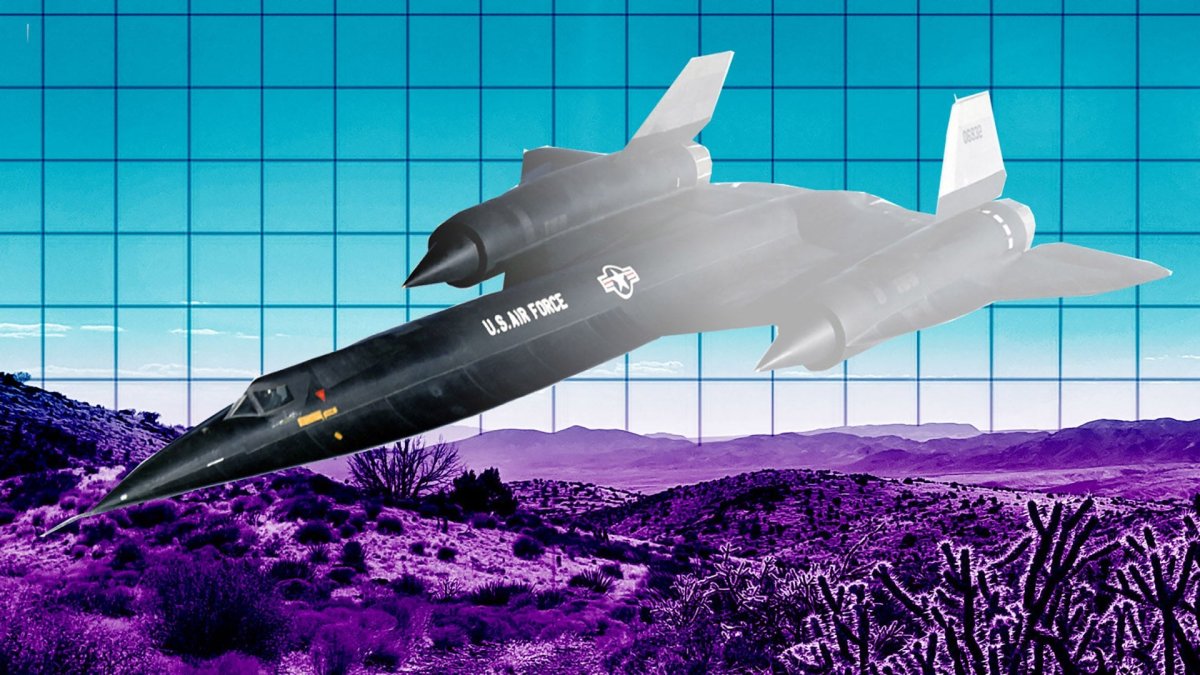
“Oxcart” was an odd nickname for the plane that killed pilot Walter Ray. Oxcarts are slow, cumbersome, and old. Ray’s A-12 jet, meanwhile, was fast, almost invisible, and novel. Among the US’s first attempts at stealth aircraft, it could travel as quickly as a rifle bullet, and fly at altitudes around 90,000 feet. On a radar screen, it appeared as barely a blip—all the better to spy on Soviets with—and had only one seat.
On January 5, 1967, that single space belonged to Ray, a quiet, clean-cut 33-year old who spent his workdays inside Area 51, then the CIA’s advanced-aviation research facility. Set atop the dried-up bed of Groom Lake in the Nevada desert, the now-infamous spot made for good runways, and was remote enough to keep prying eyes off covert Cold War projects. On the books, Ray was a civilian pilot for Lockheed Martin. In reality, and in secret, he reported to the CIA.
A-12 Oxcarts all lined up at Groom Lake. , USAF
Ray’s last morning on Earth was chilled and windy, with clouds moving in and preparing to drop snow on the nearby mountains. He took off for his four-hour flight to Florida and back a minute ahead of schedule at 11:59 a.m., the sleek curves of the Oxcart’s titanium body triggering sonic shock waves ( booms ) as it sliced through the atmosphere. He’d done this many times, having already logged 358 hours in these crafts.
At 3:22 p.m., Ray radioed back to base: His gas was low. “I don’t know where my fuel’s gone to,” he said. He lowered the plane out of the speedy headwinds, hoping to save some fuel. But the altitude change couldn’t cut his consumption enough.
Thirty-eight minutes later, Ray radioed in more bad news.
The fuel tank’s low-pressure lights had blinked on. The A-12′s jet engines—so powerful that the director of central intelligence once said they sounded as if “ the Devil himself were blasting his way straight from Hell ”—began to fail, then sputtered out.
At 4:02, Ray sent his final known transmission: He was going to eject.
Home Plate—as this group of airmen referred to Area 51—began to search. They hoped to hear a transmission from the shortwave radio in his survival kit. For them, this hunt was also personal. Many worked on the same mission as Ray: developing planes that didn’t exist in a place that didn’t exist, sometimes risking an accident like this, which also wouldn’t exist.
Isolated in the desert, the group of about 30 staffers Barnes worked with on the site’s Special Projects felt like family. “We went up on Monday morning, came home Friday night,” recalls former Area 51 crewmember T.D. Barnes. “We couldn’t tell our wives where we were at or what we were doing.”
At 3:25 p.m. the next day, a helicopter found the plane, strewn across three canyons. The crews cut a road through the sand to schlep out the debris before anyone else found it—and found out about the secret flight.
Two days after takeoff, a CIA aircraft finally spotted Ray’s parachute, and men helicoptered in to locate their comrade. His chute formed a shroud around his body, and his ejection seat sat some 50 yards above him on the hillside. The two hadn’t separated, his parachute hadn’t deployed, and so he had slammed straight into the Earth. Blood spattered the ground, but Ray’s boots still had their spurs.
To explain the aerial search going on, the Air Force told the public a cover story: An SR-71 Blackbird—whose existence had recently been revealed –flying out of Edwards Air Force Base, had gone down.
For years, Ray’s crash sites remained largely hidden from the public. But in the late 1990s, an explorer named Jeremy Krans began what would become a decades-long quest to uncover it all, and ultimately to make Ray’s once-classified life public. “I felt that we needed to do something,” he says, “because nobody knows who the hell Walt is.”
Krans had a pastime that gave him the skills to do something about it: urban exploring, sometimes called “urbex” by the initiated. It’s the art of adventuring in and around abandoned or hidden structures, urban and otherwise. Urbexers scavenger-hunt for sites and then crawl through closed tunnels, scour old buildings, flashlight around finished mines, and trek through old military bases. The community—small and loose but dedicated, lurking and sharing on forums and blogs—is populated by photographers and amateur historians. They like to go places that used to be something else, to someone else. They’ve uncovered spots others likely never knew about, like the New Jersey State Hospital for the Insane and the rainwater drains under Sydney . Krans, once a frequent poster on the urbex forum UER.ca , has always favored defense sites, beginning with empty missile silos and ghostly military installations in his early 20s.
In 1995, he and a group of like-minded friends formed an exploratory crew dubbed “Strategic Beer Command” (a riff on the US’s then-recently disbanded Strategic Air Command ). It would be a few years before they’d learn of Ray’s site, but the motivation was already there: a desire to remember what the rest of the world had forgotten.
Read the rest of the article by clicking over to Popular Science here.
Contact the editor: Tyler@thedrive.com
Comments couldn’t be loaded. Please refresh the page.
作者:莎拉·斯科尔斯——《大众科学》
发布于 2021 年 1 月 5 日下午 4:55(美国东部时间)
编者按:我们的母公司现已荣幸地拥有了历史悠久的媒体机构《大众科学》!因此,我们非常乐意尝试分享一些精选文章,相信《战区》的忠实读者会感兴趣。这篇文章正是其中之一。
在我们建立起能够无缝分享这些精彩内容的基础设施之前,我们先将莎拉·斯科尔斯撰写的文章开头部分摘录如下。如果您喜欢这段文字,可以点击文末的链接前往《大众科学》网站阅读全文。也欢迎您在下方评论区留言,告诉我们您对这种新安排的看法!
《战区》编辑
_________________________
“牛车”这个绰号对于夺走飞行员沃尔特·雷生命的飞机来说,着实有些奇怪。牛车行动缓慢、笨重且老旧。而雷驾驶的A-12喷气式飞机却速度极快、几乎隐形,而且设计新颖。作为美国最早的隐形飞机之一,它的速度堪比步枪子弹,飞行高度可达约9万英尺。在雷达屏幕上,它几乎只是一个光点——这使得它更适合用来侦察苏联——而且机上只有一个座位。
1967年1月5日,那片空地属于雷,一个安静、衣着整洁的33岁男子。他每天的工作都在51区度过,那里是当时中央情报局的先进航空研究基地。51区位于内华达州沙漠中干涸的格鲁姆湖湖床上,如今这个臭名昭著的地方非常适合修建跑道,而且位置偏僻,足以让外界窥探冷战时期的秘密项目。名义上,雷是洛克希德·马丁公司的民用飞行员。但实际上,他秘密地向中央情报局汇报工作。
A-12“牛车”运输车整齐地排列在格鲁姆湖畔。(美国空军)
雷在地球上的最后一个早晨寒冷多风,云层密布,准备给附近的山脉降下雪。上午11点59分,他比预定时间提前一分钟起飞,开始了前往佛罗里达的四小时往返飞行。牛车钛合金机身流畅的曲线划破大气层时,激起的音爆声震耳欲聋。他已经多次执行过这样的飞行任务,驾驶这种飞行器累计飞行时间已达358小时。
下午3点22分,雷用无线电向基地报告:他的燃油不足。“我不知道我的油都去哪儿了,”他说。他降低飞机高度,避开强劲的逆风,希望能节省一些燃油。但高度的变化并没有显著降低油耗。
三十八分钟后,雷通过无线电传来更多坏消息。
油箱的低压指示灯亮了起来。A-12 的喷气发动机——其动力之强劲,以至于中央情报局局长曾形容它们听起来就像“魔鬼本人正从地狱里轰鸣而出”——开始出现故障,然后熄火了。
4:02,雷发出了他最后一次已知的通讯:他要弹射出去。
这群空军人员将51区称为“本垒板”,他们开始搜寻。他们希望能听到雷的求生包里短波收音机发出的信号。对他们来说,这次搜寻也带有个人色彩。许多人和雷一样,都在执行同样的任务:在一个并不存在的地方研发并不存在的飞机,有时甚至冒着发生像这样同样不可能发生的事故的风险。
在与世隔绝的沙漠中,巴恩斯与大约30名工作人员一起负责该基地的特别项目,他们之间情同家人。“我们周一早上出发,周五晚上才回家,”前51区工作人员TD·巴恩斯回忆道,“我们不能告诉妻子我们在哪里,也不能告诉她们我们在做什么。”
第二天下午3点25分,一架直升机发现了飞机残骸,散落在三个峡谷中。救援人员在沙地上开辟了一条路,以便在其他人发现之前将残骸运走——以免他们得知这次秘密飞行。
起飞两天后,一架中央情报局的飞机终于发现了雷的降落伞,随后几名队员乘坐直升机前去寻找他的战友。他的降落伞像裹尸布一样罩住了他的身体,而他的弹射座椅则落在他上方约50码的山坡上。两人并未分离,他的降落伞也没有打开,因此他直接坠落到地面。鲜血溅满了地面,但雷的靴子上的马刺依然清晰可见。
为了解释正在进行的空中搜索,空军向公众讲述了一个掩盖真相的故事:一架从爱德华兹空军基地起飞的 SR-71 黑鸟侦察机(其存在最近才被曝光)坠毁了。
多年来,雷的坠机地点一直鲜为人知。但在上世纪90年代末,一位名叫杰里米·克兰斯的探险家开始了长达数十年的探索,试图揭开这一切,并最终将雷曾经的秘密公之于众。“我觉得我们必须做点什么,”他说,“因为没人知道沃尔特到底是谁。”
克兰斯有个爱好,让他掌握了改变现状的技能:城市探险,行内人有时称之为“urbex”。这是一种在废弃或隐蔽的建筑(包括城市建筑和其他建筑)内外进行探险的艺术。Urbex爱好者们四处寻觅,然后钻过封闭的隧道,搜遍旧建筑,用手电筒探查废弃的矿井,跋涉穿过废弃的军事基地。这个群体规模虽小,组织松散,但却充满热情,活跃在论坛和博客上,分享彼此的经验。他们大多是摄影师和业余历史学家。他们喜欢去那些曾经属于其他人的地方。他们发现了一些其他人可能从未听说过的地方,比如新泽西州立精神病院和悉尼地下的雨水排水系统。克兰斯曾经是urbex论坛UER.ca的常客,他一直对国防设施情有独钟,早在二十出头的时候,他就开始探索空荡荡的导弹发射井和废弃的军事设施。
1995年,他和一群志同道合的朋友组建了一支探险队,名为“战略啤酒司令部”(取自当时刚刚解散的美国战略空军司令部)。几年后他们才得知雷的遗址,但他们的动机早已存在:他们渴望记住那些被世界遗忘的事物。
点击此处前往《大众科学》网站阅读文章其余部分。
联系编辑:Tyler@thedrive.com
评论加载失败,请刷新页面。