Have Submarine-Launched Anti-Aircraft Missiles Finally Come Of Age?潜射防空导弹是否终于成熟了?
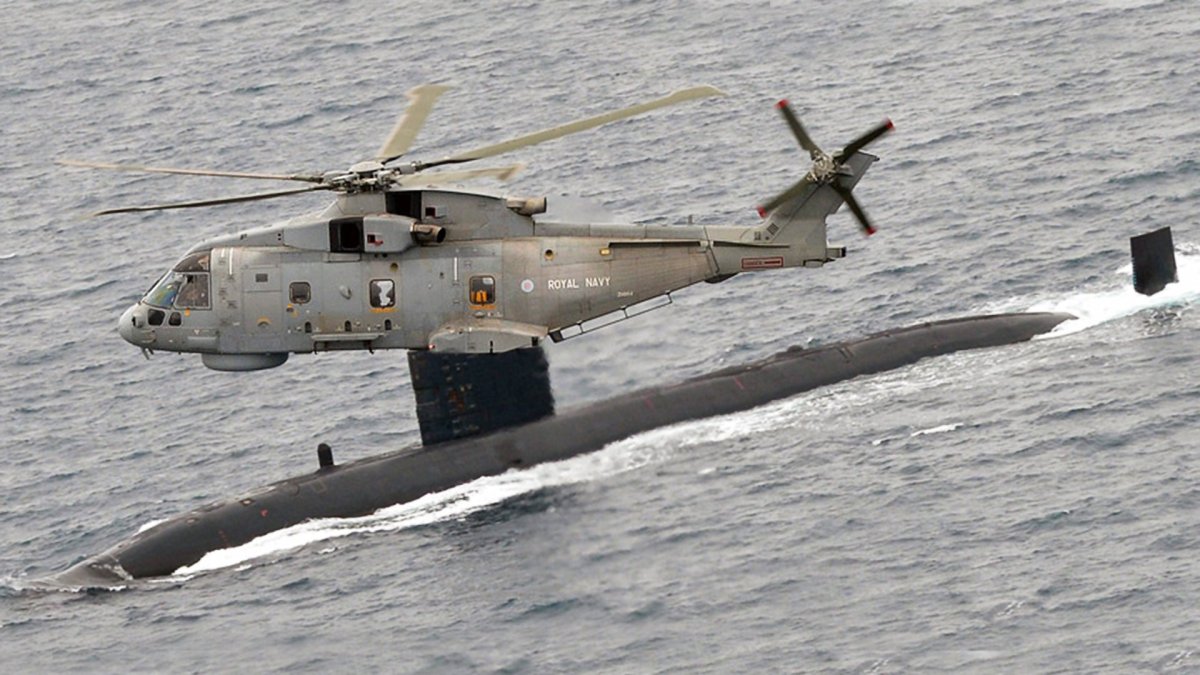
A submarine that can fire back at an aircraft hunting it certainly sounds intriguing, but is such a capability really relevant?
新闻视频
Updated Jul 3, 2020 4:06 AM EDT
The concept dates back to the dawn of aerial anti-submarine warfare, when anti-aircraft guns were mounted on the decks of submarines to defend themselves against aerial attack while surfaced. During the Cold War, man-portable air defense systems (MANPADS) were tested by the Soviets on submarine periscopes. Nothing much came of it as targeting was a troublesome affair. NATO countries also played around with the idea. The UK went maybe the farthest, with a submarine-launched version of the Blowpipe missile .
The concept featured four remotely controlled missiles clustered around a TV camera, mounted atop a telescoping mast on the sub’s sail. The seaborn Blowfish never saw widespread operational use, but there are rumors that the Israelis did purchase the system. Now, decades later, submarine-launched air missiles (SLAMs) are back on the table, but are they necessary—or even tactically viable?
Not a one-size-fits-all capability
Emerging SLAM capabilities come in a few flavors of complexity, and some still remain more theoretical than operational. The simplest of these new systems is similar to the UK’s Blowpipe concept, as it encloses an existing MANPADS air-to-air missile design in a pod attached to a turret mounted atop a submarine’s telescoping mast. The idea is that, if the submarine was cornered by an aerial anti-submarine asset, it could pop up to a very shallow depth, extend the anti-aircraft missile system, lock up the target and kill it. Hopefully doing so would give the submarine time to slip away, assuming no other anti-submarine assets were nearby.
The French A3SM submarine-launched MICA missile system is based on this same concept, and the Russians supposedly have developed a similar system for use on their Kilo-class diesel-electric submarines. It remains unclear if this capability has been deployed, either domestically or to one of the Kilo class’s many export customers.
A more advanced SLAM concept offers better survivability and maneuvering flexibility for the launching submarine, but it’s far more complex than the basic mast-mounted A3SM. This concept utilizes a torpedo-like underwater vehicle fired from the submarine that makes its way to the surface. Once there, it releases its missile—or missiles. Alternatively, no canister or vehicle may be needed at all, and the missile may be able to make its way to the surface and fly out without any assistance at all.
One such system test fired by both German and Norwegian diesel-electric submarines is the Interactive Defense and Attack System (IDAS) built primarily by Diehl Defense.
Initially designed for Germany’s popular Type 212 family of submarines, the missile itself is based loosely on the IRIS-T short-to-intermediate range air-to-air missile , but it travels at a subsonic speed and trails a fiber-optic cable. Like the French MICA, the IDAS primarily uses infrared homing to engage its target; but other seekers can be fitted, and the system is envisioned to even be used against small surface and shore targets in the future. Because a wired link between the submarine and the missile is kept at all times, target ID and even damage assessment can be made by the submarine crew during the engagement.
Here is Defense Update’s description of IDAS :
“Four missiles will be stored in a magazine that fits into a standard 21″ torpedo tube. The missiles are ejected from the magazine into the water, extract their wings and separate quietly from the submarine, where they ignite the rocket and transition to airborne flight, propelled by the weapon’s rocket motor.
One of the development challenges was the propulsion system. The same rocket was required to provide thrust for both underwater and airborne flight. The rocket was designed to sustain the missiles at optimal velocity in submerged flight, and accelerate to subsonic flight while airborne, reaching effective range of 20 km. Another concern was sustaining the optical-fiber through the transit below and above water. Diehl’s engineers were concerned how the fiberoptic bobbins will behave in the different environments (below and above water) the test provided clear evidence this will not be an issue.
Diehl initially considered using the IRST seeker for IDAS, however, this high performance and all aspect seeker may not be the only option, and other seekers might be considered to pick up the target, provided with passive cuing from by the submarine sonar. The submarine can acquire ASW helicopter when submerged, by localizing the ripple effect created by the rotor downwash. According to Diehl, the accuracy of such cuing system is adequate to provide bearing and range, bringing the missile seeker to autonomously acquire the target with high level of confidence. The fiber optical link would then be used by the crew to verify the target, confirm the intercept and perform battle damage assessment.”
The French also have a system under development that uses the Mistral short-range MANPADS missile twin-packed into a torpedo-like vehicle that brings the missiles to the surface before launching on their own power into the air.
The US Navy also played with a similar concept that has blurred into the developmental shadows in recent years. During the late 2000s, the US Navy, Raytheon and Northrop Grumman worked to migrate the highly flexible AIM-9X short-range air-to-air missile to the undersea world under the Littoral Warfare Weapon program. The AIM-9X would be vertically launched in a canister from a submarine , then the missile would climb into the sky when the canister broke the surface, locking onto its target after launch.
Tests during the mid 2000s had the AIM-9X fired from a vertical launcher as a proof of concept demonstration. A few years later, an AIM-9X was launched from an actual submarine as part of a series of integration tests . Since then the program seems to have disappeared from public view, but it’s likely development has continued on in the classified world—especially considering that submarine-launched unmanned aircraft have been an operational reality within America’s nuclear submarine fleet for some time.
Other more elaborate concepts exist where short-range air-to-air missiles are mounted inside existing cruise missile designs. The submarine launches the missile which then performers a pre-selected low-level patrol pattern in the area of the submarine, giving it a form of top cover. If its radar or electronic sensor suite picks up an aerial contact, it pursues it and launches missiles at it.
Although this type of concept is highly intriguing, it is also very expensive, complex and calls into question the ethical issues of unmanned weapon system autonomy that the DoD is struggling with today. Not just that but the presence of the missile is a great sign that an enemy submarine is nearby. There are no clear indications that this type of submarine-launched counter-air capability is actively being developed at this time, but that could change considering how the marketplace is evolving.
There’s clearly development and investment within the global defense industry for SLAM systems, so there has to be a strengthening demand for them right? Well, don’t consider the case for them to be overwhelming. Think of these systems as a last line of defense for submarines that have been located, and are facing imminent death from an aerial asset above. Using them as an offensive weapon is highly unlikely and tactically bankrupt in almost all circumstances.
This is especially true for systems like the A3SM, which require the sub to come very near the surface for a shot on a helicopter operating low, slow, and relatively close by. This leaves the submarine vulnerable, and likely results in a showdown between the ASW aircraft and submarine itself—one in which the first to fire might be pulling the trigger on a major conflict as well.
Then again, a submarine downing one ASW helicopter at near-point-blank range doesn’t necessarily mean the nationality of the sub that fired the deadly shot would have been known prior. Popular submarines designs can be used by multiple countries in a single region, some of them being potential foes of one-another. Pair this with the murky world that these weapons currently reside in today and you begin to deduct that plausible deniability of such an act could be a real possibility.
Most modern ASW helicopters and low-flying maritime patrol aircraft have advanced and highly automated infrared countermeasures suites . While a submarine may be able to get a SLAM launch off, it doesn’t mean they’ll kill their target. Worse for the sub, initiating such an attack will also clearly give away their presence and their intent. If they don’t eliminate nearby aerial threats in the process of their attack, they’ve pretty much guaranteed their own destruction.
There’s also the question of targeting: On lower-end systems, a small, high-frequency radar extended on one of the boat’s masts can cue the turret for targeting, or an infrared camera system could be used, albeit less effectively. Combining a radar and infrared camera would offer both target discrimination and quick detection and engagement capabilities. This is a lot of gear to install on the limited real-estate of a submarine’s conning tower/sail.
For more advanced SLAM concepts where a canister or the missile itself is launched to surface, getting the missiles in the right area and hunting in the right direction quickly is key. The boat’s passive sonar could be used for initial, albeit lower fidelity, targeting. Then the missile’s gimbaled, high-off bore-sight seeker head can quickly scan for its target in a section of predesignated sky as it lifts off from the surface. All this sounds good on paper—and probably looks cool in a powerpoint presentation—but getting it to work reliably, quickly, and in a broad range of environmental conditions may not be an easy proposition. In the end the system has to be reliable, as a missed shot is likely worse than no shot at all.
There is a deterrence factor that must also be credited to a weapon system like this. For anti-submarine warfare helicopter and maritime patrol aircraft crews, knowing that your prey can bite back could change the game substantially. Then again, it’s a double-edged sword. If the submarine fires at an ASW aircraft, air crews will know where that submarine is and can immediately prosecute their own attack—and rules of engagement would probably dictate doing so.
ASW tactics can also be modified to deal with the threat of SLAM equipped submarines. Hunting in larger groups of diversified aerial assets, or at least in pairs, would give sub-killers and advantage, and are already a well honed and widely used ASW strategy. Additionally, modern anti-submarine weaponry is featuring more standoff capability than ever before , keeping potential targets outside a submarine’s SLAM reach.
Knowing an enemy’s submarines were armed with anti-aircraft capabilities may actually work against that submarine, as it could make the sub hunting aircraft’s tactics, and their assigned rules of engagement, far more aggressive than they would be otherwise.
There is also the question of if naval commanders would want this type of weapon on their submarines at all, as it gives a submarine commander a possible out once detected. The whole idea of submarine warfare centers around not being detected in the first place—such a weapon system may have a hard time fitting into that proven concept of operations.
Who needs it most, if anyone?
So are submarine-launched air missiles really a capability we’ll find widespread on submarines in the future? Maybe: But there will be a clear delineation in the motives of the countries that deploy them.
These systems might prove most valuable on diesel-electric submarines , especially those that are not air-independent propulsion (AIP) equipped , and have to surface far more often to recharge their batteries. With the window for undersea operations narrowed, a SLAM at least gives air-breathing subs a shot at defending themselves from an imminent attack.
These boats spend much of their operational careers close to shore in littoral combat environments where hiding places are prevalent, but once detected, escape options may be limited. But even then, SLAMs would be a weapon of last resort—used under extreme circumstances due to its massive implications.
Another hindrance is that diesel electric subs have less space for weaponry and sensor masts than their larger and more complex nuclear counterparts. Taking up valuable real estate with a questionable last line of defense weapon may prove unpalatable. IDAS, with its potential land and surface attack capability, would at least exchange multi-role flexibility for the space it takes up and the cost of integration and training.
Considering China’s large fleet of diesel-electric submarines , shallow operating areas in the South China Sea, and the prevalence of American , Japanese and other navies in the region operating high-quality anti-submarine warfare capabilities, a Chinese SLAM may become a reality in the near future. In fact, the PLAN has worked on various submarine-based anti-aircraft weapons concepts in the past.
Israel’s Dolphin class diesel-electric boats are used as second-strike nuclear deterrents when outfitted with nuclear-tipped Popeye Turbo cruise missiles. During these patrols, it’s the boat’s job to go hide for long periods of time. Leveraging AIP technology, they can do this for days or even weeks at a time. Considering they could be called upon to enact nuclear revenge at any moment, adding a counter-air missile to their quiver may be just a logical step in ensuring that their mission will succeed, no matter the circumstances.
Nuclear submarine-equipped countries like the UK, France and especially the US may end up fielding SLAMs—or they may already have—because it’s just another integrated capability to have at the submarine commander’s fingertips. These boats cost billions of dollars each. Spending a comparatively small amount on additional capabilities, even capabilities with very narrow use, is not out of the question, especially since we already spend billions on other capabilities that have a low probability of use. Also keeping in mind where these big stealth vessels go , having a new tool to get away alive from a prowling ASW helicopter may be a better solution for a boat filled with a nation’s most guarded military technology secrets than getting sunk deep in enemy territory. Finally, there’s more room on these boats to deploy new capabilities compared to their relatively tiny diesel-electric cousins. Giving up one vertical launch tube —if even that—for a submarine derringer pistol of sorts is not such a huge sacrifice.
So yes, there may be a place for SLAMs after all—and the marketplace for such a capability will likely grow in the coming decade.
Is it a necessary capability? That depends on how you look at it, and how navies plan to employ the weapon. But generally, no. The systems conflict with the traditional tactics of subsurface warfare. If the cost isn’t horrendous, and the integration challenges aren’t severe, the question shifts to one of why not? If the cost is significant and the integration issues are intense, even wealthy navies would be better off spending their money keeping their boats from being detected in the first place.
No matter what, robust training programs featuring various engagement scenarios will have to be funded and fielded in order to leverage a SLAM system reliably once a boat is equipped with it. If a Navy is unwilling to come to terms with this additional cost—one that will remain persistent as long as the system is deployed—then they should save their money.
In the end, should submarine-launched air missiles become widely proliferated, they will be countered with increasingly effective countermeasures suites on ASW aircraft, as well as changes in standard operating procedures and applied tactics by ASW forces. Like all things subsurface warfare, the game of measure and countermeasure will take off running, with no end in sight.
Contact the author Tyler@thedrive.com
Comments couldn’t be loaded. Please refresh the page.
更新于美国东部时间2020年7月3日凌晨4:06
这一概念可以追溯到反潜作战的初期,当时人们在潜艇甲板上安装防空炮,以便在水面航行时防御空中攻击。冷战期间,苏联曾利用潜艇潜望镜测试便携式防空导弹系统(MANPADS)。但由于目标定位困难,这项测试并未取得太大进展。北约国家也曾尝试过类似的方案。英国或许走得最远,他们研制了一种潜射型“吹管”(Blowpipe)导弹。
该概念方案包括四枚遥控导弹围绕一台电视摄像机排列,摄像机安装在潜艇指挥塔顶部的伸缩桅杆上。这种名为“河豚”(Blowfish)的潜射导弹系统从未得到广泛应用,但有传言称以色列曾购买过该系统。如今,几十年过去了,潜射空空导弹(SLAM)再次被提上日程,但它们真的有必要吗?或者说,它们在战术上是否可行?
并非万能的解决方案
新兴的SLAM(即时定位、定位和导弹系统)能力复杂程度各异,其中一些仍处于理论阶段而非实际应用阶段。这些新系统中最简单的一种类似于英国的“吹管”(Blowpipe)概念,它将现有的便携式防空导弹(MANPADS)封装在一个吊舱内,该吊舱连接到安装在潜艇伸缩桅杆顶部的炮塔上。其原理是,如果潜艇被空中反潜力量包围,它可以迅速浮出水面至极浅深度,伸出防空导弹系统,锁定目标并将其摧毁。如果附近没有其他反潜力量,这样做有望为潜艇争取时间脱身。
法国A3SM潜射MICA导弹系统正是基于同样的理念,而俄罗斯据称也为其基洛级柴电潜艇研发了类似的系统。目前尚不清楚这项技术是否已在俄罗斯国内部署,或者是否已交付给基洛级潜艇的众多出口客户之一。
更先进的SLAM概念为发射潜艇提供了更好的生存能力和机动灵活性,但它比基本的桅杆式A3SM复杂得多。该概念利用一种类似鱼雷的水下航行器,从潜艇发射后游至水面。到达水面后,它会释放导弹(或多枚导弹)。另一种方案是完全不需要发射筒或航行器,导弹可以自行游至水面并飞行,无需任何辅助。
德国和挪威柴电潜艇进行测试的其中一种系统是交互式防御和攻击系统(IDAS),该系统主要由迪尔防务公司制造。
这款导弹最初是为德国广受欢迎的212型潜艇设计的,其设计大致基于IRIS-T短程至中程空空导弹,但它以亚音速飞行,并拖曳光纤电缆。与法国MICA导弹类似,IDAS主要采用红外制导来攻击目标;但它也可以安装其他导引头,并且该系统未来甚至可用于攻击小型水面和岸基目标。由于潜艇和导弹之间始终保持有线连接,潜艇艇员可以在交战过程中进行目标识别,甚至评估损伤情况。
以下是Defense Update对IDAS的描述:
“四枚导弹将储存在一个可装入标准21英寸鱼雷发射管的弹匣中。导弹从弹匣中弹出入水,展开翼片,与潜艇悄无声息地分离,然后在水中点燃火箭,并借助武器的火箭发动机动力升空飞行。”
研发过程中的一大挑战是推进系统。同一枚火箭需要同时为水下和空中飞行提供推力。该火箭的设计目标是使导弹在水下飞行时保持最佳速度,并在空中加速至亚音速,有效射程达到20公里。另一个需要考虑的问题是如何保证光纤在水下和水上传输过程中的稳定性。迪尔公司的工程师们曾担心光纤线圈在不同环境(水下和水上)下的性能,但测试结果清楚地表明,这不会成为问题。
迪尔最初考虑使用红外搜索跟踪系统(IRST)的导引头进行目标探测与定位系统(IDAS)的部署,然而,这种高性能全向导引头可能并非唯一选择,其他导引头也可用于目标探测,并可借助潜艇声呐提供的被动引导信号。潜艇在水下航行时,可通过定位旋翼下洗气流产生的涟漪效应来锁定反潜直升机。迪尔表示,这种引导系统的精度足以提供方位和距离信息,使导弹导引头能够自主且高置信度地捕获目标。之后,艇员将使用光纤链路验证目标、确认拦截并进行战损评估。
法国也在开发一种系统,该系统使用两枚“西北风”短程便携式防空导弹系统,将导弹装入类似鱼雷的载具中,该载具可将导弹带到水面,然后依靠自身动力发射到空中。
美国海军也曾尝试过类似的概念,但近年来其研发进展逐渐淡出人们的视野。在2000年代后期,美国海军、雷神公司和诺斯罗普·格鲁曼公司合作,在“近岸作战武器”计划下,致力于将高度灵活的AIM-9X短程空空导弹应用于水下作战。AIM-9X导弹将由潜艇垂直发射,导弹将装在发射筒内,在发射筒破水后爬升至空中,并在发射后锁定目标。
2000年代中期进行的测试中,AIM-9X导弹曾从垂直发射器发射,作为概念验证演示。几年后,作为一系列集成测试的一部分,一枚AIM-9X导弹从一艘真正的潜艇上发射。此后,该项目似乎从公众视野中消失,但其研发很可能仍在秘密进行——尤其考虑到潜射无人机已在美国核潜艇舰队中服役多年。
还有一些更为精巧的方案,即将短程空空导弹安装在现有的巡航导弹内部。潜艇发射导弹后,导弹会在潜艇附近海域执行预先设定的低空巡逻航线,为其提供掩护。如果潜艇的雷达或电子传感器探测到空中目标,它就会对其进行追踪并发射导弹进行拦截。
尽管这种概念极具吸引力,但它也非常昂贵、复杂,并且引发了国防部目前正在努力解决的无人武器系统自主性的伦理问题。不仅如此,导弹的出现也强烈表明附近有敌方潜艇。目前尚无明确迹象表明这种潜射反空能力正在积极研发中,但考虑到市场的发展趋势,这种情况可能会发生变化。
全球国防工业显然在研发和投资SLAM系统,所以对它们的需求必然不断增长,对吧?然而,不要以为它们的需求就十分迫切。不妨把这些系统看作是潜艇的最后一道防线,用来防御已被发现且即将被空中力量摧毁的潜艇。将它们用作进攻性武器的可能性极低,而且在几乎所有情况下都是一种战术上的失败。
对于A3SM这类系统而言,情况尤其如此。这类系统要求潜艇非常接近水面才能对低空、慢速且相对近距离飞行的直升机进行攻击。这使得潜艇自身处于危险之中,并可能导致反潜飞机与潜艇之间的对峙——而率先开火的一方很可能也会引发一场重大冲突。
然而,潜艇在近距离击落一架反潜直升机并不一定意味着事先就能知道发射致命一击的潜艇的国籍。常见的潜艇型号可能被同一地区的多个国家使用,其中一些国家甚至可能是彼此的敌对国家。再加上这些武器目前所处的复杂环境,你就会明白,这种行为完全有可能被否认。
大多数现代反潜直升机和低空巡逻机都配备了先进且高度自动化的红外对抗系统。虽然潜艇或许能够发射SLAM导弹,但这并不意味着它们一定能击沉目标。更糟糕的是,对潜艇而言,发动此类攻击也会暴露自身的位置和意图。如果它们在攻击过程中未能清除附近的空中威胁,那么几乎可以肯定的是,它们自身也会被摧毁。
此外,还有目标瞄准的问题:在低端系统中,可以在潜艇桅杆上安装小型高频雷达来引导炮塔进行瞄准,或者也可以使用红外摄像系统,尽管效果不如雷达。雷达和红外摄像系统相结合,既能提供目标识别能力,又能实现快速探测和攻击。然而,要在潜艇指挥塔/指挥塔有限的空间内安装这么多设备,实在有些棘手。
对于更先进的SLAM(即时定位与地图构建)概念,例如将发射筒或导弹本身发射到水面,关键在于如何快速地将导弹送入正确的区域并朝着正确的方向搜索目标。舰艇的被动声呐可以用于初始目标定位,尽管精度较低。然后,导弹的万向节式高离轴导引头可以在其离开水面的同时,快速扫描预定空域内的目标。这一切听起来都很美好——在PPT演示中可能看起来也很酷——但要使其在各种环境条件下可靠、快速地运行并非易事。最终,系统必须可靠,因为脱靶的后果可能比不发射还要严重。
这种武器系统也具有一定的威慑作用。对于反潜作战直升机和海上巡逻机的机组人员来说,知道猎物会反击可能会彻底改变战局。但同时,这也是一把双刃剑。如果潜艇向反潜飞机开火,机组人员就能知道潜艇的位置,并立即展开反击——而交战规则很可能也要求他们这样做。
反潜战术也可以进行调整,以应对配备SLAM导弹的潜艇的威胁。使用更大规模、更多样化的空中力量进行搜索,或者至少以两架飞机协同作战,能够为反潜武器带来优势,而这本身就是一种成熟且广泛应用的反潜策略。此外,现代反潜武器的远程打击能力也比以往任何时候都更强,能够将潜在目标置于潜艇SLAM导弹的射程之外。
知道敌方潜艇装备有防空能力实际上可能对该潜艇不利,因为这会使反潜飞机的战术和交战规则比原本更具攻击性。
还有一个问题是,海军指挥官是否愿意在潜艇上配备这种武器,因为它一旦被发现,潜艇指挥官就有了脱身之计。潜艇战的核心在于首先不被发现——这种武器系统可能很难融入这一行之有效的作战理念。
谁最需要它?
那么,潜射防空导弹真的会成为未来潜艇上普遍具备的能力吗?或许会:但部署这种导弹的国家的动机将有明显的区别。
这些系统对于柴电潜艇来说可能最为重要,尤其是那些没有配备不依赖空气推进系统(AIP)的潜艇,它们需要更频繁地浮出水面充电。随着水下作战窗口的缩小,SLAM系统至少能让吸气式潜艇有机会抵御迫在眉睫的攻击。
这些舰艇的大部分作战生涯都在近岸作战环境中度过,那里隐蔽处众多,但一旦被发现,逃脱的选择可能十分有限。即便如此,SLAM导弹也只是最后的手段——由于其影响巨大,只有在极端情况下才会使用。
另一个障碍是,柴电潜艇的武器和传感器桅杆空间比更大更复杂的核潜艇要小。占用宝贵的空间来安装一种性能存疑的最后一道防线武器,可能会让人难以接受。IDAS系统具备潜在的陆海攻击能力,至少可以牺牲其占用的空间以及集成和训练成本,换取其多用途的灵活性。
考虑到中国拥有庞大的柴电潜艇舰队、南海浅水作业区域,以及美国、日本和其他国家海军在该地区普遍拥有高水平的反潜作战能力,中国的SLAM导弹可能在不久的将来成为现实。事实上,中国海军过去曾研发过多种潜射防空武器概念。
以色列的海豚级柴电潜艇配备核弹头的“大力水手”涡轮巡航导弹后,可作为二次核打击的核威慑力量。在这些巡逻任务中,潜艇需要长时间隐蔽。借助AIP(主动潜航)技术,它们可以连续隐蔽数天甚至数周。考虑到它们随时可能被要求执行核报复任务,为其配备反空导弹或许是确保任务成功的合理之举,无论在何种情况下都能确保任务成功。
像英国、法国,尤其是美国这样的核潜艇国家最终可能会部署SLAM导弹——或者他们可能已经部署了——因为这对于潜艇指挥官来说,无疑是又一项触手可及的综合能力。每艘潜艇造价数十亿美元。即便用途非常狭窄,花费相对较少的资金来增强其他能力也并非不可行,尤其是在我们已经花费数十亿美元用于其他使用概率较低的能力的情况下。此外,考虑到这些大型隐形潜艇的航行路线,对于一艘载有国家最高机密军事技术的潜艇来说,拥有一种能够躲避反潜直升机的新型武器,或许比在敌方领土深处沉没更为明智。最后,与相对较小的柴电潜艇相比,这些潜艇拥有更大的空间来部署新的能力。为了配备类似潜艇手枪的武器而放弃一个垂直发射管——即便只是放弃一个——也算不上巨大的牺牲。
所以,SLAM或许终究会有用武之地——而且未来十年,这种能力的市场需求可能会增长。
这是否是一项必要的能力?这取决于你如何看待它,以及海军计划如何使用这种武器。但总的来说,答案是否定的。这些系统与传统的潜战战术相冲突。如果成本不高,集成挑战也不严重,那么问题就变成了为什么不采用?如果成本巨大且集成问题十分棘手,即使是财力雄厚的海军,也最好把钱花在确保舰艇从一开始就不被发现上。
无论如何,一旦舰艇配备了SLAM系统,就必须投入资金并实施涵盖各种作战场景的完善训练计划,才能可靠地利用该系统。如果海军不愿意承担这笔额外费用——而且只要系统部署在外,这笔费用就将持续存在——那么他们就应该省下这笔钱。
最终,如果潜射空空导弹被广泛扩散,反潜战飞机上日益有效的反制措施,以及反潜部队标准作业程序和战术的改变,都将是应对之策。如同所有水下作战一样,这场衡量与反制的博弈将持续进行,永无止境。
联系作者:Tyler@thedrive.com
评论加载失败,请刷新页面。