How the Houthis went from Yemen’s fringes to controlling a global chokepoint胡塞武装如何从也门边缘崛起,最终控制全球咽喉要道
DUBAI, Sept 13 — Within a matter of days, Yemen’s Houthis have swept south and seized the strategic Bab al-Mandab Strait, cementing their rise as a force to be reckoned with in...
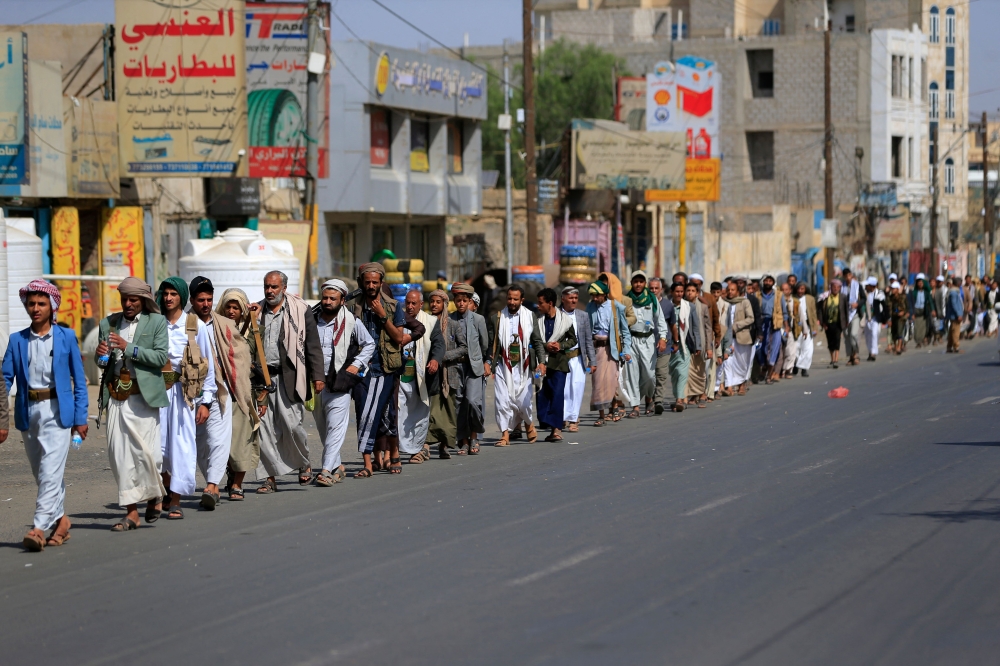
In recent developments, Yemen's Houthi militia, an Iran-backed group, has seized control of the strategic Bab al-Mandab Strait and the entire Red Sea coast, solidifying their position as a significant regional force.
Originating from Yemen's Zaidi minority, the Houthis have expanded from an isolated faction to a key player in the Middle East, with considerable military strength and strategic alliances, including close ties with Iran.
Their control over key maritime routes enhances their ability to disrupt commerce, particularly affecting Saudi Arabian oil shipments.
The group's actions align them with Tehran's "Axis of Resistance," though they maintain some autonomy from Iran.
DUBAI, Sept 13 — Within a matter of days, Yemen’s Houthis have swept south and seized the strategic Bab al-Mandab Strait, cementing their rise as a force to be reckoned with in the constellation of Iran-backed armed groups across the Middle East.
Once considered a relatively isolated religious and military movement, the Houthis now hold all of Yemen’s Red Sea coast, as well as significant territory in the country’s north, including the capital Sanaa.
The Houthis belong to the Zaidi community, an offshoot of Shia Islam, which is a minority in Yemen’s mostly Sunni population.
They rose up in the 1990s in response to alleged sectarian discrimination against the Zaidis, who are mostly present in the country’s impoverished north.
The Houthi movement, also known as Ansar Allah (Supporters of God), is named after its late spiritual leader Badreddin al-Houthi and his son Hussein, who was killed by Yemeni government forces in 2004.
Houthi’s other son, Abdulmalik, assumed the reins of power, delivering fiery speeches and transforming his group from an isolated faction in the northwest into the ruling power in the capital and a regional player.
He now has tens of thousands of fighters, that are well-trained, tenacious and battle-hardened in Yemen’s harsh, mountainous terrain.
The Houthis control areas where the majority of Yemen’s population lives, though the internationally recognised government still holds more territory.
The group’s missiles and drones also pose a threat to the country’s oil-rich Gulf neighbours, as well as Israel, which it targeted repeatedly after the outbreak of the Gaza war.
Between 2004 and 2010, the group fought six wars against Yemen’s then-government and battled Saudi Arabia in 2009-2010 after storming across the border.
They also took part in protests that forced former ruler Ali Abdullah Saleh from office in 2012 following the Arab Spring protests. But they later formed an alliance with him before again falling out and killing him in 2017.
Their big move came when they took over Sanaa in 2014, setting off a Saudi-led intervention against them in March 2015, followed by a brutal civil war that left hundreds of thousands dead and triggered a massive humanitarian crisis.
In 2022, they reached a truce with the Saudi-backed government, but remained in control of a large part of the country’s north.
The Houthis triggered a return to hostilities in July, when they let an Iranian plane land in defiance of Saudi control of Yemeni airspace. The government retaliated by striking the airport.
The Houthis are part of the Tehran-led “Axis of Resistance”, which also includes Lebanon’s Hezbollah, the Palestinian Hamas movement and Iraqi armed groups.
Saudi Arabia and the United States have long viewed the rebels as an Iranian “tool”, accusing Tehran of supplying them with weapons — a charge it had previously denied.
Unlike Hezbollah, the Houthis do not subscribe to the belief that Iran’s supreme leader is the ultimate authority. They have, however, grown closer to Iran over the years.
In 2024, Houthis began attacking ships in the Red Sea that they said were linked to Israel, saying the move was in support of Palestinians during the Gaza war.
The campaign forced many shipping companies into a lengthy detour around the tip of southern Africa.
The Houthis joined the Middle East war in support of Iran in March, claiming new drone and missile attacks against Israel, without causing significant damage.
Despite their close ties to Iran, the Houthis have managed to retain a degree of autonomy from their backer and mostly rely on them for military support.
Battle for Bab al-Mandab
The Houthis have long been able to disrupt commerce with their attacks in the Red Sea and the Bab al-Mandab Strait, its southern gateway.
The sea, which links Europe and Asia via the Suez Canal, has become a crucial artery to their foe Saudi Arabia, which turned to the waterway to keep up oil exports after Iran largely cut off shipments from the Gulf with its blockade of the Strait of Hormuz.
In July, the Houthis declared a maritime blockade on Saudi Arabia, and have since repeatedly targeted its ships in the Red Sea.
Not long after hostilities with Yemeni government forces resumed, the group launched on September 3 a major assault focused on capturing the Bab al-Mandab.
A week later, they had seized the entire Red Sea coast, as well as strategic islands in and around the strait, boosting their ability to exert control over navigation and target Saudi tankers. — AFP
Rescuers search for 129 still missing after ferry capsizes in Indonesia, killing six
Villages and wetlands sacrificed as Hong Kong builds vast Northern Metropolis tech hub
Laos power paradox: Booming exports to Thailand and Vietnam, but blackouts at home persist
Former minister Jamil Khir appears in KL court over Tabung Haji RCI charges
Anwar meets India’s Grand Mufti, discusses interfaith understanding and harmony
Malaysia’s AI Nation plan by 2030 — how the government is preparing its people
最近,受伊朗支持的也门胡塞武装控制了具有战略意义的曼德海峡和整个红海沿岸,巩固了其作为重要地区力量的地位。
胡塞武装起源于也门宰德派少数民族,已从一个孤立的派别发展成为中东地区的重要力量,拥有相当的军事实力和战略联盟,包括与伊朗的密切联系。
他们对关键海上航线的控制增强了他们扰乱商业的能力,尤其影响沙特阿拉伯的石油运输。
该组织的行动使其与德黑兰的“抵抗轴心”保持一致,尽管他们保持着一定程度的独立性。
迪拜,9 月 13 日——短短几天内,也门胡塞武装就席卷南部,夺取了具有战略意义的曼德海峡,巩固了其在中东地区伊朗支持的武装团体中不可忽视的力量地位。
胡塞武装一度被认为是一个相对孤立的宗教和军事运动,如今却控制了也门红海沿岸的所有地区,以及该国北部的大片领土,包括首都萨那。
胡塞武装属于宰德派,宰德派是什叶派伊斯兰教的一个分支,在也门以逊尼派为主的人口中属于少数群体。
20 世纪 90 年代,他们起来反抗针对扎伊迪派的所谓教派歧视,扎伊迪派主要居住在该国贫困的北部地区。
胡塞运动,又称安萨尔真主(真主的支持者),以其已故精神领袖巴德雷丁·胡塞及其子侯赛因的名字命名,侯赛因于 2004 年被也门政府军杀害。
胡塞的另一个儿子阿卜杜勒马利克接管了政权,发表了激情澎湃的演讲,将他的组织从西北部的孤立派系转变为首都的统治力量和地区力量。
他现在拥有数万名训练有素、意志顽强、身经百战的战士,他们在也门严酷的山地地形中作战经验丰富。
胡塞武装控制着也门大部分人口居住的地区,但国际社会承认的也门政府仍然控制着更多领土。
该组织的导弹和无人机也对该国石油资源丰富的海湾邻国以及以色列构成威胁,在加沙战争爆发后,该组织曾多次以以色列为目标。
2004 年至 2010 年间,该组织与当时的也门政府进行了六次战争,并在 2009 年至 2010 年越过边境后与沙特阿拉伯交战。
他们也参与了2012年阿拉伯之春抗议活动,最终迫使前统治者阿里·阿卜杜拉·萨利赫下台。但后来他们与萨利赫结盟,之后再次反目,并在2017年将其杀害。
他们的重大举措是 2014 年占领萨那,引发了沙特阿拉伯领导的军事干预,随后爆发了残酷的内战,造成数十万人死亡,并引发了大规模的人道主义危机。
2022年,他们与沙特支持的政府达成停火协议,但仍然控制着该国北部的大片地区。
胡塞武装于7月引发战火重燃,他们无视沙特阿拉伯对也门领空的控制,允许一架伊朗飞机降落。也门政府随即对该机场发动了袭击。
胡塞武装是德黑兰领导的“抵抗轴心”的一部分,该轴心还包括黎巴嫩真主党、巴勒斯坦哈马斯运动和伊拉克武装团体。
沙特阿拉伯和美国长期以来一直将反叛分子视为伊朗的“工具”,指责德黑兰向他们提供武器——伊朗此前否认了这一指控。
与真主党不同,胡塞武装并不认同伊朗最高领袖拥有最终权威。然而,多年来,他们与伊朗的关系日益密切。
2024年,胡塞武装开始袭击红海中他们声称与以色列有关的船只,并称此举是为了支持加沙战争中的巴勒斯坦人。
这场战役迫使许多航运公司绕道非洲南部最南端,走了很长的路。
胡塞武装于3月加入中东战争,支持伊朗,并声称对以色列发动了新的无人机和导弹袭击,但并未造成重大损失。
尽管胡塞武装与伊朗关系密切,但他们仍然保持了一定程度的自主性,主要依靠伊朗提供军事支持。
曼德门之战
胡塞武装长期以来一直能够通过在红海及其南部门户曼德海峡发动袭击来扰乱贸易。
通过苏伊士运河连接欧洲和亚洲的这片海域,已成为其敌对国家沙特阿拉伯的重要动脉。在伊朗封锁霍尔木兹海峡,基本切断了海湾地区的石油运输后,沙特阿拉伯转而利用这条水道来维持石油出口。
7月,胡塞武装宣布对沙特阿拉伯实施海上封锁,此后多次在红海袭击沙特阿拉伯的船只。
与也门政府军的敌对行动恢复后不久,该组织于 9 月 3 日发动了一场以夺取曼德海峡为目标的大规模进攻。
一周后,他们控制了整个红海沿岸以及海峡内外的战略岛屿,从而增强了对航行的控制能力,并能更有效地袭击沙特油轮。——法新社
救援人员仍在搜寻印尼渡轮倾覆事故中失踪的129人,事故造成6人死亡。
香港为建设庞大的北部都会区科技中心,牺牲了村庄和湿地。
老挝电力悖论:对泰国和越南的出口蓬勃发展,但国内停电问题依然存在。
前部长贾米尔基尔因朝圣基金局指控出庭吉隆坡法庭
安瓦尔会见了印度大穆夫提,探讨了不同宗教间的理解与和谐。
马来西亚2030年人工智能国家计划——政府如何为人民做好准备