New Zealand budget spares defense, intelligence agencies from cuts新西兰预算案未削减国防和情报机构的经费。
“The rules-based global system is under strain. Countries are boosting their spending on defense," said Finance Minister Nicola Willis.
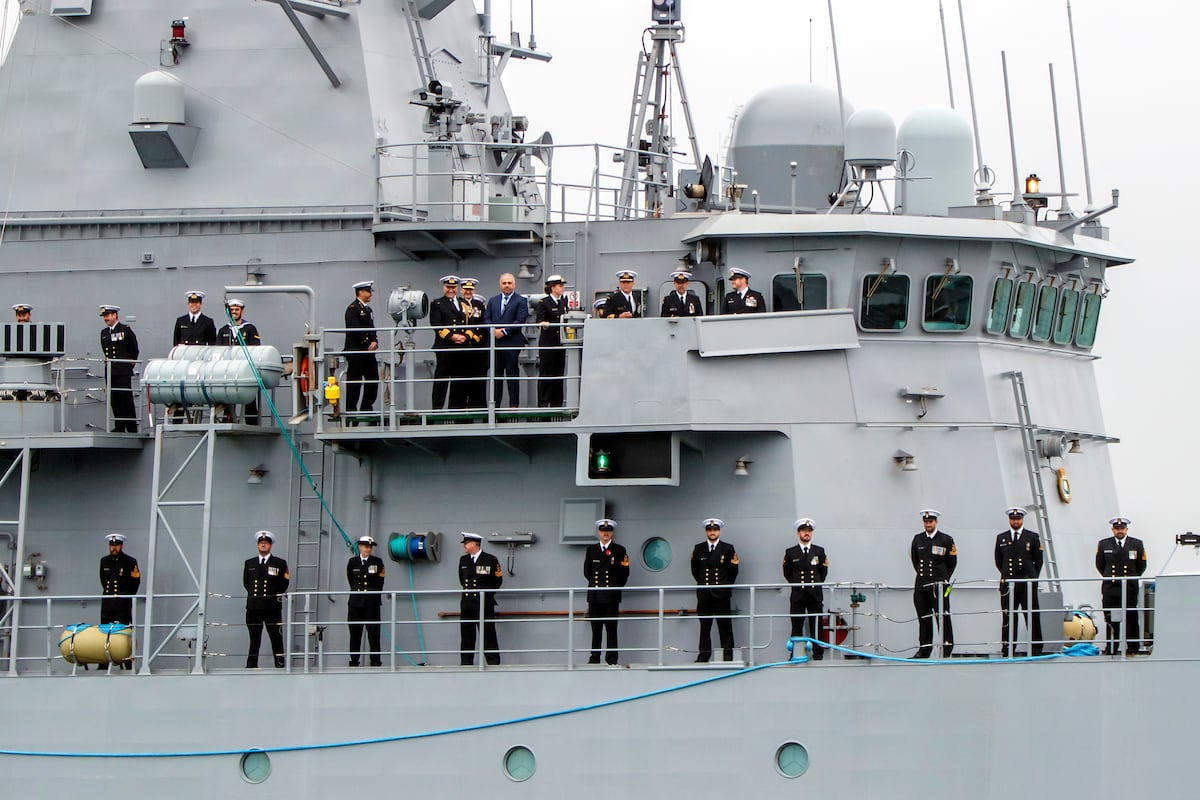
WELLINGTON, New Zealand — New Zealand’s Defence Force and intelligence agencies are on track to receive almost $4.3 billion (US$2.5 billion) in this year’s budget, Finance Minister Nicola Willis announced on May 28.
The NZDF is among the handful of government agencies exempt from trimming their budgets by 2% this year.
Their funding includes $2.3 billion capital and $1.2 billion operating funding to retain NZDF personnel — currently more than 15,000 people — increase numbers in key areas and improve accommodation and training facilities at military bases across the country. Intelligence and communication security services receive $156 million.
The operating funding includes $120 million over four years to bring NZDF pay closer to market rates and $174 million to meet increased deployment costs.
The Maritime Fleet Renewal program includes $143 million capital and $72 million operating costs over four years for critical maintenance on the Royal New Zealand Navy’s (RNZN) two Anzac-class frigates and the strategic sealift vessel HMNZS Canterbury, while developing options for their replacement.
The RNZN is also funded for introducing two types of drones. One will be used in the south-west Pacific to provide long-duration surveillance data, while the other is polar-capable and will conduct missions from naval vessels in the Southern Ocean. Sustaining the Anzac frigates, in service since 1997 and 1999, respectively, includes $14.9 million for communications upgrades.
There’s $1.5 million of capital funding, alongside $16 million of operating funding, to begin work on the Technology Accelerator program, which focuses on connecting industry with the NZDF to solve specific military challenges.
Major defense projects include $2.6 million on the maritime helicopter replacement and $60.5 million on a Future Air Mobility Capability, a figure set to more than double in the next fiscal year.
Supplying the Bushmaster armored vehicles with communications gets $13 million and $25.6 million goes toward utility vehicle replacement costs.
Willis said this is the second year of the Defence Capability Plan (DCP), expected to average $85.5 million per year over the next four years. She cautioned that the world is more volatile than ever. “The rules-based global system is under strain. Countries are boosting their spending on defense.”
Tucked into the budget is $42 million for the clean-up, salvage and other costs — previously estimated at $32 million —arising from the sinking of HMNZS Manawanui, due to human error, in October 2024.
Nick Lee-Frampton is the New Zealand correspondent for Defense News.
新西兰惠灵顿——财政部长尼古拉·威利斯于5月28日宣布,新西兰国防军和情报机构有望在今年的预算中获得近43亿新西兰元(25亿美元)的拨款。
新西兰国防军是今年少数几个无需削减 2% 预算的政府机构之一。
他们的资金包括23亿新西兰元的资本金和12亿新西兰元的运营资金,用于留住新西兰国防军人员(目前超过15000人),增加关键领域的人员数量,并改善全国各地军事基地的住宿和训练设施。情报和通信安全部门将获得1.56亿新西兰元。
运营资金包括四年内投入 1.2 亿美元,使新西兰国防军的薪酬更接近市场水平;以及投入 1.74 亿美元,以满足不断增长的部署成本。
海事舰队更新计划包括四年内投入 1.43 亿美元的资本和 7200 万美元的运营成本,用于对新西兰皇家海军 (RNZN) 的两艘安扎克级护卫舰和战略海运船“坎特伯雷”号进行关键维护,同时制定其替代方案。
新西兰皇家海军还获得了资金,用于引进两种类型的无人机。一种将用于西南太平洋,提供长时间的监视数据;另一种具备极地作战能力,将从南大洋的军舰上执行任务。此外,为分别于1997年和1999年服役的“澳新军团”级护卫舰提供维护保养,包括1490万美元用于通信升级。
政府将投入 150 万美元的资本金和 1600 万美元的运营资金,启动技术加速器计划。该计划旨在将产业界与新西兰国防军联系起来,以解决特定的军事挑战。
主要国防项目包括260万美元的海上直升机更换项目和6050万美元的未来空中机动能力项目,该数字在下一个财政年度将翻一番以上。
为“大毒蛇”装甲车提供通信设备获得 1300 万美元,另有 2560 万美元用于多用途车辆的更换费用。
威利斯表示,这是国防能力计划(DCP)实施的第二年,预计未来四年平均每年投入8550万美元。她提醒说,世界局势比以往任何时候都更加动荡。“基于规则的全球体系正面临压力。各国都在增加国防开支。”
预算中包括 4200 万美元用于清理、打捞和其他费用——此前估计为 3200 万美元——这些费用是由于 HMNZS Manawanui 号在 2024 年 10 月因人为失误而沉没造成的。
Nick Lee-Frampton 是《国防新闻》驻新西兰记者。