Asean must prepare for China's new strategic Pinglu Canal — Phar Kim Beng东盟必须为中国新的战略要道平鲁运河做好准备——法金本
SEPTEMBER 13 — China’s Pinglu Canal should not be understood simply as another impressive piece of infrastructure.For Asean, it represents something potentially much larger:...
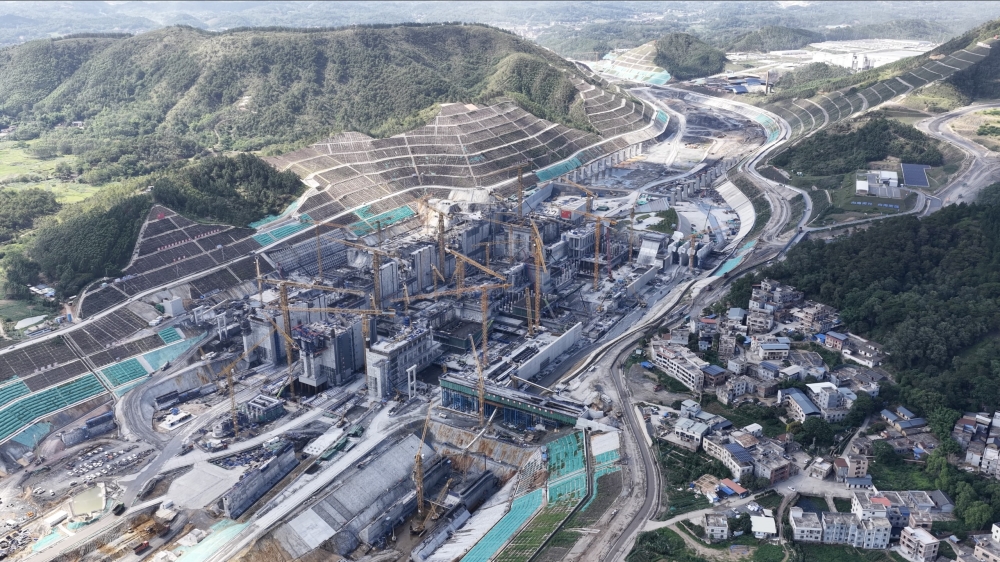
The article emphasizes the strategic significance of China's Pinglu Canal, which serves as more than just infrastructure by reorienting southwestern China toward Southeast Asia.
It creates a shorter maritime route, enhancing economic ties between China and ASEAN by providing direct access to Southeast Asian waters.
The canal is poised to reshape trade routes, thus cultivating economic and strategic partnerships, but ASEAN must strategically improve its connectivity to capitalize on emerging opportunities without over-relying on China.
Collective action and infrastructure development across ASEAN are required to optimize the benefits of this new economic geography.
SEPTEMBER 13 — China’s Pinglu Canal should not be understood simply as another impressive piece of infrastructure.
For Asean, it represents something potentially much larger: the gradual geographical reorientation of southwestern China towards Southeast Asia.
The 134.2-kilometre canal in Guangxi connects China’s inland river system with Qinzhou and the Beibu Gulf, opening a substantially shorter maritime route for goods originating in western and southwestern China.
Its location is particularly significant.
The Beibu Gulf, known internationally as the Gulf of Tonkin, lies beside Vietnam.
Once vessels emerge from the canal, they are already facing maritime Southeast Asia.
That changes economic geography.
For decades, much of China’s industrial development was associated with its eastern seaboard: Guangdong, Fujian, Zhejiang, Jiangsu and Shanghai.
The great ports of eastern China connected the country to Japan, South Korea, North America and the wider world.
The Pinglu Canal points in another direction: south.
China is increasingly developing its southwestern provinces and autonomous regions with Southeast Asia in mind.
The canal is designed to accommodate vessels of up to 5,000 tonnes and is expected to reduce the inland shipping distance from southwestern China to the sea by approximately 560 kilometres compared with routes that previously depended on access through Guangdong.
This is not a trivial logistical adjustment.
Transportation costs shape trade.
Trade shapes investment. Investment gradually reshapes strategic relationships.
Asean therefore needs to understand the Pinglu Canal as part of a much larger transformation.
It forms an important component of China’s New International Land-Sea Trade Corridor, which links inland economic centres such as Chongqing and Chengdu through western and southern China towards the Beibu Gulf.
The canal consequently gives parts of inland China something they have historically lacked: more direct and economical access to Southeast Asian waters.
Vietnam will feel this transformation first because of geography.
But it would be a mistake for Malaysia, Singapore, Thailand, Indonesia and the rest of Asean to regard the canal merely as a China-Vietnam matter.
Once ships enter the Beibu Gulf, the maritime routes naturally extend towards the wider South China Sea and Southeast Asia.
Singapore and Malaysia sit further down these commercial arteries. Thailand is developing its own logistics ambitions.
Vietnam possesses a long coastline and increasingly important manufacturing centres. Indonesia remains the largest economy in Asean.
The canal could therefore reinforce the economic integration already taking place between China and Asean. That presents enormous opportunities.
Asean companies could gain better access to China’s enormous western hinterland.
Agricultural commodities, minerals, intermediate goods and manufactured products could move in both directions more efficiently.
Western Chinese provinces that previously appeared distant from Southeast Asia could effectively become part of Asean's immediate economic neighbourhood.
But infrastructure is never strategically neutral.
Ports, railways, highways, pipelines and canals do more than transport commodities. They reorganise economic space.
When trade routes change, centres of economic gravity can change with them.
Asean must consequently avoid two opposite mistakes.
The first would be to portray the Pinglu Canal automatically as a Chinese geopolitical threat.
Such thinking would be simplistic. Asean desperately needs infrastructure, connectivity, investment and more efficient supply chains.
China is Asean’s largest trading partner, while Asean has become China’s largest trading partner. Greater physical connectivity between the two can generate considerable prosperity.
The second mistake, however, would be equally serious: pretending that the canal has no strategic implications whatsoever.
The Pinglu Canal gives China another means of orienting its enormous inland economy towards Southeast Asia.
Together with rail connections through Laos, expanding ports around the Beibu Gulf and extensive transportation networks across southern China, a new north-south economic geography is taking shape.
Asean should prepare accordingly.
The response should not be containment. It should be connectivity.
Asean needs better ports, stronger railway networks, more efficient customs procedures and deeper interoperability between national logistics systems.
The Asean Connectivity agenda must become physical rather than rhetorical.
Malaysia has particular reasons to pay attention.
Port Klang, Port of Tanjung Pelepas, Penang Port and the wider logistics infrastructure of the country should position themselves to capture increasing flows between western China and maritime Southeast Asia.
The same applies to Singapore, whose extraordinary success has always depended partly on anticipating changes in maritime geography before others do.
Vietnam faces an even more immediate strategic calculation.
A major Chinese commercial artery is emerging close to its northern maritime approaches.
Hanoi will naturally welcome the economic opportunities while simultaneously examining the longer-term consequences for trade patterns, ports and strategic geography.
This is precisely why Asean should discuss the Pinglu Canal collectively rather than leaving individual member states to react separately.
China thinks in corridors.
Asean must learn to think in networks.
A corridor concentrates movement between particular points. A network distributes opportunities across numerous economies.
Asean’s task is therefore to connect China’s new southern-facing infrastructure with an increasingly integrated Southeast Asian transportation system without becoming excessively dependent on any single external economy.
This is where Asean’s polytropous character becomes useful.
The region does not have to choose between China, Japan, South Korea, India, the European Union or the United States. It can deepen economic relationships with all of them while strengthening its own internal connectivity.
Indeed, the arrival of the Pinglu Canal should accelerate Asean’s determination to build stronger intra-Asean infrastructure.
Otherwise a peculiar situation could emerge: China may become increasingly efficient at connecting with Southeast Asia while Southeast Asian countries remain comparatively inefficient at connecting with one another.
That would weaken Asean’s centrality far more than any diplomatic disagreement.
Strategic geography is ultimately shaped by movement — of ships, goods, capital, technology and people.
The Pinglu Canal is creating a new direction of movement.
Southwestern China is moving closer to Southeast Asia economically even though the physical geography has not changed.
Asean should welcome the opportunities but understand the strategic consequences. China has built a canal towards the sea.
That sea leads directly towards Southeast Asia.
Asean must make sure that when the new economic currents begin flowing southward, the region possesses enough connectivity, resilience and strategic foresight to navigate them on its own terms.
* Phar Kim Beng is a professor of Asean Studies, and director at the Institute of International and Asean Studies, International Islamic University Malaysia.
** This is the personal opinion of the writers or publication and does not necessarily represent the views of Malay Mail .
Call for GE16 to be held as soon as possible: A flip flop? — Hafiz Hassan
When hope arrived by post — Ng Kwan Hoong
From Malaysia to China, with a plate of ‘poori’ — Matthuri Palanee
Fire breaks out at Pulau Tenggol jetty parking area, 11 cars affected, says Dungun Fire Dept
Families of missing Malaysians request detailed SAR briefings in Nepal tragedy as SMART prepares to return
Wisma Putra: 55 Malaysians remain uncontactable after Nepal and China disasters
文章强调了中国平陆运河的战略意义,它不仅仅是基础设施,更将中国西南地区与东南亚重新连接起来。
它开辟了一条更短的海上航线,通过提供直接进入东南亚水域的通道,加强了中国与东盟之间的经济联系。
运河有望重塑贸易路线,从而促进经济和战略伙伴关系的发展,但东盟必须从战略上改善其互联互通,以抓住新兴机遇,而不能过度依赖中国。
要充分发挥这一新经济格局带来的好处,东盟各国需要采取集体行动并发展基础设施。
9月13日——中国的平陆运河不应仅仅被视为又一项令人印象深刻的基础设施。
对于东盟而言,这代表着某种可能更为重大的事件:中国西南地区逐渐向东南亚的地理重新定位。
广西的这条134.2公里长的运河将中国的内河水系与钦州和北部湾连接起来,为来自中国西部和西南部的货物开辟了一条大大缩短的海上航线。
它的地理位置尤为重要。
北部湾,国际上称为东京湾,位于越南境内。
船只一旦驶出运河,就已置身于东南亚海域。
这将改变经济格局。
几十年来,中国的大部分工业发展都与东部沿海地区有关:广东、福建、浙江、江苏和上海。
中国东部的各大港口将中国与日本、韩国、北美以及更广阔的世界连接起来。
平鲁运河指向另一个方向:南方。
中国正日益重视西南省份和自治区的发展,并将东南亚市场纳入考量。
该运河设计可容纳吨位达 5000 吨的船舶,预计与以前依赖经由广东的航线相比,将中国西南地区到海洋的内河航运距离缩短约 560 公里。
这并非一项微不足道的后勤调整。
运输成本影响贸易。
贸易塑造投资,投资逐步重塑战略关系。
因此,东盟需要将平鲁运河视为更大转型的一部分来理解。
它是中国新型国际陆海贸易走廊的重要组成部分,该走廊连接重庆、成都等内陆经济中心,途经中国西部和南部,直达北部湾。
因此,这条运河为中国内陆部分地区带来了历史上一直缺乏的东西:更直接、更经济地进入东南亚水域。
由于地理位置的原因,越南将率先感受到这种变化。
但马来西亚、新加坡、泰国、印度尼西亚和东盟其他成员国如果仅仅将运河视为中越之间的问题,那就大错特错了。
一旦船舶进入北部湾,海上航线自然会延伸至更广阔的南海和东南亚。
新加坡和马来西亚位于这些商业走廊的更下游。泰国正在发展自身的物流业务。
越南拥有漫长的海岸线和日益重要的制造业中心。印度尼西亚仍然是东盟最大的经济体。
因此,这条运河可以加强中国与东盟之间业已存在的经济一体化进程,这蕴藏着巨大的机遇。
东盟企业可以更好地进入中国广袤的西部腹地。
农产品、矿产、中间产品和制成品可以更有效地双向流动。
以前看似远离东南亚的中国西部省份,实际上可能成为东盟的直接经济邻国的一部分。
但基础设施从来都不是战略中立的。
港口、铁路、公路、管道和运河的作用远不止运输商品。它们还重塑了经济空间。
当贸易路线发生变化时,经济重心也会随之发生变化。
因此,东盟必须避免犯两个截然相反的错误。
第一种方法是将平陆运河自动描绘成中国的地缘政治威胁。
这种想法过于简单。东盟迫切需要基础设施、互联互通、投资和更高效的供应链。
中国是东盟最大的贸易伙伴,而东盟也已成为中国最大的贸易伙伴。加强两国之间的实体互联互通能够带来巨大的繁荣。
然而,第二个错误同样严重:假装运河没有任何战略意义。
平陆运河为中国提供了另一种将其庞大的内陆经济转向东南亚的途径。
随着老挝铁路的开通、北部湾周边港口的扩张以及中国南方广泛的交通网络的发展,一种新的南北经济格局正在形成。
东盟应做好相应准备。
应对之策不应是封锁,而应是连接。
东盟需要更好的港口、更强大的铁路网络、更高效的海关程序以及国家物流系统之间更深层次的互操作性。
东盟互联互通议程必须从空谈走向实际行动。
马来西亚有特别的理由关注此事。
巴生港、丹戎帕拉帕斯港、槟城港以及该国更广泛的物流基础设施应做好准备,抓住中国西部与东南亚海域之间日益增长的货运量。
新加坡的情况也是如此,其非凡的成功一直部分取决于在其他国家之前预见到海洋地理的变化。
越南面临着更为紧迫的战略考量。
一条重要的中国商业动脉正在其北部海域附近形成。
河内自然会欢迎这些经济机遇,同时也会审视这些机遇对贸易格局、港口和战略地理的长期影响。
正因如此,东盟应该集体讨论平鲁运河问题,而不是让各个成员国各自做出反应。
中国人的思维方式就像在走廊里一样。
东盟必须学会以网络化的方式思考。
走廊集中了特定地点之间的交通。网络则将机遇分散到众多经济体中。
因此,东盟的任务是将中国面向南方的新基础设施与日益一体化的东南亚交通系统连接起来,同时避免过度依赖任何单一的外部经济体。
这正是东盟多面性发挥作用的地方。
该地区不必在中国、日本、韩国、印度、欧盟或美国之间做出选择。它可以在深化与所有这些国家的经济关系的同时,加强自身的内部互联互通。
事实上,平鲁运河的开通应该会加速东盟建设更强大的东盟内部基础设施的决心。
否则可能会出现一种奇特的局面:中国与东南亚的联系可能越来越有效,而东南亚国家之间的联系却相对低效。
这会比任何外交分歧更能削弱东盟的中心地位。
战略地理最终是由船舶、货物、资本、技术和人员的流动所塑造的。
平鲁运河正在开辟新的发展方向。
尽管地理环境没有改变,但中国西南地区在经济上正越来越靠近东南亚。
东盟应该欢迎这些机遇,但也要明白其中的战略后果。中国已经修建了一条通往大海的运河。
那片海域直通东南亚。
东盟必须确保,当新的经济潮流开始南下时,该地区拥有足够的互联互通性、韧性和战略远见,能够按照自己的方式驾驭这些潮流。
* Phar Kim Beng 是马来西亚国际伊斯兰大学东盟研究教授兼国际与东盟研究所所长。
**本文仅代表作者或出版方的个人观点,并不一定代表《马来邮报》的观点。
呼吁尽快举行第16届全国大选:这是政策的反复无常吗?——哈菲兹·哈桑
当希望通过邮寄送达时——吴冠雄
从马来西亚到中国,一盘“穷人”——Matthuri Palanee
登哥岛码头停车场发生火灾,11辆汽车受灾,登嘉楼消防局称。
在尼泊尔悲剧中失踪的马来西亚公民家属要求提供详细的搜救情况通报,与此同时,SMART搜救队正准备返回。
Wisma Putra:尼泊尔和中国灾难后,55名马来西亚人仍无法联系