Turkey advances plan for a national air-defense shield土耳其推进国家防空盾计划
The country's Steel Dome concept aims to integrate a smattering of national capabilities for tracking and intercepting aerial threats.
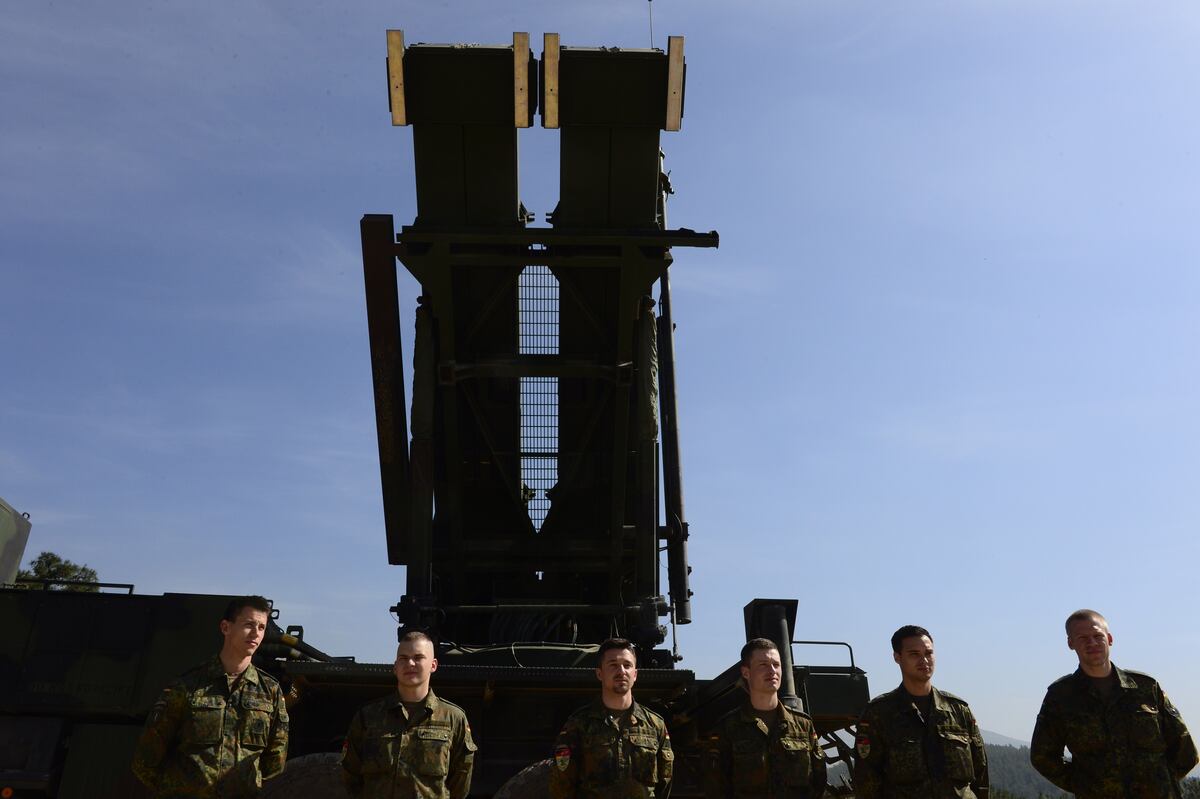
ISTANBUL — Turkey has finalized key plans for its Çelik Kubbe – Steel Dome – air defense system, a project designed to enhance the nation’s airspace security with advanced, multilayered defense capabilities.
The decision came during the second meeting of the Defence Industry Executive Committee (SSIK), chaired by President Recep Tayyip Erdoğan last month. The Steel Dome aims to integrate a wide range of air defense assets, creating a real-time operational picture and enabling centralized control with the help of artificial intelligence.
The Steel Dome is a domestic initiative developed by Aselsan in collaboration with Roketsan and Turkish government research institute TÜBİTAK SAGE. It brings together existing and future sensors, communication networks, and weapons under one system for comprehensive airspace protection.
The project’s goal is to establish a unified defense network capable of defending Turkey against emerging aerial threats like drones and missiles.
According to Sıtkı Egeli, an associate professor at İzmir University of Economics, the Steel Dome is not entirely new but rather an effort to integrate various air and missile defense systems developed over the past decade.
“The real key to successful air defense is not just having the right weapons, but integrating all these components under a single command and control system,” he said.
As envisioned, short-range systems like the Korkut self-propelled anti-aircraft gun and Sungur missiles will form the dome’s inner layer. Medium-range Hisar A+ and Hisar O (RF) missiles will engage threats in the middle layer, while the outermost layer will rely on the long-range SİPER missile, which is expected to exceed a range of 100 kilometers. Roketsan is developing an advanced version of SİPER that will extend the range to 150 kilometers.
Turkey is incorporating Aselsan-made radars and communication systems, including the HERİKKS air defense command and control system and the RADNET radar network at the hub of the behemoth program. The components are designed to create a real-time air picture for decision-makers.
Non-kinetic interceptors like the Gökberk laser weapon and the Alka direct-energy weapon also are slated for eventual incorporation into the Steel Dome, but those technologies still need development.
According to Egeli, Turkey had planned to use the ACCS (Air Command Control System) architecture, developed in the 2000s for joint use by all NATO members, as the brains of the new program. But unresolved issues over the alliance software led Turkey to develop a national solution as a supplement instead, he said.
Egeli added said that the Russian S-400 air defense system, purchased by Turkey in 2017, will not be part of the Steel Dome architecture, as the S-400 does not align with Turkey’s long-term air defense strategy.
Cem Devrim Yaylali is a Turkey correspondent for Defense News. He is a keen photographer of military ships and has a passion for writing about naval and defense issues. He was born in Paris, France, and resides in Istanbul, Turkey. He is married with one son.
伊斯坦布尔——土耳其已最终确定其“钢穹顶”防空系统的关键计划,该项目旨在通过先进的多层防御能力来增强国家空域安全。
该决定是在上个月由总统雷杰普·塔伊普·埃尔多安主持召开的国防工业执行委员会(SSIK)第二次会议上做出的。“钢铁穹顶”旨在整合各种防空资产,创建实时作战态势图,并借助人工智能实现集中控制。
“钢铁穹顶”是由阿塞尔桑公司与罗克特桑公司和土耳其政府研究机构TÜBİTAK SAGE合作开发的一项国内计划。它将现有和未来的传感器、通信网络和武器整合到一个系统中,以实现全面的空域保护。
该项目的目标是建立一个统一的防御网络,能够保护土耳其免受无人机和导弹等新兴空中威胁。
据伊兹密尔经济大学副教授 Sıtkı Egeli 称,“钢铁穹顶”并非完全是新的,而是将过去十年中开发的各种防空和导弹防御系统整合起来的一项尝试。
他说:“成功防空的真正关键不仅在于拥有合适的武器,还在于将所有这些组成部分整合到一个统一的指挥控制系统下。”
根据设想,科尔库特(Korkut)自行高射炮和松古尔(Sungur)导弹等短程系统将构成穹顶的内层。中程希萨尔A+(Hisar A+)和希萨尔O(RF)导弹将用于打击中间层的威胁,而最外层将依靠射程预计超过100公里的远程西珀(SİPER)导弹。罗克特桑公司正在研发西珀导弹的改进型,其射程将达到150公里。
土耳其正在将阿塞尔桑公司制造的雷达和通信系统整合到其庞大的防空指挥控制系统“赫里克斯”(HERİKKS)和雷达网络“拉德内特”(RADNET)中。这些组件旨在为决策者提供实时空中态势图。
像 Gökberk 激光武器和 Alka 直接能量武器这样的非动能拦截器也计划最终被纳入钢铁穹顶,但这些技术仍需进一步开发。
埃格利表示,土耳其原本计划采用2000年代开发的北约联合空中指挥控制系统(ACCS)架构作为新项目的核心。但由于联盟软件方面存在一些悬而未决的问题,土耳其最终决定开发一套国家级解决方案作为补充。
埃格利补充说,土耳其在 2017 年购买的俄罗斯 S-400 防空系统不会成为“钢铁穹顶”体系的一部分,因为 S-400 不符合土耳其的长期防空战略。
杰姆·德夫里姆·亚伊拉利是《防务新闻》驻土耳其记者。他热衷于拍摄军舰,并对海军和国防议题充满热情。他出生于法国巴黎,现居土耳其伊斯坦布尔。他已婚,育有一子。