‘Star Trek: Deep Space Nine’ Dealt With the Complexities of War in an Uncanny Fashion《星际迷航:深空九号》以一种不可思议的方式处理了战争的复杂性。
It's like the writers had a crystal ball that showed them the trials and tribulations of the coming millennium.
新闻视频
Updated Jul 2, 2020 3:15 PM EDT
“Star Trek” celebrates its 50th anniversary this week. You probably won’t be surprised to hear that Gene Roddenberry’s wonderful creation has had a massive impact on my life. I’ve seen every minute ever produced—roughly 600 hours—and many of those minutes many times over.
Although the franchise is best known for its brilliant use of science and technology, social reflection, and study of the human condition, parts of it have also been about military topics. Not only does this include tactics and strategy, but also the human toll that goes along with warfare.
Phasers on stun!, CBS
Every Star Trek series, and some of the films ( Undiscovered Country , First Contact ) have had fantastic takes on topics related to warfare and foreign relations. The original series started this trend ( Taste of Armageddon, A Private Little War, The Ultimate Computer, Balance Of Terror ) and The Next Generation built on it with some real gems of its own which dealt with the subject in incredibly thoughtful ways ( The Wounded, Chain of Command, Darmok, Pegasus, The High Ground, The First Duty ). Even Voyager had some winning episodes ( Year In Hell, Scorpion ) when it came to approaching the concept of war. But to this very day I remain in awe of what Deep Space Nine accomplished—and when it accomplished it.
The series ran from 1993 to 1999, ending years before the terror attacks on 9/11 and the massive changes at home and abroad that followed. Yet somehow, the show explored the issues of terrorism, occupation, torture, religious persecution, the terrible burdens of command, duty, extreme surveillance, and even PTSD long before these issues were catapulted into America’s collective consciousness. What makes this even more amazing is that, by approaching these subjects outside the emotion surrounding 9/11 or the wars that followed, a far more authentic commentary could be put forward, one that was unfettered by writing that simply tried to emulate the headlines.
The crew of Deep Space Nine., Youtube Screencap
What made DS9 even better is that it allowed serial storytelling to take precedence over the procedural-dominated style of the first two series in the Star Trek franchise. This allowed for far deeper character development, as well as an overarching plot that saw Starfleet march into a horrific war. Some called it “darker” Trek, but really it was just more realistic, and relatable. The same core values were there, but the struggle to uphold those values, or the reasoning for abandoning them, was far more evident.
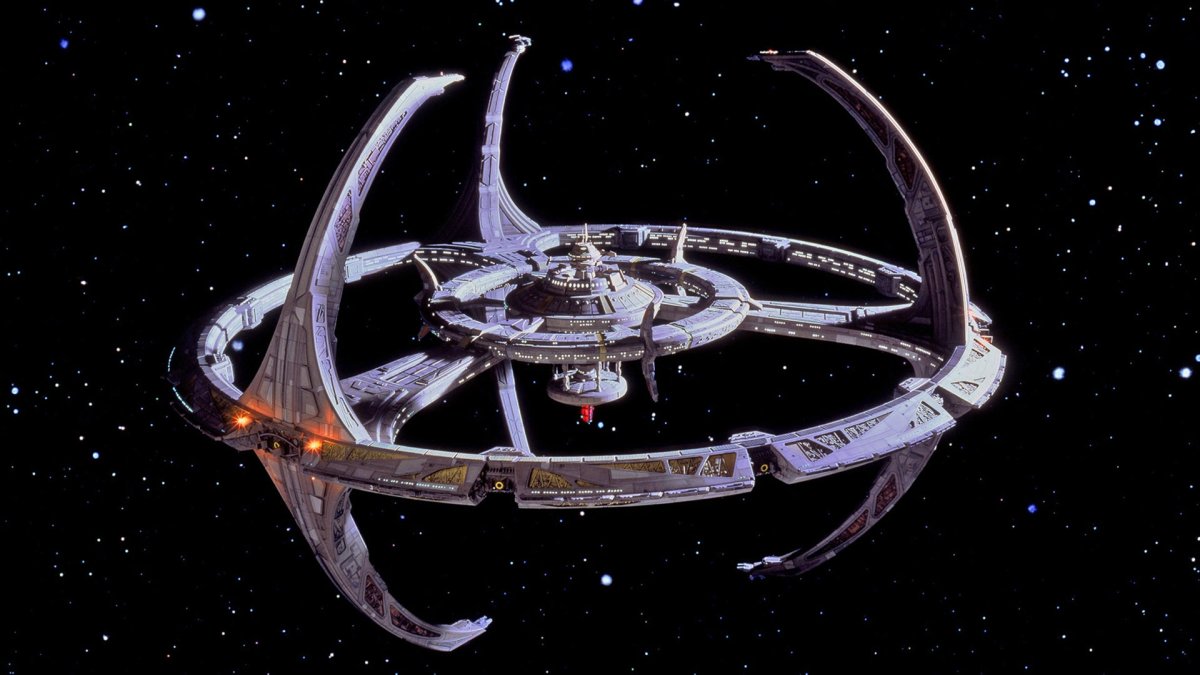
The show picks up after a long and ugly occupation of an allied planet by a militaristic alien race. The Federation is a fish out of water, trying to bring their high values to a war-torn planet and an alien space station located on edge of the Alpha Quadrant. What follows is a seven year saga, the last half of which was dominated by a brutal war in space that was awesomely depicted at a time when digital effects were still largely the realm of the silver screen.
DS9’s war with the Dominion brought CGI to a Star Trek television series like never before. , Screencap
It was if the writers had a crystal ball showing what was to come, and the acting was exceptionally strong. Bolstered by solid talent, DS9 featured some of the most complex characters to grace the small screen (Garak, Gul Dukat, or Quark anyone?). The show thrived when it explored the gray areas of morality, the burdens of command, and the stark realities of war in which the heroes don’t always come out on top.
Gul Dukot was one of the greatest villians to grace the small screen., Startrek.com
The show really is greater than the sum of its parts when watched as a whole, and there is a lot going on in every episode, but at least the episodes below that address topics related to war will get you hooked. The crazy thing is, these are more relevant today than they were 20 years ago.
The Siege of AR-558.
Nor The Battle To The Strong
It’s Only A Paper Moon
Homefront/Paradise Lost
Inter Arma Enim Silent Leges
Finally, two of the finest hours of television ever created and contenders for the best Star Trek episodes of all time, Duet (clip one) and In The Pale Moonlight (clip two):
Comments couldn’t be loaded. Please refresh the page.
更新于美国东部时间2020年7月2日下午3:15
本周是《星际迷航》开播50周年纪念日。你可能不会惊讶地发现,吉恩·罗登贝瑞的这部杰作对我的生活产生了巨大的影响。我看过每一分钟的剧集——大约600个小时——而且很多集都反复观看过很多遍。
虽然该系列作品以其对科学技术的巧妙运用、对社会问题的深刻反思以及对人性的探索而闻名,但其中也包含一些军事题材的内容。这不仅包括战术和战略,也包括战争带来的惨重的人员伤亡。
相位枪眩晕!,CBS
每一部《星际迷航》剧集,以及一些电影(《未知的国度》、《第一次接触》),都对战争和外交关系等主题有着精彩的诠释。初代《星际迷航》开创了这一先河(《末日之味》、《私人小战争》、《终极电脑》、《恐怖平衡》),而《下一代》则在此基础上,创作出了一些真正意义上的佳作,以极其深刻的方式探讨了这一主题(《伤兵》、《指挥链》、《达莫克》、《飞马座》、《高地》、《首要职责》)。就连《航海家号》在处理战争概念方面也有一些精彩的剧集(《地狱之年》、《天蝎座》)。但时至今日,我仍然对《深空九号》的成就——以及它取得这些成就的时机——感到无比敬佩。
该剧从1993年播到1999年,完结时距离9·11恐怖袭击以及随后国内外发生的巨变还有数年之久。然而,该剧却在恐怖主义、占领、酷刑、宗教迫害、指挥的沉重负担、职责、极端监控,甚至创伤后应激障碍(PTSD)等问题被推入美国民众的集体意识之前,就已探讨了这些问题。更令人惊叹的是,该剧跳出了9·11事件及其后战争的情绪框架,以更为客观的视角来探讨这些主题,从而提出了更为真实的评论,摆脱了仅仅模仿新闻标题的写作模式。
《深空九号》的船员们,YouTube 截图
《深空九号》之所以更胜一筹,在于它摒弃了《星际迷航》系列前两部剧集以程序为主的叙事风格,转而采用连续剧式的叙事手法。这使得角色塑造更加深入,也构建了一个宏大的剧情,讲述了星际舰队卷入一场惨烈的战争。有人称之为“更黑暗”的《星际迷航》,但实际上它只是更加写实,更贴近现实。剧中的核心价值观依然存在,但为了坚守这些价值观而进行的斗争,以及最终放弃这些价值观的原因,都更加清晰地展现了出来。
故事发生在盟军星球被好战的外星种族长期占领之后。联邦如同离水的鱼,试图将自身的高尚价值观带到这颗饱受战火蹂躏的星球以及位于阿尔法象限边缘的外星空间站。接下来是长达七年的传奇故事,后半段主要聚焦于一场残酷的太空战争,在数字特效仍主要局限于大银幕的年代,这场战争的画面呈现令人叹为观止。
《星际迷航:深空九号》与统治者的战争将电脑特效以前所未有的方式运用到了《星际迷航》电视剧中。(截图)
仿佛编剧们拥有预知未来的能力,演员们的表演也异常精湛。凭借着强大的演员阵容,《星际迷航:深空九号》塑造了一些小荧幕上最复杂的人物(比如加拉克、古尔·杜卡特,还有夸克)。该剧在探讨道德的灰色地带、指挥的重担以及战争的残酷现实时尤为精彩,在战争中,英雄并非总能取得最终胜利。
古尔·杜科特是小荧幕上最伟大的反派角色之一。——Startrek.com
这部剧整体来看确实远超各集之和,每一集的内容都非常丰富,但至少下面几集涉及战争主题的剧集会让你欲罢不能。更令人惊讶的是,这些主题在今天看来比20年前更具现实意义。
AR-558 围城战。
强者之战
这只是一轮纸月亮
家园防线/失乐园
Inter Arma Enim Silent Leges
最后,让我们欣赏两部堪称电视史上最精彩的剧集,也是《星际迷航》史上最佳剧集的有力竞争者:《二重奏》(片段一)和《苍白月光下》(片段二):
评论加载失败,请刷新页面。