Why NATO needs a new nuclear strategy为什么北约需要新的核战略
Opinion: A modern NATO nuclear strategy does not require reinventing the wheel, writes German defense analyst Karl-Heinz Kamp.
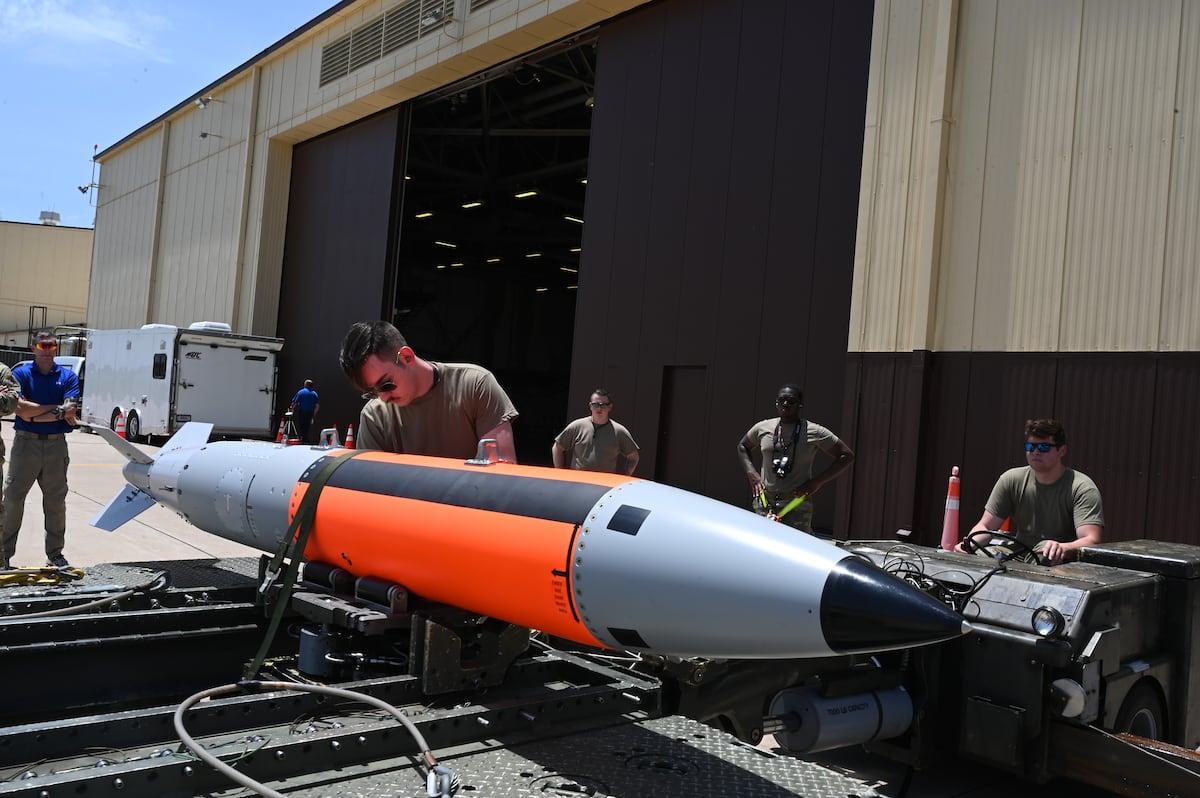
Whenever nuclear deterrence has been debated within NATO in recent years, two aspects have been the focus of attention, leaving out the most pressing issue connected to the alliance itself.
On the one hand, there is the question of whether Russia’s attack on Ukraine had fundamentally changed the threat situation and whether NATO’s nuclear arsenal – primarily American nuclear weapons in Europe – needed to be modernized or strengthened as a result.
Secondly, since Donald Trump took office as president, the question has arisen as to whether the United States can still be considered a reliable partner and what would happen if Washington were to withdraw its nuclear umbrella from its NATO allies.
A third question has largely been ignored so far: that of a credible and up-to-date nuclear strategy. This is a crucial question, because the effectiveness of nuclear deterrence is based not only on the weapons and delivery systems available, but also on the recognizable ability and willingness to use them in extreme cases.
This requires fundamental strategic decisions. What political and military principles should apply to the possible use of nuclear weapons by NATO? What targets would be eligible for such use? What procedures should there be for approving such an exceptional case within the alliance?
During the Cold War, NATO developed a detailed nuclear strategy over many years, which included political guidelines for the possible use of nuclear weapons as well as procedures for consultation among alliance partners and coordination of nuclear targeting.
With the end of the East-West conflict, all of this was abolished in the hope of having a lasting partner in Russia. As a result, NATO today lacks a nuclear strategic consensus on how to deal with an aggressive and revanchist Russia and how to strengthen the credibility of nuclear deterrence – not only with respect to the posture but also conceptually.
Fortunately, a modern NATO nuclear strategy does not require reinventing the wheel. Instead, the concepts and procedures of the Cold War form an important foundation that can be drawn upon. However, these must be adapted to the security policy realities of the 21st century.
Russia is no longer – as the Soviet Union once was – militarily superior to NATO and has also lost its former alliance system, the Warsaw Pact. This means that rapid, expansive military advances by Russia from east to west, with which the Soviet Union once sought to reach the Atlantic in a matter of weeks, are no longer to be expected, but rather limited actions in the Baltic states, for example.
Nonetheless, the use of Russian nuclear weapons on NATO territory cannot be ruled out. In a military conflict on NATO’s eastern borders, Russia could attempt to prevent both NATO troop movements from west to east and the landing of American reinforcements in Europe by attacking ports or transport hubs. Such attacks could also be carried out with nuclear weapons.
In such an extreme case, however, NATO’s response would not be nuclear warfare, as seemed conceivable during the Cold War. Instead, a nuclear escalation by NATO would primarily serve the political goal of demonstrating its willingness to defend itself against the attacker and persuading it to cease hostilities. However, this does not mean that nuclear weapons should be used purely symbolically, for example over uninhabited areas, as this could be misinterpreted as a lack of resolve.
Instead, the use of nuclear weapons must also cause damage to the attacker in order to be taken seriously as a warning. This means that nuclear targeting would focus primarily on Russian territory and probably on Belarus but no longer – as in the Cold War – on NATO terrain.
To achieve a broad consensus in NATO on the extreme case of a nuclear employment, the Cold War nuclear consultation regulations could be reactivated. Since there is no longer any fear of rapid, large-scale Russian operations from east to west, there should be sufficient time for such consultations. Although France is not represented in the NATO’s Nuclear Planning Group (NPG), it should be included in such discussions. However, the ultimate decision-making authority lies solely with the nuclear powers of NATO. Majority votes or vetoes by individual member states are still inconceivable.
Lastly, NATO must not only develop a new nuclear strategic consensus, but also regularly practice the relevant procedures, as was done until the end of the 1980s in the context of the so called WINTEX exercises. Similar political-strategic drill should be re-introduced.
All of this must be communicated openly as far as possible, not only to send a signal of determination to Russia, but also to gain public approval for the concept of nuclear deterrence, which is not easy to communicate politically.
Karl-Heinz Kamp is an associate fellow at the German Council on Foreign Relations and was president of the Federal Academy for Security Policy.
近年来,每当北约内部讨论核威慑问题时,关注的焦点总是集中在两个方面,而忽略了与联盟本身相关的最紧迫的问题。
一方面,存在这样的问题:俄罗斯对乌克兰的攻击是否从根本上改变了威胁形势,以及北约的核武库(主要是美国在欧洲的核武器)是否因此需要进行现代化改造或加强。
其次,自从唐纳德·特朗普就任总统以来,人们开始质疑美国是否还能被视为可靠的伙伴,以及如果华盛顿撤回对北约盟国的核保护伞将会发生什么。
第三个问题迄今为止基本上被忽视了:即制定可信且与时俱进的核战略。这是一个至关重要的问题,因为核威慑的有效性不仅取决于现有的武器和运载系统,还取决于在极端情况下使用这些武器和系统的明确能力和意愿。
这需要做出根本性的战略决策。北约在可能使用核武器的情况下,应遵循哪些政治和军事原则?哪些目标符合使用核武器的条件?联盟内部应采取哪些程序来批准这种特殊情况?
冷战期间,北约经过多年努力制定了详细的核战略,其中包括核武器可能使用的政治指导方针,以及联盟伙伴之间进行磋商和协调核打击目标的程序。
随着东西方冲突的结束,为了与俄罗斯建立长期伙伴关系,北约放弃了所有这些努力。结果,如今北约在如何应对咄咄逼人且奉行复仇主义的俄罗斯,以及如何增强核威慑的可信度(不仅体现在态势上,也体现在概念上)方面,缺乏核战略共识。
幸运的是,现代北约核战略无需从头开始。相反,冷战时期的概念和程序构成了一个重要的基础,可以加以借鉴。然而,这些概念和程序必须根据21世纪的安全政策现实进行调整。
俄罗斯已不再像苏联时期那样在军事上优于北约,并且失去了其原有的联盟体系——华沙条约组织。这意味着,俄罗斯不再像苏联时期那样,试图在几周内从东向西迅速扩张,抵达大西洋沿岸,取而代之的是,例如在波罗的海国家开展一些有限的军事行动。
然而,不能排除俄罗斯在北约领土上使用核武器的可能性。在北约东部边界发生的军事冲突中,俄罗斯可能通过攻击港口或交通枢纽,阻止北约部队从西向东调动以及美国增援部队在欧洲登陆。此类攻击也可能使用核武器。
然而,在这种极端情况下,北约的回应不会像冷战时期人们所设想的那样诉诸核战争。相反,北约的核升级行动主要服务于政治目的,即展现其抵御攻击者的意愿,并劝说其停止敌对行动。但这并不意味着应该纯粹象征性地使用核武器,例如在无人居住的地区进行核打击,因为这可能会被误解为缺乏决心。
相反,核武器的使用必须同时对攻击者造成损害,才能被视为一种有效的警告。这意味着核打击的目标将主要集中在俄罗斯领土,可能也会包括白俄罗斯,但不再像冷战时期那样瞄准北约领土。
为了在北约内部就使用核武器的极端情况达成广泛共识,可以重新启用冷战时期的核磋商条例。鉴于目前已不存在俄罗斯从东向西迅速发动大规模军事行动的担忧,因此应该有足够的时间进行此类磋商。尽管法国没有在北约核计划小组(NPG)中占有一席之地,但仍应将其纳入此类讨论。然而,最终的决策权完全掌握在北约核大国手中。单个成员国的多数投票或否决权仍然是不可想象的。
最后,北约不仅必须制定新的核战略共识,还必须定期演练相关程序,就像上世纪80年代末在所谓的“温特克斯”(WINTEX)演习中所做的那样。类似的政治战略演练应该重新引入。
所有这些都必须尽可能公开地传达出去,这不仅是为了向俄罗斯发出决心的信号,也是为了获得公众对核威慑概念的认可,而核威慑概念在政治上并不容易传达。
卡尔-海因茨·坎普是德国外交关系委员会的副研究员,曾任联邦安全政策学院院长。