10 years after workplace blast in Singapore, former migrant worker expands school he built in Bangladesh新加坡工作场所爆炸案发生十年后,一名曾在孟加拉国工作的移民工人扩建了他建造的学校。
After suffering severe burns in the blast, Mohammad Ataur Rahman used part of his compensation to build a school he is now expanding.
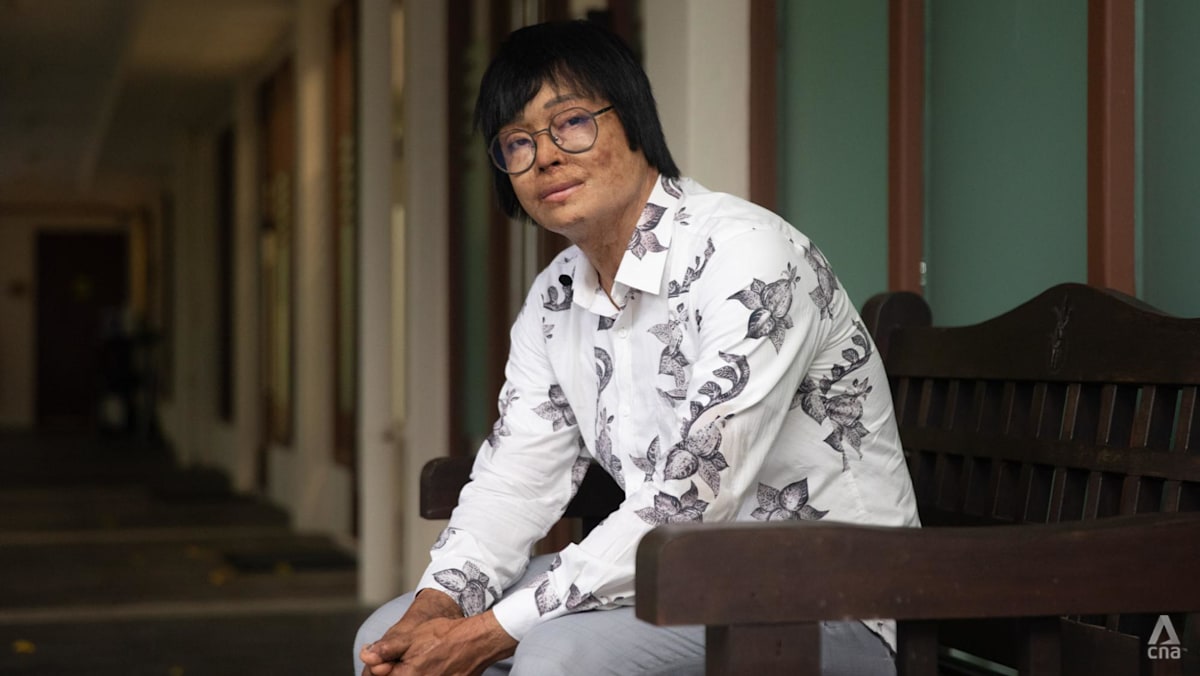
After suffering severe burns in the blast, Mohammad Ataur Rahman used part of his compensation to build a school he is now expanding.
Mohammad Ataur Rahman pictured near Botanic Gardens on Sep 11, 2026. (Photo: CNA/Mak Jia Kee)
This audio is generated by an AI tool.
SINGAPORE: Ten years ago, a workplace explosion in Singapore left Mohammad Ataur Rahman with third-degree burns to 73 per cent of his body and loss of hearing in one ear.
“I was afraid that (it) was my last day and I was not able to survive,” he recalled.
Today, the 31-year-old runs his own school in his hometown in rural Bangladesh and has recently moved its students into a bigger building with capacity for around 400 children.
Part of the compensation Mr Rahman received after the accident helped turn that ambition into reality.
Around S$30,000 (US$23,600) went towards setting up Al-Shohag Kindergarten, while another S$30,000 was used to buy the land on which its new building stands.
Speaking to CNA while back in Singapore for an education symposium, Mr Rahman said he hopes the expanded school will give children in his community the opportunity to continue their education - something he was unable to do.
“I don’t want anybody to leave school like myself,” he said. “I want to make sure that they are continuing (their) education.”
CNA Games Guess Word Crack the word, one row at a time Buzzword Create words using the given letters Mini Sudoku Tiny puzzle, mighty brain teaser Mini Crossword Small grid, big challenge Word Search Spot as many words as you can Show More Show Less
Mohammad Ataur Rahman speaking to CNA on Sep 11, 2026. (Photo: CNA/Mak Jia Kee)
Mr Rahman first came to Singapore in 2015, after spending about S$16,000 on fees to secure work at a landscaping company.
In July 2016, then 21, he was instructed to clean an underground water tank near Sungei Tengah after a day of pruning trees.
Mr Rahman said he initially refused, but relented after his supervisor threatened to report him to his boss, who could send him home.
At the time, he was in debt and earning a basic monthly salary of S$540.
“I was afraid,” Mr Rahman said. “However hard the work is, even if I wanted to rest, I could not, because I had to keep the job.”
When he switched on a light in the tank, an explosion ripped through it. He spent three months in a coma and six months in hospital undergoing treatment, including skin grafts and reconstructive procedures.
The Ministry of Manpower (MOM) found that his employer had not conducted a risk assessment or put in place safe work procedures for cleaning the tank. Workers were also not adequately trained or informed about the risks of working in a confined space.
The company was fined S$220,000 in 2019 , while Mr Rahman later received more than S$137,000 in work injury compensation.
Mohammad Ataur Rahman, before the accident, posing for a picture in the Marina Bay area, Singapore. (Photo: Mohammad Ataur Rahman)
When Mr Rahman was around 10 or 11 years old, he had to stop studying after completing primary school as his parents could not afford to send him for further education.
“I wanted to continue my education. I cried for a few days,” he recalled. “I had a hunger to learn.”
Mr Rahman began working on farms on lands his parents rented, growing rice, onions and other vegetables to help support his family.
This is "a common thing”, he said. In his village in Pabna, around 150km from Dhaka, many children leave school early to support their families.
When he later decided to start a school of his own, Mr Rahman looked to Singapore for ideas. So he visited a few kindergartens in Singapore, one of which was managed by the wife of Mr Yee Jenn Jong, whom Mr Rahman met in 2019.
“He had the ambition to start a school in Bangladesh and he wanted to understand how Singapore schools are run,” the former Non-Constituency Member of Parliament told CNA.
Yee Jenn Jong (left) and Mohammad Ataur Rahman pictured near Botanic Gardens on Sep 11, 2026. (Photo: CNA/Mak Jia Kee)
Mr Rahman subsequently began setting up Al-Shohag, which opened in 2020 with two years of kindergarten followed by five years of primary education. The school had around 200 students each year, with 20 to 30 graduating every year.
In 2023, Mr Yee and his wife visited Al-Shohag, which means “God’s love” in Bengali, and described the experience as “eye-opening”.
“We used English to talk to them, and the students could reply us back in English,” he said, adding that he had more difficulty communicating in English with students at a nearby government-run school.
Beyond academic subjects, Al-Shohag also incorporates “vocational and practical learning”, according to its principal, Mr Munshi Shajahan.
Students take part in activities such as growing vegetables, planting trees and raising poultry, while lessons also cover areas such as garden cultivation and drainage systems, he said.
Al-Shohag Kindergarten on its original premises. (Photo: Mohammad Ataur Rahman)
For about five years, Al-Shohag continued operating from what Mr Rahman described as a zinc-roof "hut", which eventually became too small for its roughly 200 students.
“The zinc shed became very hot during the summer time and the students sweat like (they’ve) showered,” he said.
Teaching children how to use computers was also a challenge as Mr Rahman had to bring groups of students to his home so that they could use computers there.
“I cannot put computers there because (there is) nobody there to look after,” Mr Rahman said, adding that it would be easy for people to enter the school and steal them.
Mohammad Ataur Rahman and students of Al-Shohag Kindergarten. (Photo: Mohammad Ataur Rahman)
A BIGGER HOME FOR AL-SHOHAG
But keeping the school running soon became a challenge. At one point, he began running short of money to keep it operating and considered returning to Singapore to work in order to fund it.
Mr Yee instead offered to help raise money for the school from people in Singapore.
“I said, ‘No, I think let me see how I can help you to organise some more active donations so that you can support the gap in the operations,’” he recalled.
Mr Yee subsequently became one of the key organisers of fundraising efforts, reaching out to friends and other groups for support.
By 2023, as Mr Rahman began making plans to replace the original school with a permanent building with better facilities, the fundraising effort expanded to help finance its construction.
Construction of the new Al-Shohag Kindergarten. (Photo: Mohammad Ataur Rahman)
Much of the S$150,000 building cost was raised from donors in Singapore.
One source of support came from a memorial fund set up by former classmates of the late Dr Matthias Quake, a dentist who befriended Mr Rahman after the accident.
The network of supporters also connected Mr Rahman with Singapore construction company Woh Hup, which Mr Yee said contributed around half of the building cost.
Many also donated used computers and books to the school.
Still, Mr Rahman sought to stretch the money raised.
Al-Shohag Kindergarten at the new location. (Photo: Mohammad Ataur Rahman)
Construction companies quoted higher prices because of the village's distance from Dhaka.
To save costs, Mr Rahman bought the raw materials himself, hired workers and supervised the construction.
Students moved into the new three-storey building in January, although work on the school is not yet complete.
The Give Collective, a local fundraising platform, launched a campaign for Al-Shohag this month.
Ms Mindy Kaur Dhaliwal, a partnerships executive, said the campaign aims to raise S$30,000 to complete the remaining 5 per cent of work at the school. This includes furniture, library resources, fencing and solar panels.
Around 250 students attend Al-Shohag today. Parents are asked to pay about S$3 a month, but Mr Rahman said many families cannot afford even that.
Some pay less, while children whose families cannot pay are allowed to attend anyway.
“My school is not for free. As much as you can, just pay,” Mr Rahman said.
Students attending class at the new Al-Shohag Kindergarten. (Photo: Mohammad Ataur Rahman)
Al-Shohag Kindergarten students during a school trip. (Photo: Mohammad Ataur Rahman)
Students doing their daily exercises during morning assembly at the new Al-Shohag Kindergarten. (Photo: Mohammad Ataur Rahman)
Now, Mr Rahman has to find a way to keep the school running.
Donations cover about 80 per cent of the school’s operating costs, while Mr Yee estimated that it faces a shortfall of about S$1,000 each month.
“How long can we ask people to donate to us?” Mr Rahman said. “If I start to charge higher to (students), they may not come.”
“I need a sustainable model so that our school can run,” he added.
One possibility Mr Rahman is exploring is using part of the school premises to train Bangladeshis hoping to work in Singapore , with income from the venture helping to fund Al-Shohag’s day-to-day operations.
The idea draws heavily on his own experience.
Before coming to Singapore, he underwent three months of training in Bangladesh and obtained a construction-related certificate. But after arriving here, he ended up working in landscaping instead.
“Now, I can see lots of gaps in how they train us,” he said. “They should not train us that way, they should do something more and not just look for a certificate.”
Students at the new Al-Shohag Kindergarten. (Photo: Mohammad Ataur Rahman)
Mr Rahman said prospective workers could be taught English, workplace safety and basic job skills before coming to Singapore.
He also hopes prospective workers could eventually be matched directly with employers in Singapore, reducing their reliance on layers of middlemen and the high fees workers like him paid to get here.
“I’m hoping it will bring jobs to our community,” Mr Rahman said, adding that these workers could in turn better support their families.
He currently lives with his wife and two children on the school's third floor, part of which could eventually be used for training. There is also space on the school grounds for a shed workshop.
For now, the plan remains at an exploratory stage. Mr Rahman has yet to secure a recruitment partner in Singapore or approach MOM about it.
Mohammad Ataur Rahman with students of Al-Shohag Kindergarten. (Photo: Mohammad Ataur Rahman)
Beyond keeping the school financially sustainable, Mr Rahman has bigger ambitions for its students.
One of them went on to attend a top secondary school in the area and received a government scholarship.
“Her English is much better than mine,” Mr Rahman joked.
His dream is to eventually have 1,000 students and to see them go further in education than he was able to.
“Maybe not in 10 years, but in future, I want to see my students study in top universities in the world,” he said.
An automated curation of our top stories to start your day.
Get our pick of top stories and thought-provoking articles in your inbox
Stay updated with notifications for breaking news and our best stories
Join our channel for the top reads for the day on your preferred chat app
穆罕默德·阿陶尔·拉赫曼在爆炸中严重烧伤,他用部分赔偿金建造了一所学校,现在他正在扩建这所学校。
2026年9月11日,穆罕默德·阿陶尔·拉赫曼在植物园附近被拍到。(图片:CNA/麦嘉琪)
这段音频由人工智能工具生成。
新加坡:十年前,新加坡的一起工作场所爆炸事故导致穆罕默德·阿陶尔·拉赫曼全身 73% 的皮肤被三度烧伤,一只耳朵失聪。
他回忆说:“我当时害怕那是我生命的最后一天,我活不下去了。”
如今,这位 31 岁的男子在孟加拉国农村的家乡经营着自己的学校,最近他将学生搬到了一栋更大的教学楼里,可容纳约 400 名儿童。
拉赫曼先生在事故后获得的部分赔偿金帮助他将这个梦想变成了现实。
约有 30,000 新元(23,600 美元)用于建立 Al-Shohag 幼儿园,另有 30,000 新元用于购买其新校舍所在的土地。
拉赫曼先生在新加坡参加教育研讨会期间接受亚洲新闻台采访时表示,他希望扩建后的学校能够让他所在社区的孩子们有机会继续接受教育——这是他自己未能做到的。
“我不希望任何人像我一样辍学,”他说。“我希望确保他们能够继续接受教育。”
CNA游戏 猜词游戏 逐行破解单词 流行词游戏 用给定的字母组成单词 迷你数独 小小谜题,挑战你的大脑 迷你填字游戏 小方格,大挑战 单词搜索 尽可能多地找出单词 显示更多 显示更少
穆罕默德·阿陶尔·拉赫曼于2026年9月11日接受亚洲新闻台采访。(图片:亚洲新闻台/麦嘉琪)
拉赫曼先生于 2015 年首次来到新加坡,当时他花费了约 16,000 新元的费用,才在一家园林绿化公司找到一份工作。
2016 年 7 月,当时 21 岁的他,在修剪了一天的树木后,被派去清理双溪登加附近的一个地下水箱。
拉赫曼先生说他一开始拒绝了,但在他的主管威胁要向上级汇报,而上级可能会把他遣送回家后,他才妥协了。
当时他负债累累,每月基本工资只有 540 新元。
拉赫曼先生说:“我很害怕。无论工作多么辛苦,即使我想休息,也休息不了,因为我必须保住这份工作。”
当他打开油箱里的灯时,油箱突然爆炸。他昏迷了三个月,之后在医院接受了六个月的治疗,包括植皮和重建手术。
人力部调查发现,他的雇主没有进行风险评估,也没有制定清洗储罐的安全作业程序。此外,工人们也没有接受过充分的培训,也没有被告知在密闭空间作业的风险。
该公司在 2019 年被罚款 22 万新元,而拉赫曼先生后来获得了超过 13.7 万新元的工伤赔偿。
事故发生前,穆罕默德·阿陶尔·拉赫曼在新加坡滨海湾地区拍照留念。(照片:穆罕默德·阿陶尔·拉赫曼)
拉赫曼先生大约 10 岁或 11 岁时,小学毕业后就不得不辍学,因为他的父母无力供他继续接受教育。
“我想继续接受教育。我为此哭了几天,”他回忆道。“我渴望学习。”
拉赫曼先生开始在他父母租来的农场里工作,种植水稻、洋葱和其他蔬菜,以帮助养家糊口。
他说,这“很常见”。在他位于巴布纳的村庄(距离达卡约150公里),许多孩子早早辍学,补贴家用。
后来,当拉赫曼先生决定创办自己的学校时,他向新加坡寻求灵感。于是,他参观了新加坡的几所幼儿园,其中一所是由余振钟先生的妻子经营的,拉赫曼先生于2019年结识了余振钟先生。
“他有志在孟加拉国创办一所学校,并且想了解新加坡的学校是如何运作的,”这位前非选区议员告诉亚洲新闻台。
2026年9月11日,余振钟(左)和穆罕默德·阿陶尔·拉赫曼在植物园附近合影。(图片:CNA/麦嘉琪)
随后,拉赫曼先生开始筹建阿尔-肖哈格学校,该校于2020年开学,设有两年的幼儿园和五年的小学。学校每年招收约200名学生,每年有20至30名毕业生。
2023年,叶先生和他的妻子参观了Al-Shohag(在孟加拉语中意为“上帝的爱”),并将这次经历描述为“令人大开眼界”。
“我们用英语和他们交流,学生们也能用英语回答我们,”他说,并补充说,他在与附近一所公立学校的学生用英语交流时遇到了更多困难。
据校长 Munshi Shajahan 先生介绍,除了学术科目外,Al-Shohag 还融入了“职业和实践学习”。
他说,学生们会参与种植蔬菜、植树和饲养家禽等活动,课程内容也涵盖花园栽培和排水系统等领域。
Al-Shohag 幼儿园在其原址。(照片:Mohammad Ataur Rahman)
大约五年时间里,Al-Shohag 一直在 Rahman 先生所描述的锌皮屋顶“小屋”里运营,但最终这个小屋对于大约 200 名学生来说太小了。
他说:“夏天的时候,锌皮棚里非常热,学生们汗流浃背,就像刚洗完澡一样。”
教孩子们如何使用电脑也是一项挑战,因为拉赫曼先生不得不把学生们带到他家,让他们在那里使用电脑。
拉赫曼先生说:“我不能把电脑放在那里,因为那里没有人看管。”他还补充说,人们很容易进入学校偷走电脑。
Mohammad Ataur Rahman 和 Al-Shohag 幼儿园的学生。 (照片:穆罕默德·阿陶尔·拉赫曼)
为阿尔-肖哈格建造更大的房子
但维持学校运转很快就成了难题。有一段时间,他甚至面临资金短缺,不得不考虑回新加坡工作以维持学校运营。
余先生则提出帮助学校在新加坡筹集资金。
“我说,‘不,我想我可以看看如何帮助你组织一些更积极的捐款,以便你能弥补运营中的缺口,’”他回忆道。
随后,余先生成为筹款活动的主要组织者之一,他联系朋友和其他团体寻求支持。
到 2023 年,当拉赫曼先生开始计划用一座设施更好的永久建筑取代原先的学校时,筹款活动扩大了规模,以帮助资助其建设。
新建的阿尔-肖哈格幼儿园正在建设中。(摄影:穆罕默德·阿陶尔·拉赫曼)
这座耗资 15 万新元的建筑的大部分资金来自新加坡的捐助者。
其中一项支持来自已故牙医马蒂亚斯·奎克博士的前同学设立的纪念基金。奎克博士在事故发生后与拉赫曼先生结下了友谊。
支持者网络还将拉赫曼先生与新加坡建筑公司和合集团联系起来,叶先生表示,和合集团贡献了大约一半的建筑成本。
许多人还向学校捐赠了二手电脑和书籍。
尽管如此,拉赫曼先生还是想方设法让筹集到的资金发挥最大的作用。
Al-Shohag幼儿园迁至新址。(摄影:Mohammad Ataur Rahman)
由于该村距离达卡较远,建筑公司给出的报价较高。
为了节省成本,拉赫曼先生自己购买原材料,雇佣工人并监督施工。
学生们于一月份搬进了新建的三层教学楼,尽管学校的建设工作尚未完全完成。
本月,当地筹款平台 Give Collective 为 Al-Shohag 发起了一项筹款活动。
合作关系主管明迪·考尔·达利瓦尔女士表示,此次筹款活动旨在筹集3万新元,用于完成学校剩余的5%工程。这些工程包括购置家具、图书馆资源、围栏和太阳能电池板。
目前,约有250名学生就读于Al-Shohag学校。学校要求家长每月支付约3新元的费用,但拉赫曼先生表示,许多家庭甚至连这笔钱都负担不起。
有些孩子支付的费用较少,而家境贫寒的孩子也被允许入学。
拉赫曼先生说:“我的学校不是免费的。你能付多少就付多少。”
学生们正在新建的阿尔绍哈格幼儿园上课。(摄影:穆罕默德·阿陶尔·拉赫曼)
Al-Shohag 幼儿园的学生在一次学校旅行中。 (照片:穆罕默德·阿陶尔·拉赫曼)
在新建的阿尔绍哈格幼儿园,学生们正在晨会期间进行日常锻炼。(摄影:穆罕默德·阿陶尔·拉赫曼)
现在,拉赫曼先生必须想办法维持学校的正常运转。
捐款可以覆盖学校约 80% 的运营成本,而 Yee 先生估计,学校每月面临约 1000 新元的资金缺口。
拉赫曼先生说:“我们还能要求人们捐款多久呢?如果我开始提高(学生)的捐款额,他们可能就不会来了。”
“我需要一个可持续的模式,这样我们的学校才能正常运转,”他补充道。
拉赫曼先生正在探索的一种可能性是利用学校的一部分场地来培训希望在新加坡工作的孟加拉国人,该项目的收入将用于资助 Al-Shohag 的日常运营。
这个想法很大程度上源于他自己的经历。
来新加坡之前,他在孟加拉国接受了三个月的培训,并获得了建筑相关的证书。但来到这里之后,他最终却从事了园林绿化工作。
“现在,我发现他们的培训方式存在很多不足,”他说。“他们不应该那样培训我们,应该做更多的事情,而不仅仅是追求一张证书。”
新 Al-Shohag 幼儿园的学生。 (照片:穆罕默德·阿陶尔·拉赫曼)
拉赫曼先生表示,未来的工人可以在来新加坡之前接受英语、工作场所安全和基本工作技能方面的培训。
他还希望,未来的务工人员最终能够直接与新加坡的雇主进行匹配,从而减少他们对多层中间商的依赖,以及像他这样的务工人员为了来到这里而支付的高额费用。
拉赫曼先生说:“我希望这能为我们的社区带来就业机会。”他还补充说,这些工人反过来可以更好地养家糊口。
他目前与妻子和两个孩子住在学校三楼,其中一部分将来可以用作培训场所。学校操场上还有空间可以建一个简易的工棚。
目前,该计划仍处于探索阶段。拉赫曼先生尚未在新加坡找到招聘合作伙伴,也未就此事与人力部接洽。
穆罕默德·阿陶尔·拉赫曼 (Mohammad Ataur Rahman) 和 Al-Shohag 幼儿园的学生。 (照片:穆罕默德·阿陶尔·拉赫曼)
除了保持学校的财务可持续性之外,拉赫曼先生对学生们还有更大的期望。
其中一人后来考入了当地一所顶尖中学,并获得了政府奖学金。
拉赫曼先生开玩笑说:“她的英语比我好得多。”
他的梦想是最终能招收 1000 名学生,并看到他们在教育方面取得比他更高的成就。
“也许10年后还不行,但将来,我希望看到我的学生能在世界顶尖大学学习,”他说。
每天清晨,我们都会自动为您推送最热门的新闻资讯,助您开启美好的一天。
订阅我们的邮件,即可获取精选热点新闻和引人深思的文章。
订阅通知,第一时间获取突发新闻和精彩报道。
加入我们的频道,即可在您常用的聊天应用上获取当日热门文章。