Pentagon pushes to partake in EU military mobility planning五角大楼力促参与欧盟军事机动规划
The request aims to test if the United States can play in the European Union's PESCO framework of defense cooperation projects.
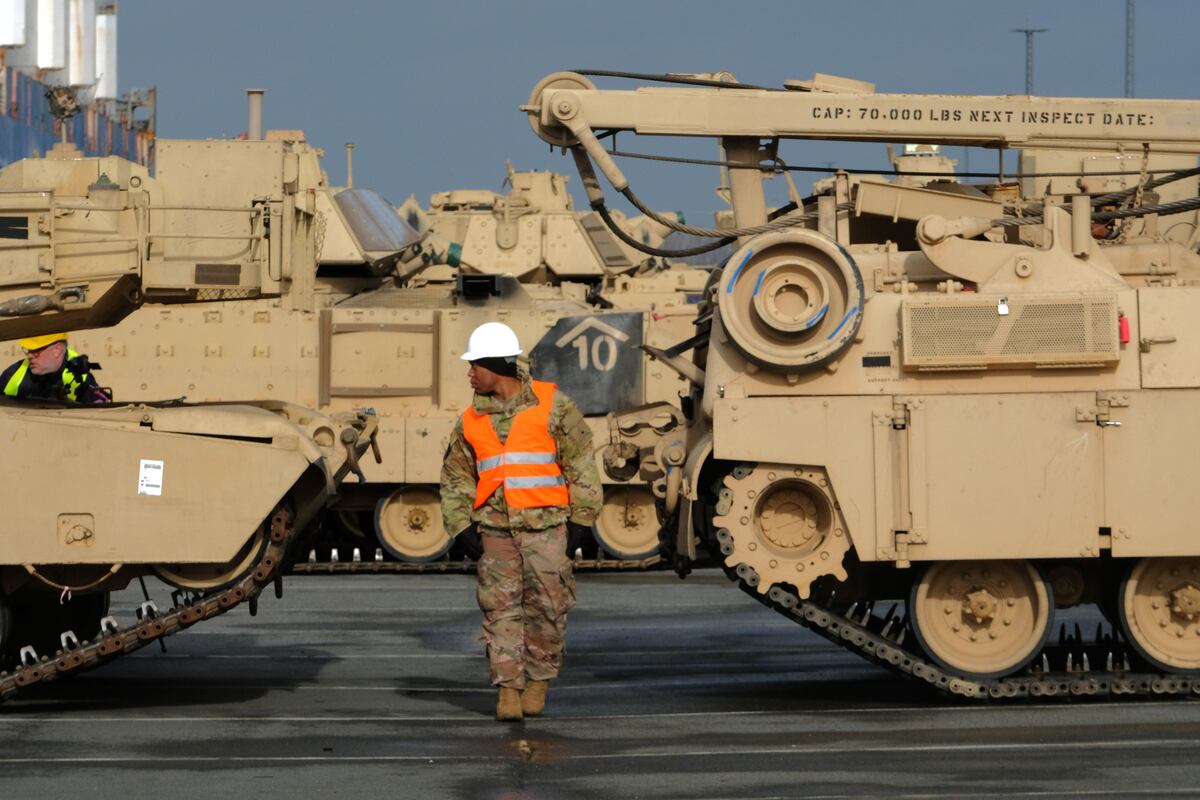
COLOGNE, Germany – U.S. defense officials want to be admitted to an internal European Union project aimed at easing the flow of military forces across the continent.
The request aims to cement an American role in tackling a key problem here, which officials from both sides of the Atlantic have traditionally worked through NATO: cutting through the red tape of cross-border logistics and putting in place transportation infrastructure capable of shipping a sizable fighting force to points east.
It also represents an initial test of whether Washington can play a role in the EU’s Permanent Structured Cooperation (PESCO) process, designed to improve defense cooperation among its members.
Led by the Netherlands, the Military Mobility PESCO project aims to “simplify and standardize cross-border military transport procedures,” according to a description on the European Commission website. “This entails avoiding long bureaucratic procedures to move through or over EU member states, be it via rail, road, air or sea.”
The U.S. request to join the project “not only aligns with ongoing and complementary work at NATO but is a critical step to identify how the United States and the EU can work together in other PESCO projects and to inform possible U.S.-EU cooperation under other EU defense initiatives,” Pentagon spokeswoman Jessica Maxwell told Defense News.
“The United States welcomes swift EU approval for U.S. participation in Military Mobility in line with EU and member state commitments that EU defense initiatives are open to the United States,” she added.
Pentagon officials consider Military Mobility participation as something of a bellwether because all 25 EU members signed up for PESCO are represented in the effort.
Officials from both sides of the Atlantic were at odds during the Trump administration about the degree to which the U.S. government and its defense contractors should be allowed to play in the PESCO framework. Germany helped broker a deal last fall that allows so-called “third-country” participants, such as the United States and the United Kingdom, to partake when there is political common ground to be found and no acquisition money is at stake.
Those access rules appear to sit well with the new defense leadership under U.S. President Joe Biden, whose top officials have rushed to repair U.S.-European relations strained by Trump-era acrimony.
“The United States maintains regular dialogue and consultations with the EU to further shared security objectives,” the Pentagon spokeswoman told Defense News in an email. “The third-state guidelines for PESCO projects allow the United States to deepen this relationship and support the trans-Atlantic commitments outlined in the 2016 and 2018 Joint NATO-EU Declarations.”
American troops stationed in Europe have traditionally made up a large chunk of the military mobility calculus here, as allies scramble to field a collective deterrent vis-a-vis Russia. There has been a fresh focus on the topic recently, with planners trying to achieve greater agility to make up for a potential loss in U.S. military muscle if American forces are urgently needed in the Indo-Pacific.
Sebastian Sprenger is associate editor for Europe at Defense News, reporting on the state of the defense market in the region, and on U.S.-Europe cooperation and multi-national investments in defense and global security. Previously he served as managing editor for Defense News. He is based in Cologne, Germany.
德国科隆——美国国防官员希望加入欧盟内部一项旨在促进欧洲大陆军事力量流动的项目。
该请求旨在巩固美国在解决一个关键问题上的作用,而大西洋两岸的官员历来都是通过北约来解决这个问题:简化跨境物流的繁文缛节,并建立能够将相当规模的作战部队运送到东方的运输基础设施。
这也初步检验了华盛顿能否在欧盟的永久结构性合作(PESCO)进程中发挥作用,该进程旨在改善成员国之间的防务合作。
根据欧盟委员会网站上的描述,由荷兰牵头的“军事机动性永久性结构化合作”(Military Mobility PESCO)项目旨在“简化和规范跨境军事运输程序”。“这意味着无论通过铁路、公路、航空还是海运,都能避免在欧盟成员国境内或通过欧盟成员国进行运输时冗长的官僚程序。”
五角大楼发言人杰西卡·麦克斯韦尔告诉《防务新闻》:“美国加入该项目的请求不仅与北约正在进行的互补性工作相一致,而且是确定美国和欧盟如何在其他PESCO项目中合作以及为美欧在其他欧盟防务倡议下可能的合作提供信息的关键一步。”
她补充说:“美国欢迎欧盟迅速批准美国参与军事机动计划,这符合欧盟及其成员国的承诺,即欧盟的防务倡议对美国开放。”
五角大楼官员认为军事机动性行动的参与具有一定的风向标意义,因为所有 25 个签署了永久结构性合作协议的欧盟成员国都参与了这项行动。
在特朗普执政期间,大西洋两岸的官员就美国政府及其国防承包商在PESCO框架下的参与程度存在分歧。去年秋天,德国斡旋达成一项协议,允许所谓的“第三国”参与者(例如美国和英国)在找到政治共识且不涉及采购资金的情况下参与其中。
这些准入规则似乎很符合美国总统乔·拜登领导下的新国防领导层的意愿,其高级官员已着手修复因特朗普时代的激烈争吵而紧张的美欧关系。
五角大楼发言人在一封发给《防务新闻》的电子邮件中表示:“美国与欧盟保持定期对话和磋商,以推进共同的安全目标。PESCO项目的第三方国家指导方针使美国能够深化这种关系,并支持2016年和2018年北约-欧盟联合声明中概述的跨大西洋承诺。”
驻欧美军历来是盟国在应对俄罗斯的军事机动性考量中占据重要地位的因素,因为盟国都在努力构建针对俄罗斯的集体威慑力量。近期,这一问题再次受到关注,规划人员试图提高军事机动性,以弥补美军在印太地区紧急部署时可能出现的兵力损失。
塞巴斯蒂安·斯普伦格是《防务新闻》欧洲版副主编,负责报道该地区的防务市场状况,以及美欧在防务和全球安全领域的合作和多国投资。此前,他曾担任《防务新闻》执行主编。他现居德国科隆。