How sport science is helping Singapore’s elite athletes gain a competitive edge运动科学如何帮助新加坡精英运动员获得竞争优势
The aim is to use data alongside the observations of athletes and coaches, helping them make more informed decisions about training and competition.
新闻视频
The aim is to use data alongside the observations of athletes and coaches, helping them make more informed decisions about training and competition.
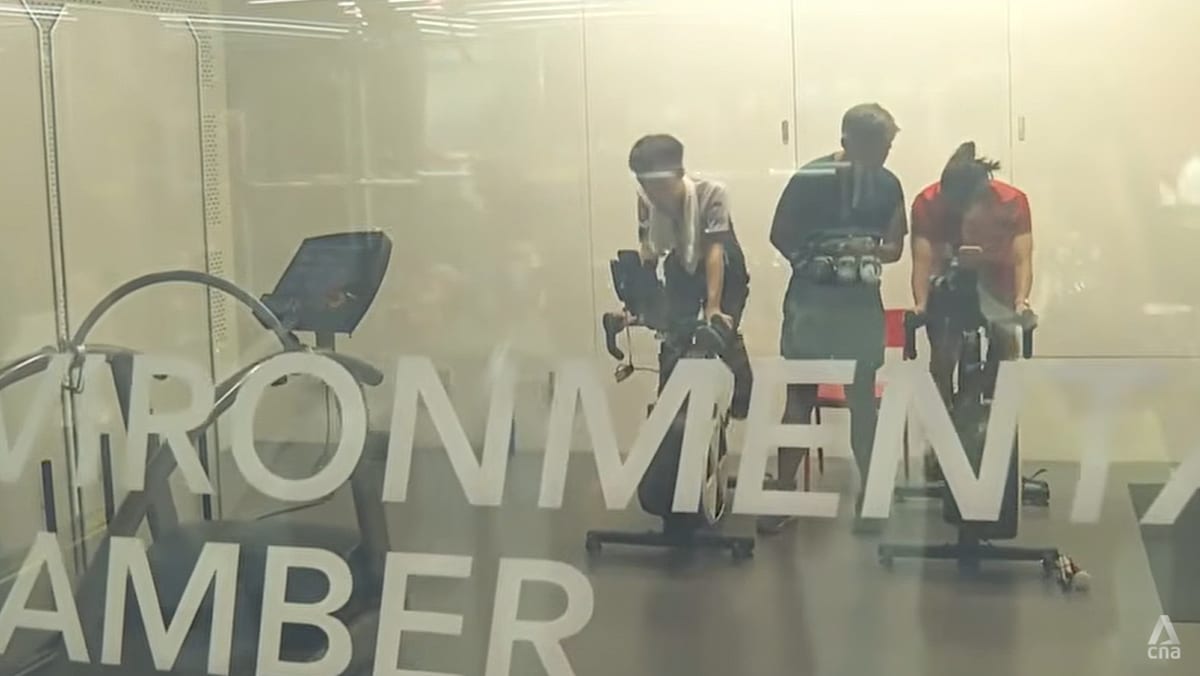
Athletes can prepare for different competition environments in a chamber that simulates conditions such as temperature, humidity and altitude. (Image: CNA)
This audio is generated by an AI tool.
SINGAPORE: Singapore’s elite athletes are increasingly tapping sport science and technology to uncover small performance gains that may not be visible to the naked eye. With the Asian Games starting on Saturday (Sep 19), such marginal improvements could prove crucial as athletes seek an edge over their competitors on one of the region’s biggest sporting stages. Sport Singapore’s (SportSG) High Performance Sport Institute draws on areas including physiology, strength and conditioning, psychology and performance analysis to identify where individual athletes can improve. The aim is to use data alongside the observations of athletes and coaches, helping them make more informed decisions about training and competition. “If a quick 1 to 2 per cent of anything can make a difference, you probably get an advantage,” said Dr Low Chee Yong, head of sport science and sport medicine at the institute. “At the highest level, even the 1 or 2 per cent can lose a chance of silver or gold." But he stressed that collecting data alone is not enough. The findings ultimately have to translate into meaningful changes in an athlete’s training. “If everyone is unique, not one set of instructions can work for everyone,” said Dr Low. “But with our data, now the coach is able to fine tune the instruction and help the athlete get the improvement they need.”
MEASURING WHAT THE EYE MISSES
Physiology tests measure indicators such as heart rate, oxygen use and power output as exercise intensity increases, giving coaches a clearer picture of how an athlete’s body responds to different demands. The data can help coaches determine appropriate training loads, monitor an athlete’s physical condition and track how efficiently they are using energy. Movement tests can similarly pick up subtle differences that may be difficult for coaches to spot through observation alone. Force plates, for instance, can measure jump height and differences in force between an athlete’s left and right sides, as well as provide indications of fatigue. Strength and conditioning coach Kenny Tan said repeated jump tests during a training cycle can give coaches a better understanding of their athletes’ condition and readiness. “In a tough training cycle, if the athlete's counter movement jump height decreases by a certain amount, you can actually see that maybe the athlete is accumulating quite a bit of fatigue,” he added. “With that information, you can actually communicate with the coaches and adjust training accordingly.”
FROM TACTICS TO MENTAL PERFORMANCE
Other tools measure reaction speed and agility, while performance analysis can be used to examine opponents’ movements, positioning and tactics in greater detail. Eye tracking, computer modelling and predictive analytics can also help uncover patterns in competition that athletes and coaches can use to gain a tactical advantage. Athletes can also prepare for different competition environments in a chamber that simulates conditions such as temperature, humidity and altitude. For cyclists, that can mean reducing the strain of regulating body temperature, so they can focus on producing more power. But sport science extends beyond physical conditioning and performance. Dr Shermaine Low, a sport psychologist at the High Performance Sport Institute, said changes in an athlete’s behaviour or performance can be signs that they are struggling with pressure. “There are some athletes who ... don't say anything at all, and then that performance drops, they start to withdraw,” she added. “There's also expectations from the public that could be put on these athletes too, and so there's a lot of stress.”
A single handpicked story that we think you shouldn't miss. Just one a day.
Get our pick of top stories and thought-provoking articles in your inbox
Stay updated with notifications for breaking news and our best stories
Join our channel for the top reads for the day on your preferred chat app
其目的是将数据与运动员和教练的观察相结合,帮助他们就训练和比赛做出更明智的决定。
运动员可以在模拟温度、湿度和海拔等条件的舱室中为不同的比赛环境做好准备。(图片:中央社)
这段音频由人工智能工具生成。
新加坡:新加坡的精英运动员正越来越多地利用运动科学和技术来挖掘那些肉眼难以察觉的细微性能提升。随着亚运会于周六(9月19日)开幕,这些微小的进步可能至关重要,因为运动员们都渴望在这一区域最重要的体育舞台之一上超越竞争对手。新加坡体育理事会(SportSG)的高水平运动研究所运用生理学、体能训练、心理学和运动表现分析等领域的知识,来确定运动员的个人提升空间。其目标是将数据与运动员和教练的观察相结合,帮助他们做出更明智的训练和比赛决策。该研究所运动科学与运动医学主管刘志勇博士表示:“如果哪怕1%到2%的提升都能带来显著的差异,那么你很可能就获得了优势。在最高水平的比赛中,哪怕是这1%到2%的差距都可能让你错失金牌或银牌。”但他强调,仅仅收集数据是不够的。最终,研究结果必须转化为运动员训练中切实可行的改变。 “每个人都是独一无二的,所以没有一套指导方案能适用于所有人,”洛博士说。“但有了我们的数据,教练现在能够微调指导方案,帮助运动员取得他们需要的进步。”
测量肉眼所看不到的东西
生理测试通过测量心率、耗氧量和功率输出等指标,追踪运动强度增加时的变化,从而帮助教练更清晰地了解运动员身体对不同负荷的反应。这些数据可以帮助教练确定合适的训练负荷,监测运动员的身体状况,并追踪他们的能量利用效率。同样,运动测试也能捕捉到一些仅凭观察难以发现的细微差别。例如,测力台可以测量跳跃高度和运动员左右两侧的力量差异,还能提供疲劳指标。体能教练肯尼·谭表示,在训练周期中反复进行跳跃测试可以帮助教练更好地了解运动员的状态和准备情况。“在一个高强度的训练周期中,如果运动员的反向跳跃高度下降到一定程度,就说明运动员可能已经积累了相当多的疲劳,”他补充道,“有了这些信息,教练就可以与运动员沟通,并据此调整训练计划。”
从战术到心理表现
其他工具可以测量反应速度和敏捷性,而性能分析则可以更详细地研究对手的动作、位置和战术。眼动追踪、计算机建模和预测分析还可以帮助运动员和教练发现比赛中的模式,从而获得战术优势。运动员还可以在模拟温度、湿度和海拔等条件的舱室中为不同的比赛环境做好准备。对于自行车运动员来说,这意味着可以减轻调节体温的压力,从而专注于产生更大的功率。但运动科学的应用范围远不止于体能训练和运动表现。高性能运动研究所的运动心理学家谢尔曼·洛博士表示,运动员行为或表现的变化可能表明他们正在承受压力。“有些运动员……什么也不说,然后他们的表现下降了,他们开始退缩,”她补充道。“公众也会对这些运动员抱有期望,所以他们承受着很大的压力。”
每天一篇,我们精心挑选一篇您不容错过的精彩故事。
订阅我们的邮件,即可获取精选热点新闻和引人深思的文章。
订阅通知,第一时间获取突发新闻和精彩报道。
加入我们的频道,即可在您常用的聊天应用上获取当日热门文章。