New Singapore racial harmony law to take effect Sep 15; inaugural presidential council appointed新加坡新的种族和谐法将于9月15日生效;首届总统理事会成员已任命
The new law introduces a restraining order regime for those involved in communicating, producing or distributing content that prejudices the maintenance of racial harmony here.
The new law introduces a restraining order regime for those involved in communicating, producing or distributing content that prejudices the maintenance of racial harmony here.
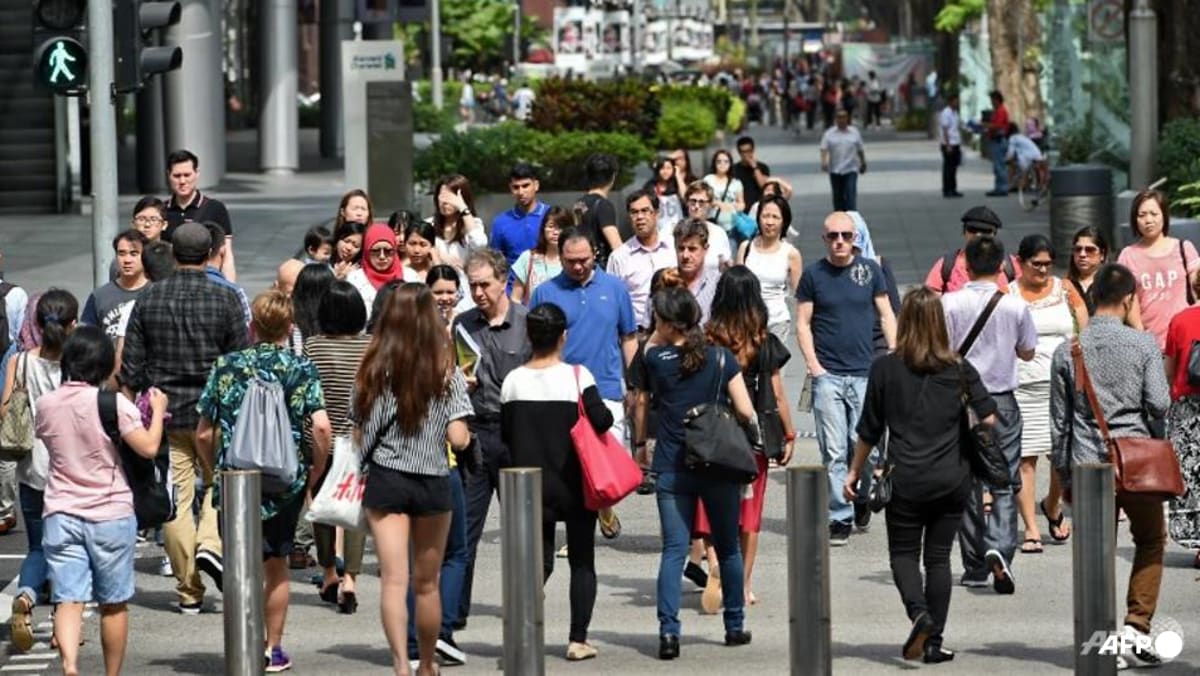
Pedestrians crossing a street in the Orchard Road shopping district in Singapore. (File photo: AFP/Roslan Rahman)
This audio is generated by an AI tool.
SINGAPORE: A new law aimed at strengthening racial harmony in Singapore will take effect on Tuesday (Sep 15), introducing powers to curb content that threatens racial harmony.
Passed by parliament in February last year , the Maintenance of Racial Harmony Act 2025 “consolidates and strengthens Singapore’s legal framework to protect racial harmony in a dedicated piece of legislation”, the Ministry of Home Affairs (MHA) said on Monday.
The Act also establishes a new Presidential Council for Racial and Religious Harmony (PCRRH), whose inaugural members will begin their three-year term on Tuesday.
The PCRRH will replace the Presidential Council for Religious Harmony, said MHA.
CNA Games Guess Word Crack the word, one row at a time Buzzword Create words using the given letters Mini Sudoku Tiny puzzle, mighty brain teaser Mini Crossword Small grid, big challenge Word Search Spot as many words as you can Show More Show Less The council will consider and advise the president on restraining orders made under the new law or the Maintenance of Religious Harmony Act 1990 (MRHA). The council may also consider matters affecting racial or religious harmony referred to it by the home affairs minister or parliament before reporting its views to them. Members are expected to exercise independent judgement and work collectively in advising on matters affecting racial and religious harmony, the Istana said in a separate release. The council will comprise representatives from Singapore’s major racial and religious communities, as well as individuals who have distinguished themselves in public service or community relations, it said. “This ensures that the council benefits from diverse perspectives and experiences.”
The council will consider and advise the president on restraining orders made under the new law or the Maintenance of Religious Harmony Act 1990 (MRHA).
The council may also consider matters affecting racial or religious harmony referred to it by the home affairs minister or parliament before reporting its views to them.
Members are expected to exercise independent judgement and work collectively in advising on matters affecting racial and religious harmony, the Istana said in a separate release.
The council will comprise representatives from Singapore’s major racial and religious communities, as well as individuals who have distinguished themselves in public service or community relations, it said.
“This ensures that the council benefits from diverse perspectives and experiences.”
President Tharman Shanmugaratnam has appointed former Supreme Court judge Choo Han Teck as the council’s chairman.
Its other members are:
Singapore Buddhist Federation president Seck Kwang Phing
Hindu Advisory Board chairman and InterReligious Organisation president K Sengkuttuvan
Mufti of Singapore Nazirudin Mohd Nasir
National Council of Churches of Singapore president Philip Lim
Archbishop of the Roman Catholic Church in Singapore William Goh
ST Engineering defence aerospace president Sarbjit Singh
Taoist Federation and Taoist Mission academic adviser Lee Cheuk Yin
Singapore Federation of Chinese Clan Associations president Thomas Chua
Singapore Non-Resident High Commissioner to Pakistan Ishak Ismail
Former Hindu Endowments Board deputy chairman Bala Reddy
Former Eurasian Association president Sandra Theseira
Corresponding constitutional amendments will come into effect on Tuesday alongside the council’s establishment and the new law's commencement.
The amendments also “confer on the president the discretion to refuse to make an appointment to the PCRRH if the president does not concur with the Presidential Council for Minority Rights’ advice”, said MHA.
RESTRAINING ORDER REGIME
The Act empowers the home affairs minister to make restraining orders against those involved in communicating, producing or distributing content that prejudices the maintenance of racial harmony in Singapore, said MHA.
Similar powers already exist under the Maintenance of Religious Harmony Act.
The restraining orders take immediate effect once served, and failure to comply is an offence.
MHA said the powers allow the government to take swift and pre-emptive action against offensive content that can spread rapidly and may cause irreparable harm to social cohesion.
The constitutional amendments will allow the president to confirm, cancel or vary a restraining order if the PCRRH's recommendation and the Cabinet's advice differ, it added.
UPDATES TO RACE-RELATED LAWS
Under the Act, some existing race-related offences will also be ported over or updated.
Sections 298 and 298A of the Penal Code 1871 on offences relating to race will be repealed, said MHA.
These offences will be superseded, with updates, by sections 39 and 40 of the new law, to cover conduct that:
Incite feelings of enmity, hatred, ill-will or hostility against, or contempt for or ridicule of, a racial group
Insult, vilify, denigrate, threaten or abuse another person on the basis of race
Urge violence on the basis of race, or against a racial group
The Act introduces defences for these offences that are already present in the MRHA.
“These include defences for private or domestic conduct, as well as for pointing out matters in good faith for the purpose of bringing about a removal of those matters,” said MHA.
COMMUNITY REMEDIAL INITIATIVE
The new law also introduces the Community Remedial Initiative, a programme that allows individuals to take remedial action after engaging in conduct affecting Singapore’s racial harmony.
In deciding whether to institute proceedings against a person for certain race-related offences, public prosecutors may consider whether the person has satisfactorily completed the programme.
“This gives an alleged offender the opportunity to learn from and make amends for his racist conduct, thereby soothing communal tensions and repairing ties between the communities,” said MHA.
The programme will not be offered for egregious cases, such as those involving incitement of violence or conduct that severely undermines social cohesion.
“These cases will continue to be considered for criminal prosecution. This sends the right signal that such conduct will not be tolerated,” said the ministry.
SAFEGUARDS AGAINST FOREIGN INFLUENCE
The Act will set safeguards against foreign influence for designated race-based entities, similar to those currently applied to religious groups under the MRHA.
Designated race-based entities must disclose foreign and anonymous donations, foreign affiliations and leadership composition, and comply with leadership restrictions.
MHA said it would engage race-based entities before designating them and guide designated entities on the reporting requirements ahead of their first reporting obligation in April 2028.
The home affairs minister will also be able to impose stepped-up measures against specific race-based entities by issuing foreign influence restraining orders.
This is to “pre-empt, prevent, or reduce foreign influence that may undermine racial harmony and present a threat to public peace and public order in Singapore”, said MHA.
Foreign influence restraining orders are subject to the same safeguards as racial content ones, it said.
The Maintenance of Racial Harmony Bill was passed unanimously by parliament in February 2025. Several Workers' Party MPs, however, voted against the accompanying constitutional amendment that updated the president's powers. WP chair Sylvia Lim argued that the r esponsibility of maintaining racial harmony, law and order, should lie with the government and not the president
The new law strengthens Singapore's ability to preserve racial harmony, respond effectively to emerging threats and safeguard its multicultural society against malicious foreign influence, said MHA.
“Together with ongoing efforts to promote mutual understanding and trust among communities, the Act will help ensure that Singapore remains a cohesive and harmonious multiracial society.”
Get our pick of top stories and thought-provoking articles in your inbox
Stay updated with notifications for breaking news and our best stories
Join our channel for the top reads for the day on your preferred chat app
新法律引入了限制令制度,针对那些参与传播、制作或分发有损于维护种族和谐的内容的人。
新加坡乌节路购物区,行人正在过马路。(资料照片:法新社/罗斯兰·拉赫曼)
这段音频由人工智能工具生成。
新加坡:一项旨在加强新加坡种族和谐的新法律将于周二(9月15日)生效,该法律赋予政府权力来遏制威胁种族和谐的内容。
新加坡内政部周一表示,去年2月国会通过的《2025年维护种族和谐法》“巩固并加强了新加坡的法律框架,以专门的立法保护种族和谐”。
该法案还设立了一个新的总统种族和宗教和谐委员会(PCRRH),其首届成员将于周二开始为期三年的任期。
内政部表示,PCRRH将取代总统宗教和谐委员会。
CNA游戏 猜词游戏 逐行破解单词 流行词游戏 用给定的字母组成单词 迷你数独 小谜题,脑力挑战 迷你填字游戏 小方格,大挑战 单词搜索 尽可能多地找出单词 显示更多 显示更少 委员会将审议并就根据新法或1990年《维护宗教和谐法》(MRHA)颁布的限制令向总统提供建议。委员会还可以审议内政部长或国会提交的、影响种族或宗教和谐的事项,然后再向他们报告其意见。总统府在另一份声明中表示,成员应独立判断并共同努力,就影响种族和宗教和谐的事项提供建议。声明还指出,委员会将由新加坡主要种族和宗教社群的代表以及在公共服务或社区关系方面表现杰出的人士组成。“这确保了委员会能够受益于多元化的视角和经验。”
委员会将审议并向总统提出根据新法律或 1990 年《维护宗教和谐法》(MRHA)作出的限制令的建议。
委员会还可以审议内政部长或议会提交的有关种族或宗教和谐的事项,然后再向他们报告其意见。
总统府在另一份声明中表示,成员们应独立判断,并共同努力,就影响种族和宗教和谐的事项提供建议。
该委员会将由新加坡主要种族和宗教社群的代表组成,以及在公共服务或社群关系方面做出杰出贡献的个人。
“这确保了理事会能够受益于不同的观点和经验。”
尚达曼总统已任命前最高法院法官朱汉德为该委员会主席。
其其他成员包括:
新加坡佛教总会会长薛光平
印度教咨询委员会主席兼跨宗教组织主席K·森库图万
新加坡穆夫提纳兹鲁丁·莫哈末·纳西尔
新加坡全国教会理事会主席林炳哲
新加坡罗马天主教大主教吴诚才
ST工程防务航空航天总裁萨尔比吉特·辛格
道教联合会及道教使团学术顾问李卓贤
新加坡宗亲总会会长蔡志明
新加坡驻巴基斯坦非常驻高级专员伊沙克·伊斯梅尔
前印度教捐赠委员会副主席巴拉·雷迪
前欧亚协会主席桑德拉·特塞拉
相应的宪法修正案将于周二与该委员会的成立和新法律的生效同时生效。
内政部表示,这些修正案还“赋予总统酌情权,如果总统不同意总统少数群体权利委员会的建议,可以拒绝任命总统少数群体权利委员会成员”。
限制令制度
内政部表示,该法案授权内政部长对参与传播、制作或散布有损新加坡种族和谐的内容的人员发出限制令。
《维护宗教和谐法》中已经存在类似的权力。
限制令一经送达即立即生效,不遵守即属违法行为。
内政部表示,这些权力使政府能够迅速采取先发制人的行动,打击可能迅速传播并可能对社会凝聚力造成不可挽回损害的冒犯性内容。
声明还补充说,宪法修正案将允许总统在总统人权委员会的建议与内阁的意见不一致的情况下,确认、取消或变更限制令。
种族相关法律的更新
根据该法案,一些现有的与种族有关的犯罪行为也将被移植或更新。
内政部表示,1871 年刑法典中关于种族相关犯罪的第 298 条和第 298A 条将被废除。
这些罪行将被新法第39条和第40条取代,并进行更新,以涵盖以下行为:
煽动对某一种族群体的敌意、仇恨、恶意或敌对情绪,或蔑视、嘲笑该种族群体。
基于种族原因侮辱、诋毁、贬低、威胁或虐待他人。
煽动基于种族或针对特定种族群体的暴力行为
该法案引入了针对这些罪行的辩护理由,这些理由在《马哈拉施特拉邦农村住房法》中已经存在。
“这些辩护理由包括私人或家庭行为,以及出于善意指出某些事项以促使消除这些事项,”内政部表示。
社区补救计划
新法律还引入了社区补救计划,该计划允许个人在做出影响新加坡种族和谐的行为后采取补救措施。
在决定是否对某人提起与种族有关的犯罪诉讼时,公诉人可以考虑该人是否已圆满完成相关计划。
“这给了涉嫌犯罪者一个机会,让他从自己的种族主义行为中吸取教训并做出弥补,从而缓解社区紧张局势,修复社区之间的关系,”MHA表示。
对于情节严重的案件,例如煽动暴力或严重破坏社会凝聚力的行为,将不予提供该计划。
“这些案件将继续作为刑事诉讼的重点对象。这发出了一个明确的信号,即这种行为绝不容忍,”该部表示。
防止外国影响的保障措施
该法案将为指定的种族实体设定防止外国影响的保障措施,类似于目前根据《种族关系法》对宗教团体实施的保障措施。
被认定为种族歧视的实体必须披露外国和匿名捐款、外国关联和领导层构成,并遵守领导层限制。
MHA表示,在指定种族实体之前,它将与这些实体进行沟通,并在指定实体于2028年4月首次履行报告义务之前,指导它们了解报告要求。
内政部长还可以通过发布外国影响限制令,对特定的种族主义实体采取更严厉的措施。
内政部表示,此举旨在“先发制人、阻止或减少可能破坏种族和谐、对新加坡公共和平与公共秩序构成威胁的外国影响”。
声明称,限制外国影响的禁令与限制种族内容的禁令一样,都受到同样的保障措施约束。
《维护种族和谐法案》于2025年2月在国会获得一致通过。然而,多名工人党议员投票反对同时提出的、旨在扩大总统权力的宪法修正案。工人党主席林瑞莲认为,维护种族和谐、法律和秩序的责任应由政府承担,而非总统。
新加坡内政部表示,新法律加强了新加坡维护种族和谐、有效应对新出现的威胁以及保护其多元文化社会免受恶意外国影响的能力。
“通过持续努力促进各社区之间的相互理解和信任,该法案将有助于确保新加坡继续保持一个团结和谐的多种族社会。”
订阅我们的邮件,即可获取精选热点新闻和引人深思的文章。
订阅通知,第一时间获取突发新闻和精彩报道。
加入我们的频道,即可在您常用的聊天应用上获取当日热门文章。