China changes law to mobilize all resources in case of conflict. Should neighbors worry?中国修改法律,以便在发生冲突时调动一切资源。邻国应该担心吗?
China’s military will get every possible resource from the home front if needed during a war, according to a change in the law to take effect in October.
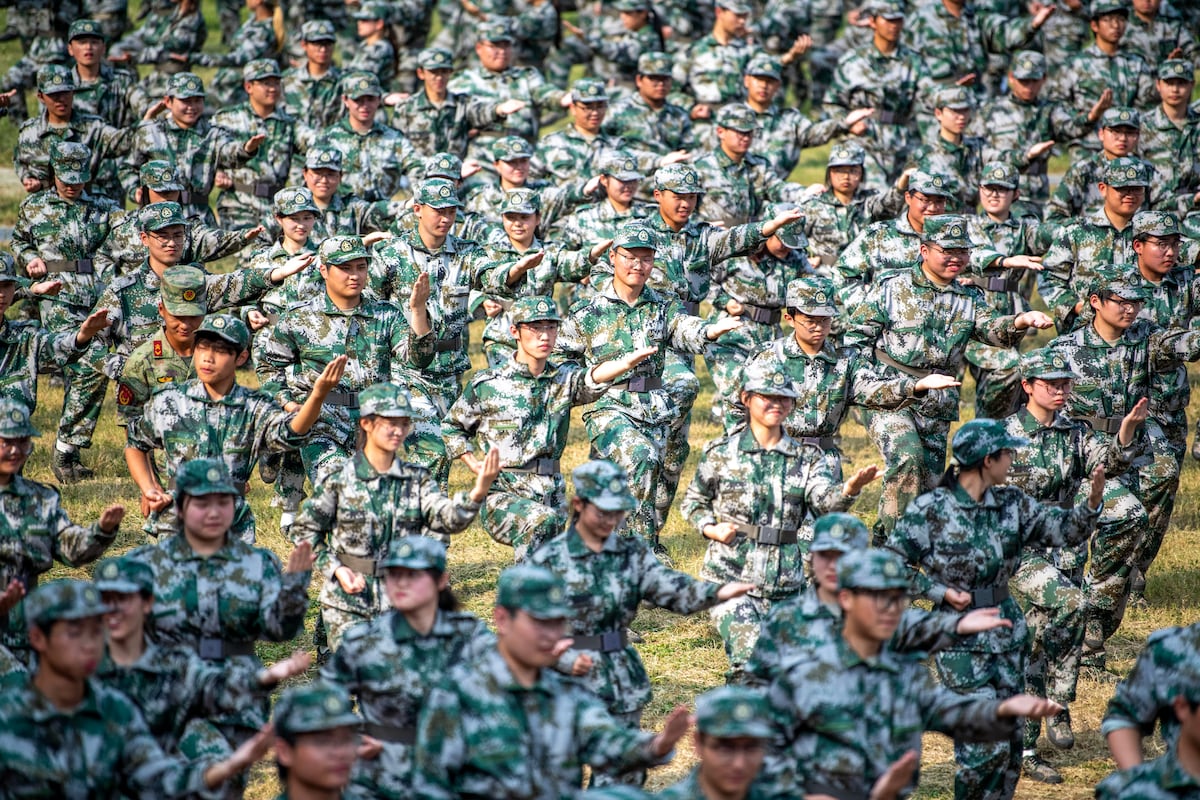
NEW TAIPEI CITY, Taiwan — China’s armed forces will get every possible resource from the home front if needed during a war, according to a change in the law to take effect in October.
And its militarily less endowed neighbors such as Taiwan and the Philippines would bear the brunt of a fully kitted People’s Liberation Army , which the updated National Defense Mobilization Law says may draw from deep within the civilian population for resources, analysts say.
Australia, Japan and the United States also would note Beijing’s revised law as they’re most likely to become involved in any Taiwan “contingency” or conflict in the South China Sea, said Carl Thayer, an Asia specialist and emeritus professor at the University of New South Wales in Australia.
Australia, India and the United States have their own issues with Beijing, he added.
“In sum, in a future conflict, China will have immediate unfettered access to relevant civilian physical and human resources,” Thayer said. “This should be a clear wake-up call to defense planners in the Pentagon and (U.S.) Pacific Command.”
The 2010 law that had not been changed over the past six years was updated to give a legal definition of “national defense mobilization,” the Chinese state-controlled Global Times news outlet said on Sept. 8.
Per that definition, the term means that when national sovereignty, national unity, territorial integrity or development interests are “threatened,” Chinese “economic and social resources” can be shifted entirely toward defense, the Global Times said.
“This ensures that mobilization can be carried out in accordance with the law and established procedures, avoiding hasty, improvised responses in times of crisis,” it said.
China, backed by the legal revision, will be able to mobilize men and women over age 18 and take over commercial and private assets and infrastructure including planes, ships and private land, Thayer projected. He said satellite communications, cyber-security systems and drone production could go into PLA hands too.
Scholars say the legal revision, announced in late August and due to take effect on Oct. 1, may address a particular scenario, most likely in the Taiwan Strait or the South China Sea.
China sees self-ruled Taiwan as part of its territory and has stepped up military drills nearby since 2022, as Washington sells arms to the island in case of any conflict. Japan, a U.S. treaty ally, contests with China a chain of uninhabited islets.
Beijing separately disputes parts of the resource-rich South China Sea with five other governments. Beijing has expanded artificial islands and carried out military drills to bolster its maritime claims against a particularly assertive Philippines.
Japan and the Philippines, both U.S. treaty allies, are tightening security relations “to safeguard all eventualities” as they see China as a joint threat, De La Salle University international studies lecturer Don McLain Gill wrote for ThinkChina in June.
The South China Sea has kept relatively calm over the past two months, though Chinese naval presence has reached “large numbers” and grown “quite widespread”, said Jay Batongbacal, associate professor and director of the Institute for Maritime Affairs and Law of the Sea at the University of the Philippines.
“You don’t know why they do these things,” Batongbacal said of the Chinese law revision. “The timing is of course problematic and that raises concern. If it’s the South China Sea situation, they’re pretty confident they already have control over the area, so no need to mobilize.”
Taiwan and any of its supporters would feel more fear, said Denny Roy, a senior fellow at the East-West Center think tank in Hawaii.
“Taiwan, Japan and the U.S. reasonably see this as another signal that the Chinese are marching toward a war over Taiwan and thinking through the practical issues, and therefore this is another warning to stop supporting Taipei before it’s too late to avoid suffering along with Taiwan,” Roy said.
Foreign defense attaches have noted previously that China carried out a large-scale mobilization exercise in Guangdong province in 2022 as a blueprint for future mobilization.
“This could also be the result of the internal mandate to obey (Chinese President Xi Jinping’s) order to get the PLA ready for war, even if there is no decision yet to go to war.” Roy said.
台湾新台北市——根据将于10月生效的一项法律修正案,如果战争期间需要,中国军队将从国内获得一切可能的资源。
分析人士称,台湾和菲律宾等军事实力较弱的邻国将首当其冲地承受装备齐全的中国人民解放军的冲击,而更新后的《国防动员法》规定,解放军可能会从平民人口中抽调资源。
澳大利亚新南威尔士大学亚洲问题专家、荣誉教授卡尔·泰耶表示,澳大利亚、日本和美国也会注意到北京修订后的法律,因为它们最有可能卷入任何与台湾有关的“突发事件”或南海冲突。
他还补充说,澳大利亚、印度和美国都与北京存在各自的问题。
“总而言之,在未来的冲突中,中国将能够立即不受限制地获取相关的民用物质和人力资源,”泰耶说。“这应该给五角大楼和(美国)太平洋司令部的国防规划人员敲响警钟。”
据中国官方媒体《环球时报》9月8日报道,2010年颁布的、过去六年未曾修改的法律进行了更新,对“国防动员”给出了法律定义。
《环球时报》称,根据该定义,该术语意味着当国家主权、国家统一、领土完整或发展利益受到“威胁”时,中国的“经济和社会资源”可以全部转向国防。
“这确保了动员工作能够按照法律和既定程序进行,避免在危机时期仓促、临时应对,”声明中写道。
泰耶预测,在法律修订的支持下,中国将能够动员18岁以上的男女公民,并接管包括飞机、船舶和私人土地在内的商业和私人资产及基础设施。他还表示,卫星通信、网络安全系统和无人机生产也可能落入解放军手中。
学者们表示,这项于 8 月下旬宣布、将于 10 月 1 日生效的法律修订,可能针对的是特定情况,最有可能发生在台湾海峡或南海。
中国视自治的台湾为其领土的一部分,自2022年以来,中国加大了在台湾附近的军事演习力度,而华盛顿则向台湾出售武器以防发生冲突。日本是美国的条约盟友,与中国在一系列无人居住的岛屿上存在主权争议。
北京与另外五个国家政府就资源丰富的南海部分海域存在主权争议。北京扩建人工岛礁并进行军事演习,以强化其针对态度尤为强硬的菲律宾的海洋主张。
据德拉萨大学国际研究讲师唐·麦克莱恩·吉尔 (Don McLain Gill) 6 月在 ThinkChina 上撰文称,日本和菲律宾都是美国的条约盟友,它们正在加强安全关系“以应对所有可能发生的情况”,因为它们将中国视为共同威胁。
菲律宾大学海洋事务与海洋法研究所副教授兼所长杰伊·巴通巴卡尔表示,尽管中国海军在南海的部署数量已达到“庞大”且“相当广泛”,但过去两个月南海局势相对平静。
“你不知道他们为什么要这么做,”巴通巴卡尔谈到中国修改法律时说。“时机当然有问题,这令人担忧。如果是南海局势,他们相当自信已经控制了该地区,所以没有必要动员起来。”
夏威夷东西方智库中心高级研究员丹尼·罗伊表示,台湾及其支持者会感到更加恐惧。
罗伊表示:“台湾、日本和美国有理由认为这是中国正走向台湾战争并认真考虑实际问题的又一个信号,因此这是又一次警告,要求各国在为时已晚之前停止支持台北,以免与台湾一同遭受苦难。”
外国国防武官此前曾指出,中国在2022年于广东省进行了一次大规模动员演习,作为未来动员的蓝图。
罗伊说:“这也有可能是内部指令的结果,即服从(中国国家主席习近平的)命令,让解放军做好战争准备,即使还没有决定是否开战。”