To maintain or replace? That is the question for Canada’s tank fleet.是继续维护还是更换?这是加拿大坦克部队面临的问题。
Canada is deploying tanks on an overseas mission for the first time in more than a decade, but the future for the country’s armored fleet is uncertain.
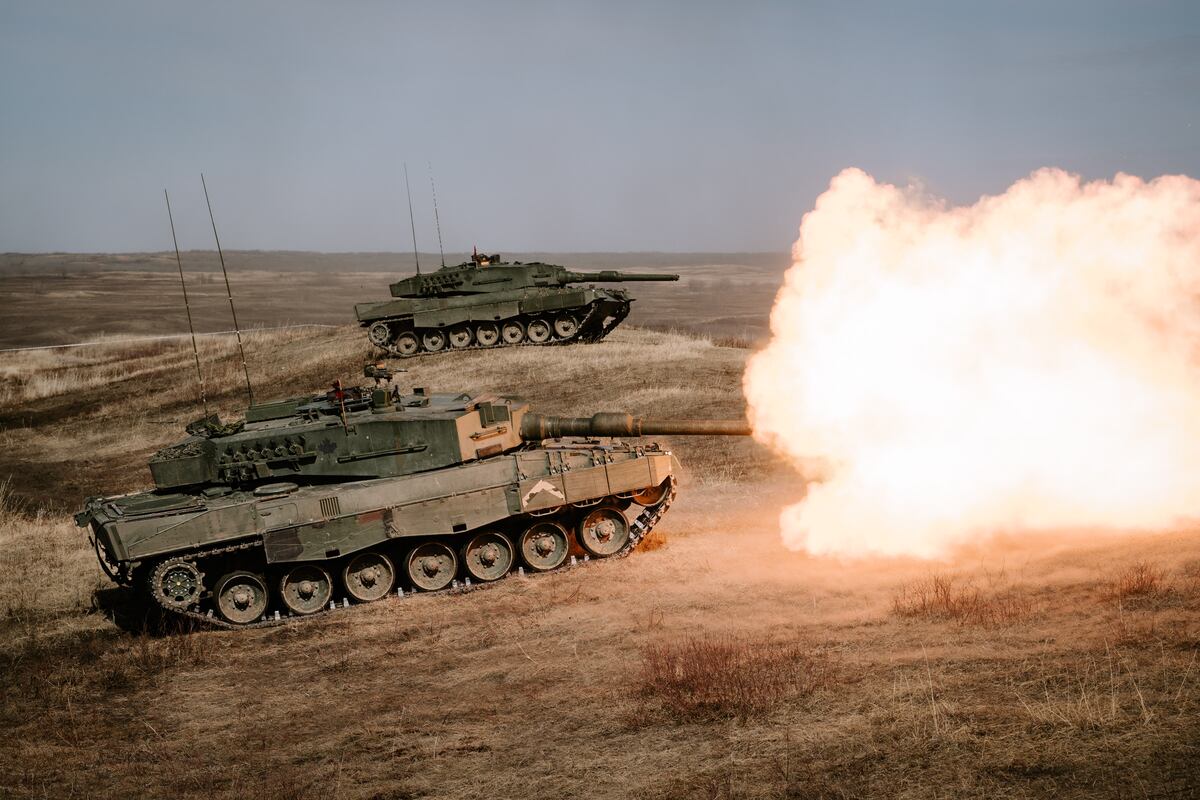
VICTORIA, British Columbia — Canada is deploying tanks on an overseas mission for the first time in more than a decade, but the future for the country’s armored fleet remains uncertain.
The first of 15 Canadian Leopard 2 tanks are expected to arrive in Latvia in mid-November as part of efforts to shore up NATO’s presence in that Eastern European nation. While that is taking place, work is underway in the Canadian Army to determine how best to maintain and support the aging tank fleet while trying to decide whether to replace the platforms.
An estimated CA$1.5 billion (U.S. $1.1 billion) will go toward the new Leopard long-term support contract, according to Defence Department spokeswoman Jessica Lamirande. That contract will see maintenance and support services for the Leopard 2 fleet in place until the tanks’ forecast end of life, currently scheduled for 2035.
“The scope of work will include key services such as maintenance support, upgrades as required, supply chain management, engineering support and technical support for the Canadian Leopard 2 fleet,” she said.
The Canadian Army had 82 Leopard 2 main battle tanks, but donated eight to Ukraine amid its fight against a Russian invasion.
Canada has identified German company Krauss-Maffei Wegmann as the sole-source provider for the long-term contract.
“We expect a contract award by spring 2024,” Lamirande said.
In addition, the Canadian Army briefed industry representatives on April 3 in Ottawa about a proposed plan to modernize the Leopard fleet.
Army Lt. Col. Chloeann Summerfield noted the tank life extension would cost more than CA$850 million and deal with obsolescence issues as well as technology improvements.
The project is in its early stages but would prioritize improvements to the Leopard 2′s protection, surveillance, target acquisition, firepower and mobility, Summerfield told industry officials.
The Army would also seek cooperation and a common configuration for such upgraded vehicles with other users of the Leopard, according to the presentation, obtained by Defense News.
A request for bids from industry for the life extension effort is to be issued around 2028, with the first fielding of the upgraded tanks starting in 2030, the presentation noted.
One of the considerations is a “limited budget” for the project, Summerfield said.
Financial barriers will also impact Canada’s decision on whether to buy new tanks to replace the Leopard 2 fleet, according to Canadian defense observers.
Martin Shadwick, a professor of Canadian defense policy and the military at Toronto’s York University, said the Army has had a contentious relationship with tanks.
In October 2003, Lt. Gen. Rick Hillier, then-commander of the Army, announced Canada was retiring Leopard tanks from service and would purchase the U.S.-made Stryker Mobile Gun System, a wheeled vehicle, Shadwick noted. At the time, Hillier said the Army’s Leopards had served their purpose but were of limited use in warfare, as the enemy was no longer Russia but rather terrorists in austere environments like Afghanistan.
However, several years later, the Army’s new leadership reversed course, instead sending Leopard tanks to Afghanistan in 2006. Canadian military leaders fighting in that country had requested the tanks, as their heavy armor provided more protection against improvised explosive devices.
Since the end of the war in Afghanistan, Canadian tanks have been limited to training exercises at home. The Canadian government has committed to buying a limited number of new tanks to replace the eight Leopards it donated to Ukraine over the past two years. In February 2023, then-Defence Minister Anita Anand announced the acquisition plan, but it’s yet to move forward.
A Royal Canadian Air Force CC-177 Globemaster delivers a Leopard 2A4 tank to Poland on March 17, 2023, as a part of Canada's commitment to donate the platforms to Ukraine. (Master Sailor Valerie LeClair/Canadian Armed Forces)
The office of Bill Blair, the current defense minister, would not provide specific details about that potential purchase. Daniel Minden, Blair’s press secretary, pointed out that “capability requirements are being reviewed by the Army to ensure capability replenishment and interoperability. Plans and timelines remain to be determined.”
For his part, Shadwick doesn’t expect the government will buy new tanks in the near future, including those meant to replace the Leopards now in Ukraine. “There is a real lack of funding for procurement, and new tanks are way down the list of priorities for the Canadian forces,” he said.
Former defense procurement chief Alan Williams agreed, noting major military purchases, such as F-35 fighter jets and the new Canadian Surface Combatant ships, leave little funds left over for tanks.
The annual budget for defense equipment acquisitions is CA$5 billion, but much, if not all, will be earmarked for the fleet of surface combatants, Williams told Defense News. The surface combatants are estimated to cost CA$100 billion over the next 20 years.
Canada has also committed to spending CA$40 billion to modernize North American Aerospace Defense Command — a figure that includes the purchase of F-35s — and another CA$6 billion on new P-8 patrol aircraft.
“I can’t see how the Army can even contemplate the acquisition of new tanks,” Williams said. “A lot of potential equipment projects will be seriously affected by programs already committed to by government.”
David Pugliese is the Canada correspondent for Defense News.
加拿大不列颠哥伦比亚省维多利亚市——加拿大十多年来首次向海外部署坦克,但该国装甲部队的未来仍然充满不确定性。
首批15辆加拿大豹2坦克预计将于11月中旬抵达拉脱维亚,这是北约加强在该东欧国家军事存在的举措之一。与此同时,加拿大陆军正在研究如何更好地维护和保障这支老旧的坦克部队,并考虑是否需要更换这些坦克。
据国防部发言人杰西卡·拉米兰德称,预计将有15亿加元(约合11亿美元)用于新的“豹”式坦克长期支持合同。该合同将为“豹2”坦克车队提供维护和支持服务,直至该型坦克预计报废,目前暂定于2035年。
“工作范围将包括为加拿大豹2机队提供维护支持、按需升级、供应链管理、工程支持和技术支持等关键服务,”她说。
加拿大军队拥有 82 辆豹 2 主战坦克,但在乌克兰抵抗俄罗斯入侵期间,向乌克兰捐赠了 8 辆。
加拿大已指定德国公司 Krauss-Maffei Wegmann 为该长期合同的唯一供应商。
拉米兰德说:“我们预计将在 2024 年春季之前授予合同。”
此外,加拿大陆军于 4 月 3 日在渥太华向业界代表介绍了豹式坦克部队现代化计划。
陆军中校克洛安·萨默菲尔德指出,延长坦克寿命将耗资超过 8.5 亿加元,并将解决过时问题以及技术改进问题。
萨默菲尔德告诉业内人士,该项目尚处于早期阶段,但将优先改进豹2坦克的防护、监视、目标获取、火力和机动性。
据《防务新闻》获得的演示文稿显示,陆军还将寻求与其他豹式坦克用户合作,并为这类升级车辆制定通用配置。
报告指出,将于 2028 年左右向业界发出延长使用寿命计划的招标邀请,升级后的坦克将于 2030 年开始首次部署。
萨默菲尔德表示,其中一个考虑因素是该项目的“预算有限”。
加拿大国防观察人士表示,财政障碍也会影响加拿大是否购买新坦克来替换豹2坦克的决定。
多伦多约克大学加拿大国防政策和军事教授马丁·沙德威克表示,陆军与坦克的关系一直很紧张。
2003年10月,时任加拿大陆军司令里克·希利尔中将宣布,加拿大将退役豹式坦克,并采购美国制造的“斯特瑞克”轮式机动火炮系统。沙德威克指出,希利尔当时表示,陆军的豹式坦克已经完成了它们的使命,但在战争中的作用有限,因为敌人不再是俄罗斯,而是像阿富汗这样环境恶劣地区的恐怖分子。
然而,几年后,陆军新领导层改变了策略,于 2006 年向阿富汗派遣了豹式坦克。在阿富汗作战的加拿大军方领导人要求提供这些坦克,因为它们的重型装甲能更好地抵御简易爆炸装置的袭击。
自阿富汗战争结束以来,加拿大坦克仅限于在国内进行训练演习。加拿大政府承诺购买数量有限的新型坦克,以替换过去两年捐赠给乌克兰的八辆豹式坦克。2023年2月,时任国防部长阿妮塔·阿南德宣布了这项采购计划,但至今尚未取得进展。
2023年3月17日,加拿大皇家空军一架CC-177“环球霸王”运输机向波兰运送了一辆豹2A4坦克,这是加拿大向乌克兰捐赠该型坦克承诺的一部分。(加拿大武装部队高级水兵瓦莱丽·勒克莱尔摄)
现任国防部长比尔·布莱尔的办公室拒绝提供有关这笔潜在采购的具体细节。布莱尔的新闻秘书丹尼尔·明登指出,“陆军正在审查能力需求,以确保能力补充和互操作性。计划和时间表仍有待确定。”
沙德威克则认为,政府近期内不会采购新坦克,包括那些原本用于替换目前部署在乌克兰的豹式坦克的坦克。“采购资金严重不足,新坦克在加拿大军队的优先事项清单上排名非常靠后,”他说道。
前国防采购主管艾伦·威廉姆斯对此表示赞同,他指出,像 F-35 战斗机和加拿大新型水面作战舰艇这样的大型军事采购,几乎没有剩余资金用于坦克。
威廉姆斯告诉《防务新闻》,国防装备采购的年度预算为50亿加元,但其中大部分(如果不是全部)将用于水面作战舰艇舰队。据估计,未来20年水面作战舰艇的造价将达到1000亿加元。
加拿大还承诺投入 400 亿加元用于北美防空司令部的现代化改造——其中包括购买 F-35 战斗机——以及另外 60 亿加元用于购买新的 P-8 巡逻机。
威廉姆斯说:“我实在看不出陆军怎么还能考虑采购新坦克。许多潜在的装备项目都会受到政府已承诺项目的严重影响。”
David Pugliese 是《国防新闻》的加拿大通讯员。