Ukraine seeks god mode with new control app for drone war乌克兰寻求通过新的无人机战争控制应用程序实现“上帝模式”。
Mission Control feeds directly into Ukraine’s performance-based “gamification” model, where drone units earn points for verified kills.
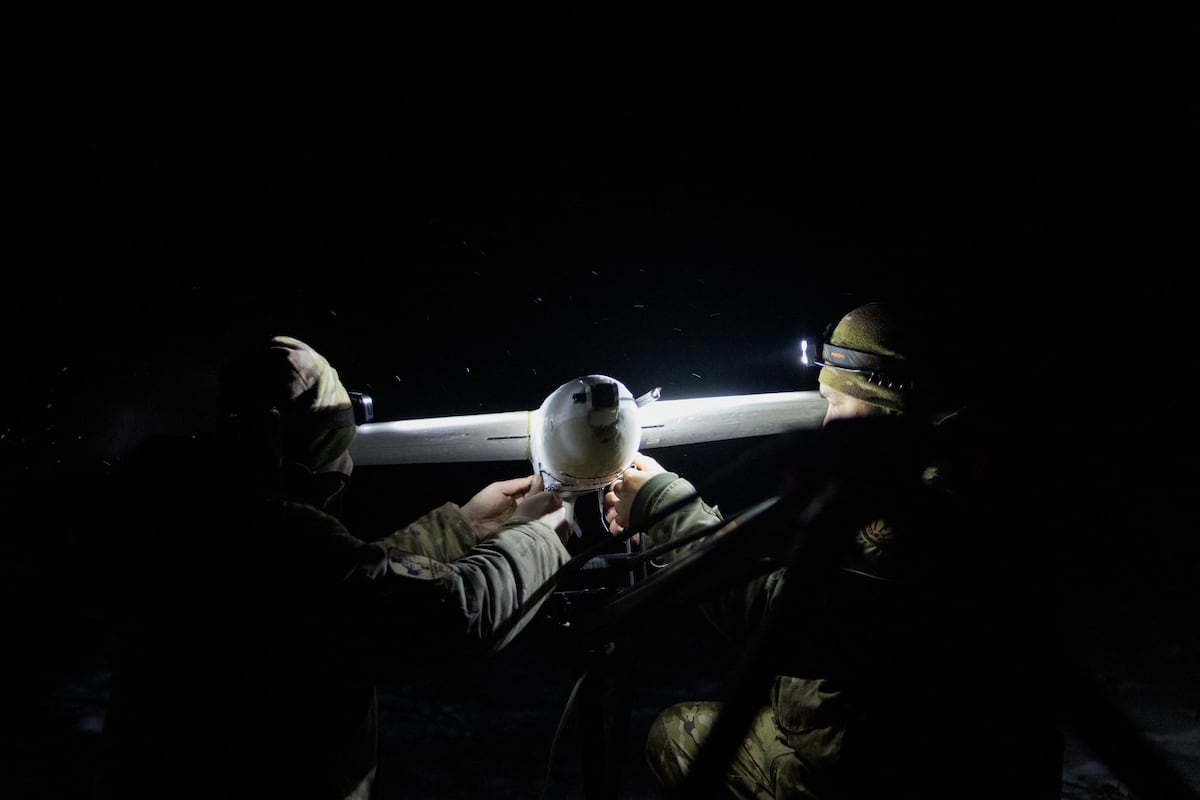
KYIV, Ukraine — Ukraine has launched Mission Control, a first-of-its-kind digital command-and-control system designed to unify planning, execution and reporting for all drone operations across the country , as Kyiv seeks more innovative ways to move the frozen front line on the battlefield after almost four years of Russia’s full-scale invasion.
The new system sits inside DELTA, Ukraine’s battlefield management ecosystem — an operational platform that already connects sensors and shooters across air, land, maritime, cyber, and space domains.
Ukrainian drone crews enter operational data into the system, including drone type, launch location, flight route, and mission task, which generates reports on real battlefield activity, according to officials. The process is meant to eliminate paper reports, facilitating an immediate analysis of battlefield conditions and strike effectiveness.
Mission Control represents Kyiv’s latest push to turn improvised war-fighting into a standardized, data-driven operation, echoing the sensor-to-shooter integration Western militaries have sought for decades.
The rollout comes as Ukraine positions its wartime data trove as leverage in peace negotiations — and as a touchpoint for deeper integration with allies.
“We will create a system that allows them to develop their software solutions utilizing our data,” Defense Minister Mykhailo Fedorov told reporters days before launching Mission Control, per Reuters . “Currently, data from the front lines holds immense value.”
Although Fedorov announced the system’s kickoff just last month, officials have been working on the concept for years as a means to level the playing field against Russia’s military numerical overmatch, Ukraine, Deputy Defense Minister Lt. Col. Yuriy Myronenko told Military Times last week.
“We are a very different country from our enemy,” Myronenko said. “They have a lot of resources, people, money, and a lot of Soviet units, storage, ammunition, and a lot of things.”
Myronenko served as a combat commander fighting with drones in Ukraine’s southern front in 2023, then led the DELTA development group, then oversaw national cyber defense and drone procurement before moving to his current post.
His view, and his recent appointment as deputy minister after serving previously in the Ministry of Digital Transformation alongside Federov, reflects the ministry’s broader bet that technology and speed are the country’s top assets for offsetting Russia’s advantages in manpower and materiel.
“We have good software, and we like technology, we like markets,” he said. “This is the only chance to win for us. There is no other chance.”
Ukraine now produces or procures more than 5 million drones annually, Myronenko confirmed to Military Times, including both “kamikaze, one-time-use drones” and fixed-wing drones reaching beyond 1,000 kilometers.
Mission Control is designed to manage this arsenal across a front line stretching hundreds of kilometers.
The advantage, Myronenko said, is not the technology itself — it’s how fast Ukraine can identify what works and scale it before the enemy adapts. “If we receive technology, the enemy will receive it as well,” he said. “Speed is key.”
Mission Control feeds directly into Ukraine’s performance-based “gamification” model, where drone units earn points for verified kills and top performers get priority access to new equipment. The connection is automatic: data entered into Mission Control flows into the ePoints ranking system without requiring separate reporting, Myronenko said.
“It is important for us to have a complete picture — with results and accumulated experience.”
Mission Control is designed to give commanders real-time visibility into what’s working and what’s not.
“Some units use drones very efficiently, some of them don’t, some of them have good management, some of them don’t,” Myronenko said. “We need to understand what is happening on the battlefield.”
The centralized system resolves that problem: “Commanders can see the whole picture. They can see what is working. They can see what is not working. They can see which crews are effective. They can see which drones are effective. They can see which tactics are effective,” he said. “And after that, they can scale it.”
The initiative also captures failure data for the first time. Before Mission Control, Ukraine could track confirmed kills, but not misses.
“We received all kinds of information about successful killing, but we didn’t have information about failures,” Myronenko said.
That means commanders can now calculate actual effectiveness rates, cost-per-kill, and identify underperforming systems — not just count hits.
“We are moving from chaos and fragmented data to managed, technological warfare, where decisions are made based on precise figures, not assumptions,” Fedorov said at the system’s launch. “This is the new logic of war.”
Myronenko — who previously led Ukraine’s State Service of Special Communication, the agency responsible for national cyber defense — said officials are creating the system with the highest levels of cybersecurity protection available, including those upheld by NATO partners.
“The security system itself is checked constantly,” Myronenko told Military Times, noting that Mission Control had already passed key cybersecurity standards put forth by the US National Institute of Standards and Technology (NIST).
“It is so complex that it is checked by the Big Four every year,” he added, referring to the four largest cybersecurity consulting firms globally.
“And the security systems are completely located in the national protected network,” he said. “No one except the Ministry of Defense has access to it,” he said.
Access is distributed on a least-privilege basis. Brigade commanders see brigade-level data. Corps commanders see corps-level data.
If a device is lost or captured — “and this happens quite often in the war” — the system limits exposure. “There is no access to the system itself. Only to the data that the pilot had,” he said.
Asked whether centralizing all operational drone data in one system creates a risk that outweighs the benefit, Myronenko pushed back.
“The biggest risk is that when almost a million people are fighting, and we don’t understand how they fight – which ways work, which don’t work, which are effective, which are ineffective,” he said. “This is the biggest risk when you don’t control the situation.”
“Even if we imagine that the enemy will see which drones we kill, which of them are effective — well, it’s probably very bad,” he acknowledged. “But without data, we will not be able to do anything.”
Myronenko drew a clear line on what gets shared with international partners, too.
Raw operational data from Mission Control — the real-time feed of who’s flying what, where, and with what results — “it’s operative information, and we never share it with anyone,” he told Military Times. But analytics — trend data, effectiveness patterns, month-over-month changes — “of course, can be shared with our close partners.”
He declined to name specific countries currently involved in the system’s development, but said that allies had already been part of the system’s development process.
The next target for centralization under Ukraine’s MoD: artillery data.
“Because it’s the same logic,” Myronenko said. “We need to have the data. We need to have the complete picture. We need to speed up decision-making.”
These developments are key to strengthening the defensive capabilities of Ukraine and its allies, according to the deputy minister.
“We need to innovate faster than our enemy,” Myronenko said.
乌克兰基辅——乌克兰推出了“任务控制中心”,这是一个史无前例的数字指挥控制系统,旨在统一全国所有无人机行动的计划、执行和报告。此前,俄罗斯已对乌克兰发动了近四年的全面入侵,基辅正在寻求更具创新性的方式来改变战场上僵持的战线。
新系统位于乌克兰战场管理生态系统 DELTA 内——这是一个已经连接空中、陆地、海上、网络和太空领域的传感器和射击者的作战平台。
据官员称,乌克兰无人机机组人员将作战数据(包括无人机类型、起飞地点、飞行路线和任务目标)输入系统,系统会生成关于真实战场活动的报告。此举旨在消除纸质报告,从而能够立即分析战场状况和打击效果。
任务控制中心代表了基辅方面将临时作战转变为标准化、数据驱动作战的最新举措,这与西方军队几十年来一直追求的传感器到射手一体化的目标遥相呼应。
乌克兰推出这些数据之际,正值其将战时数据宝库作为和平谈判的筹码,并以此作为与盟友深化融合的切入点。
据路透社报道,国防部长米哈伊洛·费多罗夫在任务控制中心启动前几天告诉记者:“我们将创建一个系统,使他们能够利用我们的数据开发软件解决方案。目前,来自前线的数据具有巨大的价值。”
尽管费多罗夫上个月才宣布该系统启动,但乌克兰国防部副部长尤里·米罗年科中校上周告诉《军事时报》,官员们多年来一直在研究这一概念,以此来对抗俄罗斯在军事数量上的优势。
“我们和我们的敌人截然不同,”米罗年科说。“他们拥有大量的资源、人力、资金,以及大量的苏联部队、物资储备、弹药等等。”
米罗年科于 2023 年在乌克兰南部前线担任无人机作战指挥官,之后领导了 DELTA 开发小组,然后负责国家网络防御和无人机采购,之后才调任到目前的职位。
他的观点,以及他最近被任命为副部长(此前他曾与费多罗夫一起在数字化转型部任职),反映了该部更广泛的信念,即技术和速度是该国抵消俄罗斯在人力和物质方面优势的最大资产。
“我们拥有优秀的软件,我们热爱科技,我们热爱市场,”他说。“这是我们唯一的获胜机会,别无他法。”
米罗年科向《军事时报》证实,乌克兰目前每年生产或采购超过500万架无人机,其中包括“神风特攻队式、一次性无人机”和航程超过1000公里的固定翼无人机。
任务控制中心旨在管理绵延数百公里的前线的这批武器装备。
米罗年科表示,优势不在于技术本身,而在于乌克兰能否在敌人做出反应之前,迅速识别并推广有效技术。“如果我们获得了某种技术,敌人也会获得,”他说。“速度是关键。”
任务控制系统直接接入乌克兰基于绩效的“游戏化”模式,无人机部队通过确认击落目标获得积分,表现优异的部队优先获得新装备。米罗年科表示,这种连接是自动的:输入任务控制系统的数据会直接进入ePoints排名系统,无需单独上报。
“对我们来说,掌握完整的情况——包括结果和积累的经验——非常重要。”
任务控制中心旨在让指挥官实时了解哪些方面运行良好,哪些方面运行不佳。
“有些部队能非常有效地使用无人机,有些则不然;有些部队管理得当,有些则不然,”米罗年科说。“我们需要了解战场上的情况。”
他说:“集中式系统解决了这个问题:指挥官可以看到全局。他们可以看到哪些方面有效,哪些方面无效。他们可以看到哪些机组人员高效,哪些无人机高效,哪些战术有效。之后,他们可以根据情况进行调整。”
该计划还首次收集了失败数据。在任务控制中心成立之前,乌克兰只能追踪已确认的击落目标,而无法追踪未击落目标。
“我们收到了各种关于成功猎杀的信息,但我们没有关于失败的信息,”米罗年科说。
这意味着指挥官现在可以计算实际的有效性率、每次击杀的成本,并找出性能不佳的系统,而不仅仅是统计命中次数。
费多罗夫在系统发布会上说:“我们正在从混乱和碎片化的数据转向可控的、技术化的战争,在这种战争中,决策是基于精确的数据,而不是假设。这就是战争的新逻辑。”
米罗年科曾领导乌克兰国家特别通信局(负责国家网络防御的机构),他表示,官员们正在创建具有最高级别网络安全保护的系统,包括北约伙伴国所维护的级别。
“安全系统本身会不断接受检查,”米罗年科告诉《军事时报》,并指出任务控制中心已经通过了美国国家标准与技术研究院 (NIST) 提出的关键网络安全标准。
“它非常复杂,每年都要由四大咨询公司进行检查,”他补充道,这里指的是全球最大的四家网络安全咨询公司。
“而且,这些安全系统完全位于国家安全网络中,”他说。“除了国防部以外,任何人都无法访问,”他补充道。
访问权限按照最小权限原则分配。旅级指挥官可以看到旅级数据。军级指挥官可以看到军级数据。
如果设备丢失或被俘获——“这种情况在战争中经常发生”——该系统可以限制信息泄露。“无法访问系统本身,只能访问飞行员保存的数据,”他说道。
当被问及将所有无人机运行数据集中到一个系统中是否会带来大于收益的风险时,米罗年科予以反驳。
他说:“最大的风险在于,当近百万人交战,而我们却不了解他们的作战方式——哪些方法有效,哪些无效,哪些策略是有效的,哪些是无效的。当你无法掌控局势时,这就是最大的风险。”
“即使我们设想敌人能看到我们击落了哪些无人机,哪些无人机是有效的——嗯,情况可能也很糟糕,”他承认道。“但如果没有数据,我们将无能为力。”
米罗年科也明确划定了与国际合作伙伴分享的内容界限。
来自任务控制中心的原始作战数据——实时显示谁在驾驶什么飞机、在哪里飞行以及飞行结果——“这是作战信息,我们绝不会与任何人分享,”他告诉《军事时报》。但分析数据——趋势数据、效能模式、月度变化——“当然可以与我们的密切合作伙伴分享”。
他拒绝透露目前参与该系统开发的具体国家,但表示盟友已经参与了该系统的开发过程。
乌克兰国防部下一个需要集中管理的目标是:炮兵数据。
“因为逻辑是一样的,”米罗年科说。“我们需要数据。我们需要了解全貌。我们需要加快决策速度。”
这位副部长表示,这些进展对于加强乌克兰及其盟友的防御能力至关重要。
“我们需要比敌人更快地进行创新,”米罗年科说。