Japan court orders approval of modified plan for Marine Corps runways日本法院下令批准修改后的海军陆战队跑道方案
A Japanese court ordered the Okinawa governor to approve the central government’s modified plan for landfill work at the planned relocation site.
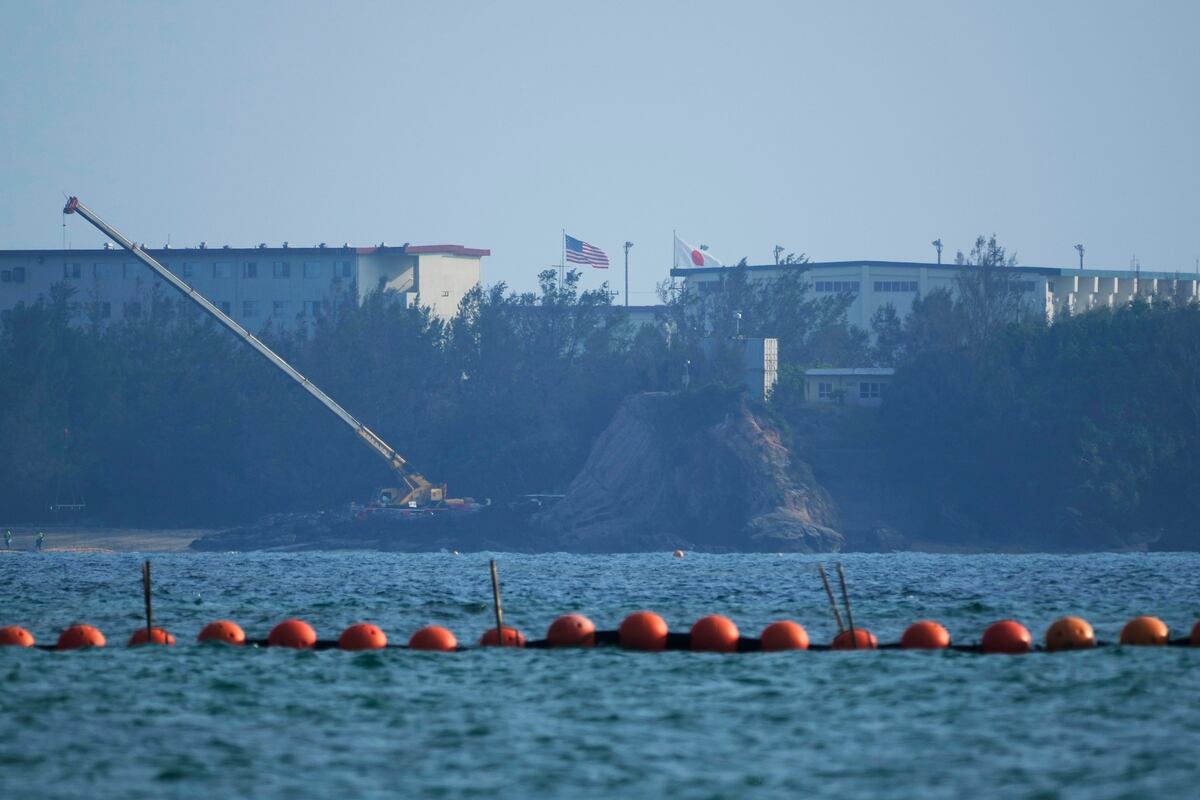
TOKYO — A Japanese court on Wednesday ordered the governor of Okinawa to approve the central government’s modified plan for landfill work at the planned relocation site of a key U.S. military base on the southern island despite persistent opposition and protests by residents.
The decision will move forward the suspended construction at a time Okinawa’s strategic importance is becoming key for the Japan-U.S. military alliance in the face of growing tensions with China. Japan also rapidly seeks to buildup its military in the southwestern region.
The ruling by the Fukuoka High Court Naha branch allows the Land and Transport Ministry to order the modification work designed to reinforce extremely soft ground at the designated relocation site for U.S. Marine Corps Air Station Futenma, overriding Gov. Denny Tamaki’s disapproval. The ruling ordered Tamaki to issue the approval within three working days.
Tamaki said it was unjust that the will of the residents is crushed by the central government.
Tamaki, noting the spirit of local government autonomy and democracy, said in a statement that the ruling that allows the government’s forcible execution of its planned construction of a new military base is “absolutely unacceptable.”
If completed, the new site will serve a key Marine Corps facility for the region and will be also home to MV-22 Ospreys that are currently deployed at Futenma.
Tamaki can still appeal to the Supreme Court, but the local government at this point has no power to stop the work unless the top court overturns the decision.
Okinawa and the central government have long tussled over the relocation of the Futenma base.
The Japanese and U.S. governments initially agreed in 1996 to close the Futenma air station a year after the rape of a schoolgirl by three U.S. military personnel led to a massive anti-base movement. But persistent protests and lawsuits between Okinawa and Tokyo have held up the plan for nearly 30 years.
Japan’s central government began the reclamation work off Henoko Bay on the eastern coast of Okinawa in 2018 to pave the way for the relocation of the Futenma base from its crowded neighborhood on the island.
The central government later found out that large areas of the designated reclamation site are on soft ground, which some experts described “as soft as mayonnaise,” and submitted a revision to the original plan with additional land improvement. But Okinawa’s prefectural government rejected the revision plan and suspended the reclamation work.
The ground improvement plan requires tens of thousands of pillars and massive amounts of soil, which opponents say would damage the environment. It is expected to cost 930 billion yen ($6.5 billion), 2.5 times the initial estimate, and take 12 years to finish, according to the Defense Ministry.
The Supreme Court in September turned down Okinawa’s appeal in another lawsuit that ordered the prefecture to withdraw its rejection of the modified landfill plan.
Tamaki has called for a significant reduction of the U.S. military on the island, which is home to more than half of 50,000 American troops based in Japan under the bilateral security pact. Tamaki also has demanded the immediate closure of Futenma base and the scrapping of the base construction at Henoko. Okinawa accounts for just 0.6% of Japanese land.
Tokyo and Washington say the relocation within Okinawa, instead of moving it elsewhere as demanded by many Okinawans, is the only solution.
“We believe that action should be taken promptly in line with this ruling,” Japan’s Chief Cabinet Secretary Yoshimasa Hayashi said. He pledged that the government will continue to make effort for the return of the Futenma air station as soon as possible to reduce the burden from the base.
东京——尽管当地居民持续反对和抗议,日本一家法院周三仍命令冲绳县知事批准中央政府修改后的美国南部岛屿上一个重要军事基地搬迁地点的垃圾填埋工程计划。
这项决定将推进此前暂停的工程建设,而此时冲绳的战略重要性正因日美军事同盟在日益紧张的中日关系中扮演着关键角色。日本也正迅速寻求在西南地区加强军事部署。
福冈高等法院那霸分院裁定,允许国土交通省下令对美军普天间航空基地指定搬迁地点的极软土地基进行加固改造,驳回了知事玉城丹尼的反对意见。裁决责令玉城丹尼在三个工作日内批准该项改造工程。
玉木表示,中央政府践踏居民的意愿是不公正的。
玉木在声明中指出地方政府自治和民主的精神,并表示允许政府强行实施其计划建设新军事基地的裁决是“绝对不可接受的”。
如果建成,新基地将成为该地区重要的海军陆战队设施,并将成为目前部署在普天间基地的 MV-22 鱼鹰运输机的驻地。
玉城仍可向最高法院提出上诉,但目前地方政府无权阻止这项工程,除非最高法院推翻该判决。
冲绳和中央政府长期以来一直就普天间基地的搬迁问题争论不休。
1996年,在三名美军人员强奸一名女学生引发大规模反基地运动一年后,日本和美国政府最初同意关闭普天间空军基地。但冲绳和东京之间持续不断的抗议和诉讼使该计划搁置了近30年。
2018 年,日本中央政府开始在冲绳东海岸边野古湾附近进行填海造陆工程,为将普天间基地从岛上拥挤的地区迁出铺平道路。
中央政府后来发现,指定填海区的大部分土地地势松软,一些专家形容其“软如蛋黄酱”,于是提交了一份修订方案,增加了土地改良措施。但冲绳县政府拒绝了该修订方案,并暂停了填海工程。
这项地面改良计划需要数万根桩基和大量土方,反对者称这将破坏环境。据防卫省估计,该计划预计耗资9300亿日元(约合65亿美元),是最初预算的2.5倍,工期12年。
最高法院在9月份驳回了冲绳县在另一起诉讼中的上诉,该诉讼命令冲绳县撤回其对修改后的垃圾填埋场计划的拒绝。
玉城正治呼吁大幅削减驻冲绳美军。根据日日安全条约,驻日美军共5万人,其中一半以上驻扎在冲绳。玉城正治还要求立即关闭普天间基地,并取消边野古基地的建设。冲绳面积仅占日本国土面积的0.6%。
东京和华盛顿方面表示,将监狱迁至冲绳境内而不是像许多冲绳人要求的那样迁往其他地方,是唯一的解决办法。
日本内阁官房长官林佳正表示:“我们认为应该根据这项裁决迅速采取行动。”他承诺,政府将继续努力,争取尽快收回普天间空军基地,以减轻该基地的负担。