Defense-driven demand powers surge in US listings by mining firms国防驱动的需求推动美国矿业公司上市。
This year’s transactions have brought producers of antimony, rare earths, tungsten and uranium to the NYSE and Nasdaq.
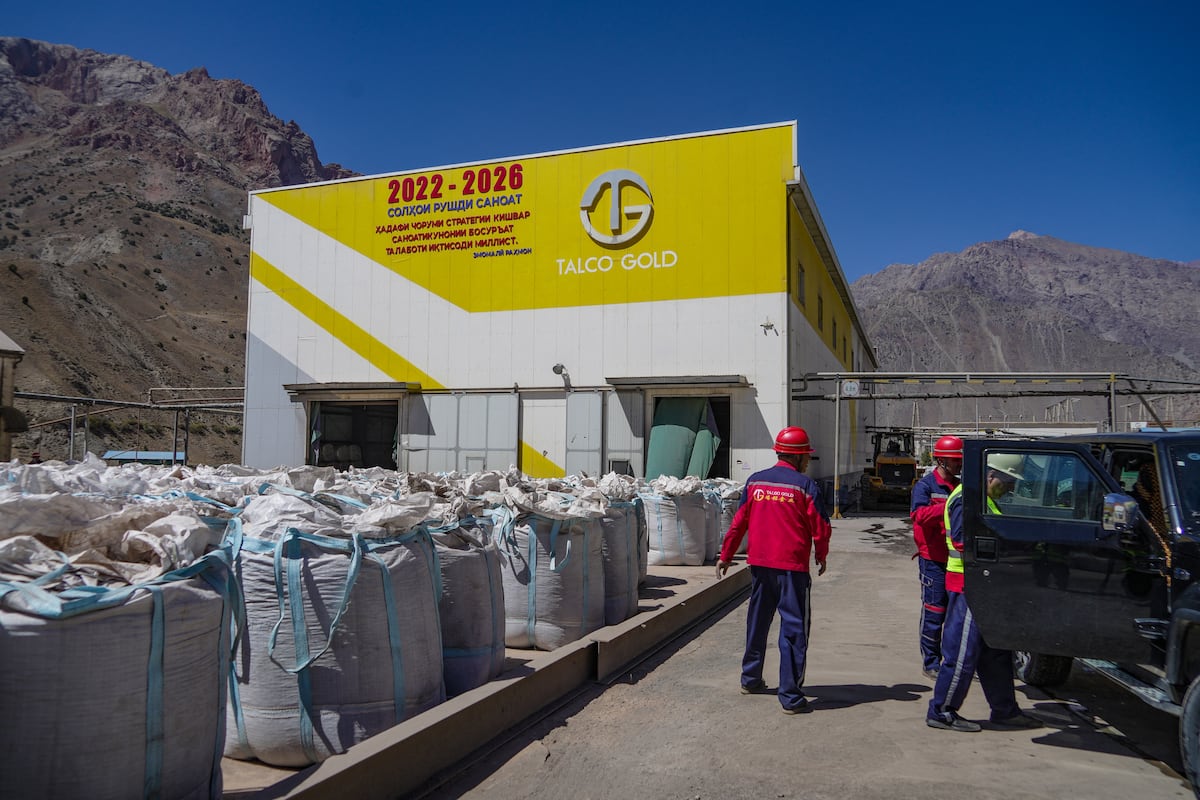
LONDON — There has been a surge in mining companies seeking U.S. listings this year, but even more striking is the change in language as firms explicitly target defense-related demand for critical minerals.
At least 18 companies, mostly Canadian and Australian but also some U.S. startups, have completed or are pursuing dual U.S. listings this year, versus just three in 2025, according to exchange filings and company disclosures reviewed by Reuters.
They span in value from about $25 million to $7.5 billion and mark a shift in how critical mineral producers seek access to capital markets as listings explicitly pitch for defense end-use applications.
This year’s transactions have brought producers of antimony, rare earths, tungsten and uranium to the NYSE and Nasdaq - all minerals designated strategic by the Pentagon and used in fighter jets, missiles and radar systems.
The firms are positioning themselves as suppliers of munitions, armor-piercing materials and of inputs for U.S. weapons systems, their public filings show, departing from traditional mining IPO language focused on supply-demand fundamentals and long-term price cycles.
“Our goal is to cover direct defense demand for tungsten,” Guardian Metal Resources CEO Oliver Friesen told Reuters, estimating U.S. military annual demand at 2,000 to 3,000 metric tons.
Guardian aims to help the U.S. rebuild its domestic tungsten supply chain, citing uses in armor-piercing ammunition. It has received $6.2 million from the Pentagon and has applied for additional funding from the U.S. military that would be worth at least $100 million, Reuters reported in March.
United States Antimony secured a $245 million Defense Logistics Agency contract to supply antimony for the defense stockpile, where the metal is used in munitions and other military applications.
Rare earth developers are also emphasizing defense uses. REalloy Inc said its project contains dysprosium and terbium used in magnets for advanced weapons systems, while Rare Earth Americas, backed by Australia’s Gina Rinehart, partly focused its IPO on “defense applications.”
Most companies have raised modest sums so far. Guardian secured $68.3 million, Rare Earth Americas $63.3 million, and Atlas Critical Minerals about $11 million, according to filings.
But several have secured government funding through Pentagon-linked programs, suggesting the listings are as much about unlocking strategic financing and investor access as upfront capital raising, analysts and lawyers said.
Equity stakes, project funding
Some Canadian-listed miners, including Lithium Americas and Trilogy Metals, are tapping U.S. defense-linked financing through equity stakes and project funding as part of Washington’s push to secure key minerals.
That push follows a series of crises that left the United States and other Western nations racing to rebuild domestic mineral supply chains and reduce their dependence on China’s dominant production and processing.
China imposed export controls on antimony in August 2024, tightening global supply of a mineral used in military equipment and raising concerns about U.S. defense supply chains.
By December 2025, the U.S. military had begun testing small-scale refineries for critical minerals, shifting from funding projects to building processing capacity itself.
A 2025 Chinese export ban on tungsten has limited feedstock for U.S. refineries built in the 1950s for filament light bulbs, which have production capacity of about 18,000 tons but are operating significantly below that, Guardian’s Friesen said.
In November 2025, China issued a one-year suspension of its export ban on antimony, gallium, germanium, and super-hard materials to the U.S., but kept restrictions on military users, easing commercial supply but leaving the Pentagon reliant on domestic sources.
In addition to China’s export curbs, Washington has faced restrictions on cobalt exports from the Democratic Republic of Congo and other risks.
Capital follows policy
Private capital has also responded. JPMorgan, for example, said in October it could invest up to $10 billion in sectors tied to national economic security, including critical minerals.
In February, U.S. President Donald Trump launched “Project Vault”, a $12 billion strategic minerals stockpile initiative backed largely by the U.S. Export-Import Bank.
The administration has also taken equity stakes in mining firms including MP Materials, USA Rare Earth and Korea Zinc.
Investors say U.S. government equity offers more than capital, giving companies access to defense-linked contracts, subsidies and policy backing, and helping protect them from price cyclicality.
Still, caution remains.
“There’s absolutely a lot of money going into defense-driven exploration, but a lot of it is also very speculative right now,” said Rick Werner, co-chair of the capital markets and securities practice at law firm Haynes Boone.
“As long as you can gain access to the mines and the resources, I don’t see why they can’t break China’s chokehold over it,” Werner said, “but it’ll take time and money.”
伦敦——今年寻求在美国上市的矿业公司数量激增,但更引人注目的是措辞的变化,因为这些公司明确地将目标锁定在与国防相关的关键矿产需求上。
据路透社查阅的交易所文件和公司披露信息显示,今年至少有 18 家公司(大部分是加拿大和澳大利亚公司,但也包括一些美国初创公司)已经完成或正在寻求在美国双重上市,而 2025 年只有 3 家公司这样做。
这些股票的价值从约 2500 万美元到 75 亿美元不等,标志着关键矿产生产商寻求进入资本市场的方式发生了转变,因为上市的股票明确标榜用于国防最终用途。
今年的交易将锑、稀土、钨和铀的生产商带到了纽约证券交易所和纳斯达克——所有这些矿物都被五角大楼指定为战略矿物,用于战斗机、导弹和雷达系统。
这些公司公开的文件显示,它们将自己定位为弹药、穿甲材料和美国武器系统投入品的供应商,这与传统矿业IPO中侧重于供需基本面和长期价格周期的措辞截然不同。
“我们的目标是满足国防对钨的直接需求,” Guardian Metal Resources 首席执行官 Oliver Friesen 告诉路透社,他估计美国军方每年的钨需求量为 2000 至 3000 公吨。
据路透社3月份报道,Guardian公司旨在帮助美国重建其国内钨供应链,钨可用于制造穿甲弹。该公司已从五角大楼获得620万美元的资金,并已向美国军方申请至少1亿美元的额外资金。
美国锑业公司获得了一份价值 2.45 亿美元的国防后勤局合同,为国防储备供应锑,这种金属用于制造弹药和其他军事用途。
稀土开发商也正着力强调其在国防领域的应用。REalloy公司表示,其项目包含用于先进武器系统磁体的镝和铽;而由澳大利亚企业家吉娜·莱因哈特支持的Rare Earth Americas公司,其首次公开募股(IPO)的部分重点也放在了“国防应用”上。
目前大多数公司筹集的资金数额不大。根据提交的文件显示,Guardian公司筹集了6830万美元,Rare Earth Americas公司筹集了6330万美元,Atlas Critical Minerals公司筹集了约1100万美元。
但分析师和律师表示,其中一些公司通过与五角大楼有关的计划获得了政府资金,这表明这些上市与其说是为了筹集前期资金,不如说是为了获得战略融资和投资者渠道。
股权投资、项目融资
一些在加拿大上市的矿业公司,包括 Lithium Americas 和 Trilogy Metals,正在通过股权投资和项目融资来利用与美国国防相关的融资,这是华盛顿为确保关键矿产资源而采取的行动的一部分。
此前一系列危机导致美国和其他西方国家竞相重建国内矿产供应链,并减少对中国占主导地位的生产和加工的依赖。
中国于 2024 年 8 月对锑实施出口管制,收紧了这种用于军事装备的矿物的全球供应,并引发了人们对美国国防供应链的担忧。
到 2025 年 12 月,美国军方已开始测试小型关键矿物精炼厂,从资助项目转向自行建设加工能力。
《卫报》记者弗里森表示,中国将于 2025 年禁止钨的出口,这限制了美国 20 世纪 50 年代建造的用于生产白炽灯泡的精炼厂的原料供应。这些精炼厂的产能约为 18,000 吨,但实际产能远低于此。
2025 年 11 月,中国暂停对美国出口锑、镓、锗和超硬材料的禁令一年,但保留了对军事用户的限制,这放宽了商业供应,但也使五角大楼依赖于国内来源。
除了中国的出口限制外,华盛顿还面临着来自刚果民主共和国的钴出口限制和其他风险。
资本遵循政策
私人资本也做出了响应。例如,摩根大通在10月份表示,可能会在与国家经济安全相关的领域(包括关键矿产)投资高达100亿美元。
今年2月,美国总统唐纳德·特朗普启动了“金库计划”,这是一项耗资120亿美元的战略矿产储备计划,主要由美国进出口银行支持。
该政府还持有包括 MP Materials、USA Rare Earth 和 Korea Zinc 在内的多家矿业公司的股权。
投资者表示,美国政府股权提供的不仅仅是资金,还能让企业获得与国防相关的合同、补贴和政策支持,并帮助它们抵御价格周期性波动。
尽管如此,仍需保持谨慎。
“目前确实有很多资金投入到国防驱动的勘探活动中,但其中很多也具有很强的投机性,”Haynes Boone 律师事务所资本市场和证券业务联席主席 Rick Werner 表示。
“只要能够获得矿山和资源,我不明白为什么他们不能打破中国对该地区的控制,”沃纳说,“但这需要时间和金钱。”