Deadly Iran school strike casts shadow over Pentagon’s AI targeting push伊朗致命校园袭击事件给五角大楼的人工智能目标打击计划蒙上阴影
A Ukrainian drone developer says the Minab strike exposed a familiar danger of semi-autonomous warfare.
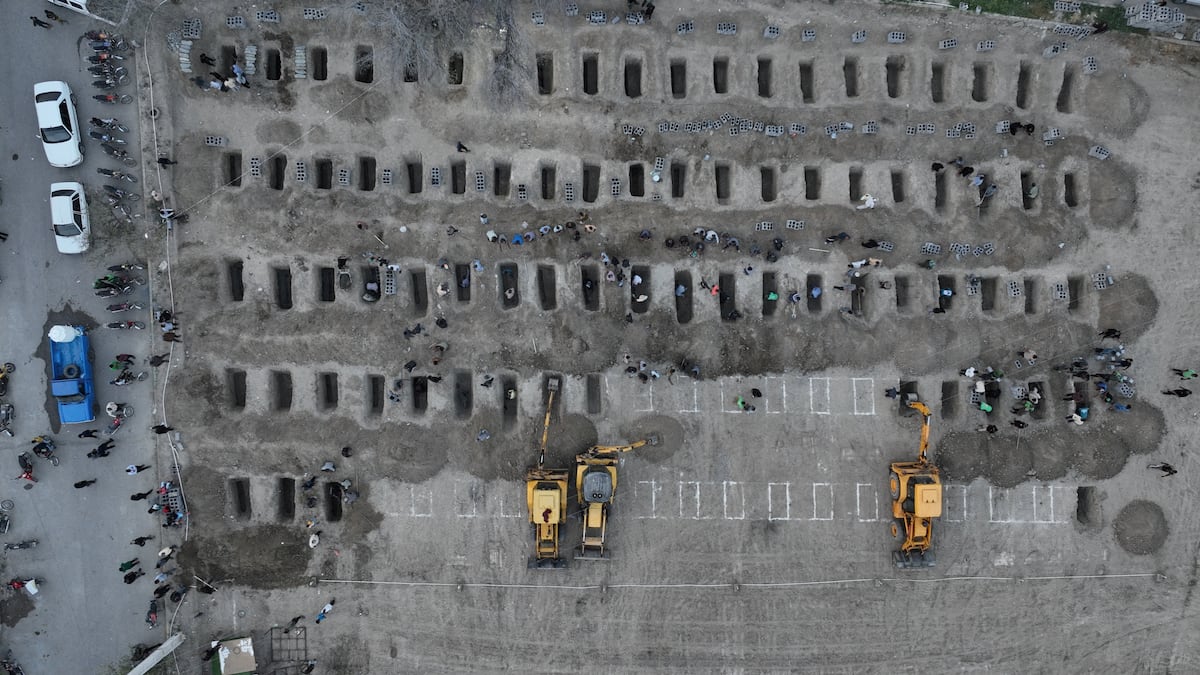
KYIV, Ukraine — On the first day of the U.S.-Iran war, a Tomahawk cruise missile struck Shajareh Tayyebeh elementary school in Minab, southern Iran. At least 168 people were killed — more than 100 of them under the age of 12, according to UN and Iranian officials.
The school building sat fewer than 100 yards from a long-time Islamic Revolutionary Guard Corps naval installation and was previously located within the IRGC compound perimeter until a wall appeared between 2013 and 2016, according to an analysis of satellite imagery by Amnesty International .
By the time the U.S. and Israel launched their first strikes on Feb. 28, the school had been established several years prior. It was active on social media and had its own website, a Reuters investigation found.
“Was artificial intelligence, including the use of the Maven Smart System, used to identify the Shajareh Tayyebeh school as a target?” more than 120 House Democrats asked in a March 12 letter to the Pentagon, just days after 46 Senate Democrats sent a similar request demanding clarity on the deadly hit.
The Maven Smart System , a targeting and intelligence platform built by data analytics company Palantir Technologies under a $1.3 billion Pentagon contract, was built to solve a problem that has grown exponentially in recent years: information overload — with artificial intelligence as its secret weapon.
Maven fuses satellite imagery, drone feeds, radar data and signals intelligence into a single interface, then classifies targets, recommends weapons systems and generates strike packages in near real time, compressing kill-chain reasoning and decision making into the fastest timelines ever seen on the battlefield.
And it uses Anthropic’s Claude AI model , embedded in its system, to semi-autonomously rank targets by strategic importance, drafting automated legal justifications for each strike along the way.
The software generated hundreds of strike coordinates in the first 24 hours of the Iran campaign, enabling the U.S. to hit more than 1,000 targets in the first 24 hours of the war, according to The Washington Post .
After sources briefed on preliminary findings told CNN that U.S. Central Command had created targeting coordinates using outdated intelligence provided by the Defense Intelligence Agency that had not been updated to reflect the school’s presence, one question became central to the inquiries: “If so, did a human verify the accuracy of this target?” they asked.
They are still waiting for an official explanation.
Ukrainian drone operators who build and deploy semi-autonomous targeting systems on the front line told Military Times they recognized the likely culprit immediately.
Ihor Matviyuk, the director of Aero Center , a Ukrainian drone company that builds and deploys semi-autonomous drones on the front lines of the war with Russia, said he can imagine exactly how the failure happened.
Although he has no inside knowledge of the Minab strike specifically, earlier this month he said that it bears the hallmarks of a targeting failure — not an AI malfunction.
“It was almost definitely a strike on the [given] coordinates,” Matviyuk told Military Times. “The main problem was not the AI — it was how close the military object was to the school.”
Last week, former military officials speaking to Semafor confirmed Matviyuk’s early assessment: “Humans — not AI — are to blame" for the school strike, they said, pointing to stale human-curated data fed to the Pentagon’s Maven targeting platform.
Matviyuk recognized the pattern because he’s had to decide how much AI to use in his own semi-autonomous weapon systems again and again as drone warfare and software capabilities have rapidly evolved on Ukraine’s battlefield.
“Automatic targeting allows us to capture less than half of the targets, not more,” Matviyuk said. “Because they are all still camouflaged.”
Ukrainian soldiers train with drones at an undisclosed location in the Donetsk Oblast, Ukraine, September 2025. (Diego Herrera Carcedo/Anadolu via Getty Images)
The Defense Department’s own data bears that out. Maven can correctly identify objects at roughly 60% accuracy overall — compared with 84% for human analysts.
But that rate drops below 30% in adverse conditions, such as bad weather or poor visibility, according to Pentagon data published in a 2024 Bloomberg report.
The risk of “collateral damage,” as the strike on the Minab school might be categorized in military terminology, is too high — that is why Aero Center and every other Ukrainian drone company that spoke with Military Times says they always leave the final strike decision to a human operator.
“The direct impact is always carried out by the operator’s command,” Matviyuk said, “to prevent civilians from getting under the blow.”
In 2021, an experimental U.S. Air Force targeting AI scored roughly 25% accuracy in real conditions, despite rating its own confidence at 90%, then-Maj. Gen. Daniel Simpson, the Air Force’s assistant deputy chief of staff for intelligence, surveillance, and reconnaissance, told Defense One .
“It was confidently wrong,” Simpson said, summing up the program’s problems. “And that’s not the algorithm’s fault. It’s because we fed it the wrong training data.”
The situation is not expected to improve. Last month, Hegseth slashed the Civilian Protection Center of Excellence workforce by approximately 90% and cut CENTCOM’s civilian casualty assessment team from 10 to one, Politico reported.
Then, after leaving a skeleton staff to oversee the guardrails of the biggest expansion of AI in the military, Deputy Secretary of Defense Steve Feinberg signed a memo earlier this month formalizing AI’s role in military decision making — designating Maven an official program of record and pushing adoption across all U.S. military branches by September, Reuters reported on Friday.
Ukrainian weapon makers like Matviyuk are not shying away from giving AI more autonomy, but they’re using it strategically.
Autonomous targeting is effective for “massive offensive operations, where targets are not camouflaged,” he said, a description that may fit Iran’s fixed military installations, which are far less concealed than most positions on the Ukrainian front.
“We support the idea of using the human element less and less in the drone operator job,” Matviyuk said. “Autonomy, autonomous elements of drones — that’s the stuff we are working on.”
The problem, in his view, was not that the Pentagon used AI. It was that the data behind the target had not been updated since a girls’ school replaced a military headquarters on the same coordinates — and the people whose job it was to verify that data had already been cut from the chain.
AI systems are only as reliable as the people who build, feed and oversee them, Matviyuk emphasized.
When the human link fails, whether through bad data, gutted oversight or compressed timelines — the machine will continue to execute the error with precision.
Former CENTCOM director of intelligence, Lt. Gen. Karen Gibson , was unequivocal about where accountability for lethal strikes lies, regardless of weapon autonomy, at a Center for Strategic and International Studies panel last week.
“I will always come back to the fundamental principle of human responsibility and accountability,” she said. “A commander somewhere will ultimately be held responsible — not a machine or a software engineer.”
乌克兰基辅——在美伊战争爆发的第一天,一枚战斧巡航导弹击中了伊朗南部米纳布的沙贾雷·塔伊贝小学。据联合国和伊朗官员称,至少168人丧生,其中100多人年龄在12岁以下。
根据国际特赦组织对卫星图像的分析,这所学校的建筑距离伊斯兰革命卫队长期使用的海军设施不到 100 码,此前位于伊斯兰革命卫队院落的范围内,直到 2013 年至 2016 年间出现了一堵墙。
路透社的调查发现,在美以两国于2月28日发动首次空袭时,这所学校已经成立数年,并且在社交媒体上十分活跃,还拥有自己的网站。
3月12日,120多名众议院民主党议员在致五角大楼的一封信中问道:“人工智能,包括使用Maven智能系统,是否被用于将Shajareh Tayyebeh学校确定为目标?”就在几天前,46名参议院民主党议员也发出了类似的请求,要求澄清这起致命袭击事件。
Maven 智能系统是由数据分析公司 Palantir Technologies 根据五角大楼 13 亿美元的合同建造的目标定位和情报平台,其建造目的是为了解决近年来呈指数级增长的问题:信息过载——而人工智能则是它的秘密武器。
Maven 将卫星图像、无人机画面、雷达数据和信号情报融合到一个单一界面中,然后对目标进行分类,推荐武器系统,并近乎实时地生成打击方案,将杀伤链推理和决策压缩到战场上前所未有的最快时间线。
该系统嵌入了 Anthropic 公司的 Claude 人工智能模型,可以半自主地根据战略重要性对目标进行排名,并在此过程中为每次打击自动起草法律依据。
据《华盛顿邮报》报道,该软件在伊朗战争爆发后的前 24 小时内生成了数百个打击坐标,使美国能够在战争爆发后的前 24 小时内打击 1000 多个目标。
消息人士向 CNN 透露,初步调查结果显示,美国中央司令部使用国防情报局提供的过时情报创建了目标坐标,而这些情报并未更新以反映该学校的存在。随后,一个问题成为调查的核心:“如果是这样,是否有人核实过这个目标的准确性?”他们问道。
他们仍在等待官方解释。
在前线建造和部署半自主瞄准系统的乌克兰无人机操作员告诉《军事时报》,他们立即认出了可能的罪魁祸首。
乌克兰无人机公司 Aero Center 的负责人伊戈尔·马特维尤克表示,他完全可以想象出这次失败是如何发生的。Aero Center 是一家乌克兰无人机公司,在与俄罗斯的战争前线制造和部署半自主无人机。
虽然他对米纳布袭击事件的具体情况并不了解,但他在本月初表示,这次袭击具有目标定位失败的特征,而不是人工智能故障的特征。
“几乎可以肯定,这是一起针对(给定)坐标的袭击,”马特维尤克告诉《军事时报》。“主要问题不在于人工智能,而在于军事目标距离学校太近了。”
上周,一些前军方官员向 Semafor 证实了 Matviyuk 的早期评估:“造成学校罢课的罪魁祸首是人,而不是人工智能”,他们指出,五角大楼的 Maven 目标平台使用了过时的、由人工整理的数据。
马特维尤克意识到了这种模式,因为随着无人机战争和软件能力在乌克兰战场上迅速发展,他不得不一次又一次地决定在自己的半自主武器系统中使用多少人工智能。
“自动瞄准系统只能让我们捕获不到一半的目标,而不是更多,”马特维尤克说。“因为它们都还处于伪装状态。”
2025年9月,乌克兰顿涅茨克州一处未公开地点,乌克兰士兵正在进行无人机训练。(Diego Herrera Carcedo/Anadolu via Getty Images)
国防部自身的数据也证实了这一点。Maven 的物体识别准确率总体约为 60%,而人工分析员的准确率则为 84%。
但根据彭博社 2024 年发布的一份报告中公布的五角大楼数据,在恶劣天气或能见度差等不利条件下,这一比例会降至 30% 以下。
如果用军事术语来说,对米纳布学校的袭击可能会造成“附带损害”,那么这种风险太高了——这就是为什么航空中心和所有其他接受《军事时报》采访的乌克兰无人机公司都表示,他们总是将最终的打击决定权留给人类操作员。
“直接冲击始终由操作员指挥执行,”马特维尤克说,“以防止平民受到冲击。”
2021 年,美国空军一项实验性目标人工智能在实际条件下的准确率约为 25%,尽管其自身信心指数为 90%。时任空军情报、监视和侦察助理副参谋长的丹尼尔·辛普森少将告诉《国防一号》杂志。
“它大错特错,”辛普森总结该程序的问题时说道。“但这并非算法的错,而是因为我们给它输入了错误的训练数据。”
预计情况不会好转。据Politico报道,上个月,赫格塞斯将民事保护卓越中心的员工人数削减了约90%,并将中央司令部的平民伤亡评估小组从10人削减到1人。
据路透社周五报道,国防部副部长史蒂夫·范伯格在留下少量人员负责监督军事领域最大规模的人工智能扩张的各项保障措施后,于本月初签署了一份备忘录,正式确立了人工智能在军事决策中的作用——将 Maven 指定为正式的记录项目,并推动美国所有军种在 9 月份之前采用该项目。
像Matviyuk这样的乌克兰武器制造商并不回避赋予人工智能更多自主权,但他们正在战略性地使用它。
他表示,自主瞄准对于“目标没有伪装的大规模进攻行动”非常有效,这种描述可能适用于伊朗的固定军事设施,这些设施的隐蔽性远不如乌克兰前线的大多数阵地。
“我们支持在无人机操作员的工作中越来越减少人为因素,”马特维尤克说。“无人机的自主性,也就是无人机的自主功能——这正是我们正在努力的方向。”
在他看来,问题不在于五角大楼使用了人工智能,而在于目标背后的数据自同一坐标上的军事总部被一所女子学校取代后就一直没有更新——而负责核实这些数据的人员也早已被排除在外。
马特维尤克强调,人工智能系统的可靠性取决于构建、维护和监督它们的人的水平。
当人为因素失效时,无论是由于数据错误、监管疏忽还是时间紧迫,机器都会继续精确地执行错误。
前中央司令部情报主管凯伦·吉布森中将在上周战略与国际研究中心的一个小组讨论会上明确表示,无论武器是否自主,致命打击的责任归属在哪里。
“我始终坚持人的责任和问责这一基本原则,”她说。“最终承担责任的是某个地方的指挥官,而不是机器或软件工程师。”