The ‘simple maneuver’ of opening Hormuz strait carries great risks, analysts say分析人士称,打开霍尔木兹海峡这一“简单举措”蕴含着巨大风险。
U.S. President Donald Trump has characterized an operation to unblock the economically vital passage as too simplistic, according to issue experts.
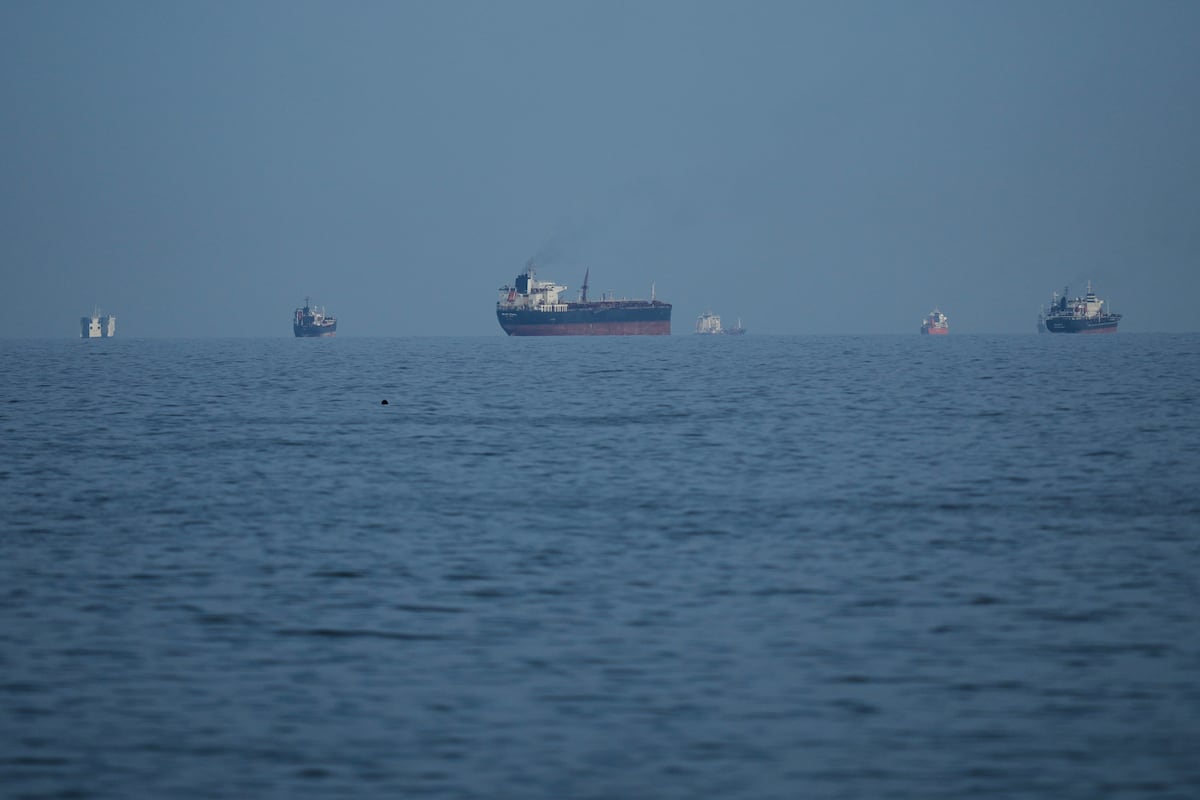
PARIS — U.S. President Donald Trump on Friday called NATO allies “cowards” for their unwillingness to help secure maritime traffic in the Strait of Hormuz, which he said would be a “simple military maneuver” with little risk.
Analysts studying military matters and geopolitics disagree.
While countries including the U.K. and France have said they’re ready to “contribute to appropriate efforts” to ensure safe passage through the Strait, those plans remain in the preparatory stage for now. Western navies operating in the narrow waterway would be well within range of Iranian missiles, cheap drones and even artillery, defense analysts say.
“No, it isn’t easy,” François Heisbourg, a special adviser at the Paris-based Foundation for Strategic Research, said in a response to Trump’s statements posted on Bluesky. “If it were, you presumably wouldn’t be asking us to help you clean up the mess you made.”
The Strait of Hormuz is a relatively constrained maritime waterway , around 50 kilometers wide at the narrowest stretch, though the water is deep enough for fully laden very large crude carriers, or VLCCs — the industry term of art for the biggest oil tankers — to navigate most of the strait. Iran controls the northern coast of the Persian Gulf and along much of the Gulf of Oman, with the Strait of Hormuz the choke point between the two.
“The Strait of Hormuz reminds us that geography matters,” said Frank Hoffman, a senior fellow at the Foreign Policy Research Institute, in an online commentary . “Iran holds a significant advantage there with the ability to range the narrow international shipping channel with small boats with rockets and guns, and an array of anti-ship cruise missiles.”
Iran had more than 1,000 fast attack craft specifically designed for swarming larger naval vessels, an estimated stockpile of more than 2,000 naval mines, shore-based anti-ship ballistic missiles with ranges of more than 700 kilometers and drone swarms capable of saturating point-defense systems, Roxana Niknami, a professor in European studies at the University of Tehran, wrote in a March 5 analysis for the European Institute for Studies on the Middle East and North Africa.
“Any naval presence will be at considerable risk from Iran’s still-extant ability to launch drones and missiles from any point along the coastline,” said Emma Salisbury, a non-resident senior fellow at the Foreign Policy Research Institute. “Without allied contributions, controlling the Strait will likely be extremely difficult, and those contributions are certainly not forthcoming at the moment.”
The Strait is a vital passage for world trade, according to UN Trade and Development data , with 38% of the world’s traded crude oil, 29% of liquefied petroleum gas and 13% of traded chemicals passing through the waterway in the week before the U.S. and Israel started striking Iran on Feb. 28.
India, Taiwan and South Korea are highly dependent on Hormuz.
An activist wearing a cutout mask depicting U.S. President Donald Trump is pictured during a rally against the U.S. demand for South Korea to deploy troops to the Strait of Hormuz, outside the U.S. embassy in Seoul, South Korea, March 16, 2026. (Reuters/Kim Soo-hyeon)
Iran has been targeting commercial vessels in the Strait of Hormuz and the Persian Gulf with missiles and drones, resulting in 17 confirmed incidents between March 1 and March 16, with ships damaged and at least 11 seafarers dead or unaccounted for, according to the International Maritime Organization.
Trump said the Strait of Hormuz will have to be “guarded and policed, as necessary,” by other nations that use it, in a post on his Truth Social account on March 20. The president said the U.S. would help with the effort if asked, though that shouldn’t be necessary once the threat of Iran was removed, saying it would be “an easy military operation for them.”
In another post, he called NATO without the United States a “paper tiger,” unwilling to join the fight against Iran. “Now that the fight is militarily won, with very little danger to them, they complain about the high oil prices they are forced to pay, but don’t want to help open the Strait of Hormuz, a simple military maneuver. So easy for them to do, with so little risk. Cowards, and we will remember.”
Taking questions from reporters on Friday, the U.S. president called reopening the Strait “very simple” and “relatively safe,” but demanding in terms of the volume of ships.
The narrow nature of the Strait would put naval vessels operating there in about the same range as the drone-swarm kill zone in Ukraine, said retired U.K. Air Marshal Martin Sampson, executive director for the Middle East at the International Institute for Strategic Studies, in a webinar on Wednesday.
“Smaller, lower-caliber, one-way drones have not had the opportunity to come into play in this conflict so far,” Sampson said. “But Strait of Hormuz operations may well bring different capabilities to bear. So the nature of the operating environment fundamentally changes.”
Meanwhile, China is watching and learning, and U.S. capabilities in the Strait of Hormuz will be of direct operational relevance to the Indo-Pacific theater, according to Sampson.
“Whatever the U.S. deploys there is likely to compromise some of its advantage that it feels that it’s developing and able to deploy in the Indo-Pacific, a priority region,” Sampson said.
Iran’s capabilities today mean the operational challenge of reopening the Strait of Hormuz today is “categorically more demanding” than in 1988, according to Niknami. Meanwhile, the U.S. without allied support doesn’t have the assets for strike, escort and mine-sweeping at the same time, said Salisbury at the FPRI.
The American operation Earnest Will to protect Kuwaiti-owned tankers from Iranian attacks in 1987 and 1988 was “a different world,” said Nick Childs, IISS senior fellow for naval forces and maritime security, in a webinar with Sampson. He said the U.S. at the time had a fleet of nearly 600 ships, compared to fewer than 300 today, and the Navy already overstretched.
The Strait of Hormuz is a more challenging environment than the Red Sea, with lower warning times, according to Childs. Additionally, even residual Iranian capabilities may be more potent that those of the Houthis in the Red Sea, while facing warships with limited capabilities and with questions around strategic stockpiles of munitions, he said.
The mine threat was underestimated in Operation Earnest Will, and mine countermeasures remain a weakness today, Childs said. While the U.S. has Littoral Combat Ships that can be equipped for mine clearing, those were never meant to be in high-intensity operations, and like any other mine clearing assets, would need protection if combat operations were still underway, according to the researcher.
Allies in the Gulf region have modern ships that could contribute to escort or mine-countermeasure missions, but with “a limited ability, actually, to look after themselves in that such a situation, let alone protect others,” Childs said.
Childs said some estimates suggest Iran has 5,000 to 6,000 mines of different types, and if its mine-laying assets are destroyed, Iran could in a worst case just “roll down mines off the back of a dhow.” He said that just the threat of mines could make shippers reluctant to send their vessels through the Strait.
“Mines have two warheads,” Childs said. “One is a high-explosive warhead, and the other one is a psychological one. Just the threat and thought of the possibility that there might be a mining threat may be enough to maintain that stranglehold.”
Rudy Ruitenberg is a Europe correspondent for Defense News. He started his career at Bloomberg News and has experience reporting on technology, commodity markets and politics.
巴黎——美国总统唐纳德·特朗普周五称北约盟国是“懦夫”,因为他们不愿意帮助确保霍尔木兹海峡的海上交通安全。他表示,这将是一次“简单的军事行动”,风险很小。
研究军事和地缘政治的分析人士意见不一。
尽管包括英国和法国在内的一些国家表示愿意“为确保海峡安全通行做出适当努力”,但这些计划目前仍处于筹备阶段。国防分析人士指出,西方海军在这一狭窄水道活动时,将完全处于伊朗导弹、廉价无人机甚至火炮的射程之内。
“不,这并不容易,”总部位于巴黎的战略研究基金会特别顾问弗朗索瓦·海斯堡在回应特朗普发表在Bluesky网站上的言论时说道。“如果这很容易,你大概就不会来找我们帮你收拾你造成的烂摊子了。”
霍尔木兹海峡是一条相对狭窄的海上航道,最窄处仅约50公里宽,但水深足以让满载的超大型原油运输船(VLCC,业内对最大油轮的称呼)航行于海峡的大部分区域。伊朗控制着波斯湾北部沿岸以及阿曼湾的大部分地区,霍尔木兹海峡是连接这两片区域的咽喉要道。
“霍尔木兹海峡提醒我们,地理位置至关重要,”外交政策研究所高级研究员弗兰克·霍夫曼在一篇网络评论中写道。“伊朗在那里拥有显著优势,它能够利用配备火箭弹和火炮的小型船只以及一系列反舰巡航导弹,对这条狭窄的国际航道进行打击。”
德黑兰大学欧洲研究教授罗克萨娜·尼克纳米在3月5日为欧洲中东和北非研究所撰写的分析文章中指出,伊朗拥有1000多艘专门设计用于围攻大型海军舰艇的快速攻击艇,估计拥有2000多枚水雷,射程超过700公里的岸基反舰弹道导弹,以及能够饱和攻击点防御系统的无人机群。
“伊朗仍然具备从海岸线任何地点发射无人机和导弹的能力,因此任何海军存在都将面临相当大的风险,”外交政策研究所非常驻高级研究员艾玛·索尔兹伯里表示。“如果没有盟国的协助,控制霍尔木兹海峡将极其困难,而目前盟国显然不会提供这种协助。”
根据联合国贸易和发展组织的数据显示,霍尔木兹海峡是世界贸易的重要通道,在美以两国于 2 月 28 日开始打击伊朗的前一周,全球 38% 的原油贸易、29% 的液化石油气贸易和 13% 的化学品贸易都经过该水道。
印度、台湾和韩国高度依赖霍尔木兹河。
2026年3月16日,在韩国首尔美国大使馆外,一名活动人士戴着印有美国总统唐纳德·特朗普头像的面具,参加反对美国要求韩国向霍尔木兹海峡部署军队的集会。(路透社/金秀贤)
据国际海事组织称,伊朗一直在使用导弹和无人机袭击霍尔木兹海峡和波斯湾的商船,导致3月1日至3月16日期间发生17起已确认的事件,造成船只受损,至少11名海员死亡或下落不明。
3月20日,特朗普在其“真相社交”账号上发帖称,霍尔木兹海峡需要由其他使用该海峡的国家“根据需要进行守卫和巡逻”。总统表示,如果被要求,美国将提供帮助,但一旦伊朗的威胁消除,就没有必要这样做了,因为“对他们来说,这将是一次简单的军事行动”。
在另一篇帖子中,他称没有美国的北约是“纸老虎”,不愿加入对抗伊朗的战斗。“现在这场战争在军事上已经胜利,他们几乎没有任何危险,却抱怨被迫支付高昂的油价,却不愿协助打通霍尔木兹海峡——这明明只是一个简单的军事行动。对他们来说,这轻而易举,风险也微乎其微。懦夫,我们会记住的。”
周五,美国总统在回答记者提问时称,重新开放海峡“非常简单”且“相对安全”,但就船舶数量而言却要求很高。
退役英国空军元帅、国际战略研究所中东事务执行主任马丁·桑普森周三在一次网络研讨会上表示,海峡的狭窄性质使得在那里活动的海军舰艇处于与乌克兰无人机群杀伤区大致相同的范围内。
桑普森说:“到目前为止,小型、低口径、单程无人机还没有机会在这场冲突中发挥作用。但霍尔木兹海峡的行动很可能会运用不同的能力。因此,作战环境的性质从根本上发生了变化。”
桑普森表示,与此同时,中国正在观察和学习,美国在霍尔木兹海峡的能力将对印太地区具有直接的作战意义。
桑普森说:“无论美国在那里部署什么,都可能损害其在印太地区(美国优先发展的区域)所拥有的一些优势。”
尼克纳米表示,伊朗如今的实力意味着,重新开放霍尔木兹海峡的行动挑战比1988年“无疑更加艰巨”。与此同时,外交政策研究所的萨利斯伯里指出,美国在没有盟友支持的情况下,无法同时执行打击、护航和扫雷任务。
国际战略研究所(IISS)海军力量和海上安全高级研究员尼克·查尔兹在与桑普森共同举办的网络研讨会上表示,1987年至1988年美国为保护科威特油轮免受伊朗袭击而开展的“坚定意志行动”与现在“截然不同”。他指出,当时美国拥有近600艘舰艇,而如今不足300艘,海军早已捉襟见肘。
查尔兹表示,霍尔木兹海峡的环境比红海更具挑战性,预警时间更短。此外,他还指出,即使伊朗残存的军事能力也可能比红海的胡塞武装更强,而胡塞武装的军舰能力有限,且战略弹药储备也存在疑问。
查尔兹表示,在“坚定意志行动”中,水雷威胁被低估了,而水雷反制措施至今仍是美国的薄弱环节。这位研究人员指出,虽然美国拥有可改装用于扫雷的濒海战斗舰,但这些舰艇原本并非设计用于高强度作战,而且与其他任何扫雷装备一样,如果作战行动仍在进行,它们也需要保护。
查尔兹说,海湾地区的盟国拥有现代化舰艇,可以为护航或扫雷任务做出贡献,但“实际上,在这种情况下,它们保护自己的能力有限,更不用说保护他人了”。
查尔兹表示,据估计,伊朗拥有5000至6000枚不同类型的水雷,如果其布雷设施被摧毁,最坏的情况下,伊朗甚至可以“用帆船将水雷滚落”。他指出,仅仅是水雷的威胁就足以让航运公司不愿派遣船只通过霍尔木兹海峡。
“地雷有两个弹头,”查尔兹说。“一个是高爆弹头,另一个是心理战弹头。仅仅是地雷威胁本身,以及人们可能存在地雷威胁的想法,就足以维持这种扼杀局面。”
鲁迪·鲁伊滕贝格是《防务新闻》的欧洲记者。他的职业生涯始于彭博新闻社,拥有报道科技、大宗商品市场和政治方面的经验。