Israel Is Getting A Single F-35 Test Jet Unlike Any Other以色列将获得一架与众不同的F-35测试机。
The Israeli Air Force's special testbed will only make the country's Joint Strike Fighter fleet more unique.
新闻视频
By Joseph Trevithick
Updated Jul 5, 2020 7:03 PM EDT
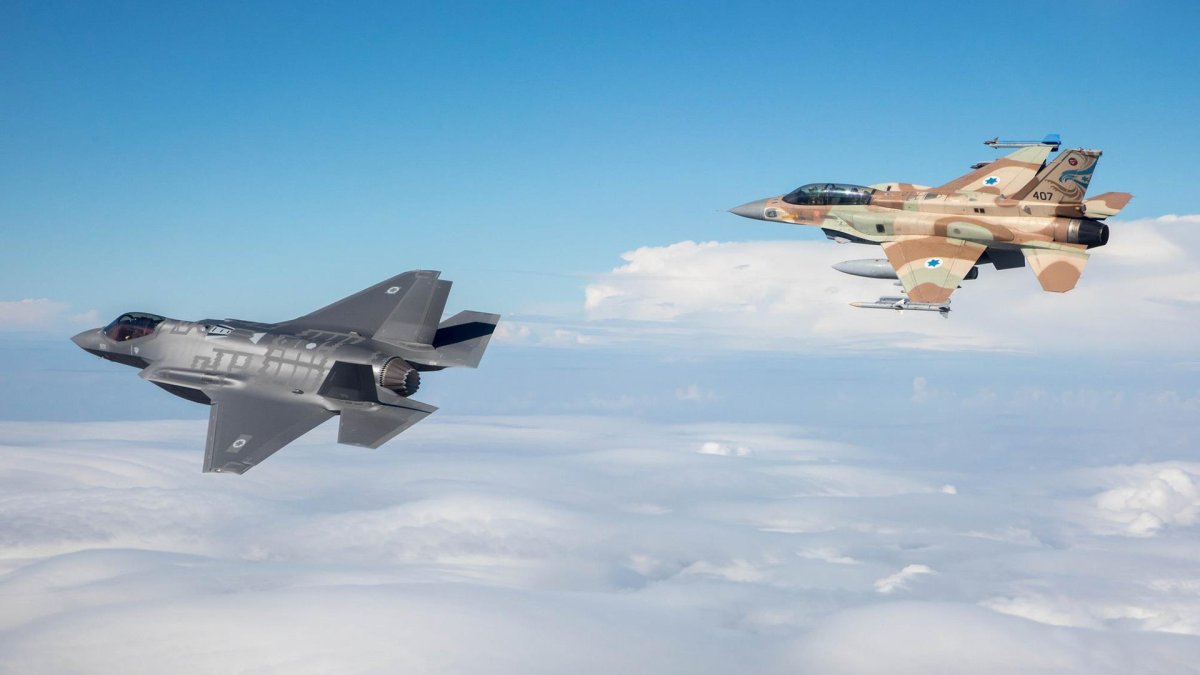
Israel continues to win unique concessions surrounding its participation in the F-35 Joint Strike Fighter program. The country’s increasingly independent development could ultimately produce a version of the aircraft specifically suited to its needs that differs significantly from Lockheed Martin’s existing offerings.
In May 2017, it emerged that Lockheed was specially building a one-off sub-variant of the F-35I “Adir” – meaning “mighty one” in Hebrew – for Israel and expected to deliver it by 2020. The plane would act as a testbed for the country’s planned, but unspecified modifications. The Israeli Air Force is planning on purchasing as many as 75 F-35s, primarily the I variant, which is similar to the U.S. Air Force’s A model. The final fleet could include derivatives of the U.S. Marine Corps’ short- and vertical-takeoff capable B version , as well. The first “Adir” touched down in Israel in December 2016.
“This unique aircraft, which was not part of any other F-35 contract, will enable us to begin the work of upgrading the capabilities of this aircraft so that it answers our special operational requirements,” the head of the Israeli Air Force’s main test center, identified only as Lieutenant Colonel Shlomy told FlightGlobal . “All our platforms have been upgraded to enable stretching the flight envelope while using the unique weapon systems made by Israeli industry.”
Shlomy didn’t offer any details about what equipment the aircraft would actually test, but Israel has long been negotiating with Lockheed for greater access to the inner workings of the Joint Strike Fighter, in particular its central computer brain, the Autonomic Logistics Information System (ALIS). In spite of its name, ALIS handles a host of critical mission functions, including acting as the loading port for vital mission data such as potential threats and hazards during a sortie.
In April 2016, state-owned defense contractor Israel Aerospace Industries confirmed it would install an additional suite of command and control software on top of the F-35’s basic programming when it received its first jets. No other country participating in the Joint Strike Fighter program has received the right to tinker with the aircraft at this level, instead having to rely on central U.S.-based facilities to devise new code packages. Israeli officials have been understandably secretive about what their additional lines of code will add on top of the aircraft’s existing functionality.
However, it seems reasonable to assume the modification would help link the aircraft’s mission computer and sensors to Israel-specific networks. It could aid with a host of other planned changes , which will include new communications systems and defensive electronic countermeasures, some of which may double as active electronic attack systems to jam enemy radars or radios. This combination of equipment could potentially make the Israeli jets more multi-purpose than their counterparts around the world. And Having access to the software and mission systems architecture could help keep the jets fully capable even if the country suddenly found itself cut off from the global infrastructure the U.S. military, Lockheed and other future F-35 operators are establishing to support the ALIS.
“The ingenious, automated ALIS system that Lockheed Martin has built will be very efficient and cost-effective,” an anonymous Israeli Air Force officer told Defense News in 2016. “But the only downfall is that it was built for countries that don’t have missiles falling on them.”
Perhaps more importantly, Israel has also secured the unique right to perform depot-level maintenance, to include overhauling engines and airframe components, within the country. Again, other future Joint Strike Fighter operators will have to send their aircraft to designated facilities in specific countries instead.
“We will not go to Italy or anywhere else,” Israeli Air Force Lieutenant Colonel Maxim Orgad, head of the Engineer Division at the service’s Depot 22, told Defense News in 2017. “These aircraft [the F-35s] will remain in Israel for whatever they need.”
In addition, greater access to the F-35’s mission systems will make it easier for Israel to integrate its own particular weapons onto the aircraft. In particular, the county is interested in purchasing a version of Rafael’s SPICE – standing for Smart, Precise Impact, Cost-Effective – a precision-guided bomb with electro-optical and GPS-targeting capabilities, which fits in the Adir’s internal weapons bay. Pop-out wings reportedly give the 1,000 pound-class version of the weapon a stand-off range of more than 60 miles. Other munitions, like the Delilah standoff missile will also likely show up on the F-35I’s weapons list.
On top of that, domestic Israeli defense contractors are working with Lockheed to develop country-specific add-ons to the aircraft’s frame, including possible new external and conformal fuel tanks. If engineered correctly, this flush design could significantly extend the F-35I’s unrefueled range while hopefully keeping its low-observable characteristics intact. Lockheed’s proposed external wing tanks compromise the jet’s stealthy shape. Extra fuel on board the aircraft eases pressure on the Israeli Air Force’s relatively small aerial tanker fleet, too.
Coupled with stand-off weapons, this added range in full stealth mode could be a great benefit to the Israeli Air Force, which routinely conducts pre-preemptive strikes in various countries, such as Syria , which have increasingly potent air defense networks. But really, the F-35I’s main reason for being is Iran. Oh, and there’s always the possibility it could enhance the country’s unspoken nuclear deterrent . Experts believe Israel has a stockpile of thermonuclear gravity bombs, in addition to land-based and submarine-launched missiles .
But Israel expects much of this work to be evolutionary. The country’s air arm wants to have the first F-35s ready for combat by the end of 2017. It expects to support that push by conducting at least half the pilot flight training in simulators on the ground. At the same time it will, it will be testing its new software and other additions. Having a specialized test plane on hand means it won’t necessarily have to pull combat aircraft out of normal rotation to aid in this work. It also allows for future research and development to occur without impeding routine operations once the Joint Strike Fighters actually reach initial operational capability or causing any unnecessary delays in progress toward full operational capability.
Regardless, Israel’s peculiar strategic position has long pushed the country to be as self-sufficient as possible, especially when it comes to military technology. As a result, it also has a long, established track record of doing so without compromising foreign system, which no doubt helped convince Lockheed to give the country’s engineers and technicians greater access to the design details.
“We recognized that Israel is also going to have sovereign sustainability requirements,” Jack Crisler, the vice president of Lockheed Martin’s F-35 business development and strategic integration division, explained to Defense News in 2016. “So we and the Joint Program Office are working through that now to see how this will be done.”
The planned modifications in many ways mirror previous work Israel has done to its American-made F-15 and F-16 fighter jets, both of which are loaded with country-specific equipment. The War Zone’s own Tyler Rogoway has written extensively
on this history in the past, explaining:
The “unique” modifications the IAF makes to American fighters is also nothing new, nor is the manner in which they have employed them. For instance, Israel was the first to convert the F-15 Eagle into an operational attack aircraft and conformal fuel tanks allowed them to strike targets thousands of miles from Israel. Today, the IAF’s F-15s and F-16s are loaded with Israel-specific communications, electronic warfare suites, and other combat-related sub-systems tailored to the potential threats and objectives they may face in the future.
This experience and cooperation with the original manufacturers has allowed Israeli crews to perform almost miraculous feats when it comes to these jets. In one particular impressive case , Depot 22 got a two-seat F-15B back in the air after replacing its completely destroyed rear half with another one from a retired single-seat F-15A. When the Israeli technicians asked Boeing, which still makes newer models of F-15 fighters, for their advice on the project, the company reportedly declined to respond because they thought the very idea was some sort of practical joke.
It seems likely that the Israelis intend to keep this up when they begin flying the F-35. Having a unique test version around will only help them refine their modifications and develop entirely new upgrades in the future.
Contact the author: joe@thedrive.com
Comments couldn’t be loaded. Please refresh the page.
作者:约瑟夫·特雷维西克
更新于美国东部时间2020年7月5日晚上7:03
以色列在参与F-35联合攻击战斗机项目方面持续获得独特的优惠条件。该国日益独立的研发能力最终可能使其研发出一款专门满足自身需求的战机版本,与洛克希德·马丁公司现有的产品截然不同。
2017年5月,有消息称洛克希德·马丁公司正在为以色列特别打造一架独一无二的F-35I“阿迪尔”(Adir,希伯来语意为“强大的”)子型号,预计将于2020年交付。这架飞机将作为以色列计划但未公开的改进方案的试验平台。以色列空军计划采购多达75架F-35战斗机,主要为I型,该型号与美国空军的A型相似。最终的机队可能还包括美国海军陆战队具备短距和垂直起降能力的B型衍生机型。首架“阿迪尔”于2016年12月降落在以色列。
“这架独特的飞机不属于任何其他F-35合同,它将使我们能够着手升级该型飞机的性能,使其满足我们的特殊作战需求,”以色列空军主要测试中心负责人,仅以中校施洛米(Shlomy)的名义告诉FlightGlobal。“我们所有的平台都已升级,以便在使用以色列工业制造的独特武器系统的同时,扩展飞行包线。”
什洛米并未透露该飞机将实际测试哪些设备,但以色列长期以来一直在与洛克希德公司谈判,以期获得更多了解联合攻击战斗机内部运作机制的机会,特别是其中央计算机系统——自主后勤信息系统(ALIS)。尽管名称如此,ALIS 却处理着一系列关键任务功能,包括在执行任务期间作为重要任务数据的加载端口,例如潜在威胁和危险信息。
2016年4月,以色列国有国防承包商以色列航空航天工业公司(IAI)确认,在接收首批F-35战机时,将在F-35的基础程序基础上加装一套额外的指挥控制软件。参与联合攻击战斗机(JSF)项目的其他国家均未获得如此级别的修改权,只能依赖位于美国的中央机构开发新的代码包。以色列官员对新增代码的具体功能一直讳莫如深,这也在情理之中。
然而,可以合理推断,此次改装将有助于将飞机的任务计算机和传感器连接到以色列专用网络。它有助于其他一系列计划中的改进,包括新的通信系统和防御性电子对抗措施,其中一些措施可能兼作主动电子攻击系统,用于干扰敌方雷达或无线电。这些设备的组合可能会使以色列战机比世界其他国家的同类战机更具多用途性。此外,即使以色列突然与美国军方、洛克希德·马丁公司和其他未来F-35用户正在建立的、用于支持“先进作战系统”(ALIS)的全球基础设施失去联系,拥有对软件和任务系统架构的访问权限也能确保战机保持完全作战能力。
一位不愿透露姓名的以色列空军军官在2016年接受《防务新闻》采访时表示:“洛克希德·马丁公司研发的这款精巧的自动化ALIS系统将非常高效且经济实惠。但唯一的缺点是,它是为那些不会遭受导弹袭击的国家设计的。”
或许更重要的是,以色列还获得了在国内进行包括发动机和机身部件大修在内的全套维修服务的独特权利。而其他未来的联合攻击战斗机用户则必须将飞机送往特定国家的指定设施进行维修。
“我们不会去意大利或其他任何地方,”以色列空军第22号维修站工程部负责人马克西姆·奥尔加德中校在2017年接受《防务新闻》采访时表示,“这些飞机(F-35)将留在以色列,以备不时之需。”
此外,更便捷地获取F-35的任务系统将使以色列更容易将其特有的武器集成到该战机上。特别是,以色列有意采购拉斐尔公司SPICE(智能、精确、经济高效)炸弹的改进型。SPICE是一种具备光电和GPS制导能力的精确制导炸弹,可装入F-35“阿迪尔”战斗机的内置弹舱。据报道,其可伸缩弹翼使这款1000磅级炸弹的防区外射程超过60英里。其他弹药,例如“黛莉拉”防区外导弹,也可能出现在F-35I的武器清单中。
此外,以色列国内的国防承包商正与洛克希德公司合作,为F-35I战机开发适用于以色列国情的附加组件,包括可能的新型外挂式和保形油箱。如果设计得当,这种齐平式设计有望显著延长F-35I的无加油航程,同时保持其隐身性能。洛克希德公司提出的外挂式油箱方案会影响战机的隐身性能。机上额外的燃油也有助于缓解以色列空军相对较小的空中加油机队的压力。
结合防区外武器,这种在完全隐身模式下增加的射程对以色列空军来说将是一大优势。以色列空军经常在叙利亚等防空网络日益强大的国家进行先发制人的打击。但实际上,F-35I存在的主要目的是为了应对伊朗。此外,它还有可能增强以色列未公开的核威慑力量。专家认为,以色列除了陆基和潜射导弹外,还拥有热核重力炸弹的储备。
但以色列预计这项工作的大部分将是渐进式的。该国空军希望在2017年底前使首批F-35战机做好作战准备。为了支持这一目标,以色列计划在地面模拟器上完成至少一半的飞行员飞行训练。与此同时,以色列还将测试其新软件和其他新增设备。拥有一架专用测试飞机意味着以色列无需将作战飞机从正常的轮换序列中抽调出来进行这项工作。此外,这也使得未来的研发工作能够在联合攻击战斗机真正达到初始作战能力后,在不影响日常作战行动或造成任何不必要的延误的情况下进行,从而确保其全面具备作战能力。
无论如何,以色列特殊的战略地位长期以来促使该国尽可能地实现自给自足,尤其是在军事技术领域。因此,以色列在不损害外国体系的前提下,也拥有长期且卓著的自给自足记录,这无疑有助于说服洛克希德公司向以色列的工程师和技术人员提供更多设计细节。
洛克希德·马丁公司F-35业务发展和战略整合部门副总裁杰克·克里斯勒在2016年接受《防务新闻》采访时解释说:“我们意识到以色列也有自主可持续性方面的要求。因此,我们和联合项目办公室正在研究如何实现这一点。”
计划中的改装在许多方面都与以色列之前对其美国制造的F-15和F-16战斗机所做的改装类似,这两款战斗机都装载了以色列特有的设备。《战区》的泰勒·罗戈韦对此进行了广泛的报道。
关于这段历史,过去曾解释过:
以色列空军对美国战斗机进行的“独特”改装并非新鲜事,其使用方式也并无新意。例如,以色列率先将F-15“鹰”式战斗机改装成作战攻击机,而保形油箱的运用使其能够打击数千英里之外的目标。如今,以色列空军的F-15和F-16战斗机都配备了以色列专用的通信系统、电子战系统以及其他作战相关的子系统,这些系统均根据以色列未来可能面临的潜在威胁和作战目标量身定制。
凭借与原制造商的合作经验,以色列机组人员在这些战机的维修方面几乎创造了奇迹。其中一个令人印象深刻的案例是,以色列第22维修站用一架退役的单座F-15A的后半部分替换了完全损毁的双座F-15B,使其重新翱翔蓝天。据报道,当以色列技术人员就此项目向仍在生产新型F-15战斗机的波音公司寻求建议时,该公司拒绝回应,因为他们认为这纯粹是个玩笑。
以色列人似乎打算在F-35开始试飞时继续保持这种做法。拥有一个独特的测试版本只会帮助他们完善改进方案,并在未来开发全新的升级版本。
联系作者:joe@thedrive.com
评论加载失败,请刷新页面。