Tighter ‘bottleneck’ regime on money transfers in force across financial system under central bank orders根据央行命令,整个金融体系正在实施更严格的资金转移“瓶颈”机制。
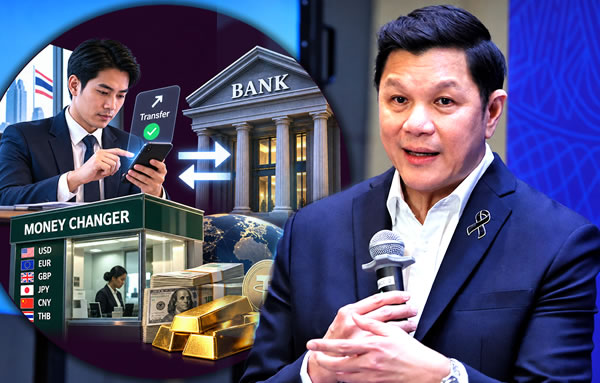
Bank of Thailand Governor Vitai Ratanakorn orders financial ‘bottlenecks’ as 11 bodies target scams, gambling and illicit cash, tracking money through bank transfers, withdrawals, money… Read More ›
新闻视频
September 15, 2026 at 11:01 am
in Economy , Living , Media , Thailand
Thailand has launched a sweeping crackdown on illicit money across its financial system. Bank of Thailand Governor Vitai Ratanakorn has brought 11 financial bodies into the drive, targeting scams, online gambling, illegal businesses and corruption. Banks, payment firms and money changers will track deposits, transfers and withdrawals through to gold, foreign currency and digital assets. Suspect accounts face faster freezes and blocks, while financial data will increasingly reach the Anti-Money Laundering Office, police, anti-corruption investigators and securities regulators. Indeed, Vitai Ratanakorn, Governor of the Bank of Thailand, has set a goal of creating ‘bottlenecks’ to control and screen the flow of funds.
Bank of Thailand Governor Vitai Ratanakorn orders financial ‘bottlenecks’ as 11 bodies track illicit money through banks, cash, gold, foreign currency and digital assets. ( Source: Bank of Thailand )
Thailand’s central bank has opened a wider front against illicit money moving through the country’s financial system. The Bank of Thailand (BOT) joined 11 financial sector bodies in the initiative on September 10. Crucially, the framework moves beyond the long-running crackdown on mule accounts. It targets money linked to online gambling, scams, illegal businesses and corruption.
Under the new framework, financial institutions will scrutinise money throughout its journey across the system. Checks will start when funds enter an account. From there, banks will examine transfers, withdrawals and subsequent asset conversions. Foreign currencies, gold and digital assets are specifically within the scope.
At the same time, banks will move faster against accounts linked to wrongdoing. Funds reaching implicated accounts must be frozen or blocked promptly. Accounts should also be closed quickly when suspicious transfers get through. The aim is to stop money before it moves further through the financial chain.
Vitai brings finance sector together as crackdown expands beyond mule accounts to illicit money flows
BOT Governor Vitai Ratanakorn said the initiative consolidates measures previously pursued separately. “What we have done over the past 11 months may have looked like separate pieces, but what we are doing today is bringing the whole industry connected with finance together,” Mr Vitai said.
The initiative is formally called the Framework for Safeguarding the Financial Sector from Illicit Activities. Its scope covers banks and other financial providers. Notably, it also brings payment companies and money changers into the operation. The BOT wants to prevent financial services from becoming conduits for illegal transactions.
Until now, continued screening of mule accounts has formed a major part of the response. Mr Vitai said that work had helped reduce losses and the frequency of offending. Yet the central bank identified a wider challenge. Money can move through several financial stages after entering an account.
For example, funds can pass through transfers before being withdrawn as cash. They can then be converted into foreign currency or gold. Alternatively, money can move into digital assets. As a result, the BOT wants controls operating throughout that chain rather than at one point.
One priority involves accounts connected with online gambling. The central bank wants to prevent those accounts receiving money obtained through deception. If transfers still reach them, banks should close or block the accounts quickly. In turn, this would obstruct further transfers and withdrawals.
Payment firms tighten merchant checks as banks target cash withdrawals, gold and digital asset flows
On another front, payment providers are being drawn more deeply into financial monitoring. They must prevent scammers and illegal businesses receiving funds through their services. The requirement covers transfers and other payment methods. Additionally, providers will strengthen ongoing checks on merchants using their systems.
Those merchant checks form another layer of the new framework. Payment providers will continue scrutinising businesses after they enter their systems. Separately, they will share data that can support analysis of financial trails. This extends monitoring beyond conventional bank accounts into other payment channels.
Cash withdrawals are another major focus. Once suspect money leaves an account as cash, it can move into other assets. In response, banks will make withdrawals from implicated accounts more difficult. Mr Vitai specifically highlighted cash used to buy gold or acquire digital assets.
“We have to make it difficult to withdraw money from those accounts, especially cash withdrawals used to convert it into other assets, such as gold or USDT,” Mr Vitai said.
USDT is among the digital assets specifically identified by the governor. Foreign currency and gold were also cited as destinations for funds. Accordingly, scrutiny will continue after money leaves its original account. The financial trail will be followed towards its eventual conversion.
Banks plan five measures as wider information sharing breaks barriers across Thailand’s financial sector
Banks plan five measures under the framework. However, the bulletin did not detail those five measures individually. The broader strategy centres on blocking receipt, transfer, withdrawal and conversion of illicit funds. Information sharing will underpin much of that work.
In parallel, the BOT plans to break down information barriers between financial institutions. Individual banks have previously depended largely on information available within their own systems. That creates limitations when money moves between separate institutions. The new framework therefore seeks broader visibility across the financial sector.
Commercial banks will participate in that information-sharing network. State-owned financial institutions will also be involved. Furthermore, foreign banks operating in Thailand are included. Non-bank financial providers, payment firms and money changers complete the wider network described by the BOT.
As part of this, institutions will be better positioned to examine money moving between different financial services. One bank may see only the first transfer. Another institution could handle the next movement. A payment provider or money changer might subsequently become involved.
Financial data will flow to AMLO, police and regulators as BOT widens scrutiny across transaction networks
The BOT wants those separate financial movements connected. Consequently, information held by individual institutions will feed into broader financial-trail analysis. The approach widens scrutiny from individual accounts towards networks of transactions. It also creates more points where suspicious money can be blocked.
Beyond the financial sector, relevant information will be shared with enforcement and regulatory bodies. The Anti-Money Laundering Office (AMLO) is among them. The National Anti-Corruption Commission will also receive relevant information. Police and the Securities and Exchange Commission (SEC) are included as well.
Each organisation will use the information under its respective responsibilities. Thus, financial institutions will concentrate on transactions and financial barriers. Police and other agencies will retain their enforcement roles. Anti-money laundering and anti-corruption bodies will act within their existing mandates.
Mr Vitai acknowledged clear limits on the Bank of Thailand’s powers. The central bank cannot directly suppress crime or arrest suspects. Instead, he said the financial sector would create “bottlenecks” throughout the movement of illicit money. “We may not have the power to suppress crime or make arrests directly, but we can create difficulties, create bottlenecks and make these transactions more complicated, reducing their volume substantially,” Mr Vitai said.
Banks move faster to block suspect funds as framework targets transfers, withdrawals and asset conversion
In practice, those obstacles begin when funds attempt to enter an implicated account. Where possible, institutions should prevent the money from arriving. Otherwise, the account should be blocked quickly after suspect funds arrive. The funds themselves should also be frozen or blocked promptly.
Thereafter, attention shifts towards onward movement. Banks will seek to make further transfers more difficult. Withdrawals provide another intervention point. Ultimately, controls will extend towards conversion into gold, foreign currencies or digital assets.
Speed is particularly important under the framework. Money can move from an account through transfers, withdrawals and asset conversion. Delays can therefore allow funds to reach another financial channel. Faster action against implicated accounts is a central element of the September 10 initiative.
Likewise, payment providers are expected to stop illegal recipients before funds move further. Their role covers scammers and other illegal businesses. Continuing merchant checks will provide another source of information. Data sharing can then help trace transactions across separate payment channels.
Previously, a bank’s view was largely confined to activity within its own system. A transaction could therefore appear as one isolated movement. Under the wider framework, participating institutions can share relevant information. This allows separate stages of a financial trail to be examined together.
BOT stresses supervisory role as wider framework makes illicit financial channels harder to exploit
For its part, the BOT is coordinating financial-sector measures rather than assuming law-enforcement powers. The distinction was stressed by Mr Vitai. The central bank and financial institutions cannot arrest people. They can, however, make financial channels harder to use.
That approach begins with accounts receiving money connected with wrongdoing. It then moves through transfers between accounts. After that, controls target cash withdrawals. The final stage involves efforts to prevent conversion into other forms of value.
Gold is one such destination identified by the governor. Foreign currencies provide another route. Digital assets, including USDT, form another part of the financial chain. Hence, the framework reaches well beyond ordinary bank transfers.
Meanwhile, the inclusion of money changers broadens the operation further. Foreign banks and state-owned institutions also sit inside the same framework. Payment firms add another layer outside conventional banking. Together, the 11 financial sector bodies cover several stages through which money can move.
The crackdown also broadens the type of activity under scrutiny. Mule accounts remain part of the operation. However, online gambling, scams, illegal businesses and corruption are now explicitly within the wider framework. The financial sector is therefore being asked to examine several sources of illicit money.
BOT targets both entry and exit points as crackdown follows illicit funds through the financial system
Significantly, the BOT is targeting both entry and exit points. Banks will seek to prevent implicated accounts from receiving funds. They will also restrict money leaving those accounts. Between those stages, transfers will face closer examination.
Asset conversion then becomes another pressure point. Cash withdrawals used to purchase gold fall within the governor’s stated concerns. So do movements into foreign currency or digital assets. The BOT wants barriers before suspect funds can complete that journey.
The September 10 agreement therefore brings previously separate measures under one financial-sector structure. It also widens information sharing beyond individual institutions. Relevant data can then move to AMLO, police, anti-corruption investigators and securities regulators.
More broadly, the framework changes the focus from a suspect account towards the complete financial trail. A mule account can represent only one stage. Money may subsequently move through other accounts, payment systems or cash withdrawals. It can then be converted into assets outside conventional deposits.
New structure follows deposits, transfers and merchants as BOT keeps its financial supervisory role
Under the new structure, scrutiny follows those successive movements. Banks will examine deposits and transfers. Payment providers will strengthen merchant monitoring. Money changers and other financial institutions will also participate in wider information sharing.
Finally, the BOT will remain within its supervisory role. Criminal suppression and arrests remain outside its direct powers. Its financial-sector partners will instead block, freeze and obstruct suspect money where applicable. Enforcement agencies will receive relevant information for their own responsibilities.
Thailand’s September 10 framework consequently expands the crackdown from mule accounts towards the full movement of illicit funds. It covers deposits, transfers, withdrawals and asset conversion. It also links banks, payment providers, money changers and enforcement agencies through wider information sharing.
New Bank of Thailand regulatory plan may impinge on foreigners’ dealings with tougher, intrusive actions
Bank of Thailand cracking down on grey capital. New five million baht limit on funds without source details
Bank of Thailand boss acts to thwart illicit activity in the banking system which could be vote buying
Bank of Thailand Governor orders monitoring of cash withdrawals amid widespread vote buying fears
Pheu Thai candidate calls on Election Commission to act. ฿1 billion for vote buying in Ubon Ratchathani
Former minister and party leader Sudarat warns of ฿20 billion plot by ‘Scambodia’ to take political power
Cambodian scam centre mess in Thailand threatens to topple interim government sooner rather than later
Deputy Minister of Finance Woraphak bows out after only 33 days amid furore over scammer centre claims
PM asks top minister for explanation as ex official claims Hun Sen started war to protect his scam centre industry
High powered, secretive meeting chaired by PM agrees robust action against Cambodian networks
Thailand and Cambodia face danger from ‘Dragon Head’ the Chinese mafia leader behind the scams
Cambodia lashes out at Anutin’s call to South Korean President Lee Jae-myung as internal interference
Cyber police and Money Laundering agency seek UK and US co-operation targeting Cambodian networks
United States, South Korea and United Kingdom act against Cambodian scam industry with Thai tie-ins
Ben Smith affair & allegations of links to Cambodian scam centres continues to rage in parliament
Joseph Anthony is an expat from Ireland who has lived in Thailand for the last decade. He has worked extensively in the media including editorial positions in Ireland and Thailand. He is focused on economic and business stories in Thailand as well as the expat lifestyle.
All posts by Joseph O' Connor
PM Anutin’s mission to Oslo to represent Thailand at the funeral of King Harald V amid budget scrutiny by the opposition September 11, 2026 Royal mission puts Anutin among monarchs and world
Bank of Thailand warns economic potential is falling with a severe crisis in the small business sector September 11, 2026 Thailand faces a widening economic split as exports
Masked man stages armed robbery in Pathum Thani netting 1.5 million baht before torching getaway car September 10, 2026 Gunman seals six people inside a Talat Thai bank,
Police officer bursts into tears as he surrenders to police led by son a day after murdering his wife September 10, 2026 Kindergarten killing ends in a dramatic dawn surrender
Court denies mercy to savage killer who bludgeoned a hotel worker to death in a drug crazed robbery in Hua Hin September 9, 2026 Death for Hua Hin hotel killer Rattikorn “Sam”
Summonses and criminal charges considered by DSI in probe into substantial Israeli network in Pattaya September 9, 2026 Israeli businessman Maimon David Marsiano faces a DSI
Dutch man entered into a mediated settlement after assaulting a young Thai woman at a Koh Samui bar September 9, 2026 CCTV catches a Dutch man repeatedly striking a Thai
French man held at Koh Samui Police Station as deportation process begins. Israeli moved to Bo Phut September 9, 2026 Kevin Dimino is behind bars on Koh Samui after PM
Local government exam scandal hints at systemic nationwide corruption even extending to ministerial level September 8, 2026 Pakamon blows open a new front in Thailand’s exam
Government begins legal action against top Thai firms for 1.26 billion baht over key satellite concession September 8, 2026 Thailand races to pursue Thaicom and Gulf for
Indian tourist severely injured but coherent after early morning fall last Friday from his Pattaya hotel September 8, 2026 Indian tourist Abhishek Jagannath Kunjir, 42, suffers
Israeli detained for deportation as PM signs order to deport now missing French zoo owner Kevin Dimino September 7, 2026 Frenchman Kevin Dimino disappears as immigration
US servicemen left behind a financial windfall in Pattaya but also a spirit of optimism and generosity September 7, 2026 Farewell Pattaya! USS Abraham Lincoln sails after
PM Anutin laughs off what political pundits see as rising threats to the stability of his government September 7, 2026 Anutin faces a gathering storm as Sondhi threatens
UK Nigerian influencer wanted for drug trafficking died in Bangkok due to genital enlargement therapy September 6, 2026 Luxury Bangkok holiday ends in tragedy as Igho
Finance Minister Ekniti outlines the government’s economic plan but behind the buzzwords are risks September 6, 2026 Thailand’s economic reset faces an early reality
Motorist’s shocked horror after 6 million baht luxury car rolls across a motorway and into a deep irrigation canal September 5, 2026 Owner watches in horror as ฿6m luxury EV rolls
Former Prime Minister and Democrat Party leader cites a lack of public trust in the Election Commission September 11, 2026
Foreign nominee companies down by 81.77% as government seizes or freezes assets of over 20 billion September 11, 2026
Ayutthaya abbot disrobes as top temple official is arrested by police who worked undercover for months September 10, 2026
Veteran protest leader and media boss Sondhi begins his street protest campaign at Israel’s Embassy September 10, 2026
Substantial US Thai trade deal ready to be finalised by a call between Anutin and Trump says Minister September 10, 2026
Pattaya police officer clinically executed his wife at a kindergarten and was later surrounded at home September 9, 2026
Thailand gets ready to enter the age of nuclear power with plans for two small modular reactors by 2037 September 9, 2026
Petrol and diesel rise as inflation for August comes in at 2.53%. However confidence is also seen rising September 9, 2026
Nationwide probe targeting over 36K foreigner linked firms with land and a further 7k which own condos September 8, 2026
Sex network boss arrested in shock police home raid on Sunday after probe exposed child porn racket September 8, 2026
Activist lawyer wants action on corruption which pilfers lottery revenue for the disabled for the rich September 8, 2026
Interior Ministry is now moving to enforce the law regarding Jewish burials and grave sites in Thailand September 7, 2026
Chaos still reigns at the NBTC as Chairman wins right to court review. Board members move to work on September 7, 2026
Vicious attack on UK man in Jomtien Pattaya leads to arrest of Thai man. 70 year old kicked in the face September 7, 2026
USS Abraham Lincoln departs Thailand after a special visit. Captain gave thanks for the very warm welcome September 6, 2026
Tourism sector starkly divided over 30 days visa from September 15th. Top tycoon says it’s a big mistake September 6, 2026
Missing Kanchanaburi mother found on southbound bus after 7 day northern stay shrouded in mystery September 6, 2026
Koh Samui Israeli expat the first to be deported under Prime Minister Anutin’s new deportation regime September 5, 2026
US Navy’s Pattaya visit is plain sailing with strong spending breeze. Chonburi governor hails it a success September 5, 2026
Paying AI users in Thailand had a nightmare week online just as the government waded into the market September 5, 2026
Malaysian online gambling boss arrested in Bangkok raid. 48 year old was a UFA network Master agent September 4, 2026
Crazed ex lover rams former girlfriend and her new boyfriend on a motorbike to their death with pickup September 4, 2026
© 2026 Thai Examiner. All rights reserved.
2026年9月15日上午11:01
在经济、生活、媒体、泰国
泰国已在其金融体系内发起一场打击非法资金的全面行动。泰国央行行长维泰·拉达那空已将11家金融机构纳入此次行动,目标直指诈骗、网络赌博、非法商业活动和腐败。银行、支付公司和货币兑换机构将追踪存款、转账和取款,直至黄金、外币和数字资产。可疑账户将面临更快的冻结和封禁,而金融数据也将越来越多地提交给反洗钱办公室、警方、反腐败调查人员和证券监管机构。事实上,泰国央行行长维泰·拉达那空的目标是建立“瓶颈”,以控制和审查资金流动。
泰国央行行长维泰·拉达那空下令设立金融“瓶颈”,由11个机构追踪通过银行、现金、黄金、外币和数字资产进行的非法资金流动。(来源:泰国央行)
泰国央行扩大了打击非法资金在该国金融体系中流动的力度。泰国央行(BOT)于9月10日与11家金融机构共同发起这项倡议。至关重要的是,该框架超越了长期以来对洗钱账户的打击,将目标锁定在与网络赌博、诈骗、非法商业活动和腐败相关的资金上。
在新框架下,金融机构将对资金在整个系统中的流转进行全程审查。审查将从资金进入账户开始。之后,银行将审查转账、取款以及后续的资产转换。外汇、黄金和数字资产尤其在审查范围内。
与此同时,银行将加快对涉嫌违法账户的打击力度。流入涉案账户的资金必须立即冻结或拦截。一旦发现可疑转账,也应迅速关闭相关账户。其目的是在资金进一步流入金融链条之前将其拦截。
Vitai 将金融界团结起来,打击行动的范围从洗钱账户扩大到非法资金流动。
泰国央行行长维泰·拉塔纳功表示,这项举措整合了此前各自独立实施的各项措施。“过去11个月里,我们所做的工作看似各自独立,但今天我们所做的,是将整个金融相关行业整合起来,”维泰先生说道。
该倡议正式名称为《保护金融部门免受非法活动侵害框架》。其范围涵盖银行和其他金融机构。值得注意的是,支付公司和货币兑换机构也包含在内。泰国央行希望防止金融服务沦为非法交易的渠道。
迄今为止,持续筛查洗钱账户一直是应对措施的重要组成部分。维泰先生表示,这项工作有助于减少损失和降低犯罪频率。然而,央行也指出了一个更广泛的挑战。资金在进入账户后可能会经历多个金融环节。
例如,资金在以现金形式提取之前,可以先经过转账。之后,这些资金可以兑换成外币或黄金。或者,资金也可以转入数字资产。因此,BOT希望在整个资金链中实施管控,而不是仅仅在某个环节进行控制。
其中一项重点工作是打击与网络赌博相关的账户。中央银行希望阻止这些账户接收通过欺诈手段获得的资金。如果这些账户仍然收到转账,银行应迅速关闭或冻结这些账户。这样一来,就能阻止进一步的转账和取款。
随着银行将目光转向现金提取、黄金和数字资产流动,支付公司也加强了对商户的审查。
另一方面,支付服务提供商正被更深入地纳入金融监控范畴。他们必须防止诈骗分子和非法企业通过其服务获取资金。这项要求涵盖转账和其他支付方式。此外,服务提供商还将加强对使用其系统的商户的持续审查。
这些商户审核构成了新框架的另一层保障。支付服务提供商在企业接入其系统后将继续对其进行审查。此外,他们还将共享可用于分析财务流向的数据。这使得监控范围从传统的银行账户扩展到其他支付渠道。
现金提取是另一个重点关注领域。一旦可疑资金以现金形式离开账户,就可能转移到其他资产。作为应对措施,银行将加大对涉事账户取款的难度。维泰先生特别强调了用于购买黄金或数字资产的现金。
“我们必须让从这些账户中取款变得困难,尤其是用于将其转换为其他资产(如黄金或USDT)的现金取款,”维泰先生说。
USDT是行长特别指定的数字资产之一。外汇和黄金也被列为资金流向之一。因此,资金离开原始账户后,审查将继续进行。资金流向将被追踪,直至最终兑换成其他货币。
随着更广泛的信息共享打破泰国金融领域的壁垒,各银行计划采取五项措施。
银行计划在该框架下采取五项措施。然而,公告并未逐一详细说明这五项措施。更广泛的战略核心是阻止非法资金的接收、转移、提取和兑换。信息共享将是这项工作的重要组成部分。
与此同时,泰国央行计划打破金融机构间的信息壁垒。此前,各家银行主要依赖自身系统内的信息,这导致资金在不同机构间流动时存在诸多限制。因此,新的框架旨在提升整个金融行业的透明度。
商业银行将参与该信息共享网络。国有金融机构也将参与其中。此外,在泰国运营的外资银行也包含在内。非银行金融机构、支付公司和货币兑换机构共同构成了泰国银行所描述的更广泛的网络。
为此,各机构将能更好地监控不同金融服务机构之间的资金流动。一家银行可能只负责第一笔转账,另一家机构可能负责后续的资金流动,支付服务提供商或货币兑换商也可能随后介入。
随着博茨瓦纳银行扩大对交易网络的审查,金融数据将流向洛佩斯·奥夫拉多尔、警方和监管机构。
泰国央行希望将这些分散的金融活动联系起来。因此,各个机构掌握的信息将被用于更广泛的金融追踪分析。这种方法将审查范围从单个账户扩大到交易网络,并创造了更多可以拦截可疑资金的节点。
除金融领域外,相关信息还将与执法和监管机构共享,其中包括反洗钱办公室(AMLO)、国家反腐败委员会、警方和证券交易委员会(SEC)。
各机构将根据各自的职责使用这些信息。因此,金融机构将专注于交易和金融壁垒。警方和其他机构将继续履行其执法职责。反洗钱和反腐败机构将在其现有职权范围内开展工作。
维泰先生承认泰国央行的权力存在明显的局限性。央行不能直接打击犯罪或逮捕嫌疑人。他表示,金融部门可以通过在非法资金流动过程中设置“瓶颈”来解决问题。“我们或许没有权力直接打击犯罪或逮捕嫌疑人,但我们可以制造困难,设置瓶颈,使这些交易更加复杂,从而大幅减少交易量。”维泰先生说道。
银行加快拦截可疑资金的步伐,因为该框架旨在打击资金转移、取款和资产转换。
实际上,这些障碍始于资金试图流入涉案账户之时。金融机构应尽可能阻止资金流入。否则,一旦可疑资金到达,就应立即冻结账户。资金本身也应立即被冻结或拦截。
此后,关注点将转向后续转移。银行将试图加大进一步转账的难度。提款将成为另一个干预点。最终,管控措施将扩展到兑换成黄金、外币或数字资产。
在这一框架下,速度尤为重要。资金可以通过转账、取款和资产转换等方式从账户转移出去。因此,任何延误都可能导致资金流入其他金融渠道。加快对涉事账户采取行动是9月10日倡议的核心内容。
同样,支付服务提供商应在资金进一步转移前阻止非法收款人。他们的职责涵盖诈骗分子和其他非法交易。持续的商户审核将提供另一信息来源。数据共享有助于追踪不同支付渠道的交易。
此前,银行的视野主要局限于自身系统内的活动。因此,一笔交易可能被视为孤立的事件。而在更广泛的框架下,参与机构可以共享相关信息。这使得对金融交易路径的不同阶段进行联合分析成为可能。
泰国央行强调监管作用,认为更广泛的框架能够使非法金融渠道更难被利用。
泰国央行(BOT)的职责是协调金融部门的各项措施,而非行使执法权。维泰先生强调了这一点。央行和金融机构不能逮捕任何人,但它们可以采取措施,使金融渠道的使用更加困难。
这种方法首先针对接收与不法行为相关的资金的账户。然后,它通过账户间的转账进行渗透。之后,控制措施会针对现金提取。最后阶段则是采取措施防止资金被兑换成其他形式的价值。
黄金是行长指定的投资目的地之一。外汇是另一种途径。包括USDT在内的数字资产则构成了金融链的另一部分。因此,该框架的覆盖范围远远超出了普通的银行转账。
与此同时,货币兑换机构的纳入进一步扩大了这一运作范围。外资银行和国有机构也属于同一框架。支付公司则在传统银行体系之外增添了另一层保障。这11家金融部门机构共同涵盖了资金流动的多个环节。
此次打击行动也扩大了审查范围。洗钱账户仍然是行动的一部分。然而,网络赌博、诈骗、非法商业活动和腐败现在也被明确纳入更广泛的审查框架。因此,金融部门被要求审查多种非法资金来源。
BOT 的目标是打击非法资金流入和流出金融系统的渠道。
值得注意的是,泰国央行此次行动的目标是资金流入和流出两个环节。银行将阻止涉事账户接收资金,并限制资金从这些账户流出。在资金流入和流出这两个环节之间,所有转账都将受到更严格的审查。
资产转换随即成为另一个压力点。用于购买黄金的现金提取符合行长此前的担忧。资金流入外汇或数字资产也同样如此。泰国央行希望在可疑资金完成此类转移之前设置障碍。
因此,9月10日的协议将此前分散的措施整合到一个金融部门框架下。它还将信息共享范围扩大到单个机构之外。相关数据随后可以传递给洛佩斯·奥夫拉多尔、警方、反腐败调查人员和证券监管机构。
更广泛地说,该框架将关注点从可疑账户转移到完整的资金流向。洗钱账户可能仅仅代表一个阶段。资金随后可能通过其他账户、支付系统或现金提取进行转移,并最终转化为传统存款以外的资产。
新结构涵盖存款、转账和商户,而泰国银行则继续发挥其金融监管作用。
在新架构下,审查将贯穿整个交易流程。银行将审查存款和转账记录。支付服务提供商将加强对商户的监管。货币兑换商和其他金融机构也将参与更广泛的信息共享。
最后,泰国央行将继续履行其监管职责。打击犯罪和逮捕行动不在其直接职权范围之内。其金融部门合作伙伴将在适用情况下冻结、拦截和阻止可疑资金流动。执法机构将收到相关信息,以履行其职责。
泰国9月10日出台的框架协议将打击范围从“骡子账户”扩大到非法资金流动的全过程,涵盖存款、转账、取款和资产转换等环节。该协议还通过更广泛的信息共享,将银行、支付服务提供商、货币兑换商和执法机构联系起来。
泰国银行新的监管计划可能会对外国人的交易产生更严厉、更具侵入性的措施。
泰国央行严厉打击灰色资金。新增500万泰铢资金上限,禁止无来源信息的资金流入。
泰国央行行长采取行动,阻止银行系统中可能涉及贿选的非法活动。
泰国央行行长下令监控现金取款,以应对普遍存在的贿选担忧。
为泰党候选人呼吁选举委员会采取行动。乌汶府贿选金额高达10亿泰铢。
前部长兼党魁苏达拉警告称,“骗局国”正密谋以200亿泰铢夺取政权。
柬埔寨在泰国的诈骗中心丑闻有可能很快导致临时政府垮台。
财政部副部长沃拉帕克在因诈骗中心指控引发的轩然大波中,仅任职33天便辞职。
首相要求高级部长解释,此前一名官员声称洪森发动战争是为了保护他的诈骗中心产业。
由总理主持的高级别秘密会议同意对柬埔寨网络采取强有力的行动
泰国和柬埔寨面临“龙头”的威胁,他是幕后操纵诈骗案的中国黑帮头目。
柬埔寨强烈谴责阿努廷致电韩国总统李在明,称其为干涉内政。
网络警察和反洗钱机构寻求英国和美国合作,打击柬埔寨网络犯罪。
美国、韩国和英国联合打击与泰国有关联的柬埔寨诈骗产业
本·史密斯事件及其与柬埔寨诈骗中心有关联的指控在议会持续发酵。
约瑟夫·安东尼是一位来自爱尔兰的侨民,过去十年一直居住在泰国。他曾在爱尔兰和泰国的媒体行业担任过编辑职务,拥有丰富的媒体从业经验。他主要关注泰国的经济和商业新闻,以及侨民的生活方式。
约瑟夫·奥康纳的所有帖子
2026年9月11日,在反对党对预算进行审查之际,阿努廷总理将代表泰国前往奥斯陆参加哈拉尔五世国王的葬礼。此次皇家访问使阿努廷与君主和世界各国领导人齐聚一堂。
泰国央行警告称,小企业部门面临严重危机,经济潜力正在下降(2026年9月11日) 随着出口下滑,泰国面临日益扩大的经济分化
2026年9月10日,一名蒙面男子在巴吞他尼实施武装抢劫,劫走150万泰铢后焚毁了逃跑车辆。同日,一名持枪男子将六人困在一家泰泰银行内。
2026年9月10日,一名警官在儿子带领下向警方投降,他痛哭流涕,此前一天他刚刚杀害了自己的妻子。幼儿园枪击案以黎明时分的戏剧性投降告终。
2026年9月9日,华欣一名酒店凶手拉提科恩·“萨姆”·阿特金斯被判死刑,此前他因吸毒后神志不清而抢劫并残忍地将一名酒店员工殴打致死。
2026年9月9日,泰国特别调查局(DSI)考虑对芭堤雅一个庞大的以色列人网络展开调查,并考虑发出传票和提出刑事指控。以色列商人迈蒙·大卫·马尔西亚诺(Maimon David Marsiano)面临泰国特别调查局的调查。
2026年9月9日,一名荷兰男子在苏梅岛一家酒吧殴打一名年轻的泰国女子后,经调解达成和解。监控录像显示,该荷兰男子多次殴打一名泰国女子。
一名法国男子被关押在苏梅岛警察局,遣返程序即将开始。一名以色列男子于2026年9月9日被转移到波普特。凯文·迪米诺在总理下台后被关押在苏梅岛。
地方政府考试丑闻暗示全国范围内存在系统性腐败,甚至蔓延至部长级层面 2026年9月8日 帕卡蒙揭露泰国考试丑闻新篇章
泰国政府于2026年9月8日对泰国主要公司提起诉讼,追讨12.6亿泰铢的卫星特许经营权欠款。泰国正加紧追究Thaicom和Gulf公司的责任。
2026年9月8日,上周五清晨,一名印度游客从芭堤雅的酒店坠落,身受重伤但意识清醒。这名印度游客名叫阿比舍克·贾甘纳特·昆吉尔,42岁。
以色列人因涉嫌移民问题被拘留,等待遣返;总理签署命令遣返目前失踪的法国动物园园主凯文·迪米诺(2026年9月7日);法国人凯文·迪米诺在移民局的调查中失踪
美国军人在芭堤雅留下了一笔意外之财,同时也留下了乐观和慷慨的精神。2026年9月7日,再见了,芭堤雅!“亚伯拉罕·林肯”号航空母舰启航
2026年9月7日,阿努廷总理对政治评论员认为对其政府稳定日益增长的威胁一笑置之。桑迪的威胁让阿努廷面临一场风暴。
一名因涉嫌贩毒而被英国通缉的尼日利亚裔网红于2026年9月6日在曼谷因接受生殖器增大疗法而死亡。豪华曼谷之旅以悲剧告终,伊戈
财政部长埃克尼蒂概述了政府的经济计划,但华丽的辞藻背后隐藏着风险 2026年9月6日 泰国经济重置计划或将提前面临现实
2026年9月5日,一辆价值600万泰铢的豪华轿车在高速公路上翻滚坠入深水渠,车主惊恐万分。车主眼睁睁地看着这辆价值600万泰铢的豪华电动车翻滚。
前总理兼民主党领袖指出公众对选举委员会缺乏信任 2026年9月11日
2026年9月11日,由于政府查封或冻结超过200亿美元的资产,外国代理公司数量下降了81.77%。
阿瑜陀耶寺住持脱去僧袍,此前警方秘密潜伏数月后逮捕了寺庙高级官员 2026年9月10日
资深抗议领袖兼媒体大佬桑迪于2026年9月10日在以色列大使馆前发起街头抗议活动。
泰国部长阿努廷表示,美泰实质性贸易协议有望在阿努廷与特朗普通话后最终敲定(2026年9月10日)
2026年9月9日,芭堤雅一名警察在幼儿园枪杀了妻子,随后在家中被警方包围。
泰国准备进入核电时代,计划在2037年前建成两座小型模块化反应堆(2026年9月9日)
受8月份通胀率2.53%的影响,汽油和柴油价格上涨。然而,市场信心预计在2026年9月9日也会上升。
全国范围内的调查目标是超过3.6万家与外国人有关联的土地公司和另外7000家拥有公寓的公司 2026年9月8日
2026年9月8日,一名性交易网络头目因涉嫌儿童色情犯罪活动于周日被警方突袭逮捕。
维权律师呼吁对挪用残疾人彩票收入、为富人谋利的腐败行为采取行动 2026年9月8日
泰国内政部将于2026年9月7日开始执行有关犹太人葬礼和墓地的法律。
国家广播电视和电信委员会(NBTC)内部依然混乱,主席赢得诉诸法庭的权利。委员会成员将于2026年9月7日开始工作。
一名英国男子在芭堤雅中天区遭到恶性袭击,一名泰国男子被捕。一名70岁老人于2026年9月7日被踢中面部。
“亚伯拉罕·林肯”号航空母舰结束对泰国的特别访问后离开。舰长对泰国的热情接待表示感谢。2026年9月6日
旅游业对9月15日起实施的30天签证政策存在严重分歧。一位顶级大亨称此举是一个巨大的错误。(2026年9月6日)
2026年9月6日,一名失踪的北碧府母亲在北部逗留7天后,在一辆南行巴士上被发现,失踪原因至今成谜。
2026年9月5日,苏梅岛一名以色列侨民成为总理阿努廷新驱逐制度下首位被驱逐出境者。
美国海军芭堤雅之行进展顺利,消费强劲。春武里府府尹称此行圆满成功。2026年9月5日
就在泰国政府于2026年9月5日正式介入人工智能市场之际,泰国的付费人工智能用户经历了噩梦般的一周。
马来西亚网络赌博头目在曼谷突袭行动中被捕。这名48岁的男子是UFA网络的高级代理人。2026年9月4日
2026年9月4日,一名疯狂的前男友驾驶皮卡撞向骑摩托车的前女友及其新男友,致其死亡。
© 2026 Thai Examiner。版权所有。