Limited missions, big risks: What a US ground fight in Iran could become任务有限,风险巨大:美国在伊朗的地面战争可能演变成什么样子?
Military analysts point to several possibilities of what ground operations could entail, including coastal assaults and nuclear site raids.
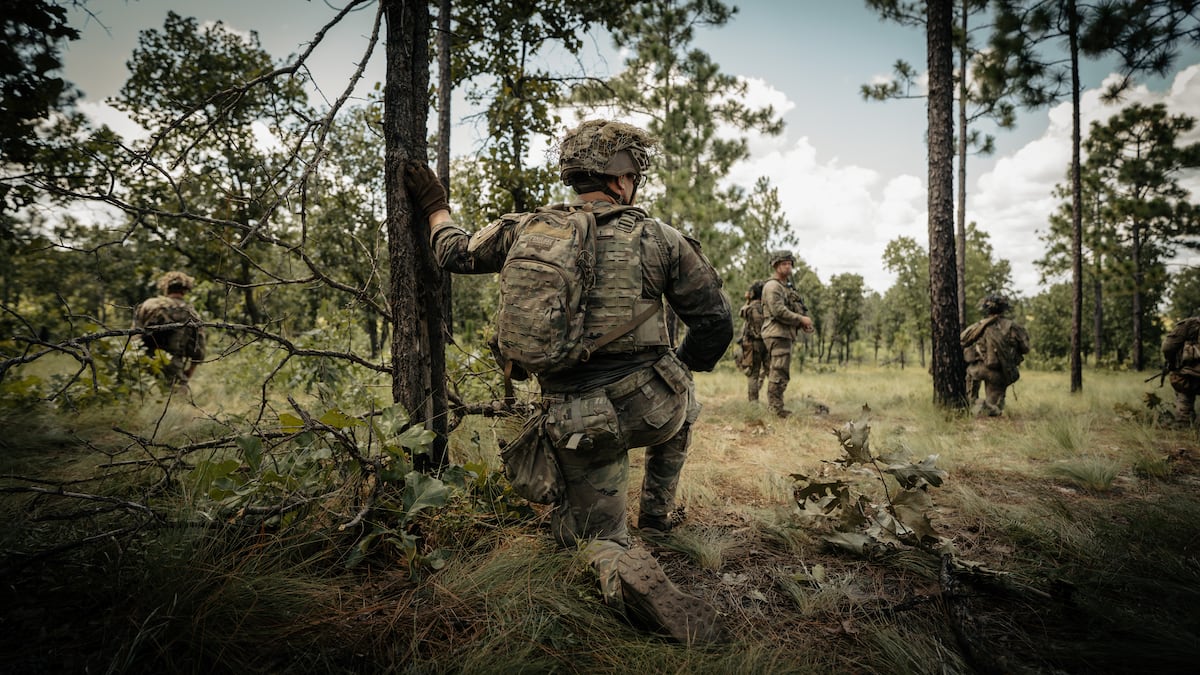
U.S. troops are deploying to the Middle East by the thousands as the Pentagon weighs the possibility of ground operations in Iran. The movement raises a question: What would those missions actually look like on the ground?
Military analysts point to several possibilities, including coastal assaults , nuclear site raids or operations deeper inside the country.
Any one of these missions could unfold alone or evolve into something more broad. But across each scenario, U.S. forces would enter an environment where Iranian missiles , drones and ground units could begin targeting them as soon as they arrive.
A battle for the waterway
One version of the fight would likely unfold along the water.
U.S. forces could be tasked with seizing islands or coastal positions to reopen the Strait of Hormuz, a global shipping route that has been heavily disrupted by the war with Iran.
The mission could be a limited ground incursion, with Marines and airborne units deploying to seize important terrain, said Joe Costa, director of the Forward Defense program at the Atlantic Council’s Scowcroft Center.
Paratroopers assigned to the 82nd Airborne Division walk the flightline before conducting airborne operations at Fort Bragg, North Carolina, Jan. 28, 2026. (Spc. Noe Cork/U.S. Army)
President Donald Trump has publicly threatened Kharg Island, Iran’s primary oil export hub, which is located off the country’s coast.
In a Truth Social post on Monday, he said the U.S. would finish its “stay” in Iran, by “completely obliterating” Kharg Island.
Costa, a former senior Pentagon official who worked on U.S. war plans, including Iran, acknowledged speculation about Kharg, but also described a scenario in which U.S. forces would try to secure islands such as Abu Musa, Larak and the Tunbs, off Iran’s southern coast.
“This helps us take out Iranian reconnaissance units as we think of ways to reopen Hormuz. If you have the ability to secure some of the ports along the coast as well, you go a long way to supporting naval assets to start to open up the Strait,” Costa said, adding that the operation could rely on Marine units for the initial assault, with airborne forces supporting limited incursions and air assault operations — all under U.S. air superiority.
The USS Tripoli and embarked 31st Marine Expeditionary Unit arrived in the region’s waters last Friday, and the elements of the 82nd Airborne Division are deploying to the Middle East, the Pentagon confirmed last week.
An opening fight would not be in isolation, Costa said, and though there are mixed reports about Iranian military capacity right now, the country still appears to have functional command and control and is capable of attacks.
The first waves of U.S. ground troops would undoubtedly face Iranian fire, Costa warned.
“We have overwhelming force and would likely be successful in securing territory, but at that point every commander will face the daily decision of assuming risk to troops or risk to mission — force protection becomes paramount, especially if we start to see casualties mount up,” he said, adding, “There’s a high risk of that in this operation.”
Targeting nuclear sites
A different type of operation would focus on Iran’s nuclear program instead of territory.
Instead of seizing ground, U.S. forces could be tasked with entering fortified sites and securing material, likely under fire and deep within Iranian territory.
An operation aimed at seizing enriched uranium would likely involve special forces at a nuclear site in Isfahan, a populous city in the center of the country, said Nicole Grajewski, an expert on Iran’s missiles and the Islamic Revolutionary Guard Corps.
A U.S. Marine with Force Reconnaissance Platoon, 31st Marine Expeditionary Unit, during an exercise in the Philippine Sea, Feb. 4, 2026. (Lance Cpl. Victor Gurrola/U.S. Marine Corps)
Excavating nuclear material would require a myriad of support, from construction equipment to Chemical, Biological, Radiological and Nuclear assets, Grajewski, a professor at Sciences Po, said.
Ground forces would likely have to dig deep underground to access the highly enriched uranium canisters “and then go in there, excavate it, then get out of the country,” she added.
An extraction team would likely be met with force. The area is heavily trafficked, and the nuclear site in Isfahan is located near numerous military and missile facilities, making it exceedingly risky.
Grajewski described the operation as likely “one that the U.S. military has not really done before,” and said experts could only speculate on how it would be accomplished.
“I’m not sure how they’re thinking about doing it,” she said, pondering if “they’re going to fly in there and do this quick extraction under the guise of night?”
Even targeted operations like seizing an island or extracting nuclear materials carry the risk of evolving into something larger.
Dan Grazier, the director of the National Security Reform Program at the Stimson Center, said the challenges U.S. forces may face goes beyond securing land or items. It centers on how Iran chooses to fight once American soldiers are on its ground.
“The Iranians are going to do whatever they can to kill and capture as many Americans as they can,” said Grazier, who is also a Marine Corps veteran, “for the propaganda victory alone.”
Rather than seeking decisive engagement, Iranian forces would likely avoid conventional confrontation and stretch the conflict over time, he said. Instead of defeating U.S. forces, he added, Iran’s objective becomes making the conflict costly and prolonged, forcing leaders in Washington to decide whether the fight is worth continuing.
Any sustained ground operation would also risk widening the battlefield, as Iran could activate proxy groups across the region to further target U.S. forces and partners.
The Center for Strategic and International Studies in early March estimated that the first 100 hours of the war cost billions of dollars , and experts warn that critical air defense interceptors could be depleted faster than the rate of replacement .
The human cost has also risen as the war enters its second month. Thirteen American service members had been killed and over 300 injured as of late March. A survey earlier in March found that a majority of Americans thought the war had gone too far, and a separate poll showed diminished confidence in the president’s handling of it.
“The Iranians don’t stand any chance of defeating the United States on the ground, I don’t think,” Grazier said. “They do stand a chance of defeating the United States politically back home.”
Eve Sampson is a reporter and former Army officer. She has covered conflict across the world, writing for The New York Times, The Washington Post and The Associated Press.
随着五角大楼权衡在伊朗开展地面行动的可能性,数千名美军士兵正被部署到中东。这一举动引发了一个问题:这些地面行动的实际形式会是怎样的?
军事分析人士指出有几种可能性,包括沿海袭击、核设施袭击或深入国内腹地的行动。
这些任务中的任何一项都可能单独展开,也可能演变成更广泛的行动。但无论哪种情况,美军都将进入一个伊朗导弹、无人机和地面部队随时可能对其发起攻击的环境。
争夺水道
其中一种打斗场景很可能发生在水边。
美军可能会被派去夺取岛屿或沿海阵地,以重新开放霍尔木兹海峡。霍尔木兹海峡是全球航运路线,但因与伊朗的战争而严重中断。
大西洋理事会斯考克罗夫特中心前沿防御项目主任乔·科斯塔表示,此次任务可能是一次有限的地面入侵,海军陆战队和空降部队将部署以夺取重要地形。
2026年1月28日,隶属于第82空降师的伞兵在北卡罗来纳州布拉格堡进行空降作战前,沿着飞行跑道行进。(美国陆军下士诺伊·科克摄)
美国总统唐纳德·特朗普公开威胁伊朗的主要石油出口中心哈尔克岛,该岛位于伊朗海岸附近。
周一,他在 Truth Social 上发帖称,美国将通过“彻底摧毁”哈尔克岛来结束其在伊朗的“停留”。
科斯塔曾是五角大楼的高级官员,参与制定了包括对伊朗在内的美国战争计划。他承认有关哈尔格岛的猜测,但也描述了一种情景,即美军将试图夺取伊朗南部海岸附近的阿布穆萨岛、拉拉克岛和通布斯岛等岛屿。
科斯塔表示:“这有助于我们清除伊朗侦察部队,以便我们思考如何重新开放霍尔木兹海峡。如果还能确保沿海部分港口的安全,就能极大地支援海军力量,开始打通海峡。”他还补充说,此次行动初期可能依靠海军陆战队发起突击,空降部队则支援有限的入侵和空中突击行动——所有行动都将在美国空中优势的保障下进行。
五角大楼上周证实,美国海军“的黎波里”号两栖攻击舰及其搭载的第31海军陆战队远征部队已于上周五抵达该地区水域,第82空降师的部分兵力也正在部署到中东。
科斯塔表示,首战不会是孤立发生的,尽管目前关于伊朗军事能力的报道褒贬不一,但该国似乎仍然拥有有效的指挥和控制能力,并且有能力发动袭击。
科斯塔警告说,美国地面部队的第一批进攻部队无疑会遭到伊朗的炮火攻击。
“我们拥有压倒性的兵力,很可能成功夺取领土,但到那时,每位指挥官每天都将面临一个抉择:是让部队承担风险还是让任务承担风险——部队保护变得至关重要,尤其是在伤亡人数开始增加的情况下,”他说道,并补充道,“这次行动中存在着很高的风险。”
以核设施为目标
另一种行动的重点将是伊朗的核计划,而不是领土。
美军的任务可能不是占领阵地,而是进入伊朗境内的防御工事并夺取物资,这很可能是在炮火下进行的。
伊朗导弹和伊斯兰革命卫队专家妮可·格拉耶夫斯基表示,旨在缴获浓缩铀的行动很可能需要特种部队在伊朗中部人口稠密的城市伊斯法罕的核设施内进行。
2026年2月4日,美国海军陆战队第31远征部队侦察排的一名海军陆战队员在菲律宾海域进行演习。(美国海军陆战队下士维克多·古罗拉摄)
巴黎政治学院教授格拉耶夫斯基表示,挖掘核材料需要各种各样的支持,从建筑设备到化学、生物、放射性和核资产。
她补充说,地面部队可能需要深入地下才能找到高浓缩铀罐,“然后进入罐内,将其挖掘出来,然后撤出该国”。
撤离小组很可能会遭到武力阻拦。该地区人流密集,而且伊斯法罕的核设施毗邻众多军事和导弹设施,因此风险极高。
格拉耶夫斯基称这次行动可能是“美军以前从未真正执行过的行动”,并表示专家只能猜测它将如何完成。
“我不确定他们打算怎么做,”她说道,一边思考着“他们是不是打算趁着夜色飞过去,迅速进行撤离?”
即使是占领岛屿或开采核材料等有针对性的行动,也存在演变成更大规模事件的风险。
史汀生中心国家安全改革项目主任丹·格雷泽表示,美军可能面临的挑战远不止于确保土地或物资安全。其核心在于,一旦美军踏上伊朗领土,伊朗将如何选择作战方式。
“伊朗人会不惜一切代价杀害和俘虏尽可能多的美国人,”格雷泽说,他本人也是一名海军陆战队退伍军人,“仅仅是为了宣传上的胜利。”
他表示,伊朗军队不太可能寻求决战,而是会避免常规对抗,将冲突拖延下去。他还补充说,伊朗的目标不是击败美军,而是让冲突代价高昂、旷日持久,迫使华盛顿领导人决定这场战争是否值得继续下去。
任何持续的地面行动都有可能扩大战场范围,因为伊朗可能会在该地区激活代理人组织,进一步袭击美国军队和伙伴国。
战略与国际研究中心在 3 月初估计,战争的头 100 个小时就耗资数十亿美元,专家警告说,关键的防空拦截机的消耗速度可能超过其更换速度。
随着战争进入第二个月,人员伤亡也随之上升。截至3月底,已有13名美军士兵阵亡,300多人受伤。3月初的一项调查显示,大多数美国民众认为这场战争已经走得太远,而另一项民调则表明,民众对总统处理战争的能力信心下降。
格雷泽说:“我认为,伊朗人没有机会在地面上击败美国。但他们确实有机会在国内政治上击败美国。”
伊芙·桑普森是一名记者,也是一名前陆军军官。她曾报道过世界各地的冲突,为《纽约时报》、《华盛顿邮报》和美联社撰稿。