‘Ukrainian housewives’ and Skyranger delays – German defense poster child Rheinmetall is in hot water“乌克兰家庭主妇”事件和“天行者”无人机延误——德国国防标杆企业莱茵金属公司陷入困境
In October, company CEO Armin Papperger had already called into question the importance of drones in the war in Ukraine.
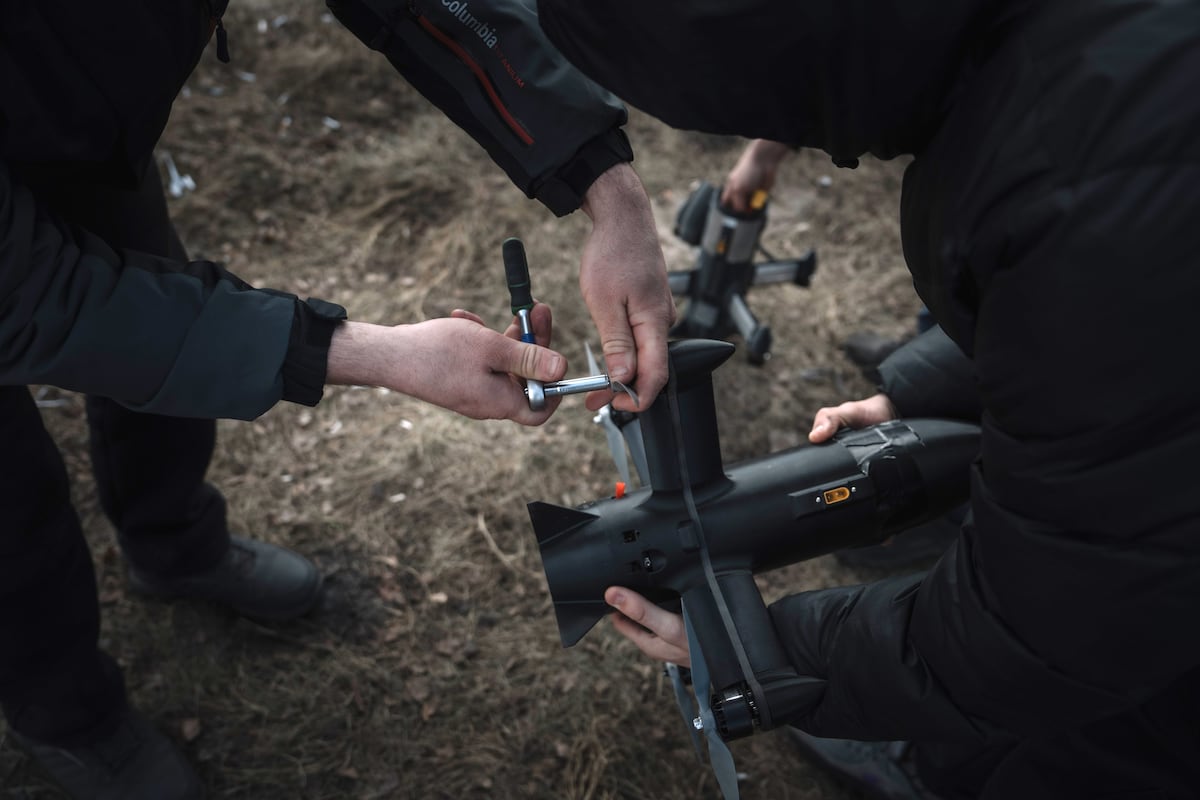
VIENNA — The chief executive of Rheinmetall, Europe’s highest-valued defense company, continues to face criticism after dismissing Ukraine’s drone industry as the work of “housewives” with “3D printers in their kitchens” − comments his own company quickly walked back. Now, German media report the Bundeswehr’s flagship Rheinmetall counter-drone system is running at least 16 months behind schedule, adding further troubles for the defense giant.
Armin Papperger made the remarks on Ukraine in an interview with The Atlantic, published March 27, conducted at Rheinmetall’s Unterlüß factory. Discussing Ukrainian drone manufacturers − including companies such as Fire Point and Skyfall, named by the interviewer − Papperger said the producers were “Ukrainian housewives” and described the work as “playing with Lego.”
“This is not the technology of Lockheed Martin, General Dynamics or Rheinmetall,” he said.
The backlash was swift and came from multiple directions. Within 48 hours, Rheinmetall’s own corporate communications published a statement saying the company “deeply respects the enormous efforts of the Ukrainian people in self-defense against Russian aggression” and called the Ukrainian “innovative strength and fighting spirit” a “source of inspiration.”
Papperger has been the company’s CEO since 2013.
Armin Papperger, CEO of Rheinmetall AG, stands behind a model of the KF51 Panther after the annual press conference at the group headquarters in Düsseldorf, Germany, on March 11, 2026. (Rolf Vennenbernd/picture alliance via Getty Images)
Rheinmetall runs multiple joint ventures in Ukraine and has staked much of its rearmament narrative on being a trusted partner of Kyiv.
The Ukrainian drone industry, while heavily reliant on Chinese components, has developed battlefield capabilities, from one-way attack FPVs to long-range strike drones, that have demonstrably shaped the course of the war in ways no Western prime contractor has replicated at comparable speed or cost.
In October, Papperger had already called into question the importance of drones in the war in Ukraine, telling Handelsblatt, a German business publication, that modern wars are still fought primarily with tanks and missiles. “There are a lot of these narratives circulating right now that claim future wars will be fought exclusively with drones. I think that’s nonsense,” he was quoted as saying.
The timing of his latest remarks collided with unflattering news on Rheinmetall’s home turf. According to German news magazine Stern, reporting on March 31 based on sources in Bundeswehr and parliamentary circles, the Defense Ministry expects delivery of the first serial Skyranger 30 systems with a delay of at least 16 months. That pushes initial deliveries to 2027 at the earliest. The fully developed version would not reach the Bundeswehr until 2029, according to Stern.
Rheinmetall, when asked, said the delay amounts to five months.
The Skyranger 30 is a 30mm air-defense and counter-drone cannon mounted on a Boxer armored vehicle. Stern reported that the delay stems from technical problems integrating key turret components and a failure to incorporate a guided missile originally included in the system’s specification. Under contract terms reviewed by the magazine, Rheinmetall could face a penalty of up to €25 million ($29 million). Neither Rheinmetall nor the Defense Ministry confirmed this number, with the ministry citing trade secrets.
Rheinmetall's Skyranger air-defense gun is on display at the Eurosatory trade fair near Paris in June 2024. (Rudy Ruitenberg/staff)
Rheinmetall had proposed an interim solution: a reduced-capability, truck-mounted variant, quoted at approximately €300 million ($348 million). Stern reported that both the ministry and the army rejected the offer after a shooting test deemed unsatisfactory.
Rheinmetall’s stock price remains around 15 times higher than it was before Russia’s full-scale invasion of Ukraine.
The Bundeswehr is urgently rebuilding its short-range air defense capacity, largely gutted after the Cold War, at a moment when the war in Ukraine has made drone threats the most pressing tactical challenge on the European continent. Germany has framed its rearmament as a matter of strategic urgency, and Rheinmetall has been the central industrial beneficiary of that program.
Ukrainian President Volodymyr Zelenskyy called Papperger’s comments “strange” earlier this week, the Associated Press reported.
“If every Ukrainian housewife can really produce drones, then every Ukrainian housewife could also be the CEO of Rheinmetall,” he told reporters via voicemail on WhatsApp, AP reported. “I congratulate our defense-industrial complex on being at such a high level.”
Linus Höller is Defense News' Europe correspondent and OSINT investigator. He reports on the arms deals, sanctions, and geopolitics shaping Europe and the world. He holds master’s degrees in WMD nonproliferation, terrorism studies, and international relations, and works in four languages: English, German, Russian, and Spanish.
维也纳——欧洲市值最高的国防公司莱茵金属的首席执行官此前曾将乌克兰的无人机产业贬低为“家庭主妇”用“厨房里的3D打印机”制造出来的,此番言论引发持续批评。莱茵金属随后迅速收回了这些言论。如今,德国媒体报道称,德国联邦国防军的旗舰级莱茵金属反无人机系统至少已延期16个月,这无疑给这家国防巨头雪上加霜。
阿明·帕佩格尔在3月27日发表于《大西洋月刊》的采访中谈到了乌克兰问题。此次采访在莱茵金属公司位于翁特吕斯的工厂进行。在谈到乌克兰无人机制造商——包括采访者提到的Fire Point和Skyfall等公司——时,帕佩格尔称这些制造商是“乌克兰家庭主妇”,并将她们的工作形容为“玩乐高积木”。
“这不是洛克希德·马丁公司、通用动力公司或莱茵金属公司的技术,”他说。
舆论反弹迅速而强烈,来自四面八方。48小时内,莱茵金属公司官方公关部门发表声明,称该公司“高度尊重乌克兰人民为自卫抵抗俄罗斯侵略所做出的巨大努力”,并称赞乌克兰人民的“创新力量和战斗精神”是“鼓舞人心的源泉”。
自 2013 年以来,Papperger 一直担任该公司首席执行官。
2026年3月11日,在德国杜塞尔多夫莱茵金属股份公司总部举行的年度新闻发布会后,该公司首席执行官阿明·帕佩格尔站在KF51“黑豹”坦克的模型后面。(图片来源:Rolf Vennenbernd/picture alliance via Getty Images)
莱茵金属在乌克兰经营着多家合资企业,并将其重整军备计划的大部分赌注押在了成为基辅值得信赖的合作伙伴上。
乌克兰无人机产业虽然严重依赖中国零部件,但已发展出从单向攻击型FPV到远程打击无人机等战场能力,这些能力已明显地影响了战争的进程,而任何西方主要承包商都无法以类似的速度或成本复制这些能力。
10月份,帕珀格就曾质疑无人机在乌克兰战争中的重要性。他告诉德国商业杂志《商报》,现代战争仍然主要依靠坦克和导弹。“现在有很多说法声称未来的战争将完全由无人机进行。我认为这是无稽之谈。”他当时说道。
他发表最新言论的时机恰逢莱茵金属公司本土传出不利消息。据德国《明星周刊》(Stern)3月31日报道,该报道援引德国联邦国防军和议会内部消息人士的话称,国防部预计首批量产型“天行者30”(Skyranger 30)系统的交付将至少延迟16个月。这意味着最早也要到2027年才能开始交付。据《明星周刊》报道,完全研制成功的版本最早也要到2029年才能交付德国联邦国防军。
莱茵金属公司在被问及此事时表示,延误时间长达五个月。
Skyranger 30是一款安装在Boxer装甲车上的30毫米防空反无人机火炮。《明星周刊》(Stern)报道称,此次延误源于关键炮塔部件集成方面的技术问题,以及未能将原先包含在系统规格中的制导导弹集成到系统中。根据该杂志查阅的合同条款,莱茵金属公司可能面临高达2500万欧元(约合2900万美元)的罚款。莱茵金属公司和德国国防部均未证实这一数字,国防部以商业机密为由拒绝透露。
莱茵金属公司的“天行者”(Skyranger)防空炮于2024年6月在巴黎附近的欧洲防务展上展出。(Rudy Ruitenberg/工作人员摄)
莱茵金属公司曾提出一项过渡方案:一种性能降低的车载式导弹系统,报价约为3亿欧元(3.48亿美元)。《明星周刊》报道称,在射击测试结果不尽如人意后,国防部和陆军均拒绝了该方案。
莱茵金属公司的股价仍然比俄罗斯全面入侵乌克兰之前高出约 15 倍。
德国联邦国防军正紧急重建其短程防空能力,该能力在冷战后遭到严重削弱。此时,乌克兰战争已使无人机威胁成为欧洲大陆最紧迫的战术挑战。德国将重新武装视为一项战略要务,而莱茵金属公司则是该计划的主要工业受益者。
据美联社报道,乌克兰总统泽连斯基本周早些时候称帕佩格尔的言论“很奇怪”。
据美联社报道,他通过WhatsApp语音留言告诉记者:“如果每个乌克兰家庭主妇都能生产无人机,那么每个乌克兰家庭主妇也能成为莱茵金属公司的首席执行官。我祝贺我们的国防工业综合体达到了如此高的水平。”
林努斯·霍勒是《防务新闻》的欧洲记者和开源情报调查员。他报道影响欧洲乃至全球的军火交易、制裁和地缘政治。他拥有大规模杀伤性武器不扩散、恐怖主义研究和国际关系三个硕士学位,并精通英语、德语、俄语和西班牙语四种语言。