Nuclear-capable Oreshnik missiles enter active service, Russia says俄罗斯称,可携带核弹头的“奥列什尼克”导弹已投入现役。
Russia's claim comes as negotiators continue to search for a breakthrough in peace talks to end Moscow's war in Ukraine.
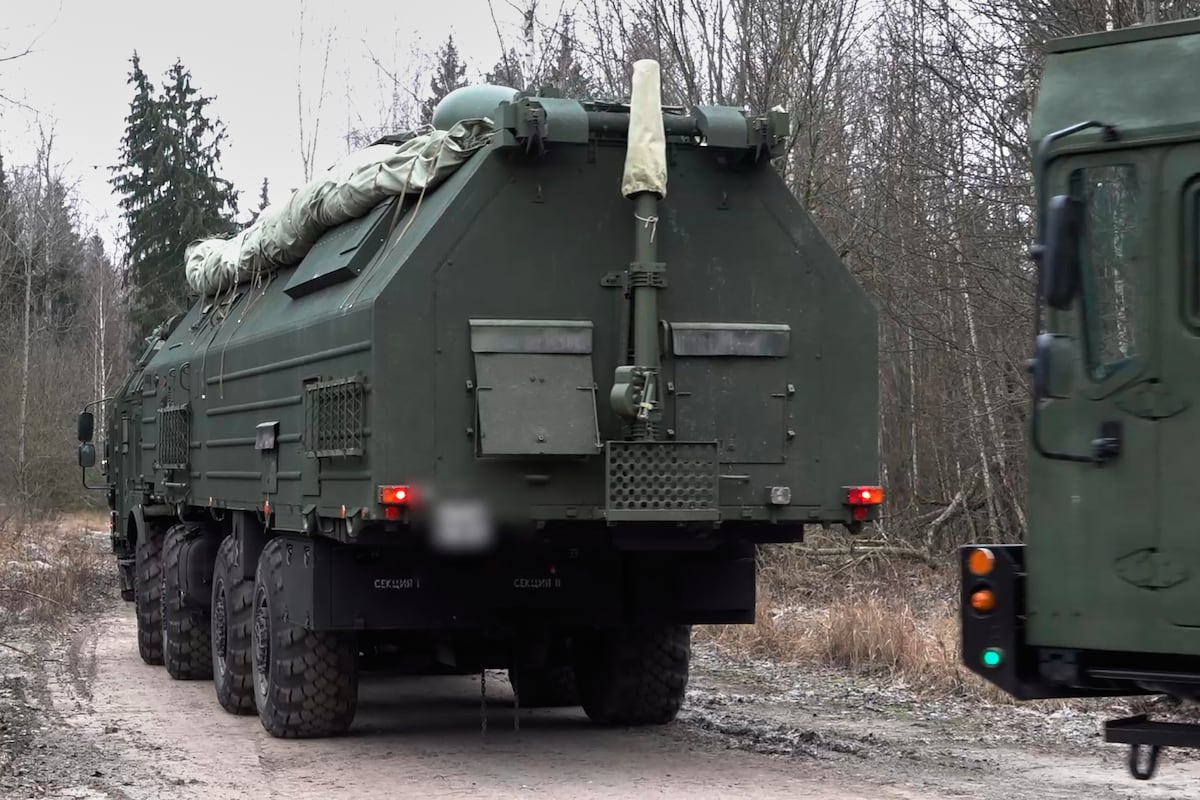
Russia’s nuclear-capable Oreshnik missile system has entered active service in Belarus, Russia’s Defense Ministry said Tuesday, as the U.S. efforts to broker a deal to end the nearly four-year war in Ukraine have entered a pivotal stage.
The ministry released a video showing combat vehicles that are part of the mobile intermediate range ballistic missile system driving across a forest as part of combat training. The announcement followed a statement from Belarusian President Alexander Lukashenko , who said earlier this month that the Oreshnik had arrived in the country. Lukashenko said that up to 10 such missile systems will be stationed in Belarus.
Russian President Vladimir Putin said earlier this month that the Oreshnik would enter combat duty before the year’s end. He made the statement at a meeting with top Russian military officers, where he warned that Moscow will seek to extend its gains in Ukraine if Kyiv and its Western allies reject the Kremlin’s demands in peace talks .
The announcement comes at a critical time for Russia-Ukraine peace talks. U.S. President Donald Trump hosted Ukrainian President Volodymyr Zelenskyy at his Florida resort Sunday and insisted that Kyiv and Moscow were “closer than ever before” to a peace settlement.
However, Moscow and Kyiv remain deeply divided on key issues, including whose forces withdraw from where in Ukraine and the fate of Ukraine’s Russian-occupied Zaporizhzhia nuclear power plant, one of the 10 biggest in the world. Trump noted that the monthslong U.S.-led negotiations could still collapse.
Putin has sought to portray himself as negotiating from a position of strength as Ukrainian forces strain to keep back the bigger Russian army.
Russia first tested a conventionally armed version of the Oreshnik — Russian for hazelnut tree — to strike a Ukrainian factory in November 2024. Putin has bragged that Oreshnik’s multiple warheads plunge at speeds of up to Mach 10 and can’t be intercepted, and that several of them used in a conventional strike could be as devastating as a nuclear attack.
The Russian leader has warned the West that Russia could use the Oreshnik next against allies of Kyiv that allowed it to strike inside Russia with their longer-range missiles.
The Belarusian Defense Ministry said Tuesday that the Oreshnik has a range of up to 5,000 kilometers, or 3,100 miles.
Russian state media boasted that it would take the missile only 11 minutes to reach an air base in Poland and 17 minutes to reach NATO headquarters in Brussels. There’s reportedly no way to know whether it’s carrying a nuclear or a conventional warhead before it hits the target.
Intermediate-range missiles can fly between 500 to 5,500 kilometers, or 310 to 3,400 miles. Such weapons were banned under a Soviet-era treaty that Washington and Moscow abandoned in 2019.
Russia previously deployed tactical nuclear-capable weapons to Belarus, whose territory it used to launch a full-scale invasion of Ukraine in February 2022. Lukashenko has said that his country has several dozen Russian tactical nuclear weapons.
While signing a security pact with Lukashenko in December 2024, Putin said that even with Russia controlling the Oreshniks, Moscow would allow Minsk to select the targets. He noted that if the missiles are used against targets closer to Belarus, they could carry a significantly heavier payload.
In 2024, the Kremlin released a revised nuclear doctrine, noting that any nation’s conventional attack on Russia that is supported by a nuclear power will be considered a joint attack on his country.
The threat was clearly aimed at discouraging the West from allowing Ukraine to strike Russia with longer-range weapons and appears to significantly lower the threshold for the possible use of Russia’s nuclear arsenal.
The revised Russian doctrine also placed Belarus under the Russian nuclear umbrella.
Lukashenko has ruled the nation of 9.5 million with an iron fist for more than three decades. His government has been repeatedly sanctioned by the West for its crackdown on human rights and for allowing Moscow to use its territory for the invasion of Ukraine.
Belarusian opposition leader Sviatlana Tsikhanouskaya has said that the deployment of Oreshnik to Belarus deepens the country’s military and political dependence on Russia.
俄罗斯国防部周二表示,俄罗斯具备核打击能力的“奥列什尼克”导弹系统已在白俄罗斯投入使用。与此同时,美国斡旋结束乌克兰近四年战争的努力已进入关键阶段。
该部发布了一段视频,显示作为移动式中程弹道导弹系统一部分的作战车辆正在森林中进行实战训练。此前,白俄罗斯总统亚历山大·卢卡申科本月早些时候曾表示,“奥列什尼克”导弹系统已抵达该国。卢卡申科称,白俄罗斯将部署多达10套此类导弹系统。
俄罗斯总统普京本月初表示,“奥列什尼克”装甲车将在年底前投入战斗任务。他在与俄罗斯高级军官的会议上发表了上述声明,并警告说,如果基辅及其西方盟友拒绝克里姆林宫在和平谈判中的要求,莫斯科将寻求扩大其在乌克兰取得的战果。
这一声明发布之际,正值俄乌和平谈判的关键时刻。美国总统唐纳德·特朗普周日在其佛罗里达州度假胜地会见了乌克兰总统弗拉基米尔·泽连斯基,并坚称基辅和莫斯科比以往任何时候都更接近达成和平协议。
然而,莫斯科和基辅在关键问题上仍然存在严重分歧,包括哪一方的部队应该从乌克兰的哪些地区撤军,以及被俄罗斯占领的乌克兰扎波罗热核电站(世界十大核电站之一)的命运。特朗普指出,由美国主导的、持续数月的谈判仍有可能破裂。
普京试图将自己塑造成在谈判中占据优势的形象,而乌克兰军队则竭力抵挡人数更多的俄罗斯军队。
俄罗斯于2024年11月首次测试了常规武装版的“奥列什尼克”(俄语意为榛子树)导弹,目标是乌克兰的一家工厂。普京曾吹嘘,“奥列什尼克”导弹的多枚弹头以高达10马赫的速度俯冲,无法被拦截,并且在一次常规打击中使用多枚弹头,其破坏力可与核攻击相媲美。
俄罗斯领导人警告西方,俄罗斯接下来可能会对基辅的盟友使用“奥列什尼克”导弹,这些盟友曾允许俄罗斯使用远程导弹打击俄罗斯境内目标。
白俄罗斯国防部周二表示,“奥列什尼克”导弹的射程可达 5000 公里,即 3100 英里。
俄罗斯官方媒体吹嘘称,这枚导弹只需11分钟就能击中波兰的一个空军基地,17分钟就能击中位于布鲁塞尔的北约总部。据报道,在导弹击中目标之前,无法确定它携带的是核弹头还是常规弹头。
中程导弹的射程在500至5500公里之间,即310至3400英里。这类武器曾被苏联时期的一项条约禁止,但华盛顿和莫斯科已于2019年退出该条约。
俄罗斯此前曾向白俄罗斯部署战术核武器,并于2022年2月利用白俄罗斯领土对乌克兰发动全面入侵。卢卡申科曾表示,他的国家拥有数十枚俄罗斯战术核武器。
2024年12月,普京在与卢卡申科签署安全协议时表示,即使俄罗斯控制了“奥列什尼克”导弹系统,莫斯科也会允许明斯克选择打击目标。他还指出,如果这些导弹用于攻击距离白俄罗斯更近的目标,它们可以携带更重的有效载荷。
2024 年,克里姆林宫发布了修订后的核战略,指出任何国家对俄罗斯发动的、得到核大国支持的常规攻击都将被视为对俄罗斯的联合攻击。
这一威胁显然旨在阻止西方允许乌克兰使用远程武器打击俄罗斯,并且似乎大大降低了俄罗斯可能使用核武库的门槛。
修订后的俄罗斯核战略还将白俄罗斯置于俄罗斯的核保护伞之下。
卢卡申科以铁腕统治这个拥有950万人口的国家超过三十年。他的政府因镇压人权以及允许莫斯科利用其领土入侵乌克兰而屡遭西方制裁。
白俄罗斯反对派领导人斯维特兰娜·季哈诺夫斯卡娅表示,向白俄罗斯部署“奥列什尼克”导弹防御系统加深了该国在军事和政治上对俄罗斯的依赖。