Pentagon keeps Ukraine aid out of budget, punting to divided Congress五角大楼将对乌克兰的援助排除在预算之外,把问题推给了意见分歧的国会。
The Pentagon is opting to keep funding Ukraine with emergency spending bills despite previous testimony it was working to integrate it in the base budget.
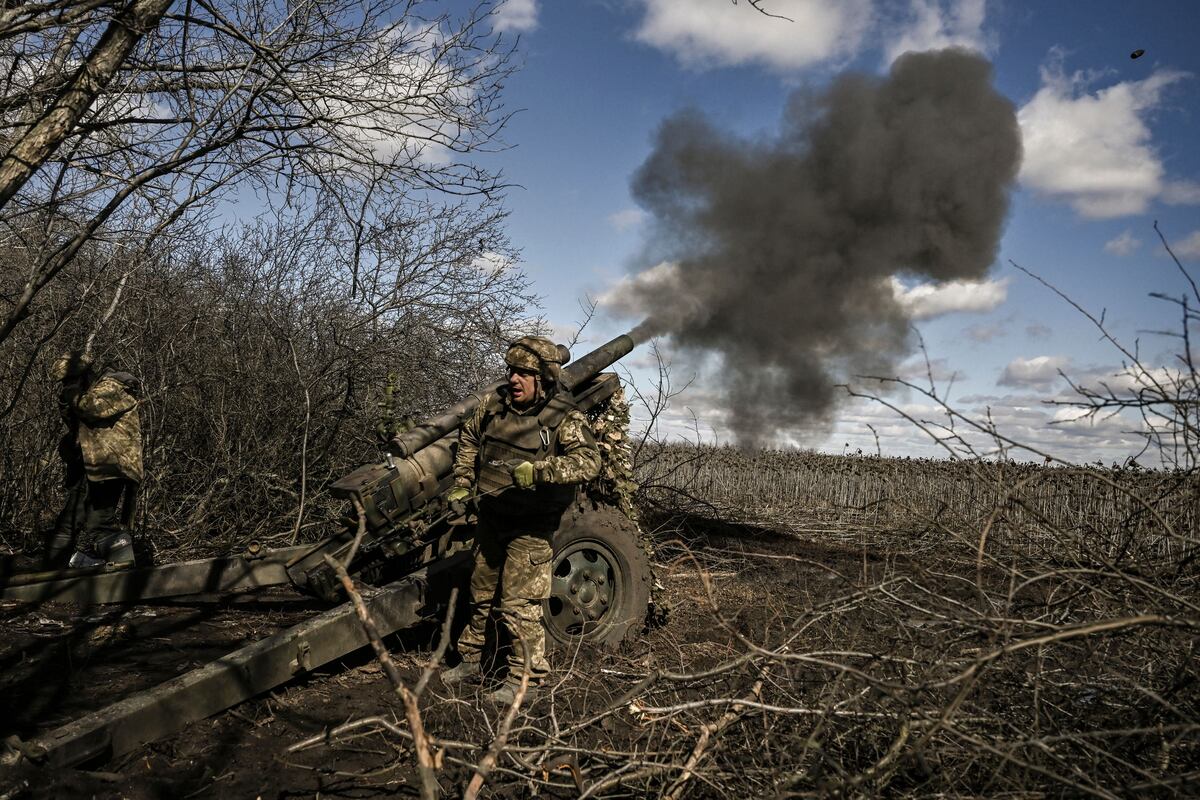
WASHINGTON — Sending military aid to Ukraine has been one of the Defense Department’s highest profile focuses for more than a year, but defense officials left it out of the Pentagon’s new budget request and say the plan is to continue to seek emergency funding from Congress.
The notable exclusion of politically sensitive Ukraine contingency funding from the budget request suggests the Pentagon may be seeking to insulate its core programs against Capitol Hill cross-currents. House Republicans are divided on Ukraine aid, and some have also made an ambitious promise to slash discretionary spending by at least $130 billion even as they seek to grow the overall defense budget .
But excluding Ukraine aid from the $842 billion in Pentagon spending the Biden administration has requested for fiscal 2024 puts the onus on Congress — if it wants to continue to help Kyiv — to pass billions of dollars more in supplemental appropriations.
Pentagon budget officials attributed the decision to rely on supplementals to the uncertain nature of the war.
“Ukraine support above the pre-conflict levels is not in this budget; the situation remains too fluid,” Pentagon Comptroller Mike McCord told reporters at Monday’s budget rollout. “The way we’re handling this is the way we’ve handled every emerging situation in the last few years, and that’s supplementals.”
The Republican divide over whether to continue aid to Kyiv ― and Republican House Speaker Kevin McCarthy ’s vow not to grant Ukraine a “blank check” ― has prompted House GOP leaders to spotlight the extensive oversight on Ukraine aid and that U.S. weapons have not been diverted from their intended use.
But even some Democrats supportive of the aid have have begun to question the Biden administration’s reliance on extra-budgetary means. Senate Budget Committee Chairman Sheldon Whitehouse, D-R.I., for instance, told Defense News he would rather include Ukraine aid as part of the defense budget.
“My personal preference would be to bake it into the base budget,” Whitehouse said. “That sends a very positive signal to Ukraine. But there are a lot of players in this world who have a voice on that. And I’m very comfortable following the lead of my colleagues on the Armed Services Committee and the Appropriations Committee as to what they think the best way to go would be.”
At a defense appropriations subcommittee hearing last month, Rep. Mike Garcia, R-Calif., said the Biden administration needs to “do a better job of messaging on this long-term, especially over the next two years,” while Rep. Ed Case, D-Hawaii, called on the Pentagon at the same hearing to “be totally honest with everybody about what this is all going to cost.”
“People need to know what this will cost and people need to consider how to fund it,” Case said. “We have colleagues that are good representatives of their constituents who want to increase, who want to decrease, who want to borrow more, who want to borrow less and we just need to know what it takes realistically to get through the assumption … that this war is going to continue.”
Emergency spending for the Pentagon is not new, but it grew increasingly controversial in the final years of the U.S. wars in Iraq and Afghanistan. Funds were appropriated through Overseas Contingency Operations spending packages outside the base budget, which some lawmakers likened to a “budget gimmick.”
According to the Congressional Budget Office, emergency funds made up 2% of the Pentagon’s budget between 1970 and 2000, but grew after Sept. 11, 2001 and peaked at 28% in 2007 and 2008. Overseas Contingency Operations spending averaged about $119 billion per year before President Joe Biden’s 2022 budget request eliminated it.
Though the Biden administration has doubled down on using emergency Ukraine spending rather than starting to integrate it into the regular budget process, as recently as last month a senior Pentagon official testified that the Biden administration had started work on placing Ukraine assistance within the base budget.
“There is work ongoing to build it into a base budget, and we are not ruling out coming back to you for a supplemental,” Assistant Secretary of Defense for International Security Affairs Celeste Wallander told the House Appropriations Committee’s defense panel on Feb. 28.
But on Monday, McCord said the Pentagon would rely on emergency supplementals. Though his office has not put together additional supplemental spending requests for fiscal 2023 or fiscal 2024, he said, the Pentagon was able to quickly draft four supplementals in 12 months.
“The spring offensives are not far along enough for us to draw any conclusions on that,” McCord said. “We can do them quickly, especially if we do them in short windows, but we’re not trying to prognosticate a whole year in advance.”
McCord noted some proposed funds that had gone into the base budget’s Ukraine Security Assistance Initiative would now go into the European Deterrence Initiative — for which the Biden administration has requested nearly $5 billion in FY24.
The White House’s Office of Management and Budget announced last week it was only seeking $6 billion in Ukraine aid as part of its FY24 base budget, an amount roughly on par with funding for Kyiv before Russia’s invasion last year.
That $6 billion is also a small fraction of the $113 billion in military and economic aid for Ukraine that Congress passed last year via four emergency supplemental packages.
Bryant Harris is the Congress reporter for Defense News. He has covered U.S. foreign policy, national security, international affairs and politics in Washington since 2014. He has also written for Foreign Policy, Al-Monitor, Al Jazeera English and IPS News.
Joe Gould was the senior Pentagon reporter for Defense News, covering the intersection of national security policy, politics and the defense industry. He had previously served as Congress reporter.
华盛顿——一年多来,向乌克兰提供军事援助一直是美国国防部最受关注的重点之一,但国防部官员在五角大楼的新预算申请中却将其排除在外,并表示计划继续向国会寻求紧急拨款。
预算申请中明显排除了政治敏感的乌克兰应急资金,这表明五角大楼可能试图使其核心项目免受国会山各种阻力的影响。众议院共和党人在乌克兰援助问题上存在分歧,一些共和党人甚至雄心勃勃地承诺,即便他们寻求增加国防预算总额,也要削减至少1300亿美元的可自由支配支出。
但是,如果将对乌克兰的援助排除在拜登政府为 2024 财年申请的 8420 亿美元五角大楼支出之外,那么如果国会想要继续帮助基辅,就必须通过数十亿美元的补充拨款。
五角大楼预算官员将依靠补充拨款的决定归因于战争的不确定性。
五角大楼主计长迈克·麦考德在周一的预算发布会上告诉记者:“这份预算中没有包含高于冲突前水平的对乌克兰援助;局势仍然太过不稳定。我们处理这种情况的方式,与过去几年处理所有突发情况的方式相同,那就是通过补充拨款。”
共和党内部对于是否继续援助基辅存在分歧,而共和党众议院议长凯文·麦卡锡誓言不会给乌克兰“空白支票”,这促使众议院共和党领导人强调对乌克兰援助的广泛监督,以及美国武器没有被挪作他用。
但即便一些支持援助的民主党人也开始质疑拜登政府依赖预算外资金的做法。例如,参议院预算委员会主席谢尔顿·怀特豪斯博士告诉《防务新闻》,他更倾向于将对乌克兰的援助纳入国防预算。
怀特豪斯说:“我个人倾向于将其纳入基本预算。这会向乌克兰发出非常积极的信号。但世界上有很多国家对此事有发言权。我很乐意听取军事委员会和拨款委员会同事的意见,看看他们认为什么才是最佳方案。”
在上个月的国防拨款小组委员会听证会上,加州共和党众议员迈克·加西亚表示,拜登政府需要“更好地就这项长期计划进行宣传,尤其是在未来两年内”,而夏威夷州民主党众议员埃德·凯斯在同一听证会上呼吁五角大楼“对所有人完全坦诚,说明这一切将花费多少”。
凯斯说:“人们需要知道这将花费多少,也需要考虑如何筹集资金。我们的一些同事都是各自选民的优秀代表,他们有的想增加开支,有的想减少开支,有的想增加借贷,有的想减少借贷,我们只需要知道,在战争将持续下去的假设下,实际需要多少资金。”
五角大楼的紧急开支并非新鲜事,但在美国伊拉克和阿富汗战争的最后几年,这种做法变得越来越具争议性。这些资金是通过海外应急行动支出方案拨付的,不在基本预算之内,一些议员将其比作“预算噱头”。
根据国会预算办公室的数据,1970年至2000年间,紧急资金占五角大楼预算的2%,但在2001年9月11日事件后有所增长,并在2007年和2008年达到28%的峰值。在乔·拜登总统2022年的预算请求取消海外应急行动支出之前,该项支出平均每年约为1190亿美元。
尽管拜登政府一直坚持使用紧急乌克兰援助资金,而不是将其纳入常规预算程序,但就在上个月,一位五角大楼高级官员作证说,拜登政府已经开始着手将对乌克兰的援助纳入基本预算。
“我们正在努力将其纳入基本预算,并且不排除将来向你们提出补充拨款申请,”负责国际安全事务的助理国防部长塞莱斯特·瓦兰德于 2 月 28 日在众议院拨款委员会国防小组作证时表示。
但麦考德周一表示,五角大楼将依靠紧急补充拨款。他表示,虽然他的办公室尚未提交2023财年或2024财年的额外补充支出申请,但五角大楼在12个月内迅速起草了四份补充拨款申请。
麦考德说:“春季训练营的进展还不足以让我们得出任何结论。我们可以快速完成训练,尤其是在短时间内完成的情况下,但我们不会试图提前一整年进行预测。”
麦考德指出,一些原本计划拨入基本预算中的乌克兰安全援助计划的资金,现在将拨入欧洲威慑计划——拜登政府已在 2024 财年为该计划申请了近 50 亿美元。
白宫管理和预算办公室上周宣布,在其 2024 财年基本预算中,仅寻求 60 亿美元的乌克兰援助,这一数额与去年俄罗斯入侵前基辅获得的资金大致相当。
这 60 亿美元也只是国会去年通过的四项紧急补充拨款方案向乌克兰提供的 1130 亿美元军事和经济援助的一小部分。
布莱恩特·哈里斯是《防务新闻》的国会记者。自2014年以来,他一直在华盛顿报道美国外交政策、国家安全、国际事务和政治。他还曾为《外交政策》、《Al-Monitor》、《半岛电视台英语频道》和IPS新闻撰稿。
乔·古尔德是《防务新闻》的资深五角大楼记者,负责报道国家安全政策、政治和国防工业的交汇点。他此前曾担任国会记者。