UNIFIL’s final months: Uncertainty persists in Lebanon over what comes next联合国驻黎巴嫩临时部队的最后几个月:黎巴嫩局势仍不明朗,未来走向充满不确定性。
The mission for the United Nations Interim Force in Lebanon is nearing its end. Amid Israeli occupation, a decision on what comes next has yet to be made.
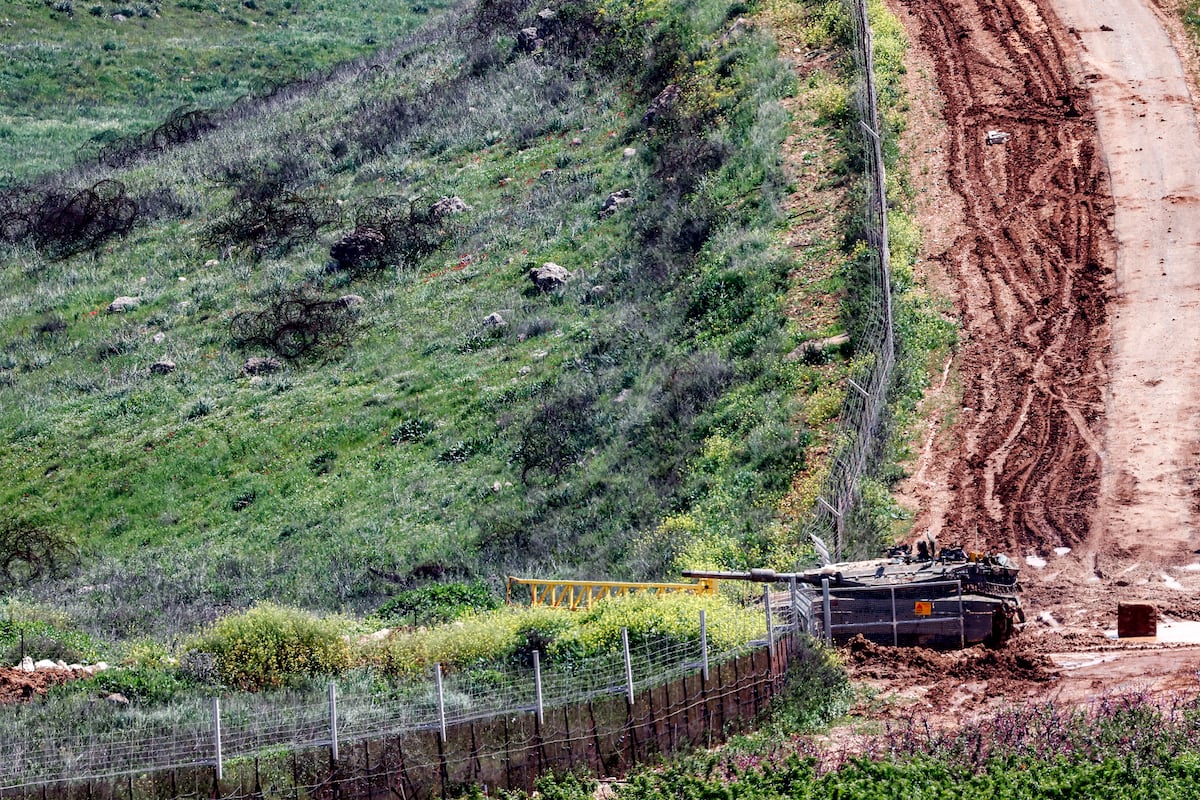
BEIRUT — The United Nations Interim Force in Lebanon , or UNIFIL, has entered the final months of its mission while operating in areas that remain under Israeli occupation.
Although its mandate expires at the end of the year, the future of the security arrangements in southern Lebanon remains highly uncertain, with multiple options still under consideration.
Part of UNIFIL’s international civilian staff was evacuated during the escalation of the conflict that reignited on March 2, while military personnel remained on the ground and continued operations.
“UNIFIL has a mandate until Dec. 31, 2026, and our mission will continue until then,” UNIFIL spokesperson Kandice Ardiel said.
While rumors, public statements and various proposals have emerged about next steps, no clear plan has taken shape.
On June 2, UN Secretary-General António Guterres submitted three options to the UN Security Council, all of which would significantly reduce the number of peacekeepers deployed in southern Lebanon.
Guterres outlined scenarios that would see a light, medium or more substantial presence, with troop numbers ranging from 900 to 1,500 or 3,000, alongside varying numbers of military observers and reserve forces.
However, the UN Security Council has yet to reach a decision and could ultimately opt for a course of action different from the three proposed alternatives.
“The Security Council is currently examining the options. We will wait and see what decision it makes,” Ardiel said. “For us, the priority remains continuing to implement our mandate, and creating the conditions for a smooth handover to whatever comes next.”
There is no timeline yet, but as the end date nears, the risk is that southern Lebanon will be left with a security vacuum.
The three options, meanwhile, are not the only proposals on the table. Over the past few months, several countries have expressed interest in maintaining an international presence in southern Lebanon.
Following a proposal by Italy and France to form a post-UNIFIL multinational coalition — put forward during the bilateral summit held in Antibes in late June — Germany was the last EU country to join the call for an EU force to replace UN peacekeepers in the border area.
The European External Action Service also proposed a three-year civilian and military mission, not as a replacement for UNIFIL but to strengthen the Lebanese authorities and the Lebanese Armed Forces (LAF) in enhancing territorial control and border security.
However, any scenario is further complicated by Israel’s continued presence in Lebanese territory and its ongoing military operations in border villages, despite the ceasefire currently in place.
UNIFIL and Resolution 1701, which brought an end to the 2006 Israel-Hezbollah war, have been largely absent from both the initial and now-defunct U.S.-Iran agreement, which included a ceasefire in Lebanon, and the security arrangements outlined in the framework agreement signed between Lebanon and Israel in Washington.
The framework agreement foresees the implementation of “pilot zones” in southern Lebanon that would be placed under LAF control and cleared of Hezbollah presence and weapons before the Israeli withdrawal, which would take place upon verification.
How such verification should be carried out remains unclear, while UNIFIL has not been brought into the discussion. So far, Israel has withdrawn from only one of the two agreed pilot zones. Israeli and Lebanese representatives are set to meet again in Rome on Aug. 4.
Regardless of outcomes, UNIFIL will cease operations on Dec. 31. As the mission’s mandate expires, the tasks outlined under Resolution 1701, including monitoring the cessation of hostilities and supporting the deployment of the Lebanese army south of the Litani River, will come to an end, even though the UN Security Council resolutions would technically remain in place.
On a practical level, this means UNIFIL will no longer be on the ground to monitor, report and coordinate daily between the parties, but will instead dismantle its bases and withdraw after nearly five decades of operations.
The Lebanese government has made no secret of its preference for maintaining an international presence along the border.
Officer-in-charge of the United Nations Special Coordinator to Lebanon (UNSCOL) Jean Arnault recently received a delegation representing 86 members of the Lebanese Parliament who signed a petition addressed to the UN secretary-general for the renewal of UNIFIL’s mandate, expressing their concerns about the consequences of the withdrawal.
According to Paul Salem, a non-resident senior associate at the Center for Strategic and International Studies and former president and CEO of the Middle East Institute, the Lebanese state and the LAF should be able to assume full responsibility instead of relying on an additional international force.
“The time to rely on others is over,” he said. “The LAF should be supported in gradually assuming full responsibility for security, not by bringing in another international force. They are certainly not ready yet, but that should be the end goal, rather than perpetuating the current model.”
According to Salem, from a realpolitik perspective, UNIFIL has not been particularly effective. At least half of the mission’s positions are currently located in areas occupied by Israel, affecting peacekeepers on the ground and delaying or blocking freedom of movement.
“Other countries should step in to support Lebanese authorities, not only the United States, but also the Gulf states, Turkey and Europe,” he concluded. “Everyone should help the LAF through training, resources, equipment and recruitment, rather than by maintaining a presence on the ground.”
Agnese Stracquadanio is a Middle East correspondent for Defense News. She has a background in writing and photojournalism, holds a master's degree in international relations, and previously worked for Reuters.
贝鲁特——联合国驻黎巴嫩临时部队(联黎部队)已进入其任务的最后几个月,而其行动区域仍处于以色列占领之下。
尽管其授权期限将于年底到期,但黎巴嫩南部安全安排的未来仍然高度不确定,目前仍在考虑多种方案。
3月2日冲突再次爆发,冲突升级,联合国驻黎巴嫩临时部队(联黎部队)的部分国际文职人员被撤离,而军事人员则留在当地继续开展行动。
“联黎部队的任务期限到2026年12月31日,我们的任务将持续到那时,”联黎部队发言人坎迪斯·阿尔迪尔说。
虽然关于下一步措施的传言、公开声明和各种提议层出不穷,但尚未形成明确的计划。
6月2日,联合国秘书长安东尼奥·古特雷斯向联合国安理会提交了三个方案,所有这些方案都将大幅减少部署在黎巴嫩南部的维和人员数量。
古特雷斯概述了轻度、中度或更大规模驻军的方案,驻军人数从 900 到 1500 或 3000 不等,同时还有不同数量的军事观察员和预备役部队。
然而,联合国安理会尚未做出决定,最终可能会选择与这三个提议的替代方案不同的行动方案。
“安全理事会目前正在研究各种方案。我们将等待其做出决定,”阿尔迪尔说。“对我们来说,首要任务仍然是继续履行我们的职责,并为顺利交接给下一任领导人创造条件。”
目前还没有具体时间表,但随着截止日期的临近,黎巴嫩南部可能会出现安全真空。
与此同时,这三个方案并非摆在桌面上的全部提议。过去几个月里,一些国家表示有兴趣在黎巴嫩南部保持国际存在。
在意大利和法国于 6 月下旬在昂蒂布举行的双边峰会上提出组建后联合国驻黎巴嫩临时部队多国联盟的提议后,德国是最后一个响应呼吁组建欧盟部队以取代联合国驻黎巴嫩临时部队的欧盟国家。
欧洲对外行动署还提议派遣一支为期三年的民事和军事部队,其目的不是为了取代联合国驻黎巴嫩临时部队,而是为了加强黎巴嫩当局和黎巴嫩武装部队在加强领土控制和边境安全方面的能力。
然而,尽管目前已实施停火,但以色列仍继续驻扎在黎巴嫩领土上,并在边境村庄持续开展军事行动,这使得任何局面都变得更加复杂。
联合国驻黎巴嫩临时部队(联黎部队)和结束 2006 年以色列-真主党战争的第 1701 号决议,在最初的、现已失效的美伊协议(其中包括在黎巴嫩停火)以及黎巴嫩和以色列在华盛顿签署的框架协议中概述的安全安排中,基本上都没有得到体现。
框架协议设想在黎巴嫩南部设立“试点区”,这些试点区将置于黎巴嫩武装部队的控制之下,并在以色列撤军之前清除真主党的存在和武器,以色列的撤军将在核实后进行。
此类核查应如何进行仍不明确,而联合国驻黎巴嫩临时部队(联黎部队)并未参与讨论。迄今为止,以色列仅从两个商定的试点区中的一个撤军。以色列和黎巴嫩代表定于8月4日在罗马再次会晤。
无论结果如何,联黎部队将于 12 月 31 日停止行动。随着特派团任务期限的到期,根据第 1701 号决议概述的任务,包括监测停止敌对行动和支持黎巴嫩军队在利塔尼河以南的部署,也将结束,即使联合国安理会决议在技术上仍然有效。
从实际层面来说,这意味着联合国驻黎巴嫩临时部队将不再驻扎在当地进行日常的监测、报告和协调,而是在近五十年的行动后拆除基地并撤离。
黎巴嫩政府毫不掩饰其在边境地区保持国际存在的倾向。
联合国驻黎巴嫩特别协调员(UNSCOL)主管官员让·阿尔诺最近接待了一个由 86 名黎巴嫩议会议员组成的代表团,他们签署了一份致联合国秘书长的请愿书,要求延长联合国驻黎巴嫩临时部队(联黎部队)的任务期限,并表达了他们对撤军后果的担忧。
据战略与国际研究中心非常驻高级研究员、中东研究所前总裁兼首席执行官保罗·萨勒姆称,黎巴嫩政府和黎巴嫩武装部队应该能够承担全部责任,而不是依赖额外的国际部队。
他说:“依赖他人的时代已经结束了。应该支持拉各斯武装部队逐步承担起全部安全责任,而不是引入另一支国际部队。他们当然还没有做好准备,但这应该是最终目标,而不是延续目前的模式。”
萨勒姆认为,从现实政治角度来看,联合国驻黎巴嫩临时部队(联黎部队)的效力并不显著。该部队至少一半的阵地目前位于以色列占领区,这不仅影响了地面维和人员的行动,还阻碍或延缓了他们的行动自由。
他总结道:“其他国家应该介入支持黎巴嫩当局,不仅是美国,还有海湾国家、土耳其和欧洲。各国都应该通过培训、资源、装备和招募来帮助黎巴嫩武装部队,而不是在当地驻军。”
阿格尼斯·斯特拉夸达尼奥是《防务新闻》的中东记者。她拥有写作和摄影新闻背景,持有国际关系硕士学位,此前曾在路透社工作。