Iran war depleted US Patriot missile stockpiles, creating readiness challenges, experts say专家称,伊朗战争消耗了美国的爱国者导弹库存,造成了战备方面的挑战。
The U.S. has depleted roughly two-thirds of its pre-war Patriot missile interceptor inventory during the conflict with Iran, new analysis says.
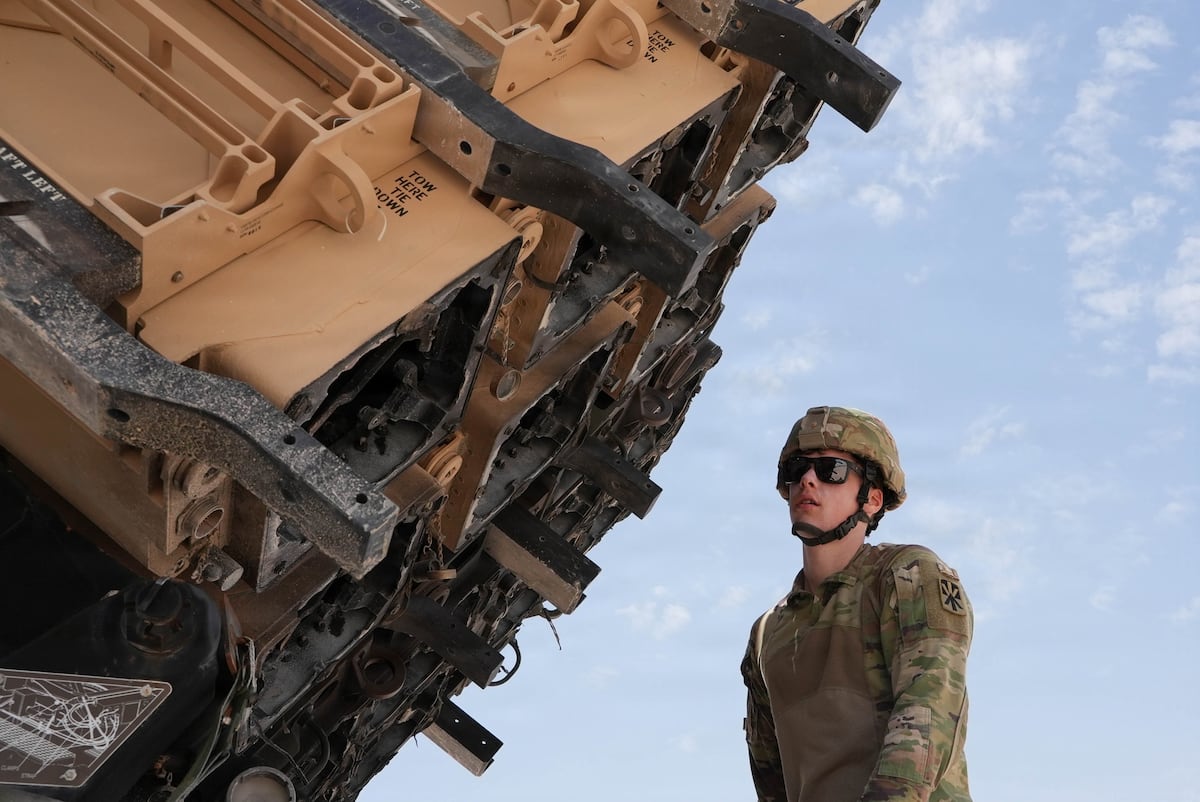
The United States has depleted roughly two-thirds of its pre-war Patriot missile interceptor inventory during the conflict with Iran, according to a new analysis by the Center for Strategic and International Studies — a drawdown the think tank says could create readiness challenges if another major conflict erupts before stockpiles are rebuilt.
Using publicly available information on missile expenditures, production rates and estimated U.S. inventories, the Washington-based think tank estimates the U.S. has expended about 65% of its Patriot inventory, leaving fewer than 1,000 interceptors remaining. The analysis also estimates U.S. inventories of Terminal High Altitude Area Defense, or THAAD, interceptors have declined by about 38%, leaving an estimated 234 to 278 interceptors.
CSIS concluded the greater strategic risk is not sustaining the current conflict but responding to another high-intensity contingency before Patriot and THAAD inventories can be rebuilt. According to the analysis, depleted inventories could force the U.S. and its coalition partners to accept greater operational risk during air-defense operations by conserving interceptors or prioritizing only the highest-value threats.
Patriot interceptors are among the U.S. military’s primary defenses against ballistic missiles and are used to protect troops, military installations and allied populations from incoming attacks. During the Iran conflict, Patriot and THAAD systems helped defend U.S. forces and partner nations against ballistic missile attacks, although some missiles penetrated air defenses and caused casualties and damage.
In the assessment, CSIS analysts Mark Cancian and Chris Park wrote that U.S. forces expended large quantities of air-defense interceptors during the initial phase of Operation Epic Fury, leaving significantly fewer missiles available as operations resumed.
“There are no good alternatives to Patriot and THAAD for ballistic missile defense,” the duo concluded in their report.
Their findings further detail that rebuilding depleted interceptor inventories will take multiple years, raising readiness concerns for other theaters.
The Pentagon has not publicly confirmed the inventory estimates contained in the CSIS analysis and did not immediately respond to a request for comment.
The Army this week awarded Lockheed Martin a contract worth up to $58.6 billion to produce Patriot Advanced Capability-3 Missile Segment Enhancement, or PAC-3 MSE, interceptors through fiscal 2032. The multiyear agreement is intended to expand production capacity as demand for the air-defense missile continues to grow.
“It takes several years to produce a missile. If you put money into the system today, you wouldn’t get a missile for three or four years. Sometimes even five,” Cancian told the BBC. “What we’re getting now are missiles that were funded in 2023.”
That production timeline, CSIS said, leaves a near- to medium-term window of risk if the U.S. is forced to respond to another major conflict before interceptor stockpiles are restored.
Natalie Oliverio is an independent journalist and Navy veteran who covers military and veterans’ issues. Drawing on her experience as a talent executive and mentor, she writes about the policies, people and programs shaping the military community.
根据战略与国际研究中心的一项最新分析,美国在与伊朗的冲突中消耗了战前“爱国者”导弹拦截器库存的大约三分之二——该智库表示,如果库存重建之前再次爆发重大冲突,这种削减可能会造成战备方面的挑战。
这家位于华盛顿的智库利用公开的导弹支出、生产率和美国库存估算信息,估计美国已消耗了约65%的“爱国者”导弹库存,剩余拦截导弹不足1000枚。该分析还估计,美国“萨德”末段高空区域防御系统(THAAD)拦截导弹的库存已减少约38%,估计剩余拦截导弹数量在234至278枚之间。
战略与国际研究中心(CSIS)得出结论,更大的战略风险并非维持当前的冲突,而是在“爱国者”和“萨德”导弹系统库存重建之前,应对另一场高强度突发事件。分析指出,库存不足可能迫使美国及其盟国在防空行动中承担更大的作战风险,例如节约拦截导弹或仅优先应对最具价值的威胁。
“爱国者”导弹拦截系统是美国军方抵御弹道导弹的主要防御手段之一,用于保护部队、军事设施和盟国民众免受来袭导弹的攻击。在伊朗冲突期间,“爱国者”和“萨德”系统帮助美国军队及其伙伴国家抵御了弹道导弹的袭击,尽管一些导弹突破了防空系统,造成了人员伤亡和财产损失。
在评估报告中,CSIS 分析师 Mark Cancian 和 Chris Park 写道,美军在“史诗狂怒行动”初期阶段消耗了大量防空拦截导弹,导致行动恢复后可用的导弹数量明显减少。
“在弹道导弹防御方面,没有比爱国者和萨德更好的替代方案,”两人在报告中总结道。
他们的研究结果进一步详细说明,重建耗尽的拦截器库存需要数年时间,这引发了其他战区的战备担忧。
五角大楼尚未公开证实CSIS分析中包含的库存估算,也没有立即回应置评请求。
本周,美国陆军授予洛克希德·马丁公司一份价值高达586亿美元的合同,用于生产爱国者先进能力-3导弹段增强型(PAC-3 MSE)拦截弹,合同期限至2032财年。这项多年期协议旨在扩大产能,以满足不断增长的防空导弹需求。
坎西安告诉BBC:“制造一枚导弹需要好几年时间。如果你今天投资这个系统,三四年内都拿不到一枚导弹。有时甚至五年。” “我们现在得到的导弹是2023年就已获得资金支持的。”
战略与国际研究中心 (CSIS) 表示,按照目前的生产时间表,如果美国在拦截器库存恢复之前被迫应对另一场重大冲突,那么短期到中期内将存在风险。
娜塔莉·奥利维里奥是一位独立记者,也是一位海军退伍军人,她主要报道军事和退伍军人相关议题。凭借其作为人才主管和导师的经验,她撰写有关塑造军事社区的政策、人物和项目的文章。