Firms must plan for workers as they transform, not treat them as an HR afterthought: PM Wong黄循财总理指出,企业必须为员工转型做好规划,而不是将员工视为人力资源部门事后才考虑的因素。
New Connect by SWDA centre to bring career guidance, employment support and training advice under one roof. Read more at straitstimes.com.
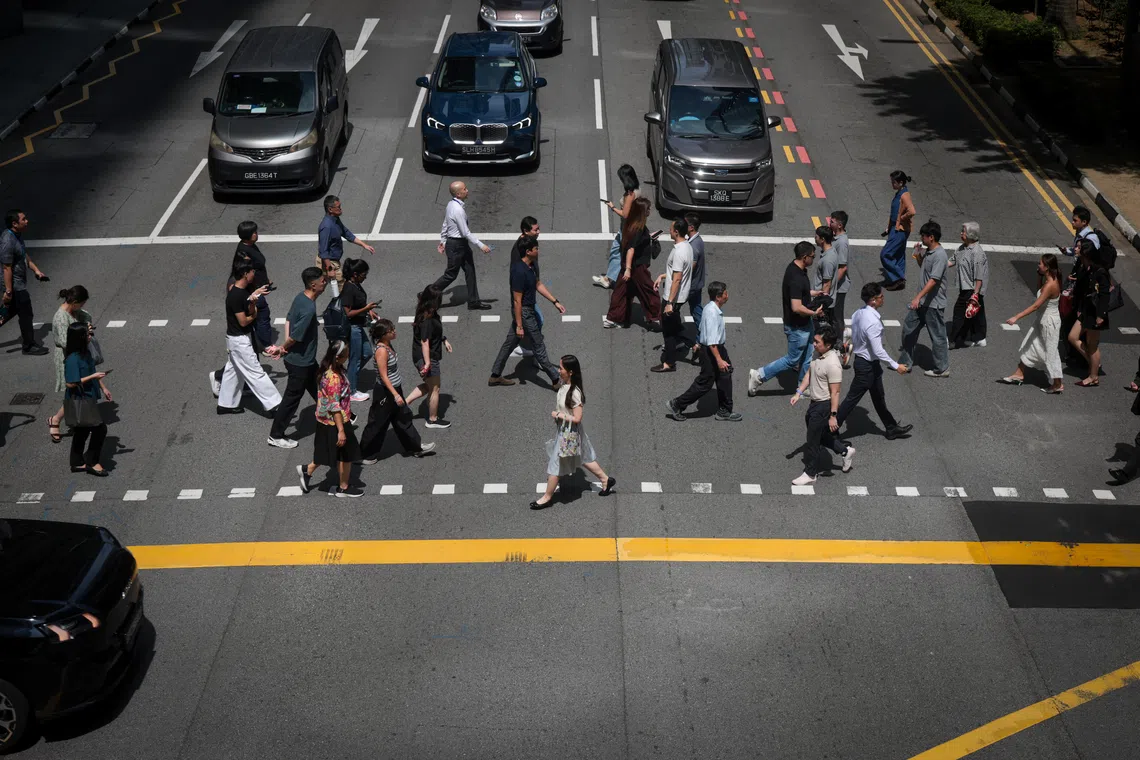
This push for businesses and workers to transform together is one of three important shifts PM Wong said Singapore must make in order to deliver better outcomes for workers and businesses.
ST PHOTO: JASON QUAH
Published Sep 16, 2026, 12:00 PM
Updated Sep 16, 2026, 12:00 PM
SINGAPORE — Businesses must plan for their workers at the same time as they transform their operations, rather than treat workforce issues as an afterthought for human resources departments, Prime Minister Lawrence Wong said on Sept 16.
Firms should also consider how jobs will change, what new skills will be needed and how existing workers can be equipped to take on new and better jobs, he said.
The other two shifts are to connect learning more closely to jobs and careers, and to make the skills and employment support system easier to navigate.
A new centre under the newly merged SkillsFuture Workforce Development Agency (SWDA) named Connect by SWDA is where the three shifts will come together, PM Wong said.
The agency, formed earlier this year by bringing together SkillsFuture Singapore and Workforce Singapore, is meant to connect skills more closely with jobs and careers, and workforce development more closely with business transformation.
Connect by SWDA, which occupies two floors at the Lifelong Learning Institute, is the agency’s flagship careers and skills service touchpoint for individuals and employers, the SWDA said in a factsheet. It is operated by Lifelong Learning Singapore.
Speaking at the launch of the annual SkillsFuture Festival held at the Lifelong Learning Institute, PM Wong said businesses already know they must keep changing to remain competitive, whether by adopting new technology, improving processes or refreshing their business models.
But too often, the workforce dimension comes later and is treated as a matter to be dealt with by the HR manager after business decisions have already been made. “That is far too late,” he said.
“When companies transform, they must think about their people at the same time. How will jobs change? What new skills will be needed. How can existing workers be equipped to take on new and better jobs?” he said.
These questions cannot be an afterthought, PM Wong stressed.
“Our workers cannot be an afterthought in business transformation,” he said. “When a company transforms, its workers should have the chance to transform with it. So the two must go hand in hand.”
“We want businesses to become more productive and competitive. But we also want workers to benefit – through better skills, better jobs and better prospects,” he added.
To achieve this, the Government, through the SWDA, will bring its support for businesses and workers closer together so that companies can transform their operations and their workforce at the same time, he said.
“So don’t just come to the Government for enterprise grants. Talk about workforce grants too,” PM Wong said.
On connecting learning to jobs and careers, PM Wong said the agency must ensure that the skills workers acquire remain relevant and valued by industry by paying close attention to the quality and relevance of the training courses it offers.
Courses must meet high standards, provide substantive training and build skills that open real pathways to better jobs, new roles or stronger career prospects.
But such relevance cannot be determined once and for all, he added, as technology, business models and jobs continue to change.
SWDA will therefore have to continually review and refresh its course offerings, while working with training providers and industry to keep training relevant and up to date, he said.
That said, PM Wong said employers cannot demand graduates to be job ready from day one.
Pointing out that employers sometimes complain that education institutions are “not up to scratch”, he said: “Education institutions must be responsive to industry needs, but they cannot possibly prepare every student for every specific job.
“They must also equip young people with strong foundations and a broader set of capabilities to think critically, to be able to adapt and learn on a continuing basis.”
Everyone has a role to play, he said, as he noted that employers must invest in its workers and provide job-specific training.
On making the system easier to navigate, PM Wong acknowledged that there are so many schemes, programmes and training providers in Singapore that it can get confusing, even overwhelming.
“We do need to streamline and be more customer-centric,” he said, adding that people should not have to know which agency runs which scheme before they can get help.
SWDA will thus provide a simpler and more coherent journey, tailored to the needs of both workers and businesses.
It starts today with three moves, he noted – a one-stop resource portal for employers; a refresh of the SkillsFuture portal to make course offerings more streamlined and accessible for learners; and the launch of a new portal that will come with six months of free access to premium AI tools like ChatGPT Plus and Google AI Pro, as well as a curated catalogue of over 200 AI courses.
Elaborating on the work of Connect by SWDA, PM Wong said the centre is “more than a place for people to sign up for courses”.
It is where learning, career guidance and employment support come together, allowing jobseekers to take stock of where they are, understand where opportunities lie and receive tailored advice on the skills and steps they need, he said.
Support will also increasingly be delivered through digital tools, allowing Singaporeans to access personalised guidance beyond the centre, PM Wong added.
Connect by SWDA will also support employers through advice on workforce transformation, job redesign and equipping workers with new skills, he said.
Smaller businesses will receive additional support, including digital tools to help them identify opportunities to transform and funding to offset some costs of job redesign and workforce transformation.
They could also get support from “larger queen bee companies” – bigger companies that can serve as pathfinders – he said.
PM Wong said the changes were necessary as skills become obsolete faster and careers involve more pivots and transitions.
Businesses, workers, unions and training institutions will thus have to work together as technology reshapes work, he added.
Singapore has an advantage in this area, PM Wong added, citing its longstanding tripartite partnership and “a habit of working together to solve problems”.
SWDA will build on that foundation and work closely with tripartite partners, as well as trade associations and chambers, professional bodies, institutes of higher learning and training providers to reach more workers and businesses, he said.
The work has already started, he said, noting that the Ministry of Manpower and SWDA have launched Alliances for Action to work on issues from supporting career longevity for senior workers, building more flexible work pathways for mature workers, to helping fresh graduates take their first step in the workplace.
“Every issue is different. But the approach is the same: bring the right people together, understand the problem on the ground, and work out practical solutions collectively,” he said.
SkillsFuture Singapore
黄循财总理表示,推动企业和员工共同转型是新加坡必须做出的三大重要转变之一,以便为员工和企业带来更好的结果。
《海峡时报》摄影:JASON QUAH
发布于2026年9月16日下午12:00
更新于2026年9月16日中午12:00
新加坡——总理黄循财9月16日表示,企业在进行业务转型的同时,必须为员工制定计划,而不是将劳动力问题视为人力资源部门的次要考虑事项。
他还表示,企业也应该考虑工作岗位将如何变化,需要哪些新技能,以及如何让现有员工做好准备,胜任新的、更好的工作。
另外两个转变是将学习与工作和职业更紧密地联系起来,以及使技能和就业支持系统更容易使用。
黄循财总理表示,新合并的技能创前程劳动力发展局 (SWDA) 下属的一个新中心,名为 Connect by SWDA,将是三个班次汇合的地方。
该机构由新加坡技能创前程局和新加坡劳动力发展局于今年早些时候合并而成,旨在将技能与工作和职业更紧密地联系起来,并将劳动力发展与业务转型更紧密地联系起来。
新加坡社会发展署(SWDA)在一份情况说明书中表示,位于终身学习学院两层的Connect by SWDA是该机构面向个人和雇主的旗舰职业技能服务平台,由新加坡终身学习学院运营。
黄循财总理在终身学习学院举行的年度技能创前程节启动仪式上发表讲话时表示,企业已经意识到,为了保持竞争力,他们必须不断变革,无论是采用新技术、改进流程还是更新商业模式。
但很多时候,员工队伍问题被放在后面考虑,被视为人力资源经理在业务决策做出之后才需要处理的事情。“这太晚了,”他说。
他说:“企业转型时,必须同时考虑员工。工作岗位会发生哪些变化?需要哪些新技能?如何才能让现有员工胜任新的、更好的工作?”
黄循财总理强调,这些问题绝不能被忽略。
“在企业转型过程中,员工绝不能被忽视,”他说道。“当一家公司转型时,其员工也应该有机会与公司一同转型。因此,两者必须齐头并进。”
“我们希望企业提高生产效率和竞争力,但我们也希望劳动者受益——通过提升技能、获得更好的工作和拥有更美好的前景,”他补充道。
他表示,为了实现这一目标,政府将通过社会福利发展署(SWDA)加强对企业和员工的支持,以便企业能够同时转变运营方式和员工队伍。
“所以,不要只来找政府申请企业补助金,也要谈谈员工补助金,”黄循财总理说。
黄总理在谈到将学习与工作和职业联系起来时表示,该机构必须密切关注其提供的培训课程的质量和相关性,以确保工人获得的技能与行业保持相关性和价值。
课程必须达到高标准,提供实质性培训,并培养能够为学生开辟通往更好工作、新角色或更强职业前景的真正途径的技能。
但他补充说,这种相关性无法一劳永逸地确定,因为技术、商业模式和工作都在不断变化。
因此,SWDA必须不断审查和更新其课程设置,同时与培训机构和行业合作,以保持培训的相关性和时效性,他说道。
尽管如此,黄英贤总理表示,雇主不能要求毕业生从第一天起就做好工作准备。
他指出,雇主有时抱怨教育机构“不够好”,并表示:“教育机构必须对行业需求做出反应,但他们不可能让每个学生都为每份具体的工作做好准备。
“他们还必须为年轻人打下坚实的基础,培养他们更广泛的批判性思维能力,使他们能够不断适应和学习。”
他表示,每个人都应该发挥作用,并指出雇主必须投资于员工,并提供针对特定工作的培训。
关于如何让系统更容易操作,黄英贤总理承认,新加坡有太多的计划、项目和培训机构,这可能会让人感到困惑,甚至不知所措。
“我们确实需要简化流程,更加以客户为中心,”他说道,并补充说,人们在获得帮助之前不应该需要知道哪个机构负责哪个项目。
因此,SWDA 将提供更简单、更连贯的流程,以满足工人和企业的需求。
他指出,今天将采取三项举措——为雇主提供一站式资源门户网站;更新技能创前程门户网站,使课程设置更加精简,方便学习者使用;以及推出一个新门户网站,该网站将提供六个月的免费高级人工智能工具访问权限,例如 ChatGPT Plus 和 Google AI Pro,以及包含 200 多门人工智能课程的精选目录。
黄总理在详细阐述SWDA的Connect项目时表示,该中心“不仅仅是人们报名参加课程的地方”。
他说,这里汇集了学习、职业指导和就业支持,让求职者能够评估自身现状,了解机会所在,并获得关于所需技能和步骤的量身定制的建议。
黄循财总理补充说,政府也将越来越多地通过数字工具提供支持,让新加坡人能够在中心之外获得个性化的指导。
他还表示,SWDA 的 Connect 项目还将通过提供有关劳动力转型、工作重新设计和为员工提供新技能方面的建议来支持雇主。
小型企业将获得额外支持,包括帮助它们发现转型机会的数字工具,以及用于抵消部分工作重新设计和劳动力转型成本的资金。
他还表示,他们还可以从“更大的蜂后公司”那里获得支持——这些规模更大的公司可以充当探路者。
黄总理表示,随着技能更新换代速度加快,职业生涯涉及更多转型和变动,这些变革势在必行。
他补充说,随着技术重塑工作,企业、工人、工会和培训机构将不得不携手合作。
黄英贤总理补充说,新加坡在这方面具有优势,他指出新加坡长期以来与中国保持着三方伙伴关系,并且“习惯于共同努力解决问题”。
他表示,SWDA 将以此为基础,与三方合作伙伴、行业协会和商会、专业机构、高等院校和培训机构密切合作,以惠及更多工人和企业。
他表示,这项工作已经开始,并指出人力部和新加坡社会发展署已启动行动联盟,致力于解决从支持资深员工延长职业生涯、为成熟员工构建更灵活的工作途径,到帮助应届毕业生迈出职场第一步等问题。
“每个问题都不一样。但方法是一样的:把合适的人聚集在一起,了解问题的实际情况,然后共同制定切实可行的解决方案,”他说。
新加坡技能创前程