Man, 90, fails to get maintenance from 89-year-old ex-wife after 64-year marriage90岁老翁与89岁前妻结婚64年后,仍未收到赡养费。
The woman claimed that she had financed their home alone while her husband contributed "nothing". She also said that she gave him half of her pension after she retired.
The woman claimed that she had financed their home alone while her husband contributed "nothing". She also said that she gave him half of her pension after she retired.
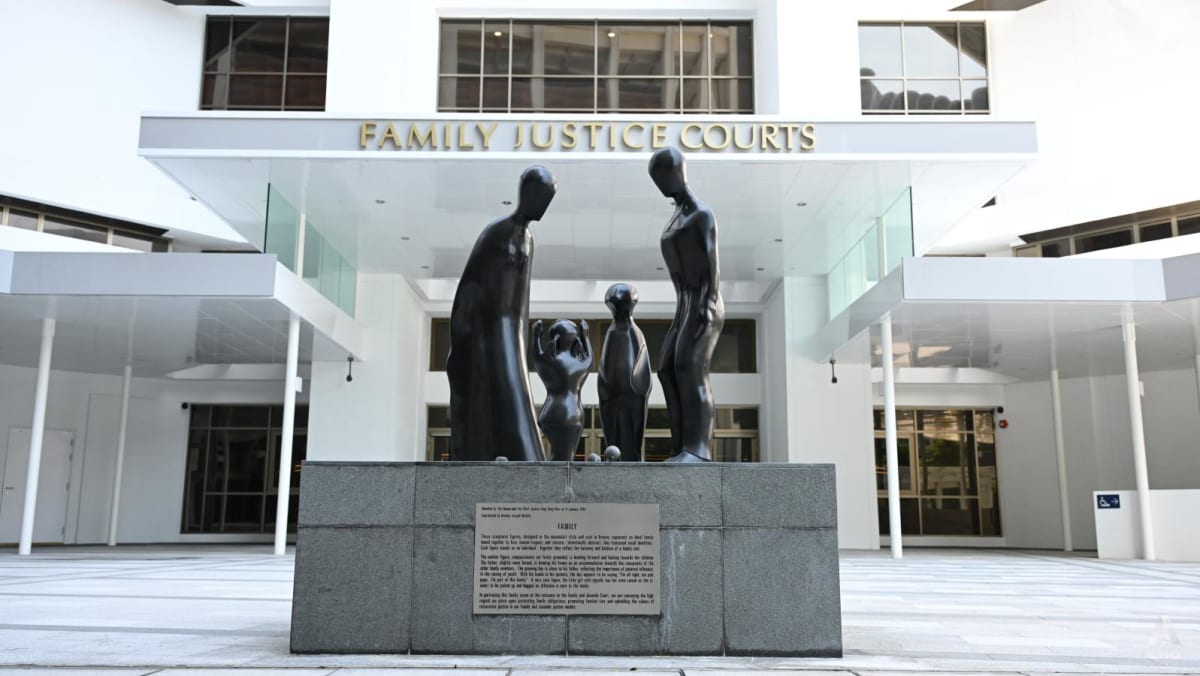
The Family Justice Courts – comprising the Family Courts, Youth Courts and Family Division of the High Court – as seen on Nov 1, 2024. (File photo: CNA/Raydza Rahman)
This audio is generated by an AI tool.
SINGAPORE: A family court has rejected a 90-year-old man's claim for spousal maintenance from his 89-year-old wife, noting that both of them are in the twilight of their lives.
The court also noted that the man will receive more than S$2 million (about US$1.6 million) from the matrimonial pool, comprising the couple's assets to be divided in the divorce, and his wife is a retiree living on a pension.
The former couple were married for more than 64 years and have three children, all aged above 60, a judgment published on Wednesday (Sep 16) stated. They were not named in the judgment, as is usual for a family court ruling.
Most of the value in the matrimonial pool came from their joint asset, a S$5.8 million house.
The couple married in January 1960 and were granted an interim judgment for divorce in September 2024.
There were no issues of custody or child maintenance since their children are adults.
Dealing with the division of matrimonial assets, Justice Dedar Singh Gill added about S$14,500 in the man's name to the pool. Most of this is from his Central Provident Fund (CPF), Singapore's mandatory social security savings scheme.
He added about S$80,000 from the woman's assets to the pool, including almost S$20,000 in CPF.
The woman argued that she had contributed to 100 per cent of the matrimonial home and financed it alone.
She said she had bought their previous property under the Teacher's Estate housing scheme, which provided homes for educators. The sale proceeds from this property were used fully to buy the matrimonial home, to which her husband contributed "nothing".
The man sought a 50:50 division of all matrimonial assets, claiming to have contributed to both the Teacher's Estate property and the matrimonial home.
However, the judge noted that neither side's account was supported by documentary evidence.
INDIRECT CONTRIBUTIONS
The woman sought a ratio of 80:20 in indirect contributions in her favour, arguing that she bore virtually all the financial and non-financial burdens of the family throughout the marriage.
She said she was the main provider during the first half of the marriage when both of them worked, paying for the children's tuition and courses, family vacations and a domestic worker to care for the children when she was at work.
She also said that she gave her son S$50,000 to start a business that failed, and footed the bills for her children's weddings.
After she retired in 1992, she claimed that her husband had no income and contributed "nothing" while she supported the household from her pension of about S$2,400 a month.
She gave her husband half of this amount each month, she added.
She also said that she was the primary caregiver for her children, cooking for the family and supervising the various domestic helpers and overseeing the repairs and maintenance of the household.
The husband sought an equal or near-equal division of indirect contributions, claiming that until retirement, both parties had pooled their incomes in joint accounts.
From these, all the household expenses were paid. After retirement, he said the expenses were paid from their pooled savings in joint accounts, and thereafter from his wife's joint accounts with their son and oldest daughter.
He said he did his "fair share of being involved in the care and upbringing of the children".
Justice Gill said the indirect financial contributions for the first half of the marriage were difficult to determine, given the couple's differing versions of events without objective evidence.
However, the position is clearer for the second half of the marriage after their retirement.
It was undisputed that the man had no income beyond his monthly annuity of S$485.75 from insurer NTUC Income, and that the only income stream was the woman's monthly pension of about S$2,400, of which she gave her husband half.
The woman also produced payment records showing that she paid the property tax bills up to 2024, as well as receipts for household bills she continued to cover on her own.
WIFE CONTRIBUTED GREATER SHARE
The judge also found that the wife contributed the greater share in indirect non-financial contributions, with detailed evidence of her caregiving and homemaking.
She was the primary caregiver of her children from birth and even when she worked, helping them with their homework and managing their schooling and activities.
She also ran the household, cooked for the family, organised family gatherings, and trained and supervised the various domestic workers they hired.
"The husband, on the other hand, does no more than assert in general terms that he did his fair share," Justice Gill said.
"He descends to no particulars of caring for the children, their schooling, their health or their emotional needs.
"I also consider it significant that the husband neither disputed most of what the wife says she did for the family nor offered any competing account of his own."
He assessed indirect contributions at 70:30 in favour of the woman.
The woman sought a 2 per cent increase of her share of the matrimonial pool, saying that her ex-husband had illegally excluded her from the home from March 2025 and placed a padlock on the gate.
The man, however, claimed that his ex-wife and their oldest daughter moved out of their own accord.
Justice Gill noted that this complaint of illegal exclusion surfaced for the first time only in written submissions, and both parties would obtain substantial sums from the pool in any event. He declined to raise the woman's share of the assets on this basis.
In total, the ratio across direct and indirect contributions was computed to be 60:40, in favour of the woman.
Accordingly, she was to get S$3.5 million, while her ex-husband obtained S$2.4 million.
The man sought maintenance as an incapacitated former husband under the Women's Charter, pointing to his medical and mobility issues, his inability to earn a livelihood, his minimal income and his wife's departure from the matrimonial home. This has left him to cover the home's expenses alone.
If he did not get maintenance, the man asked for a lump sum equivalent to 5 to 10 per cent of his share of the matrimonial assets.
The judge rejected the man's claim for spousal maintenance and his request for the lump sum payment.
He said that both parties are in the twilight of their lives, with neither having any earning capacity nor any expectations to improve their financial positions through work.
Both of them rely on monthly pensions or payouts as their financial source, and they will each have very substantial sums from the matrimonial pool, Justice Gill added.
The sum of more than S$2 million that the man will obtain is "more than sufficient to meet the needs of a 90-year-old retiree for the remainder of his life".
"Once the division takes effect, he will be amply provided for. In these circumstances, I do not think an order for maintenance against the wife, herself an elderly retiree living on a pension, would be just or necessary."
The man sought reimbursement from his ex-wife's share for the property tax he paid on the house for the years of assessment 2025 and 2026, saying that she had paid nothing since moving out in March 2025.
The judge acknowledged that the man should not necessarily bear the entire property tax simply because he lives there, but found his argument for his ex-wife to pay the full bill untenable.
He said that the property tax for the two years must be borne equally by both parties.
The home is to be sold on the open market within six months, with them having joint conduct of the sale.
Each side will bear its own costs.
Get our pick of top stories and thought-provoking articles in your inbox
Stay updated with notifications for breaking news and our best stories
Join our channel for the top reads for the day on your preferred chat app
该女子声称,房子是她独自出资购买的,而她的丈夫“一分钱都没出”。她还说,退休后,她把退休金的一半给了丈夫。
2024年11月1日拍摄的家庭司法法院——包括家庭法院、青少年法院和高等法院家庭庭。(资料照片:CNA/Raydza Rahman)
这段音频是由人工智能工具生成的。
新加坡:一名90岁男子向其89岁妻子索要配偶赡养费的请求被家庭法庭驳回,法庭指出,两人都已步入晚年。
法庭还指出,该男子将从夫妻共同财产中获得超过 200 万新元(约 160 万美元),这些财产将在离婚时进行分割,而他的妻子是一名靠养老金生活的退休人员。
周三(9月16日)公布的判决书显示,这对前夫妇结婚超过64年,育有三个子女,均已年过六旬。按照家事法庭的惯例,判决书中并未提及他们的姓名。
婚后财产的大部分价值来自他们的共同资产,即价值 580 万新元的房产。
这对夫妇于 1960 年 1 月结婚,并于 2024 年 9 月获得离婚临时判决。
由于他们的孩子都已成年,因此不存在监护权或子女抚养费的问题。
在处理夫妻共同财产分割事宜时,法官迪达·辛格·吉尔(Dedar Singh Gill)将约14,500新元以男方的名义添加到共同财产池中。这笔钱大部分来自他的中央公积金(CPF),即新加坡的强制性社会保障储蓄计划。
他将这名女子名下的约 8 万新元资产投入资金池,其中包括近 2 万新元的公积金。
该女子辩称,她对婚姻住所的建设和购置做出了 100% 的贡献,并且独自承担了所有费用。
她说,她之前购买的房产是教师住房计划的一部分,该计划旨在为教育工作者提供住房。出售这处房产所得的全部款项都用于购买现在的婚房,而她的丈夫“分文未出”。
该男子要求平分所有婚姻财产,声称自己对教师遗产和婚姻住所都做出了贡献。
然而,法官指出,双方的说法均没有书面证据支持。
间接贡献
该女子要求间接贡献比例为 80:20,理由是她在整个婚姻期间几乎承担了家庭所有的经济和非经济负担。
她说,在婚姻的前半段,两人都工作,她是家里的主要经济支柱,支付孩子们的学费和课程费用、家庭度假费用,以及在她工作时雇佣家政人员照顾孩子的费用。
她还表示,她给了儿子 5 万新元让他创业,但最终失败了;她还承担了孩子们的婚礼费用。
1992 年退休后,她声称丈夫没有收入,对家庭“没有任何贡献”,而她则靠每月约 2400 新元的养老金来维持家庭生计。
她补充说,她每个月会把这笔钱的一半给丈夫。
她还表示,她是孩子的主要照顾者,负责全家的饮食起居,监督各种家政人员的工作,并负责房屋的维修和保养。
丈夫要求对间接贡献进行均等或近似均等的分割,声称在退休之前,双方一直将收入存入联名账户。
这些钱用来支付所有家庭开支。他说,退休后,开支先是从他们共同账户里的积蓄中支付,之后则从他妻子与儿子和长女的联名账户中支付。
他说他“尽了自己的一份力去照顾和抚养孩子们”。
吉尔法官表示,由于这对夫妇对事件的描述各不相同,且没有客观证据,因此很难确定婚姻前半段的间接经济贡献。
然而,在他们退休后的婚姻后半程,情况就更加明朗了。
无可争议的是,该男子除了每月从NTUC Income保险公司领取的485.75新元年金外,没有其他收入;而他唯一的收入来源是该女子每月约2400新元的养老金,其中一半给了她的丈夫。
该女子还出示了付款记录,证明她已支付了截至 2024 年的房产税,以及她继续自行支付的家庭账单的收据。
妻子贡献了更多份额
法官还认定,妻子在间接的非经济贡献方面贡献更大,并提供了她照顾家人和操持家务的详细证据。
她从孩子出生起就是他们的主要照顾者,即使在工作期间,她也会帮助孩子们做作业,安排他们的学习和课外活动。
她还负责管理家务,为家人做饭,组织家庭聚会,并培训和监督他们雇佣的各种家政工人。
“另一方面,丈夫只是笼统地断言他已经尽了自己的一份力,”吉尔法官说。
“他丝毫不关心照顾孩子、他们的教育、他们的健康或他们的情感需求等细节。
“我还认为,丈夫既没有否认妻子所说的她为家庭所做的大部分事情,也没有提出任何与之相反的说法,这一点也很重要。”
他认为间接贡献占70%,女性占30%。
该女子要求增加其在婚姻财产中的份额 2%,称其前夫从 2025 年 3 月起非法将她排除在家中,并在大门上加了一把挂锁。
然而,该男子声称他的前妻和他们的大女儿是自愿搬出去的。
吉尔法官指出,关于非法排除的指控仅在书面陈述中首次出现,而且无论如何双方都将从资产池中获得相当可观的金额。因此,他拒绝以此为由提高该女子应得的资产份额。
总的来说,直接贡献和间接贡献的比例为 60:40,女性贡献占多数。
因此,她将获得 350 万新元,而她的前夫将获得 240 万新元。
该男子依据《妇女宪章》以丧失行为能力的前夫身份申请赡养费,理由是他存在健康和行动障碍,无法谋生,收入微薄,且妻子已离开婚房。这些情况导致他不得不独自承担家庭开支。
如果他得不到赡养费,该男子要求一次性支付相当于其婚姻财产份额 5% 至 10% 的款项。
法官驳回了该男子要求配偶赡养费和一次性付款的请求。
他说,双方都已步入晚年,既没有赚钱的能力,也没有通过工作改善经济状况的希望。
吉尔法官补充说,他们两人都依靠每月养老金或津贴作为经济来源,而且他们还将从婚姻财产中获得相当可观的金额。
该男子将获得的超过 200 万新元的款项“足以满足一位 90 岁退休老人余生的需求”。
“一旦分割生效,他将得到充分的生活保障。在这种情况下,我认为没有必要也不公正地判令妻子支付赡养费,她本人也是一位靠养老金生活的老年退休人员。”
该男子要求前妻偿还他为该房屋缴纳的 2025 年和 2026 年房产税,称自 2025 年 3 月搬出以来,她一分钱也没交。
法官承认,该男子不应仅仅因为住在那里就承担全部房产税,但认为他要求前妻支付全部税款的论点站不住脚。
他说,这两年的房产税应由双方平均分担。
该房屋将在六个月内通过公开市场出售,双方将共同进行出售事宜。
双方各自承担各自的费用。
订阅我们的邮件,即可获取精选热点新闻和引人深思的文章。
订阅通知,第一时间获取突发新闻和精彩报道。
加入我们的频道,即可在您常用的聊天应用上获取当日热门文章。