Dutch NATO math portends uphill battle for Europe on defense spending荷兰对北约的估算预示着欧洲在国防开支方面将面临一场艰苦的斗争。
The alliance's Capability Targets 2025, to be formally set at a summit in June, will significantly increase the requirements compared to previous goals.
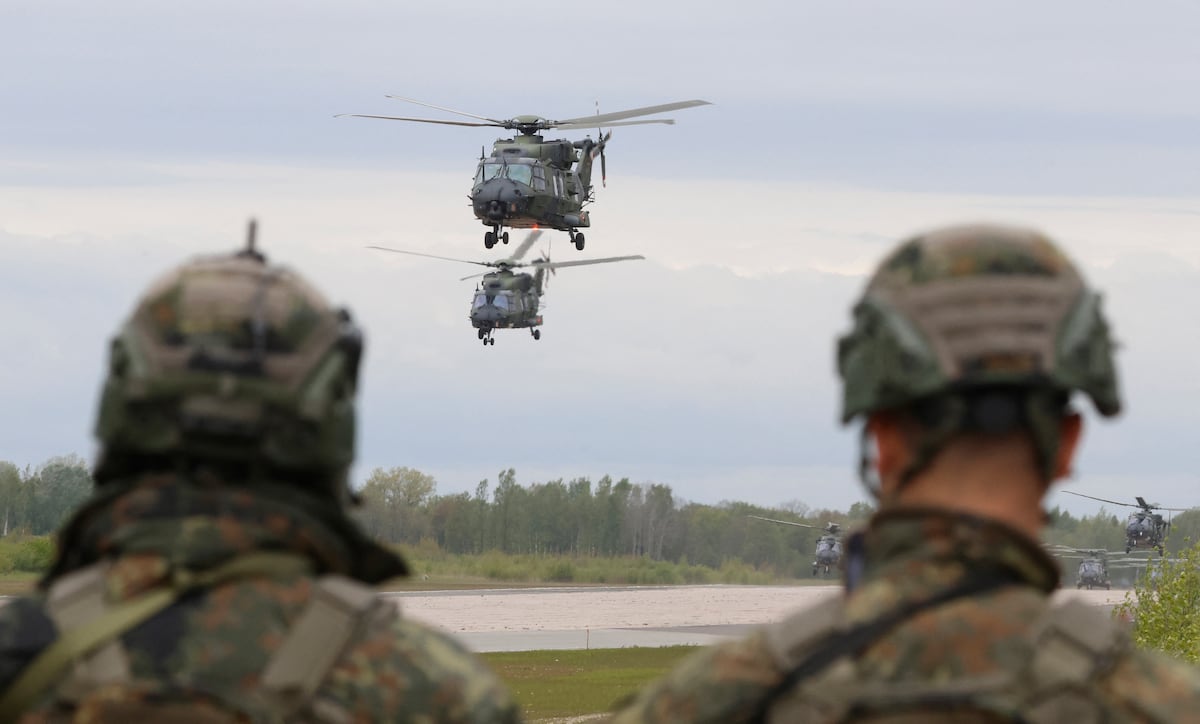
PARIS — The Netherlands worked out the costs of meeting NATO’s new capability targets, providing a taste of the billion-euro budget challenge European members of the alliance face to boost their military posture in the face of a more aggressive Russia.
The Dutch calculate that meeting their share of the targets will cost at least €16 billion to €19 billion ($18 billion-$21 billion) a year on top of the existing defense budget, Defence Minister Ruben Brekelmans told parliament in a letter last week . That would amount to about 3.5% of GDP, from 2% now – conveniently also the core defense spending target that NATO leadership is calling for.
NATO’s Capability Targets 2025, to be formally set at a summit in The Hague in June, will significantly increase the requirements compared to previous targets, according to the Dutch. The CT25 focus will be on ground-based air and missile defense, ground-based fire support, land maneuver units and joint enablers, Brekelmans said.
For the larger economies of Germany, France and the U.K., meeting the new targets means “we’re no longer talking about a few billion extra per year, but tens of billions,” said Dick Zandee, senior research fellow at Dutch think tank Clingendael Institute and former head of planning at the European Defence Agency.
The three countries have the biggest defense budgets of European NATO members, spending a little over 2% of GDP on their military. The Netherlands is Europe’s sixth-biggest spender, lifting its 2025 defense budget to €22 billion euros from €21.4 billion last year.
U.S. President Donald Trump has repeatedly demanded NATO countries increase military spending to 5% of GDP, threatening to pull out of the alliance if members don’t pay up.
NATO Secretary General Mark Rutte said this week he expects alliance members to agree to a 5% spending target in The Hague, with a proposal for 3.5% of GDP for direct military spending and another 1.5% for related spending such as infrastructure and cybersecurity.
The Netherlands also estimates meeting the new NATO capability targets will require 17,000 to 18,000 more personnel.
While the 32-nation alliance typically keeps the capability targets secret, NATO Supreme Allied Commander Transformation Adm. Pierre Vandier said in March the alliance will ask members to raise military capability targets by 30% – even with allies already 30% behind on delivering on existing goals.
The Dutch say the NATO “standard path” to fully meet the capability targets has been 19 years, but current threats make a faster build-up necessary, and NATO expects “a significant part will already be built up in the coming years.”
Brekelmans says around €9 billion to €10 billion of the calculated costs and 8,500 to 9,000 of the personnel count are attributable to the Netherlands not yet having fully met NATO’s 2021 capability targets.
While NATO defense planning is based on the principle that all the capabilities are realized, “in practice of course, that is never achieved,” Zandee said.
Neighboring Germany and Belgium have similar issues as the Netherlands of having to play catch up with the 2021 targets, with personnel shortages partially explaining the shortcomings, he said.
“All countries are coming out of roughly two decades of severe budget cuts, all countries to a varying degree donated to Ukraine, reducing stocks and supplies,” Zandee said. “The Netherlands is not really in a unique position in this regard.”
The calculations by Brekelmans exclude the costs of host nation support, with Dutch responsibility within the alliance for large-scale transfer of military equipment, as well as homeland defense and military activities outside the NATO treaty area, such as the Caribbean Netherlands. That means total defense costs would exceed 3.5% of GDP, according to Brekelmans.
The Netherlands has typically been transparent about the costs of NATO targets, according to Zandee. Publishing the figures serves a political purpose in trying to muster broad parliamentary and coalition-government support for a bigger defense budget, a politically sensitive issue in the country, and gain popular support for more spending, he said.
Spending 3.5% of GDP on core defense is achievable for a country like the Netherlands with healthy public finances, and also quite doable for Scandinavian countries, Zandee said. For countries in southern Europe with high debt levels “it does become a big problem,” for example in France, where more defense spending will mean more borrowing.
Italy, Spain and Belgium, among the NATO members that spend the least on defense relative to their economy, all have government debt to GDP ratios above 100%. Greece and France, the other European Union countries in NATO whose debt exceeds GDP, have historically been bigger military spenders.
By contrast, the Netherlands had a debt to GDP ratio of 43.3% at the end of 2024, while for Germany the ratio was 62.5%. Zandee expects Germany under new Chancellor Friedrich Merz will agree to the 3.5% target, the British as loyal allies will commit despite “major financial problems,” while the Netherlands will ultimately also go along.
“The problem mainly starts in Belgium and then further south,” Zandee said. “The French will simply take the budgetary risk, because they are not going to back down. But the Italians and the Spanish in particular will have to perform some fancy maneuvering.”
Some countries are already well on their way to meeting the NATO target. Estonia announced in April that it would increase defense spending to 5.4% of GDP already in 2026 and through to 2029, for an additional €2.8 billion of additional budget over four years, with the government saying spending would take into account the NATO capability targets.
Meanwhile, Denmark said in February it will spend an additional 50 billion Danish kroner (US$7.6 billion) in 2025 and 2026 to strengthen its armed forces in the short term, also with a view to NATO demands and capability targets, lifting defense spending to above 3% of GDP.
Poland is the only NATO country that has already met the new target, spending 4.1% of GDP on defense in 2024, for total spending of around $35 billion.
Some countries may agree to 3.5% of core defense spending in The Hague with no intention of ever reaching the target, to keep NATO alive, even if they won’t say so publicly, Zandee said. He said the same happened with the 2% spending target agreed in Wales in 2014.
“When it comes to the survival of the alliance and keeping the Americans in, I think even those countries will simply agree to it,” Zandee said. “That 3.5% is almost a done deal. If Trump can wave that one piece of paper and say, ‘I’ve achieved all this,’ then the NATO summit will have been a success, it’s as simple as that.”
Rudy Ruitenberg is a Europe correspondent for Defense News. He started his career at Bloomberg News and has experience reporting on technology, commodity markets and politics.
巴黎——荷兰计算出了满足北约新能力目标所需的成本,这让人们体会到,面对更具侵略性的俄罗斯,欧洲北约成员国为提升军事实力,将面临数十亿欧元的预算挑战。
荷兰国防部长鲁本·布雷克尔曼斯上周在致议会的一封信中表示,荷兰方面估计,要达到其应承担的目标份额,每年至少需要在现有国防预算之外额外支出160亿至190亿欧元(180亿至210亿美元)。这将相当于荷兰国内生产总值(GDP)的3.5%左右,而目前这一比例为2%——巧合的是,这恰好也是北约领导层呼吁的核心国防开支目标。
据荷兰方面称,北约将于6月在海牙峰会上正式制定的“2025年能力目标”(CT25)将比以往的目标大幅提高要求。布雷克尔曼斯表示,CT25的重点将放在陆基防空和导弹防御、陆基火力支援、陆地机动部队和联合保障能力上。
荷兰智库克林根达尔研究所高级研究员、欧洲防务局前规划主管迪克·赞迪表示,对于德国、法国和英国这些较大的经济体而言,实现新目标意味着“我们不再谈论每年额外增加几十亿,而是数百亿”。
这三个国家是欧洲北约成员国中国防预算最高的国家,军费开支略高于国内生产总值的2%。荷兰是欧洲第六大国防开支国,其2025年国防预算从去年的214亿欧元增至220亿欧元。
美国总统唐纳德·特朗普多次要求北约国家将军费开支提高到国内生产总值的5%,并威胁说如果成员国不支付这笔费用,美国将退出北约。
北约秘书长马克·吕特本周表示,他希望联盟成员国在海牙达成一致,将军费开支目标设定为占GDP的5%,其中3.5%用于直接军事支出,另外1.5%用于基础设施和网络安全等相关支出。
荷兰方面估计,要达到北约新的能力目标,还需要增加 17,000 至 18,000 名人员。
尽管这个由 32 个国家组成的联盟通常对能力目标保密,但北约最高盟军转型司令皮埃尔·范迪耶海军上将在 3 月份表示,该联盟将要求成员国将军事能力目标提高 30%——即使盟国在实现现有目标方面已经落后 30%。
荷兰方面表示,北约全面实现能力目标的“标准路径”需要 19 年时间,但当前的威胁使得加快建设势头成为必要,北约预计“很大一部分将在未来几年内建成”。
布雷克尔曼斯表示,计算出的成本中约有 90 亿至 100 亿欧元以及 8500 至 9000 人的损失,是由于荷兰尚未完全达到北约 2021 年的能力目标。
赞迪说,虽然北约的国防计划基于所有能力都得以实现的原则,“但实际上,这当然从未实现过”。
他说,邻国德国和比利时与荷兰一样,面临着追赶 2021 年目标的类似问题,人员短缺是造成这些不足的部分原因。
“所有国家都经历了近二十年的严重预算削减,所有国家都不同程度地向乌克兰提供了援助,导致库存和物资减少,”赞迪说。“在这方面,荷兰的处境并非独一无二。”
布雷克尔曼斯的计算并未计入东道国支持成本,包括荷兰在北约内部承担的大规模军事装备转移责任,以及国土防御和北约条约区以外的军事活动,例如在加勒比荷兰地区的军事活动。这意味着,根据布雷克尔曼斯的说法,国防总成本将超过国内生产总值的3.5%。
赞迪表示,荷兰通常在北约目标的成本方面保持透明。他说,公布这些数据具有政治目的,旨在争取议会和联合政府对增加国防预算的广泛支持——国防预算在荷兰是一个政治敏感问题——并争取民众对增加国防开支的支持。
赞迪表示,对于像荷兰这样公共财政状况良好的国家来说,将GDP的3.5%用于核心国防是可以实现的,对于北欧国家来说也完全可行。但对于负债水平较高的南欧国家来说,“这就会成为一个大问题”,例如法国,因为增加国防开支意味着需要借更多钱。
意大利、西班牙和比利时是北约成员国中国防开支占经济总量比例最低的国家之一,但它们的政府债务占GDP的比重均超过100%。希腊和法国是北约成员国中其他债务超过GDP的欧盟国家,而这两个国家历来军费开支较高。
相比之下,荷兰2024年底的债务占GDP比重为43.3%,而德国则高达62.5%。赞迪预计,在新任总理弗里德里希·默茨的领导下,德国将同意3.5%的目标;英国作为忠实盟友,尽管面临“严重的财政问题”,也会做出承诺;而荷兰最终也会同意。
“问题主要出在比利时,然后向南蔓延,”赞迪说。“法国人会承担预算风险,因为他们不会让步。但意大利人,尤其是西班牙人,则必须使出一些巧妙的手段。”
一些国家已在实现北约目标方面取得了显著进展。爱沙尼亚于今年4月宣布,将从2026年起至2029年将国防开支提高至GDP的5.4%,四年内新增预算28亿欧元。政府表示,这笔开支将充分考虑北约的能力目标。
与此同时,丹麦在 2 月份表示,将在 2025 年和 2026 年额外支出 500 亿丹麦克朗(76 亿美元),以在短期内加强其武装力量,同时也是为了满足北约的要求和能力目标,这将使国防开支提高到国内生产总值的 3% 以上。
波兰是唯一一个已经达到新目标的北约国家,2024 年国防开支占 GDP 的 4.1%,总支出约为 350 亿美元。
赞迪表示,一些国家可能在海牙会议上同意将核心国防开支提高到3.5%,但实际上根本没有达到这个目标的打算,目的只是为了维持北约的存续,即使它们不会公开承认这一点。他还说,2014年在威尔士会议上商定的2%的国防开支目标也出现了同样的情况。
“事关联盟的存亡和美国能否继续留在联盟内,我认为即使是那些国家也会同意,”赞迪说。“那3.5%的份额几乎已经板上钉钉。如果特朗普能挥舞着那张纸说,‘我已经实现了这一切’,那么北约峰会就算成功了,就这么简单。”
鲁迪·鲁伊滕贝格是《防务新闻》的欧洲记者。他的职业生涯始于彭博新闻社,拥有报道科技、大宗商品市场和政治方面的经验。