Germany vows to underwrite Ukraine’s long-range missile production德国承诺为乌克兰远程导弹生产提供资金支持
Investing in Ukraine will enable Kyiv to have a “substantial” number of long-range weapons this year, the German defense ministry said in a statement.
THE HAGUE, Netherlands — German Chancellor Friedrich Merz said his country would pay for Ukraine to build long-range missiles at home, days after the leader announced a lift on range restrictions on Kyiv’s Western-supplied weapons.
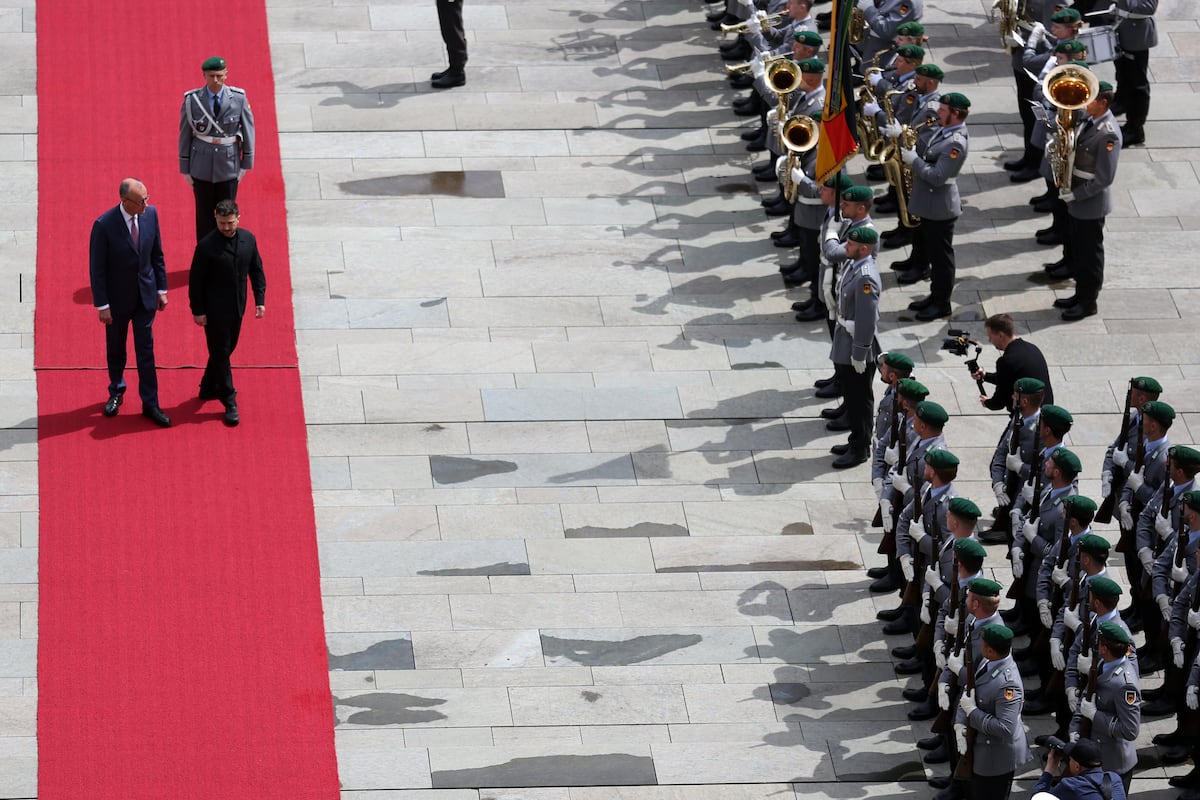
The remarks came during Ukrainian President Volodymyr Zelenskyy’s short-notice visit to Berlin on Wednesday. During a press conference, the leaders also announced the start of intergovernmental German-Ukrainian consultations later this year, as well as deeper defense industry ties.
A memorandum of understanding between the countries, signed by the two defense ministers, governs the cooperation details.
Investing in Ukraine will enable Kyiv to have a “substantial” number of long-range weapons this year, the German defense ministry said in a statement, with the first deliveries set to take place in just a few weeks’ time.
These declarations come after Merz announced on Monday that Western backers would no longer attach range limitations to their weapons donations, though it was unclear which systems he was referring to other than Germany’s own. Known suppliers of such arms also include the U.K., France and the United States. Russia lashed out following the announcement, calling it a “dangerous” decision.
Speaking alongside Zelenskyy on Wednesday, Merz hailed “the beginning of a new form of military-industrial cooperation between our countries, which has very great potential.”
Germany’s defense ministry said the latest aid package was worth around €5 billion ($5.65 billion) and was concluded “in light of the current, most severe Russian aerial attacks since the beginning of the offensive war against Ukraine.”
In addition to the investment in Ukrainian arms manufacturing, Germany will deliver more air defense systems and replenish Kyiv’s stocks of munitions, according to a government statement. Germany will also provide financial support for battlefield maintenance conducted in Ukraine, as well as the country’s military and satellite communications infrastructure.
Absent from the press conference was any mention of Germany’s own Taurus long-range cruise missile, considered one of the most advanced globally. For well over a year, there have been heated debates in Berlin about whether to deliver the weapons for Kyiv to use in the country’s defense. The previous government under Chancellor Olaf Scholz had opted against such a move out of fear that German officials would have to remain involved in firing it, thereby drawing Berlin directly into the war.
Despite the reticence, Germany has been a key backer of Ukraine in its defense against Russia’s invasion, which commenced in earnest in February 2022. It is second only to the United States in the quantity of military aid it has delivered.
“We will continue our military support, and we will expand it,” said Merz after meeting with his Ukrainian colleague.
Details are likely to remain scant. The new German government has thrown to the wind the transparency fostered by the Scholz administration and said it will no longer share which weapons it sends to Ukraine. A website tallying German weapons deliveries has since been archived, and the chancellor said during the press conference that he would not provide any further specific details about military assistance and cooperation.
Linus Höller is Defense News' Europe correspondent and OSINT investigator. He reports on the arms deals, sanctions, and geopolitics shaping Europe and the world. He holds master’s degrees in WMD nonproliferation, terrorism studies, and international relations, and works in four languages: English, German, Russian, and Spanish.
荷兰海牙——德国总理弗里德里希·默茨表示,德国将出资帮助乌克兰在国内建造远程导弹。几天前,默茨宣布取消对基辅从西方获得的武器的射程限制。
乌克兰总统泽连斯基周三对柏林进行突访期间发表了上述言论。在随后举行的新闻发布会上,两国领导人还宣布将于今年晚些时候启动德乌政府间磋商,并深化国防工业合作。
两国国防部长签署的谅解备忘录规定了合作细节。
德国国防部在一份声明中表示,对乌克兰的投资将使基辅今年能够拥有“相当数量”的远程武器,首批交付将在几周内进行。
此前,梅尔茨周一宣布,西方捐助者将不再对其武器捐赠附加射程限制,但除德国自身武器系统外,尚不清楚他指的是哪些系统。已知的此类武器供应国还包括英国、法国和美国。俄罗斯对此声明予以强烈抨击,称其为“危险的”决定。
梅尔茨周三与泽连斯基一同发表讲话时称赞道:“这标志着我们两国之间新型军事工业合作的开始,具有非常巨大的潜力。”
德国国防部表示,最新援助方案价值约 50 亿欧元(56.5 亿美元),是“鉴于自对乌克兰发动进攻战争以来,俄罗斯目前最严重的空袭”而达成的。
据乌克兰政府声明,除投资乌克兰武器制造业外,德国还将提供更多防空系统并补充基辅的弹药储备。德国还将为在乌克兰进行的战场维护以及该国的军事和卫星通信基础设施提供财政支持。
在新闻发布会上,德国只字未提其自主研发的“金牛座”远程巡航导弹,该导弹被认为是世界上最先进的导弹之一。一年多来,柏林一直在就是否向基辅交付这种导弹用于国防问题展开激烈辩论。前任总理奥拉夫·朔尔茨领导的政府曾因担心德国官员将不得不参与导弹发射,从而直接将柏林卷入战争而选择不这样做。
尽管德国一直保持沉默,但它一直是乌克兰抵御俄罗斯入侵的关键支持者,俄罗斯的入侵于2022年2月正式开始。德国提供的军事援助数量仅次于美国。
梅尔茨在与乌克兰同行会面后表示:“我们将继续提供军事支持,并且会扩大支持范围。”
细节可能仍然很少。德国新政府抛弃了朔尔茨政府所倡导的透明度,并表示将不再公开其向乌克兰提供的武器种类。一个统计德国武器交付情况的网站已被存档,总理在新闻发布会上表示,他不会提供有关军事援助和合作的任何其他具体细节。
林努斯·霍勒是《防务新闻》的欧洲记者和开源情报调查员。他报道影响欧洲乃至全球的军火交易、制裁和地缘政治。他拥有大规模杀伤性武器不扩散、恐怖主义研究和国际关系三个硕士学位,并精通英语、德语、俄语和西班牙语四种语言。