EU unveils Black Sea strategy with an eye on post-war Ukraine欧盟公布黑海战略,着眼于战后乌克兰
The plan will see the creation of a “Black Sea Maritime Security Hub” to serve as Europe’s early-warning center in the region.
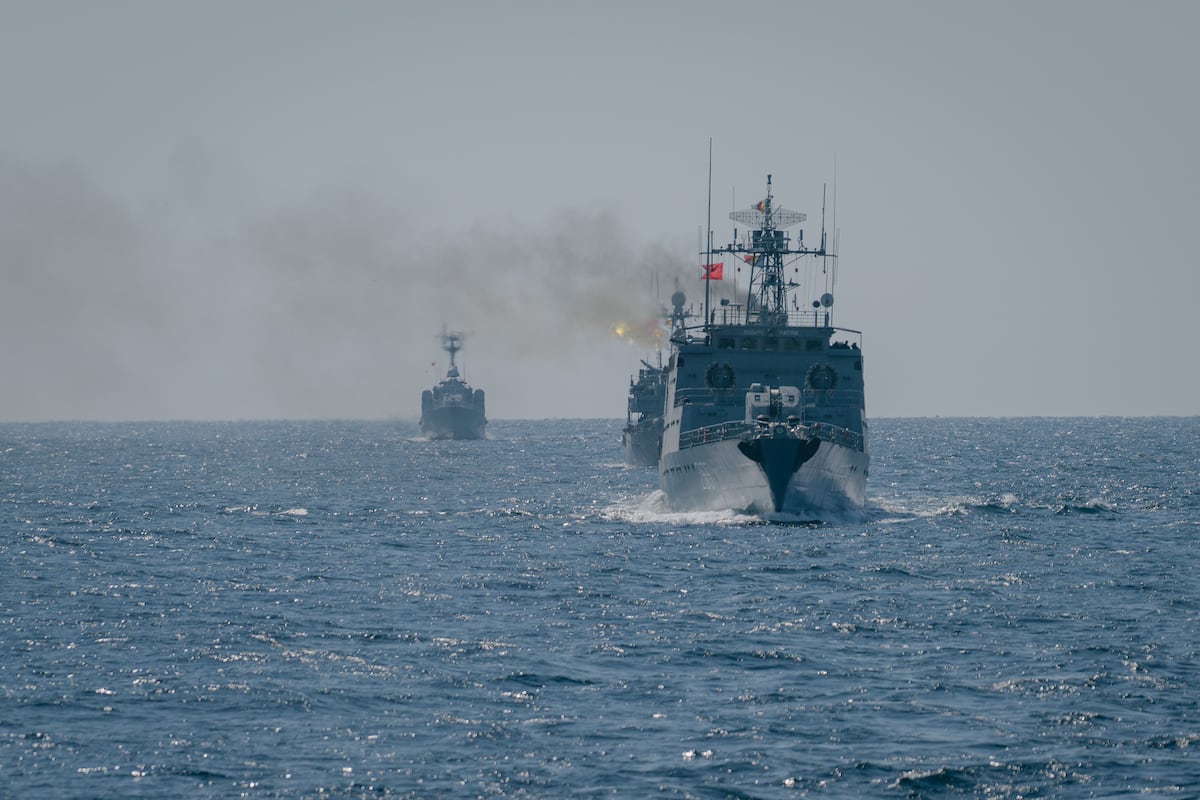
THE HAGUE, Netherlands — The European Union has unveiled a sweeping security strategy for the strategically vital Black Sea aimed at countering Russian threats in the region.
Announced on Wednesday, the strategy will see the creation of a “Black Sea Maritime Security Hub” to serve as Europe’s early-warning center in the region. According to the document, it will provide “situational awareness and information sharing on the Black Sea, real-time monitoring from space to seabed, and early warning of potential threats and malicious activities.”
The center will be tasked with monitoring critical maritime infrastructure, including submarine cables, offshore installations and gas and wind energy operations off the EU shores in the Black Sea, the strategic plan says. Hybrid warfare, including the apparent sabotage of ocean-based infrastructure, has been at the forefront of many Western leaders’ minds in recent years after a series of suspicious incidents in the Baltic Sea related to Chinese and Russian vessels.
Among the other priorities outlined in the strategy are mine clearance, protection of commercial shipping routes, and means to deal with Russia’s “shadow fleet” of clandestinely operating and often decrepit oil tankers that Moscow uses to circumvent Western sanctions, a strategy also employed by North Korea.
At a press conference revealing the new strategy, Kaja Kallas, the EU’s top diplomat, suggested the center could serve to monitor any eventual ceasefire or peace deal between Russia and Ukraine.
Details remain to be worked out on where exactly such a hub would be located and how the proposal will be realized. The policy paper promises that specific needs and “present operational options” will be worked out by the end of summer.
The initiative lacks a specific budget line and will instead rely on existing EU programs, including the €150 billion ($159 billion) SAFE initiative for defense spending . The groundbreaking plan, aimed at mobilizing cheap loans to drastically increase European defense spending, received the final green light from the EU member states a day before the Black Sea strategy was released.
Besides the flagship Security Hub, the strategy promises major upgrades to regional infrastructure with an eye to military mobility. Included in the outline is the promise for significant work on ports, roads, railways and airports around the Black Sea to enable faster movement of military equipment.
“These updates will help to ensure troops can be where they are needed, when they are needed,” Kallas said, adding that the changes would reinforce NATO deterrence. The EU also plans tighter screening of foreign ownership in strategic facilities, particularly ports. Analysts have been worried about Chinese investment in strategic European ports, ostensibly as part of Beijing’s ambitious “Belt and Road” global infrastructure initiative.
Simultaneously, the EU will work to deepen its ties with non-EU partners Ukraine, Moldova, Georgia, Turkey, Armenia and Azerbaijan, including enhancing “regional cooperation on connectivity,” according to a European Commission website on the project.
Security aspects are a prominent pillar in the new Black Sea strategy, which otherwise aims to foster economic growth and ensure environmental protection.
Linus Höller is Defense News' Europe correspondent and OSINT investigator. He reports on the arms deals, sanctions, and geopolitics shaping Europe and the world. He holds master’s degrees in WMD nonproliferation, terrorism studies, and international relations, and works in four languages: English, German, Russian, and Spanish.
荷兰海牙——欧盟公布了一项针对具有重要战略意义的黑海地区的全面安全战略,旨在应对俄罗斯在该地区的威胁。
周三公布的这项战略将建立一个“黑海海上安全中心”,作为欧洲在该地区的预警中心。文件显示,该中心将提供“黑海态势感知和信息共享、从太空到海底的实时监测,以及对潜在威胁和恶意活动的早期预警”。
该战略计划指出,该中心将负责监控关键海上基础设施,包括黑海欧盟沿岸的海底电缆、海上设施以及天然气和风能作业。近年来,波罗的海发生一系列与中国和俄罗斯船只有关的可疑事件,混合战争(包括对海洋基础设施的明显破坏)一直是许多西方领导人关注的焦点。
该战略概述的其他优先事项包括清除水雷、保护商业航运路线,以及应对俄罗斯秘密运营且通常破旧不堪的油轮“影子舰队”的手段。莫斯科利用这支舰队规避西方制裁,朝鲜也采用了类似的策略。
在公布新战略的新闻发布会上,欧盟最高外交官卡娅·卡拉斯表示,该中心可以用于监督俄罗斯和乌克兰之间最终达成的任何停火或和平协议。
关于该枢纽的具体选址和实施方案等细节仍有待商榷。政策文件承诺,将在夏季结束前确定具体需求和“现有运营方案”。
该倡议没有专门的预算项目,而是将依赖现有的欧盟计划,包括规模达1500亿欧元(1590亿美元)的“安全、自由和财政倡议”(SAFE计划),用于国防开支。这项旨在筹集低息贷款以大幅增加欧洲国防开支的开创性计划,在黑海战略发布前一天获得了欧盟成员国的最终批准。
除了旗舰项目“安全中心”之外,该战略还承诺对区域基础设施进行重大升级,以提升军事机动性。其纲要包括对黑海周边港口、公路、铁路和机场进行大规模改造,以加快军事装备的调动速度。
卡拉斯表示:“这些更新将有助于确保部队能够在需要的时候出现在需要的地方。”他还补充说,这些变化将加强北约的威慑力。欧盟也计划对战略设施(尤其是港口)的外国所有权进行更严格的审查。分析人士一直担忧中国对欧洲战略港口的投资,这表面上是北京雄心勃勃的“一带一路”全球基础设施倡议的一部分。
与此同时,欧盟将努力深化与非欧盟伙伴乌克兰、摩尔多瓦、格鲁吉亚、土耳其、亚美尼亚和阿塞拜疆的关系,包括加强“互联互通方面的区域合作”,欧盟委员会在其项目网站上如此表示。
安全问题是新的黑海战略的重要支柱,该战略的其他目标还包括促进经济增长和确保环境保护。
林努斯·霍勒是《防务新闻》的欧洲记者和开源情报调查员。他报道影响欧洲乃至全球的军火交易、制裁和地缘政治。他拥有大规模杀伤性武器不扩散、恐怖主义研究和国际关系三个硕士学位,并精通英语、德语、俄语和西班牙语四种语言。