Chinese hold on solar-power tech raises fresh sabotage fears in Europe中国对太阳能技术的掌控引发欧洲新的破坏担忧
After a news report about undeclared circuitry in Chinese solar components, European experts fear the bloc may be vulnerable to blackmail.
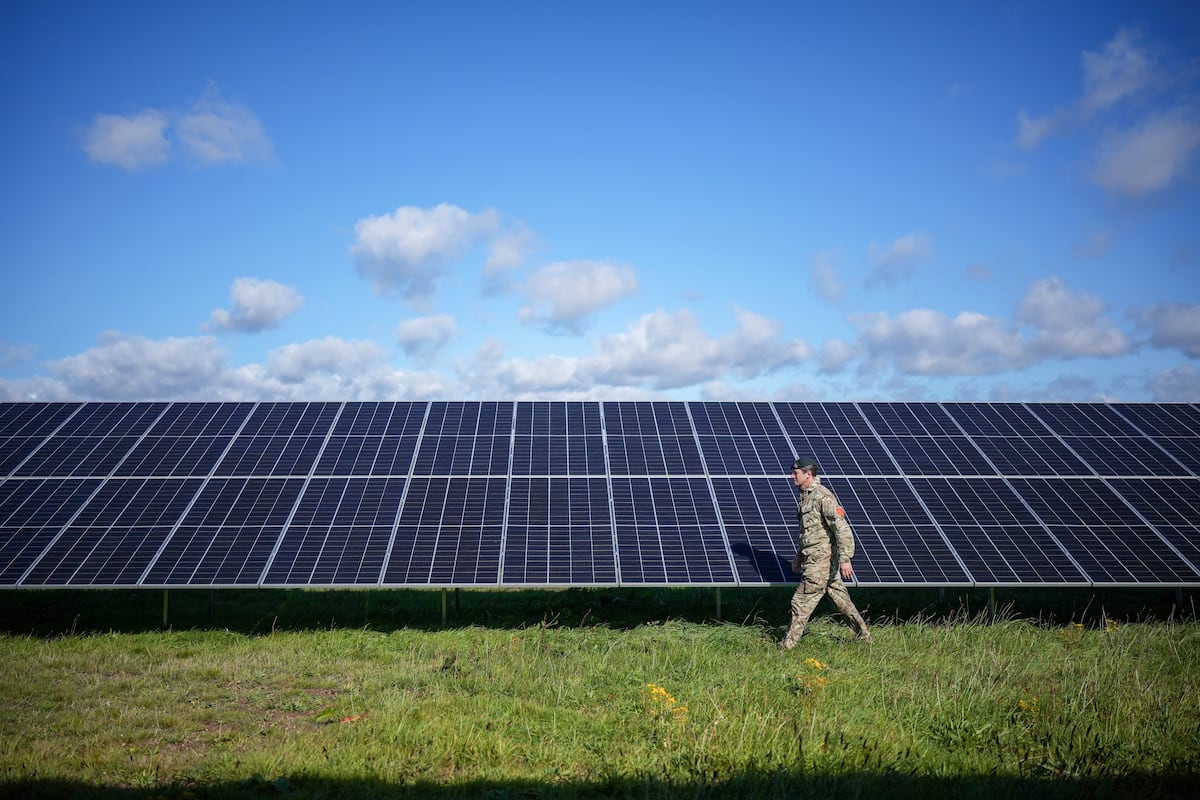
THE HAGUE, Netherlands — Hidden components in Chinese-made solar power equipment have caused alarm bells in Western capitals amid concerns over Beijing’s ability to interfere with power grids. Europe may be particularly vulnerable, experts say, with most of its solar farms potentially at risk of remote shutdown.
The revelation of undeclared remote access devices in American solar farms, first reported by Reuters earlier this month, came less than a month after a power outage that shut down electricity for millions throughout Spain, Portugal, Andorra and parts of France, highlighting the possible fragility of even highly developed and integrated European power grids.
According to unnamed sources cited by Reuters, the communication devices that were embedded in solar farm gear were not shown on schematics and customer information of the products, suggesting they may have been deliberately concealed. The undisclosed devices were reportedly found during a routine disassembly of Chinese-made power inverters, which serve to connect solar farms to the electricity grid, control the flow of power and maintain the all-important grid frequency.
While Iberian authorities have ruled out a cyber attack in the case of the peninsula’s massive blackout, the finding has nonetheless instilled a new sense of urgency in European planning to make the continent’s integrated electrical grid safe and resilient.
Inverters are crucial in linking photovoltaic (PV) power plants, which output DC electricity, to the broader electricity network, which runs on AC. In 2023, 78% of all inverters installed in Europe came from Chinese vendors, with the overwhelming majority being made by Huawei and SunGrow, according to DNV, a risk consultancy. The report was commissioned by SolarPower Europe, an industry advocacy group.
This market dominance can likely be explained by a combination of China’s large manufacturing capacity and the comparatively lower prices of Chinese inverters compared to European ones.
Control over the inverters allows outsiders to simultaneously disconnect generating capacity from the grid, which can cause blackouts. It would also allow them to manipulate voltage and frequency settings to destabilize local grids and to override safety protections like anti-islanding systems.
Both Huawei and Sungrow have documented links to the Chinese government and the country’s ruling Communist Party, including formal ties, participation in government projects, and officials holding high-ranking positions simultaneously in both the companies and the state.
Under Chinese law, Huawei faces mandatory cooperation requirements with intelligence services. The 2017 National Intelligence Law declares that Chinese companies must “support, assist, and cooperate with” China’s intelligence-gathering authorities. As a result of questions over its independence and safety, the electronics giant has already faced restrictions on work on critical communications infrastructure – especially 5G networks – in several countries. It is also front and center in a major investigation currently ongoing in Brussels surrounding bribery of European officials.
Energy sovereignty at risk
“Europe’s energy sovereignty is at serious risk due to the unregulated and remote control capabilities of photovoltaic inverters from high-risk, non-European manufacturers – most notably from China,” said the European Solar Manufacturing Council, an industry association.
This isn’t purely hypothetical, either. In November 2024, some solar inverters in the U.S., U.K. and Pakistan were actually disabled remotely from China. Very little was publicly revealed about this incident and its consequences; investigations later showed that the shutdown may have been the result of an industry dispute, according to Günter Born, a German tech and cybersecurity journalist.
Following the decoupling of Europe’s energy needs from cheap and readily available Russian gas after the invasion of Ukraine, energy sovereignty has become a new priority for capitals across the continent. Renewables have been front and center, building on existing momentum to combat climate change and residual skepticism of nuclear power for its perceived safety shortcomings and high cost.
“Today, over 200 GW of European PV capacity is already linked to inverters manufactured in China – the equivalent of more than 200 nuclear power plants,” said Christoph Podewils, the ESMC secretary general, citing numbers by the DNV consultancy.
“This means Europe has effectively surrendered remote control of a vast portion of its electricity infrastructure.”
The Iberian Peninsula blackout was triggered by a 2.2-gigawatt (GW) loss in electricity generation that occurred within seconds. Previously, DNV had estimated that a loss of 3 GW of generating power could have serious ramifications for the European power grid. A loss of this amount of input can result in cascading effects, leading to a large-scale shutdown of the power grid, just as had occurred in Spain on April 28.
The DNV report identified over a dozen threat scenarios, most of which it considered “high” or “critical” risks even after the full implementation of existing EU cybersecurity measures.
In the first three months of 2025 alone, nearly 68 terawatt hours of electricity were produced by solar panels, data from the energy think tank Ember shows. This marks an increase by almost a third over the same period a year earlier. It amounted to 8.2% of Europe’s electricity production in March, despite the shorter days at that time of year. In summer, around 15% of Europe’s electricity may come from the sun, with some countries – particularly around the Mediterranean – relying on it to make up over a quarter of their total energy mix during the daytime.
According to SolarPower Europe , the industry advocacy group, the installed PV capacity in Europe is expected to exceed 800 GW by 2030.
Wrangling the dragon
The shock of the Spanish power outage – even without it being caused by an attack – has jolted some in Europe into action. But consciousness surrounding a China vulnerability predates the grid collapse.
Lithuania on May 1 implemented new legislation that requires photovoltaic projects above 100kW to use inverters that meet national safety standards. Existing projects must also be retrofitted. This practically outlaws Chinese inverters in the country’s power infrastructure.
Late last year, Estonia’s spy chief Kaupo Rosin said that Chinese technology in critical infrastructure, particularly solar farms, could open Europe up to Chinese blackmail .
Some EU lawmakers are also taking note, with one member of the European parliament submitting an inquiry on the topic of solar inverters and the risk of Chinese influence on May 15.
A 2022 EU directive called NIS2 provides the basis for joint cybersecurity defense measures of critical infrastructure, outlining 18 broad sectors that require particular attention, including electrical grids.
However, the directive primarily applies to very large projects, leaving smaller power generation projects vulnerable. This is particularly relevant to solar, which is not only produced in large farms but also by countless dispersed, smaller photovoltaic projects, such as those on rooftops and factory grounds.
Linus Höller is Defense News' Europe correspondent and OSINT investigator. He reports on the arms deals, sanctions, and geopolitics shaping Europe and the world. He holds master’s degrees in WMD nonproliferation, terrorism studies, and international relations, and works in four languages: English, German, Russian, and Spanish.
荷兰海牙——中国制造的太阳能发电设备中隐藏的组件引发了西方国家的警觉,人们担忧北京有能力干预电网。专家表示,欧洲可能尤其脆弱,因为其大部分太阳能发电厂都可能面临被远程关闭的风险。
路透社本月早些时候首次报道了美国太阳能发电厂未申报的远程访问设备被曝光的消息。不到一个月前,西班牙、葡萄牙、安道尔和法国部分地区发生大停电,导致数百万人断电,这凸显了即使是高度发达和一体化的欧洲电网也可能存在脆弱性。
据路透社援引匿名消息人士的话报道,嵌入太阳能发电厂设备的通信装置并未在产品原理图和客户资料中显示,这表明它们可能被故意隐藏。据悉,这些未公开的装置是在对中国制造的逆变器进行例行拆解时发现的。这些逆变器用于将太阳能发电厂连接到电网,控制电力流动并维持至关重要的电网频率。
尽管伊比利亚半岛当局已排除大规模停电是由网络攻击造成的可能性,但这一发现仍然促使欧洲更加迫切地需要制定计划,以确保欧洲大陆一体化电网的安全性和韧性。
逆变器在将输出直流电的光伏电站连接到以交流电为主的电网中起着至关重要的作用。据风险咨询公司DNV的数据显示,2023年欧洲安装的所有逆变器中,78%来自中国供应商,其中绝大多数由华为和SunGrow生产。该报告由行业倡导组织欧洲太阳能协会(SolarPower Europe)委托撰写。
中国在市场上的主导地位很可能是由于中国强大的制造能力以及中国逆变器相对于欧洲逆变器价格较低等因素共同造成的。
通过控制逆变器,外部人员可以同时断开电网的发电容量,从而导致停电。他们还可以操纵电压和频率设置,破坏局部电网的稳定性,并绕过诸如防孤岛系统之类的安全保护措施。
华为和阳光电源都与中国政府和中国执政的共产党有确凿的联系,包括正式关系、参与政府项目以及官员同时在公司和国家担任高级职务。
根据中国法律,华为必须与情报机构合作。2017年颁布的《国家情报法》规定,中国企业必须“支持、协助、配合”中国情报机构。由于其独立性和安全性受到质疑,这家电子巨头在多个国家参与关键通信基础设施(尤其是5G网络)建设方面已受到限制。此外,华为还卷入了布鲁塞尔正在进行的一项重大调查,该调查涉及其涉嫌贿赂欧洲官员。
能源主权面临风险
欧洲太阳能制造委员会(一个行业协会)表示:“由于来自高风险非欧洲制造商(尤其是中国制造商)的光伏逆变器不受监管且具备远程控制能力,欧洲的能源主权正面临严重风险。”
这并非纯粹的假设。2024年11月,美国、英国和巴基斯坦的部分太阳能逆变器确实遭到了来自中国的远程操控。关于此次事件及其后果,外界知之甚少;德国科技和网络安全记者Günter Born表示,后来的调查显示,此次故障可能是行业纠纷所致。
在乌克兰战争后,欧洲的能源需求与廉价且供应充足的俄罗斯天然气脱钩,能源主权成为欧洲各国首都的新优先事项。可再生能源成为关注焦点,这得益于应对气候变化的现有势头,以及人们对核能因其安全隐患和高成本而产生的疑虑。
欧洲太阳能市场委员会秘书长克里斯托夫·波德维尔斯援引DNV咨询公司的数据表示:“如今,超过200吉瓦的欧洲光伏发电容量已经连接到中国制造的逆变器——相当于200多座核电站。”
“这意味着欧洲实际上已经放弃了对其大部分电力基础设施的远程控制权。”
伊比利亚半岛的停电是由几秒钟内2.2吉瓦(GW)的发电量损失引发的。此前,DNV曾估计,3吉瓦的发电量损失可能会对欧洲电网造成严重影响。如此巨大的电力输入损失会引发连锁反应,导致大规模电网瘫痪,正如4月28日西班牙发生的情况一样。
DNV 的报告指出了十几种威胁场景,其中大多数场景即使在全面实施现有的欧盟网络安全措施之后,也被认为是“高”或“严重”风险。
能源智库Ember的数据显示,仅在2025年的前三个月,太阳能电池板就产生了近68太瓦时的电力。这比上年同期增长了近三分之一。尽管3月份日照时间较短,但太阳能发电量仍占欧洲3月份总发电量的8.2%。夏季,欧洲约15%的电力可能来自太阳能,一些国家——尤其是地中海沿岸国家——白天依靠太阳能发电来满足其能源结构中超过四分之一的需求。
据行业倡导组织 SolarPower Europe 称,到 2030 年,欧洲光伏发电装机容量预计将超过 800 吉瓦。
驯服巨龙
西班牙大停电事件——即便并非由袭击造成——也震惊了欧洲,促使一些人采取行动。但人们对中国电网脆弱性的认识,早在电网崩溃之前就已存在。
立陶宛于5月1日实施新法规,要求装机容量超过100千瓦的光伏项目必须使用符合国家安全标准的逆变器。现有项目也必须进行改造升级。这实际上禁止了中国产逆变器在该国电力基础设施中的应用。
去年底,爱沙尼亚情报局局长考波·罗辛表示,中国在关键基础设施(尤其是太阳能发电厂)领域的技术可能会使欧洲面临中国的勒索。
一些欧盟立法者也注意到了这一点,其中一位欧洲议会议员于 5 月 15 日提交了一份关于太阳能逆变器和中国影响风险的质询。
2022 年欧盟发布的名为 NIS2 的指令为关键基础设施的联合网络安全防御措施提供了基础,概述了 18 个需要特别关注的广泛领域,其中包括电网。
然而,该指令主要适用于大型项目,小型发电项目则容易受到影响。这一点对太阳能发电尤为重要,因为太阳能发电不仅来自大型农场,还来自无数分散的小型光伏项目,例如屋顶和工厂内的光伏项目。
林努斯·霍勒是《防务新闻》的欧洲记者和开源情报调查员。他报道影响欧洲乃至全球的军火交易、制裁和地缘政治。他拥有大规模杀伤性武器不扩散、恐怖主义研究和国际关系三个硕士学位,并精通英语、德语、俄语和西班牙语四种语言。