French Navy tests unmanned beach assault, expands drone tactics法国海军测试无人滩头突击,扩大无人机战术应用范围
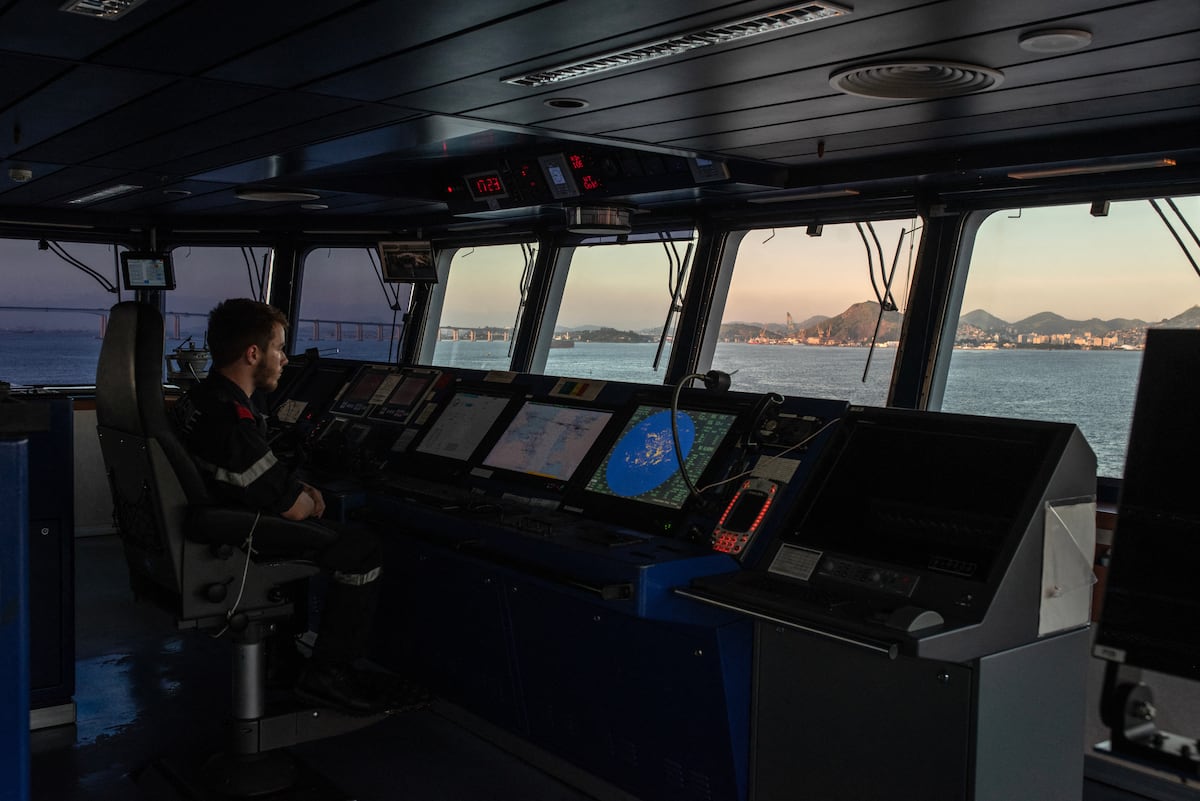
In the exercise called Dragoon Fury, the French Navy used its amphibious helicopter carrier Tonnerre as a drone platform.
PARIS — The French Navy is stepping up drone use in the air and in the water, relying almost entirely on unmanned systems to recapture a beach in southern France in an amphibious operation during an exercise in March, according to the commander of the force.
In the exercise to retake a stretch of shore in the Bay of Hyères on France’s Mediterranean coast, the Navy used aerial drones and underwater gliders for maritime surveillance, drones to assault enemies targeting the beach, and to counterattack hostile drones, Navy Chief of Staff Adm. Nicolas Vaujour told a parliamentary hearing last week.
“We did it almost entirely with drones,” Vaujour told the National Assembly’s defense committee. “We are in the experimental phase to see exactly how far we want to go with each of these things.”
In the exercise called Dragoon Fury, the French Navy used its amphibious helicopter carrier Tonnerre as a drone platform. Vaujour said drones don’t fully replace amphibious maneuvers, and the Navy will still be dropping off troops and piloted military equipment on beaches, “but we are fully invested in this concept of drone carriers.”
Vaujour said the Navy is “starting to achieve some interesting things,” for example using first-person view drones or tele-operated munitions to take out attacking unmanned surface vehicles.
Despite these advancements, a drone force today isn’t able to provide the power projection of an aircraft carrier strike group, Vaujour told lawmakers. “Being able to drop six 125-kilogram bombs 400 to 600 nautical miles from the aircraft carrier, that’s something a drone can’t do.”
Drones are particularly well-suited for operations in confined areas such as the Baltic Sea, and can offer additional capabilities especially when operating near coastlines or a carrier platform, such as in the beach assault, said Vice Adm. Emmanuel Slaars, the French Navy commander in charge of operations, speaking after Vaujour. Still, don’t count on drones for all the solutions, he said.
“This is not high seas action, it is not the ability to fight against nuclear attack submarines,” Slaars told lawmakers. “We don’t yet have drones, either in the air or on the surface domain, capable of operating sustainably in contested environments – and I think it will still be a very long time before we do so in the surface domain.”
The Navy embarked around ten defense companies aboard the Tonnerre during Dragoon Fury in the first two weeks of March, to create a real-life laboratory for tactical and technological innovation. Participating companies included Alseamar with underwater gliders, Delair with several drones from its portfolio and Exail with its DriX H-8 unmanned surface vehicle.
The French Navy has been experimenting with autonomous underwater gliders for several years, with the systems truly operational “for some time now,” according to Vaujour. The Navy works with Alseamar, which makes a 2-meter long underwater glider called Seaexplorer with an advertised 1,700-kilometer range and 110-day endurance.
During last year’s Polaris 24 exercise, in which the French and Italian navies faced off in the Mediterranean, the French force deployed gliders that were able to detect a number of Italian vessels. The French then struck the opposing ships with carrier aircraft from “a very, very long way off,” leaving the Italians clueless to how they’d been localized, according to Vaujour.
Locating the opposing vessels relied on “lots of artificial intelligence” to detect small signals in the data collected by the gliders, according to the admiral.
“So that was quite an interesting breakthrough that shows there’s a place for gliders,” Vaujour said. “On the other hand, with passive detection alone, you can’t detect everything.”
Gliders are “still a long way off” from being able to sniff out a nuclear-powered ballistic missile submarine, according to Vaujour. However, they will have their place in maritime surveillance, and passive swarms combined with artificial intelligence for data analysis are an interesting means of detection, he said.
“There’s still a lot of room for improvement,” the admiral said. “We’re developing these tools on a national level, with real capabilities, but also real limitations. The manufacturer who says they’re going to make the oceans transparent isn’t credible yet, let’s say.”
AI hasn’t yet been able to replace the human ear for analysis of acoustic signals, “even though a lot of money has been spent trying to do so,” Vaujour said. What the Navy needs are acoustic warfare analysts that understand the technology and “who will help the AI to help them,” he said.
The Navy is taking an “iterative approach” to AI development, bringing aboard experts so they can see what the force needs, according to Vaujour.
The Navy’s center for data services and AI developed an onboard data hub that was tested onboard the frigate Provence, with Vaujour describing the hub as “a huge computer” collecting all data from a ship, with subsequent analysis catching signals that would previously have gone unnoticed.
The success of the test prompted the Navy to put four data hubs on ships taking part in a five-month deployment of the Charles de Gaulle aircraft carrier strike group, from late November to late April. The Navy also invited data scientists from French defense firms along for a month-long stint during the mission.
Vaujour gave lawmakers a non-classified example of AI use on the Provence, in which algorithms tracked down the underlying cause of a diesel alternator valve failure, identifying a rising fluid temperature elsewhere in the system as the culprit.
In another example, before passing a strait in Indonesia during the Charles de Gaulle deployment, the Navy used AI to analyze hundreds of possible locations for a Chinese submarine to work out the best tactical screen for the carrier, which Vaujour said “wasn’t entirely intuitive.”
The Navy now needs to build up its AI skills, which must become generalized, and structure how the subject is approached from a human-resources angle, Vaujour said in the committee hearing.
“How do we inject artificial intelligence modules into all naval training, not to turn people into data scientists, but to create maritime experts in a field who can easily plug into artificial intelligence,” Vaujour said. “I’m not going to turn data scientists into acoustic experts. However, I can make acoustic experts compatible with data scientists. That’s the direction we’re headed.”
Rudy Ruitenberg is a Europe correspondent for Defense News. He started his career at Bloomberg News and has experience reporting on technology, commodity markets and politics.
巴黎——据法国海军司令称,法国海军正在加大空中和水上无人机的使用力度,在3月份的一次两栖作战演习中,几乎完全依靠无人系统夺回了法国南部的一处海滩。
海军参谋长尼古拉斯·沃茹尔海军上将在上周的议会听证会上表示,在法国地中海沿岸耶尔湾的一次夺回海岸线的演习中,海军使用了无人机和水下滑翔机进行海上监视,使用无人机攻击以海滩为目标的敌人,并反击敌方无人机。
“我们几乎完全依靠无人机完成了这项任务,”沃茹尔在国民议会国防委员会上表示。“我们目前正处于试验阶段,以确定我们想在这些方面做到什么程度。”
在名为“龙骑兵之怒”的演习中,法国海军使用其两栖直升机航母“雷霆”号作为无人机平台。沃茹尔表示,无人机并不能完全取代两栖作战,海军仍会在海滩上投放部队和有人驾驶的军事装备,“但我们对无人机航母这一概念投入了全力。”
沃茹尔表示,海军“开始取得一些有趣的成就”,例如使用第一人称视角无人机或遥控弹药摧毁来袭的无人水面舰艇。
沃茹尔告诉议员们,尽管无人机技术取得了这些进步,但如今的无人机部队还无法提供像航空母舰打击群那样强大的投送能力。“无人机无法做到在距离航母400到600海里的地方投掷六枚125公斤重的炸弹。”
法国海军作战司令埃马纽埃尔·斯拉尔斯中将在沃茹尔海战后表示,无人机尤其适合在波罗的海等狭小区域作战,尤其是在海岸线附近或航母平台附近作战时,例如在滩头突击中,无人机能够提供额外的作战能力。但他同时指出,不要指望无人机能解决所有问题。
“这并非公海作战,也并非对抗核动力攻击潜艇的能力,”斯拉尔斯对议员们说。“我们目前还没有能够在对抗环境中持续作战的无人机,无论是在空中还是在水面——而且我认为,在水面领域实现这一点还需要很长时间。”
在3月的前两周,海军在“龙骑兵之怒”演习期间,将大约十家国防公司派驻到“雷霆”号航母上,旨在打造一个战术和技术创新的实战实验室。参与的公司包括:携水下滑翔机的阿尔西玛公司(Alseamar)、携旗下多款无人机的德莱尔公司(Delair)以及携其DriX H-8无人水面艇的埃克塞尔公司(Exail)。
据沃茹尔称,法国海军已对自主水下滑翔机进行了数年的试验,该系统实际上已经投入运行“一段时间了”。海军与阿尔塞玛公司合作,该公司生产一种名为“海洋探索者”(Seaexplorer)的2米长水下滑翔机,官方宣称其航程可达1700公里,续航时间长达110天。
据沃茹尔称,在去年法意两国海军于地中海举行的“北极星24”联合军演中,法军部署的滑翔机成功探测到多艘意大利舰艇。随后,法军舰载机从“非常非常远的距离”对这些敌舰发动攻击,令意大利方面完全摸不着头脑,不知法军是如何定位这些舰艇的。
据这位海军上将称,定位敌方舰艇依靠“大量的人工智能”来检测滑翔机收集的数据中的微小信号。
“所以这是一项相当有趣的突破,表明滑翔机是有应用前景的,”沃茹尔说。“另一方面,仅靠被动探测,你不可能探测到所有目标。”
沃茹尔表示,滑翔机距离能够探测到核动力弹道导弹潜艇“还有很长的路要走”。但他指出,滑翔机在海上监视领域将占有一席之地,而将被动集群与人工智能数据分析相结合,是一种很有前景的探测手段。
“还有很大的改进空间,”这位海军上将说。“我们正在国家层面开发这些工具,它们具备实际能力,但也存在实际局限性。比如说,那些声称能让海洋变得透明的制造商,目前还不可信。”
沃茹尔表示,尽管人们为此投入了大量资金,但人工智能目前仍无法取代人耳对声信号的分析。他认为,海军真正需要的是了解这项技术的声学战分析人员,“他们能够帮助人工智能更好地为他们服务”。
据沃茹尔称,海军在人工智能开发方面采取了“迭代方法”,引入专家,以便了解部队的需求。
海军数据服务和人工智能中心开发了一个舰载数据中心,并在普罗旺斯号护卫舰上进行了测试。沃茹尔将该中心描述为“一台巨大的计算机”,它收集来自舰船的所有数据,随后的分析捕捉到了以前会被忽略的信号。
此次测试的成功促使海军在参与“戴高乐”号航空母舰打击群为期五个月部署(从11月下旬到4月下旬)的舰艇上部署了四个数据中心。海军还邀请了法国国防企业的数据科学家随舰执行为期一个月的任务。
Vaujour 向立法者提供了一个关于普罗旺斯号上人工智能应用的非机密案例,其中算法追踪到了柴油交流发电机阀门故障的根本原因,并确定系统中其他地方的流体温度升高是罪魁祸首。
另一个例子是,在“戴高乐”号航母部署期间,经过印度尼西亚的一个海峡之前,海军利用人工智能分析了中国潜艇可能出现的数百个位置,以找出航母的最佳战术掩护,沃茹尔说这“并非完全符合直觉”。
沃茹在委员会听证会上表示,海军现在需要提升其人工智能技能,使其具有通用性,并从人力资源的角度构建处理该问题的方法。
“我们如何将人工智能模块融入所有海军训练中,不是为了把人变成数据科学家,而是为了培养能够轻松应用人工智能的海事专家,”沃茹尔说。“我不会把数据科学家变成声学专家。但是,我可以让声学专家与数据科学家兼容。这就是我们努力的方向。”
鲁迪·鲁伊滕贝格是《防务新闻》的欧洲记者。他的职业生涯始于彭博新闻社,拥有报道科技、大宗商品市场和政治方面的经验。