Is the European Meteor Air-To-Air Missile Really the Best in the World?欧洲“流星”空空导弹真的是世界上最好的吗?
Some would say the best arrow is the one still left in your quiver.
新闻视频
Updated Jul 2, 2020 3:16 PM EDT
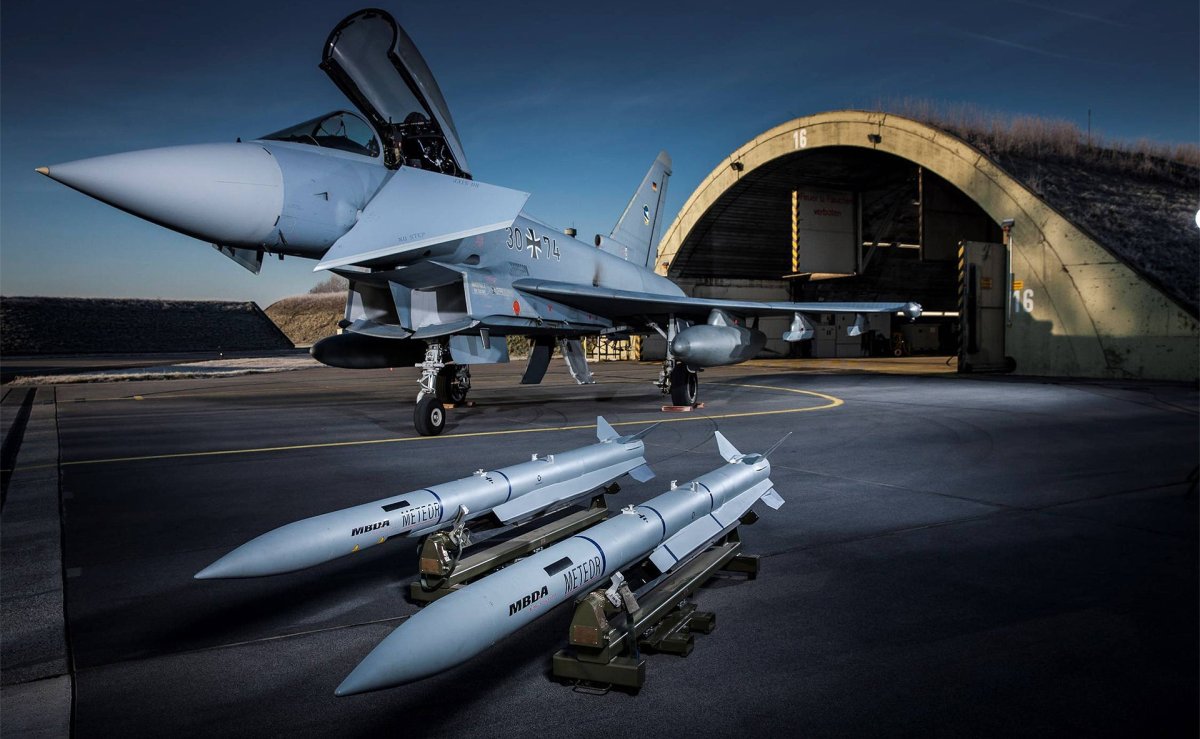
For years now there has been a ton of hype about MBDA’s Meteor beyond-visual-range air-to-air missile, but now that it has reached operational status , blanket claims are being tossed around in the media as to its capabilities: headlines like “the best in the world“ and “the most deadly” are commonplace. But is it really that simple? Is the Meteor the dream missile every western fighter needs under its wings or in its weapons bays or is it a niche capability?
The truth is that the Meteor isn’t that new at all as it has been in development for nearly two decades. Still there is no doubt that the missile is extremely impressive, but it is not necessarily the best solution for the beyond-visual-range (BVR) job for all fighters and for all scenarios.
The Meteor’s roots can be traced back to the mid-1990st grew out of a common European need for a next generation BVR missile. This new missile had to have superior range and overall kinematic performance than the American AIM-120 AMRAAM. The UK, France, Sweden, Germany, Italy and Spain all participated in the program and although European aerospace and defense consortiums are nothing new, some aspects of what the Meteor brings to the fight is.
Meteor’s most impressive feature is its propulsion concept. Think of the Meteor more as an air-to-air cruise missile than as a traditional guided air-to-air rocket. For propulsion, it uses a solid fuel, variable flow, ducted rocket—also referred to as a ramjet—instead of a traditional rocket motor. What this means is that Meteor can throttle its engine during different phases of flight whereas a rocket delivers all of its potential energy in one continuous unmodulated burn cycle. This capability may not sound like a huge deal, but it is.
A Meteor is fired during testing., Dassault
When a standard air-to-air missile is fired at a target it delivers the same amount of thrust over a certain period regardless of the tactical scenario. If the target can be reached without the rocket motor burning out, or shortly after it does so, the missile will have a high-energy state during its terminal attack phase. This will allow it to maneuver very hard, easily countering a target aircraft trying to evade the incoming missile. If the target is farther away, the missile will usually climb to a high altitude while its rocket motor is burning and then coast on its built-up energy with gravity on its side until it reaches the terminal phase of its flight (its final attack run).
If the target isn’t too far away, and the missile is still above it, it will dive down on the target in an attempt to maximize its ability to make hard maneuvers. The longer the shot, the less energy the missile will have for its critical terminal phase of flight, and that is not a good thing.
Enter the ramjet powered Meteor. Instead of burning off all its fuel right after launch it can throttle its engine back during cruise, thus saving fuel. As it approaches its target it can throttle up, eventually making its terminal attack while at its highest possible energy state, around mach 4.5, even when fired over long ranges.
Not only does this mean the Meteor will have more energy to maneuver during the endgame of the engagement, but this capability also drastically increases the size of the missile’s “no escape zone.” Basically, the Meteor has a far greater ability to “chase” and catch enemy aircraft over long ranges.
So more than just being a better beyond-visual-range (BVR) missile via high-end sensors and a larger rocket motor, Meteor has a totally different—and much smarter—propulsion concept, that not only increases range but also increases its effectiveness of the missile over that range.
A missile that listens and talks to its master
The Meteor competes in other ways than just propulsion. It packs an active X-band radar seeker for locking onto targets during the terminal phase of its flight. In fighter pilot parlance this is when the missile goes “ pitbull ” and becomes a true fire-and-forget weapon. In other words, the firing aircraft does not need to guide it any farther toward its target in order to ensure that it gets a lock and can make its final attack on its own.
There is a common misconception about most modern BVR missiles, especially the AIM-120 AMRAAM. It is regarded as a fire-and-forget weapon, and it does have a mode to do just that. Basically it takes the targeting data from the aircraft’s radar and calculates where the target “should be” when it arrives in the target area.
It then flies out to that area using its own inertial navigation system. Once there, the missile’s small radar seeker, which has far less range and scanning capability than the radar on the fighter that fired it, starts to look for the bad guy. If said bad guy is within the AMRAAM radar’s cone of detection it can lock on and attack.
The problem is that at intermediate and medium ranges, fire-and-forget performance is abysmal. If the target is not where the missile thought it would be, within a limited cone of the sky, it’s a miss. As such, this mode is more effective for defensive shots as anything else or for shots taken at close ranges where there is less flight time in which the enemy can change course, altitude and tactics.
The way the AIM-120 missile is usually employed at range is by the fighter aircraft that launched it sending it mid-course updates as it flies out to the target. As it goes along its way, and as the range between the missile and the target decreases, its ability to predict where the target will be improves as it has much more recent telemetry to rely on. Ideally the fighter will provide updates to the missile until it locks its own radar on the enemy target.
There is a tradeoff between risk and reward for the pilot firing the missile. He can keep his radar pointing towards the bad guy and continue sending radar data to the missile to improve its chances of a kill, but that may expose him to the enemy as range between him and the target decreases. Once the missile goes “pitbull” and has locked its own radar on the target at close range the pilot can perform the “forget” part of fire and forget concept and can break its lock.
An F-16CJ is seen packing an AIM-120, AIM-9M, and an AGM-88 HARM. The little housing above the Sidewinder is where towed decoys deploy from. , USAF
Like the AIM-120, the Meteor probably has a fire-and-forget mode, but mid-course updates are not only key to the missile’s success. Because the missile can modulate its throttle, the autopilot can provide the most efficient flight profile to the target in long-range shots. Greater range means less certainty of where the target will be by the time the missile is close enough to detect it itself.
The Meteor will be able to get those crucial mid-course guidance updates not just from the jet that fired it, but from “third party” sources as well. These can include other fighters, airborne early warning and control (AEW&C) aircraft, and land and sea-based radar and electronic surveillance systems that provide their own “sensor pictures” to the missile-firing aircraft via data-link. With many assets contributing to a common tactical network “picture” via common data-link waveform and language it provides information that anyone, including the Meteor-armed fighter and the Meteor itself, can exploit.
In fact, the launching jet’s pilot may never have to use his own radar at all to engage a target. Instead he simply assigns the missile a target on his situational display. The missile then gets continuous updates from third party sources—rather than the fighter that fired it—right up to its final attack sequence.
Even if the data-link does not provide high-fidelity “target tracks” that does not mean they are not engagement quality as the missile only has to have the target within its own radar’s cone of detection in order to initiate the terminal attack phase of its flight. This means getting the Meteor close to the target is good enough.
The Meteor’s data-link also has two-way capability, so the pilot could re-target the missile while it is already on its way. The pilot can also see the missile’s fuel, energy and tracking state in real-time. This is essential for making quick decisions as to whether or not to fire another missile at the target or to run away if it is properly tracking toward the target or has obtained its own lock.
The thing is that modern data-links on missiles are not exclusive to Meteor, or to modern air-to-air missiles for that matter , but let’s keep it to that scope for this piece.
Reaching peak AMRAAM
Enter the AIM-120D Advanced Medium Range Air-to-Air Missiles (AMRAAM), the latest incarnation of the 25 year old Raytheon-built AMRAAM which has even been adapted for surface-to-air use. The D model, which is just coming online right now, also has a two-way data-link with third party targeting capabilities like the Meteor. Additionally, it sports 50% more range than the previous version of the ARMAAM, the AIM-120C7, which itself had increased range over its predecessor variant the AIM-120C5.
Some basic stats on the 25 year old AMRAAM., Raytheon
Other improvements found in the AIM-120D include an enhanced seeker with a better ability to detect targets off-boresight (off the missile’s centerline axis). This is a big deal for the critical terminal phase of flight, since it can scan a larger area while trying to acquire the target on its own. This upgrade also makes it harder for the enemy to shake the missile of its trail.
The AIM-120D’s capability to engage targets at short range will also be enhanced by this feature, which is a boon for the F-35, which does not carry a short-range air-to-air missile while in stealth configuration. The EA-18G Growler, which is also limited to the AIM-120 alone, will also gain uniquely from this improvement.
This new AMRAAM will also feature a better navigation system with its inertial navigation system (INS) augmented with embedded GPS. Also like the Meteor, the AIM-120D has the latest electronic-countermeasure-countermeasures, making it very hard for the enemy to jam or confuse it.
Overall, these improvements elevate what has already been the “gold standard” of BVR air-to-air missiles for decades. What this new AMRAAM doesn’t have is the Meteor’s ramjet engine and all the benefits that go along with it.
More range over the current AIM-120 is in many ways needed to match the great leaps in fighter radar technology and networked warfare that have become a reality in the last decade and a half. Active Electronically Scanned Array radar sets can see much farther and in much higher fidelity than their mechanically scanned predecessors. This has left pilots who fly fighters equipped with them in a strange predicament where they can see the enemy from much farther away than their missiles are capable of engaging.
The F-15C’s APG-63V3 AESA can reach out much farther (on an order of multiples depending on the target and scenario) than the radar it is replacing. Being able to see bad guys at well over 100 miles away, but only being able to kill that bad guy at say 40 miles is an issue for the very unstealthy Eagle, but not so much for a low-observable fighter. In fact, the F-22 Raptor (and the F-35 eventually) really don’t need larger, longer-ranged missiles, they need more missiles.
F-22 firing an AIM-120 AMRAAM, USAF
More missiles, please
If you ask a F-22 pilot what they want more than anything else, you are very likely to hear “more missiles.” The aircraft, with its stealthiness, supercruise capability and superior situational awareness can get far closer to the bad guys without detection than their 4th generation counterparts like the F-15C. The problem is that the F-22 only has six AIM-120 AMRAAMs at its disposal, and the F-35 will only have four.
Finally, adding the AIM-9X to the F-22’s quiver will actually help with this deficiency as the missile has a limited intermediate range capability, but employing it against certain targets may be too close to comfort. A solution for this conundrum is quietly in the works in the form of a smaller BVR missile like Lockheed’s conceptual Cuda air-to-air missile , also nicknamed the “Halfaraam.” This thing is like the Small Diameter Bomb of air-to-air weapons and will theoretically increase the F-22’s beyond-visual-range missile load by at least double. The F-35 will also greatly benefit from it or a weapon like it.
Parallel initiatives to develop such a weapon have been recently dubbed by the USAF the Small Advanced Capability Missile (SACM) and Miniature Self-Defense Munition (MSDM) . These are two separate research and development programs that have been awarded to Raytheon and seem to have similar goals. Lockheed’s Cuda could also evolve into a competitor for such a requirement if it were to formally move outside of the exploratory phase or even as a self-funded weapon option.
Although details still remain sketchy, the Cuda’s compact size comes at the sacrifice of two things. The first is the deletion of a warhead. Instead of a 30lb-50lb shrapnel-encased charge and proximity fuse system like what most air-to-air missiles use, the Cuda will slam into its victims like a bullet. This hit-to-kill capability, which has evolved greatly in recent years via ballistic missile defense research, should cause more than enough trauma to fighters to take them down and would probably result in at least a mission kill against larger airframes.
Rendering of what the hit-to-kill Cuda would look like. , Lockheed
The Cuda will also sacrifice range in comparison to its more long and slender BVR missile cousins. Instead of being able to engage targets at 50 miles (or in the AIM-120D’s case likely much farther), it should be able to do so at ranges of half that distance depending on the scenario. Using such a weapon offensively may be somewhat suicidal for 4th generation fighter, but for 5th generation jets it’s a day’s work.
Cuda, or a missile like it, will also likely feature extreme agility as it has to impact its target directly, not detonate its warhead nearby. This will also make it a capable short-range dogfight missile. This means aircraft like the F-35, that lack a short-range air-to-air missile during stealthy operations, would now have a good option for closer-range situations.
In many ways such a weapon will complement the AMRAAM, or even the Meteor, wonderfully. Instead of carrying a pair of AMRAAMs and a full air-to-ground internal load, an F-35 could carry an AMRAAM and two Cudas. This gives F-35 pilots more options and a greater ability to defend themselves as they make their way in and out of the target area.
These missiles would also likely be able to have the ability to engage surface and ground targets as well, like the AIM-9X, but at much greater ranges. For stealth aircraft, these smaller intermediate-range air-to-air missiles could be a viable weapon for suppression of enemy air defenses if adapted to that mission.
With all this in mind, when it comes to the Meteor and the F-22 and F-35, there simply is far less of a need for its extreme range, and its more bulky structure would just take up more precious real estate within the jets’ weapons bays than the AIM-120 currently does.
America’s air arms and the Meteor
So where does the Meteor and potential future missiles like it fit in with America’s air arms? The US will operate a 4th generation fighter fleet for many decades to come, including F-15s, F-16s and F/A-18 Super Hornets. At face value the Meteor may seem like a relevant weapon for these aircraft to have in high-threat, peer-state warfare scenarios, especially if they are upgraded with AESA radar sets and the latest data-link modems, but even this is on a case-by-case basis
Let’s take the US Navy for instance. With a resurgent threat from major peer-state competitors like Russia and China, the Meteor is the missile to have. It would match well with the Navy’s Super Hornet fleet which is almost entirely equipped with APG-79 AESA radars. It would also finally replace the AIM-54 Phoenix long-range air-to-air missile that was retired with the F-14 Tomcat. Basically it would bring back a real “fleet defender” capability to the Navy’s Carrier Air Wings, and the Super Hornet could carry a lot of Meteor’s at one time if need be and bring them back to the ship. This is something the Tomcat could not do with the Phoenix.
A test flight saw the Legacy Hornet loaded up with no less than 10 AMRAAMs. , US Navy
The F-15C could use the Meteor as a longer-range alternative to the AIM-120D but fitment may be an issue. Carrying four on the F-15C’s belly stations should be possible, but the feasibility of mounting them under the Eagle’s wings above drop tanks is questionable. Still, the idea of an F-15C with a pair of AIM-9Xs, a pair of AIM-120Ds, and four Meteors is very enticing as it would make the best of the F-15C’s massive AESA radar. But really the jet could get by with AIM-120D just fine for its mission, which largely includes domestic air defense tasking, and in a major conflict it would not fight alone. And this is precisely where the Meteor’s value comes into play vis-à-vis the F-15C and the F-22, but that will have to wait for a moment.
As much as beyond-visual-range combat is hyped these days, and technology is certainly caught up with the concept, the operational realities that most 4th generation fighters will find themselves in the future doesn’t really support the idea that dog-fighting is dead. Rules of engagement and fear of friendly fire incidents make very long-range missile shots unpalattable during coalition operations like those we have seen time and time again against non-peer state foes over the last few decades.
The cold hard reality is that visual identification of the target is still where the bar sits for weapons release during many operations. Using targeting pods slaved to a 4th generation fighter’s radar (like the F-15C has today via the Sniper pod), or using the F-35’s Electro-Optical Targeting System (EOTS) for long-range examination of aerial targets, can help greatly with this hurdle. The only issue is that using these systems for visual identification of a potential enemy still puts such an engagement deep within the range of any AIM-120 variant. As such, the benefits the Meteor offers would are nullified.
A Florida F-15C takes off with a Sniper targeting pod attached to its centerline stores pylon. The National Guard is fielding the Sniper pods to its F-15C/D units as an off-the-shelf solution for providing long-range visual identification of targets during day and night., USAF
In other words, if you look at history, for the vast majority of operations the Meteor’s extreme range will be unnecessary. That does not make it irrelevant, far from it, but it all depends on what fighters an air arm has at its disposal. For instance, a country that is not buying the F-35 should invest in Meteor to get the best standoff range for their advanced 4th generation fighters. This is especially so if they feel like their fighter aircraft would be used outside of coalition operations with the US at the helm. A Super Hornet equipped Royal Canadian Air Force for instance that has to protect its great norther expanse could really use the Meteor.
Meteor and the USAF’s F-22A/F-15C air dominance team
Remember how we just discussed that the F-22 and the F-35 could use more missiles, lots more, especially to counter-balance against a capable home-team foe with a quantitative advantage? Well when we step outside the platform “vacuum” and look at the F-22 and F-15 as a team, you can see how the Meteor could be a huge force multiplier.
F-15C and F-22 battle doctrine is still taking shape, with small but critical initiatives underway to drastically improve their interoperability. Case in point the podded Talon Hate system which you can and should read all about in one of my past features linked here .
This big fuel-tank shaped pod hangs underneath an F-15C and works as a mobile information gateway data fusion center. It takes information shared among F-22s via their own proprietary and stealthy data-link, including sensor info and communications, and translates it, fuses it, and re-broadcasts it in a data-link waveform and language that F-15s can understand and display to their pilots. Most likely it also is capable of piping this information out to any Link 16 data-link user in the area.
Nellis based F-15s and F-22s work to develop innovative new tactics that allow the two totally different generations of aircraft to work as a team., USAF
In other words, it takes the F-22’s high-fidelity sensor picture from beyond the front lines and simulcasts it to Eagles and potentially all other allied platforms in the battlespace to see and exploit.
The F-22 can receive Link 16 information but it cannot broadcast in that same form as it could give away their location. By using the Talon Hate as a translator, the F-15s and F-22s can share a common “tactical picture.” This opens up the possibility to employ a whole host of tactics that combined equal more than the sum of their parts.
Boeing has unveiled concepts that have as many as 16 BVR missiles loaded onto an F-15 at one time. This loadout turns the Eagle into a small arsenal ship more than anything else. The missile laden F-15s, operating behind F-22s and even F-35s, who themselves are operating at the forward edge of the battlespace, can provide a steady supply of missiles for the stealth fighters even after their magazines run dry. Think of them as flying artillery batteries.
Working as forward air controllers of sorts, stealthy fighters, and especially the F-22, can use their forward position and advanced sensors to request and direct missiles shots from F-15s operating many dozens of miles behind them. All the while the unstealthy F-15s remain outside the range of the same enemy aircraft they are sending missiles towards to kill. This is where the Meteor’s extreme range and dynamic flight profile could be extremely useful. It keeps the stealth fighters in the fight long after they have expended their own missile stocks and keeps the more vulnerable F-15s at a safe distance from threat aircraft.
The opposite tactic can also be used, albeit at a decrease sensor horizon. The F-15C’s can use their massively powerful radars to scan the skies for enemy aircraft, and deliver that sensor picture to the forward operating F-22s and F-35s. With that information the stealth fighters can operate in their most deadly mode, electromagnetically silent with no radar emissions at all. Loaded with Cuda type missiles and with a full picture of the battlespace ahead, they can maraud enemy formations in great numbers.
So yes, the Meteor’s range could benefit the F-15C and F-22, but not necessarily that much when you put both aircraft in a vacuum. But when you put them together and enlist the F-15C into arsenal ship operations, having the longest-range missile available with strong “end game” kinematics really enhances the capability of the F-15/F-22, and even the F-35, air dominance team.
What’s new today is old tomorrow
Although the Meteor is just entering service, there are new technologies around the corner that may see the missile age far faster than the AIM-120 has over the last 25 years. Then again, if MBDA can react swiftly enough to changing capabilities, the Meteor could be upgraded and reconfigured to stay at the forefront of air-to-air missile technology, albeit this proposition takes a steady stream of cash to realize.
Multi-mode seekers, which primarily include both Imaging Infrared and active radar on a single missile, could benefit the AIM-120D and the Meteor, and will likely be commonplace on future BVR missiles. Such a setup means that during the terminal phase of flight the targeted aircraft will have to try and break the lock of both radar and a high-end imaging infrared seekers, the latter of which is impervious to electromagnetic jamming. Israel already has this technology working on their Arrow and Stunner interceptors and is looking to migrate the concept to the air-to-air realm.
Israel’s Stunner interceptor and its “dolphin” seeker head that allows it to house both infrared and active radar sensors., Rafael
Even tri-mode seekers, where BVR air-to-air missiles incorporate a anti-radiation homing function for suppression of enemy air defenses would be an ideal capability for stealthy aircraft with tight weapons bays and limited stores. This is exactly what was in the works to replace the AMRAAM in the late 2000s. The program was dubbed the Next Generation Missile (NGM) and later the Dual Role Air Dominance Missile (DRADM ) before being cancelled by the Obama Administration 2013.
Since then other risk-reduction exploratory programs have emerged, like the Triple Target Terminator (T3) program led by DARPA, although not much has been heard about it for the last couple of years and it seems to have concluded after a limited flight test program was executed.
It is quite likely that any next generation BVR missile will also have a robust secondary ground-attack capability using GPS, radar and even infrared homing. It is even possible that versions of Cuda-like missiles may be adapted to facilitate laser targeting capability for striking small targets with minimal collateral damage. It’s all about flexibility and an extrapolation of the hot concept of “distributed lethality,” being able to use one weapon for multiple types of engagements, thus putting the enemy at greater risk over a larger area and in more ways.
The bottom line is that the AIM-120D signals the end of the AMRAAM’s design life cycle. This does not mean the final AMRAAM is not an incredibly capable missile, but there is only so much that can be pulled from a 25 year old high-performance missile design. The US will move to begin developing a new medium to long-range air-to-air missile very soon. In fact it seems pretty clear that a good chunk of this development has already happened with exploratory research and development programs, some of which were likely semi-clandestine in nature.
Then again, the Pentagon could just invest in and procure the Meteor and concentrate funding on developing smaller intermediate range missiles like the Cuda that are more tailored to its burgeoning 5th generation fighter force. This way the Meteor program would get a huge influx of money and would realize much larger production numbers, thus dropping the unit cost. It would also allow for quicker upgrades to the current design to be made to suit the DoD’s needs.
Sounds like a pretty slick idea right? Well it won’t happen.
The problem is that doing so would have poor support from the defense lobby and no general will get another star on their collar or a big defense industry gig after retiring by importing a missile from Europe. There simply isn’t enough money in it for defense contractors and the US will have nothing to sell to customers overseas in the same class.
In fact, we have laws against that sort of thing and the Meteor would likely have to be built under license here in the US if the Pentagon wanted to buy it en masse. Even then there won’t be lucrative development dollars to be had. Instead the DoD will likely independently develop a similar missile at great cost and will end up with just an upgraded Meteor.
A Dassault Rafle is seen brislting with weapons, including the MBDA Meteor, Dassault
Is the Meteor a must-have masterpiece?
In the end the Meteor may have the longest range and largest no escape zone of any air-to-air missile in service today, but it is not necessarily the best solution for every fighter and every Air Force out there.
For 5th generation stealth fighters, who can operate far closer to threats than their 4th generation progenitors, quantity is more of an advantage than range alone for most combat situations. For 4th generation fighters with modern AESA radars and a quality networked fighting force backing them up, the Meteor can be very useful in limited situations and not really relevant in many others. But when you pair 5th generation fighters with 4th generation fighters and empower them with network connectivity, the equation changes and the Meteor can elevate both via a whole set of exciting new tactics. The AIM-120D can also do this, although to a lesser degree.
The thing is air combat is changing rapidly. With advanced unmanned combat air vehicles and automated swarm warfare that comes with them likely already a reality , as well as innovative ideas like the Cuda in development and airborne laser weapons on the horizon, both the AIM-120D and the Meteor are feel far less revolutionary than what seems to be right around the corner.
In the end calling the Meteor the best air-to-air missile in the world is a simplification of a very complicated proposition, although it certainly seems to have the best long-range engagement capabilities. The reality is that the title of best air-to-air missile in the world depends on what aircraft it is being deployed on and what aircraft it is being deployed against, as well as the combat scenario at hand.
For a Swedish JAS-39E Gripen NG, French Rafale or a Saudi Typhoon upgraded with an AESA radar the Meteor may be a dream weapon. If you are a country flying F-16s, Mirage 2000s or a similar 4th generation fighter without an AESA radar upgrade, limited networking capabilities, and especially if your country’s borders are not measured in the many hundreds or thousands of miles, the Meteor offers little benefit. Quite literally it can engage targets much farther than these jets’ radars can even see and for the air sovereignty/homeland defense mission its advantages are muffled.
A Swedish Gripen is seen packing Meteor training rounds., KALM
Finally, the reality is that the real performance data and the raw capabilities of these missiles are closely guarded secrets. You can find range estimates for the AIM-120D from about 40 miles to nearly 100 miles. Info on the Meteor is just as inconsistent, with range claims form from around 60 to 130 miles. How these missiles actually perform in various real-world scenarios is more important than their basic “brochure” fly-out ranges and features. The AMRAAM has been test fired nearly 4,000 times and used in combat with multiple kills, the Meteor has a long way to go to catch up to figures like that.
Still, it is clear that the Meteor is a seriously capable weapon and it represents a leap in some aspects of BVR missile technology. Does that warrant the title as the best air-to-air missile in the world? Well that is up to you to decide. But as we have discussed, other leaps in air-to-air combat tech are right around the corner and there are strong indications that in this post operational 5th generation fighter reality extreme-range is no longer the Holy Grail air-to-air missile technology.
Contact the author Tyler@thedrive.com
Comments couldn’t be loaded. Please refresh the page.
更新于美国东部时间2020年7月2日下午3:16
多年来,MBDA公司的“流星”(Meteor)超视距空空导弹一直备受瞩目,如今它已投入使用,媒体对其性能的描述更是五花八门,诸如“世界最佳”、“最致命”之类的标题屡见不鲜。但事实真的如此简单吗?“流星”导弹真的是每架西方战斗机都梦寐以求的装备,还是仅仅是一种小众武器?
事实上,“流星”导弹并非什么新技术,它已经研发了近二十年。尽管如此,该导弹的性能依然令人印象深刻,但它未必是所有战斗机在所有作战场景下执行超视距(BVR)作战任务的最佳选择。
“流星”导弹的起源可以追溯到20世纪90年代中期,它源于欧洲各国对下一代超视距空空导弹的共同需求。这种新型导弹必须在射程和整体运动性能方面超越美国的AIM-120先进中程空空导弹(AMRAAM)。英国、法国、瑞典、德国、意大利和西班牙都参与了该项目。虽然欧洲航空航天和国防联盟并非新鲜事物,但“流星”导弹在作战中带来的某些方面却是前所未有的。
“流星”导弹最令人印象深刻的特点是其推进系统。与其说“流星”导弹是传统的空空导弹,不如说它更像是一枚空空巡航导弹。它的推进系统采用固体燃料、可变流量、涵道式火箭发动机(也称为冲压式发动机),而非传统的火箭发动机。这意味着“流星”导弹可以在飞行过程中的不同阶段调节发动机的推力,而火箭发动机则只能在一个连续的、不可调节的燃烧周期内释放所有势能。这种能力听起来似乎微不足道,但实际上意义重大。
测试期间发射了一枚流星导弹。达索
当一枚标准的空空导弹发射攻击目标时,无论战术场景如何,它在一定时间内产生的推力都是相同的。如果导弹能在火箭发动机燃尽之前或燃尽后不久抵达目标,那么在末段攻击阶段,导弹将处于高能状态。这将使其能够进行高机动,轻松应对试图规避来袭导弹的目标飞机。如果目标距离较远,导弹通常会在火箭发动机燃烧期间爬升到高空,然后依靠积累的能量和重力滑翔,直至到达飞行末段(即最终攻击阶段)。
如果目标距离不太远,导弹仍在目标上方,它会俯冲攻击目标,以尽可能地发挥其高机动性。发射距离越远,导弹在飞行末段的关键阶段所拥有的能量就越少,这并非好事。
隆重推出冲压式喷气发动机驱动的“流星”导弹。它不会像其他导弹那样在发射后立即耗尽燃料,而是在巡航阶段降低发动机推力,从而节省燃料。接近目标时,它可以再次加速,最终在能量达到最高状态(约4.5马赫)时发动致命一击,即使是远距离发射也不例外。
这不仅意味着“流星”导弹在交战末段将拥有更多机动能力,而且还大幅扩大了导弹的“无逃逸区”。简而言之,“流星”导弹拥有更强的远距离追击和捕获敌机的能力。
因此,流星导弹不仅仅是通过高端传感器和更大的火箭发动机成为更好的超视距导弹,它还拥有完全不同且更智能的推进概念,这不仅增加了射程,还提高了导弹在该射程内的有效性。
一枚能听懂并能与主人对话的导弹
“流星”导弹的优势不仅在于推进力。它配备了主动式X波段雷达导引头,可在飞行末段锁定目标。用战斗机飞行员的话来说,这相当于导弹进入了“斗牛犬”模式,成为真正的“发射后不管”武器。换句话说,发射飞机无需再引导导弹飞向目标,即可确保导弹锁定目标并自主完成最后的攻击。
人们对大多数现代超视距空空导弹,尤其是AIM-120 AMRAAM,存在一个常见的误解。它被认为是一种发射后不管的武器,而它的确也具备这种模式。简单来说,它会接收来自飞机雷达的目标数据,并计算出目标在抵达目标区域时“应该”位于的位置。
然后,导弹利用自身的惯性导航系统飞抵目标区域。到达目的地后,导弹的小型雷达导引头(其探测距离和扫描能力远不及发射它的战斗机上的雷达)开始搜索目标。如果目标位于AMRAAM雷达的探测范围内,导弹即可锁定并攻击。
问题在于,在中远距离,“发射后不管”导弹的性能极其糟糕。如果目标不在导弹预判的预定位置(即在有限的锥形范围内),则导弹会脱靶。因此,这种模式更适用于防御性打击,或者近距离攻击,因为近距离飞行时间短,敌方难以改变航向、高度和战术。
AIM-120导弹通常的远程作战方式是由发射它的战斗机在导弹飞向目标的过程中不断向其发送中程更新数据。随着导弹飞行,与目标之间的距离逐渐缩短,由于可以利用更新后的遥测数据,其预测目标位置的能力也会提高。理想情况下,战斗机会持续向导弹发送更新数据,直到导弹自身的雷达锁定敌方目标为止。
飞行员发射导弹时,风险与收益之间存在权衡。他可以保持雷达指向目标,持续向导弹发送雷达数据以提高命中率,但随着与目标距离的缩短,这样做可能会使他暴露在敌人的攻击之下。一旦导弹进入“近距离锁定”状态,并锁定目标后,飞行员就可以执行“发射后不管”策略中的“忘记”操作,解除导弹的锁定。
一架F-16CJ战斗机被拍到携带AIM-120、AIM-9M和AGM-88 HARM导弹。响尾蛇导弹上方的小型舱室是用于投放拖曳式诱饵弹的。(美国空军)
与AIM-120类似,“流星”导弹可能也具备发射后不管的模式,但中途修正并非导弹成功的唯一关键。由于导弹可以调节推力,自动驾驶仪可以在远程攻击中提供最高效的飞行轨迹。射程越远,导弹接近目标并能够探测到目标时,目标位置的确定性就越低。
“流星”导弹不仅能从发射它的战机获取关键的中段制导更新,还能从“第三方”来源获取。这些第三方来源包括其他战斗机、空中预警与控制(AEW&C)飞机,以及陆基和海基雷达和电子监视系统,它们通过数据链向导弹发射机提供各自的“传感器图像”。众多资源通过通用的数据链波形和语言共同构建通用战术网络“图像”,使得包括装备“流星”导弹的战斗机和“流星”导弹本身在内的任何单位都能利用这些信息。
事实上,发射导弹的战机飞行员可能根本不需要使用自己的雷达来锁定目标。他只需在态势显示器上为导弹指定目标即可。之后,导弹会从第三方来源(而非发射它的战机)持续接收更新信息,直至完成最终攻击。
即使数据链无法提供高精度的“目标跟踪”,也不意味着导弹不具备交战能力,因为导弹只需将目标置于自身雷达的探测锥内即可启动末端攻击阶段。这意味着只要“流星”导弹接近目标就足够了。
“流星”导弹的数据链具备双向通信能力,因此飞行员可以在导弹飞行途中重新瞄准目标。飞行员还可以实时查看导弹的燃料、能量和跟踪状态。这对于快速决策至关重要,例如是否向目标发射另一枚导弹,或者在导弹正正确跟踪目标或已锁定目标的情况下脱离攻击。
问题在于,导弹上的现代数据链并非“流星”导弹独有,也并非现代空空导弹独有,但为了本文的讨论,我们暂且将范围限定在这个范围内。
达到AMRAAM峰值
隆重推出AIM-120D先进中程空空导弹(AMRAAM),这是雷神公司制造的AMRAAM的最新改进型,该导弹已有25年的历史,甚至还经过改进,可用于地对空作战。D型导弹目前正在陆续投入使用,它还配备了双向数据链,可与“流星”(Meteor)等第三方目标指示系统配合使用。此外,它的射程比上一代AMRAAM——AIM-120C7——提高了50%,而AIM-120C7的射程本身也比其前身AIM-120C5有所提升。
以下是关于服役25年的AMRAAM导弹的一些基本数据,雷神公司
AIM-120D的其他改进包括增强型导引头,使其能够更好地探测偏离瞄准线(偏离导弹中心轴线)的目标。这对于飞行末段的关键阶段至关重要,因为它可以扫描更大的区域并自主锁定目标。这项升级也使敌方更难摆脱导弹的追踪。
这项改进还将提升AIM-120D的近程攻击能力,这对隐身状态下无法携带近程空空导弹的F-35战机来说是一大福音。同样只能携带AIM-120导弹的EA-18G“咆哮者”电子战飞机也将从这项改进中获益匪浅。
这款新型先进中程空空导弹(AMRAAM)还将配备更先进的导航系统,其惯性导航系统(INS)增强了嵌入式全球定位系统(GPS)。与“流星”导弹一样,AIM-120D也拥有最新的电子对抗措施,使敌方很难对其进行干扰或迷惑。
总体而言,这些改进提升了这款几十年来一直是超视距空空导弹“黄金标准”的产品。这款新型先进中程空空导弹(AMRAAM)缺少的是“流星”导弹的冲压式发动机及其带来的所有优势。
在很多方面,为了应对过去十五年来战斗机雷达技术和网络化作战的巨大飞跃,AIM-120导弹的射程必须比现在的AIM-120更远。有源相控阵雷达的探测距离和精度都远超其机械扫描式雷达。这使得配备AIM-120导弹的飞行员陷入了一种尴尬的境地:他们能够探测到的敌方目标距离远超导弹的有效射程。
F-15C的APG-63V3有源相控阵雷达的探测距离比它所取代的雷达远得多(具体距离取决于目标和作战场景,可达数倍)。对于隐身性能极差的F-15“鹰”式战斗机来说,能够探测到100英里以外的敌机,却只能在40英里左右将其击落,这无疑是个问题;但对于低可探测性战斗机而言,这则并非什么大问题。事实上,F-22“猛禽”(以及未来的F-35)真正需要的并非更大、射程更远的导弹,而是更多的导弹。
美国空军F-22战斗机发射AIM-120 AMRAAM导弹
请提供更多导弹
如果你问F-22飞行员他们最想要什么,你很可能会听到“更多导弹”。凭借其隐身性能、超音速巡航能力和卓越的态势感知能力,F-22能够比F-15C等第四代战机更接近敌方目标而不被发现。问题在于,F-22只有六枚AIM-120 AMRAAM导弹,而F-35也只有四枚。
最后,将AIM-9X导弹加入F-22的武器库确实有助于弥补这一不足,因为该导弹的中程射程有限,但用它攻击某些目标可能过于近距离。解决这一难题的方案正在悄然研发中,例如洛克希德·马丁公司的概念型“梭鱼”(Cuda)空空导弹,也被称为“半空空”(Halfaraam)。这种导弹类似于空空武器中的小直径炸弹,理论上可以将F-22的超视距导弹载荷至少提高一倍。F-35也将从这种导弹或类似武器中受益匪浅。
美国空军近期将两项并行研发此类武器的计划分别命名为“小型先进能力导弹”(SACM)和“微型自卫弹药”(MSDM)。这两个独立的研发项目均已授予雷神公司,且目标似乎相似。如果洛克希德·马丁公司的“梭鱼”(Cuda)导弹能够正式退出探索阶段,甚至成为一项自筹资金的武器方案,它也有可能成为此类武器的竞争对手。
尽管细节仍不甚明了,但“梭鱼”导弹的紧凑尺寸是以牺牲两项性能为代价的。首先是取消了弹头。与大多数空空导弹使用的30至50磅重的弹片包裹装药和近炸引信系统不同,“梭鱼”导弹会像子弹一样直接撞击目标。这种近距离撞击杀伤能力近年来随着弹道导弹防御研究的深入而得到显著提升,足以对战斗机造成足以将其击落的重创,并且很可能至少能击落大型战机。
这是“一击必杀”型库达导弹的渲染图。,洛克希德
与更细长的超视距导弹相比,库达导弹的射程也略逊一筹。它无法像AIM-120D那样在50英里(或更远的距离)外打击目标,而是根据具体情况,射程约为其一半。对于第四代战斗机而言,使用这种武器进行进攻可能无异于自杀,但对于第五代战机来说,这却是家常便饭。
“梭鱼”导弹或类似导弹很可能具备极高的机动性,因为它必须直接命中目标,而不是在目标附近引爆弹头。这也将使其成为一种优秀的近程空战导弹。这意味着像F-35这样在隐蔽作战中缺乏近程空空导弹的战机,现在在近距离作战中将拥有一个不错的选择。
在许多方面,这种武器将与AMRAAM甚至“流星”导弹形成绝佳的互补。F-35战机无需携带两枚AMRAAM导弹和全部空对地内部载荷,而是可以携带一枚AMRAAM导弹和两枚“梭鱼”导弹。这将为F-35飞行员提供更多选择,并增强他们在进出目标区域时的自卫能力。
这些导弹很可能也具备攻击地面目标的能力,就像AIM-9X一样,但射程要远得多。对于隐形飞机而言,如果经过改装,这些小型中程空空导弹可以成为压制敌方防空系统的有效武器。
考虑到所有这些因素,对于流星导弹、F-22 和 F-35 来说,它对超远射程的需求要小得多,而且它更笨重的结构只会比 AIM-120 导弹占用更多飞机武器舱内宝贵的空间。
美国空军和流星战斗机
那么,流星导弹以及未来可能出现的类似导弹在美国空军中扮演着怎样的角色呢?美国将在未来几十年内继续使用第四代战斗机,包括F-15、F-16和F/A-18超级大黄蜂。乍一看,流星导弹似乎是这些战机在面对高威胁、势均力敌的对手时的理想武器,尤其是在升级了AESA雷达和最新数据链调制解调器之后。但即便如此,最终也需要具体情况具体分析。
以美国海军为例。面对俄罗斯和中国等主要竞争对手的重新崛起,流星导弹无疑是海军的理想选择。它与海军的超级大黄蜂战斗机机队完美匹配,后者几乎全部配备了APG-79有源相控阵雷达。此外,它还将最终取代随F-14“雄猫”战斗机退役的AIM-54“不死鸟”远程空空导弹。简而言之,它将为海军舰载机联队重新赋予真正的“舰队防御”能力,而且超级大黄蜂战斗机必要时可以一次性携带大量流星导弹并将其带回舰艇。这是“雄猫”战斗机无法做到的。
一次试飞中,美国海军的“老大黄蜂”战斗机装载了不少于10枚先进中程空对空导弹(AMRAAM)。
F-15C 可以使用“流星”导弹作为 AIM-120D 的远程替代方案,但安装可能存在问题。在 F-15C 的机腹挂架上挂载四枚“流星”导弹应该可行,但将其安装在“鹰”式战斗机机翼下方的副油箱上方则存在疑问。尽管如此,F-15C 携带两枚 AIM-9X、两枚 AIM-120D 和四枚“流星”导弹的设想仍然非常诱人,因为这将充分发挥 F-15C 强大的有源相控阵雷达 (AESA) 的优势。但实际上,对于 F-15C 的主要任务(包括国内防空),AIM-120D 就足以胜任,而且在重大冲突中,它也不会孤军作战。这正是“流星”导弹相对于 F-15C 和 F-22 的价值所在,但这还需要时间考虑。
尽管超视距空战如今被大肆宣传,技术也确实已经跟上了这一概念,但大多数第四代战斗机未来将面临的作战现实并不支持“近距离空战已死”的说法。交战规则和对误伤友军的担忧使得超远程导弹攻击在类似过去几十年我们屡次目睹的对抗非势均力敌对手的联合作战中变得难以接受。
残酷的现实是,在许多作战行动中,目视识别目标仍然是武器投放的前提条件。使用与第四代战斗机雷达联动的瞄准吊舱(例如F-15C目前使用的“狙击手”吊舱),或者使用F-35的光电瞄准系统(EOTS)进行远程空中目标探测,可以极大地帮助克服这一障碍。唯一的问题是,即使使用这些系统进行潜在敌方目标的目视识别,交战地点仍然处于任何AIM-120导弹的射程之内。因此,“流星”导弹的优势将被抵消。
一架佛罗里达州的F-15C战斗机起飞,机身中线挂架上挂载着“狙击手”瞄准吊舱。国民警卫队正在为其F-15C/D部队配备“狙击手”吊舱,作为一种现成的解决方案,用于在白天和夜间进行远程目标目视识别。(美国空军)
换句话说,纵观历史,对于绝大多数作战行动而言,“流星”导弹的超远航程并非必要。但这并不意味着它毫无价值,恰恰相反,一切都取决于空军拥有哪些战斗机。例如,一个不采购F-35的国家应该投资“流星”导弹,以使其先进的第四代战斗机拥有最佳的防区外作战能力。如果该国认为其战斗机将在非美国主导的联合作战中使用,这一点尤为重要。例如,装备了F/A-18“超级大黄蜂”战斗机的加拿大皇家空军,需要保护其广袤的北部领土,那么“流星”导弹就非常实用。
“流星”战斗机和美国空军的F-22A/F-15C空中优势团队
还记得我们刚才讨论过F-22和F-35可以携带更多导弹吗?多得多,尤其是在面对实力强劲且数量占优的本土对手时?如果我们跳出平台“真空”的局限,把F-22和F-15看作一个团队,你就会明白“流星”导弹如何能成为巨大的战力倍增器。
F-15C 和 F-22 的作战理论仍在不断完善中,目前正在开展一些虽小但至关重要的举措,以大幅提升它们的互操作性。例如,我之前撰写的一篇专题文章就详细介绍了“鹰爪仇恨”(Talon Hate)吊舱系统,您可以点击此处链接阅读全文。
这个形似大型油箱的吊舱悬挂在F-15C战斗机下方,用作移动信息网关数据融合中心。它接收F-22战斗机通过其专有的隐蔽数据链共享的信息,包括传感器信息和通信数据,并将其转换、融合,然后以F-15能够理解并显示给飞行员的数据链波形和语言重新广播。很可能它还能将这些信息传输给附近任何使用Link 16数据链的用户。
驻扎在内利斯空军基地的F-15和F-22战机正在合作开发创新战术,使这两代截然不同的战机能够协同作战。(美国空军)
换句话说,它将 F-22 从前线之外获取的高保真传感器图像同步传输给鹰式战斗机以及战场上所有其他盟军平台,以便它们能够看到并加以利用。
F-22 可以接收 Link 16 信息,但无法以相同形式广播,因为这可能会暴露其位置。通过使用 Talon Hate 系统作为翻译器,F-15 和 F-22 可以共享共同的“战术态势图”。这使得双方能够运用多种战术,其综合效果远大于各部分之和。
波音公司公布了一种概念方案,即在一架F-15战斗机上一次性挂载多达16枚超视距导弹。这种挂载方式使“鹰”式战斗机更像是一艘小型武器库。这些挂载导弹的F-15战斗机可以跟随在F-22甚至F-35战斗机(后者本身也在战场前沿作战)之后,即使这些隐形战斗机的弹药库耗尽,它们也能持续为其提供导弹补给。你可以把它们想象成飞行炮兵阵地。
隐形战斗机,尤其是F-22,可以充当前线空中管制员的角色,利用其前沿位置和先进传感器,请求并引导数十英里后方的F-15战斗机发射导弹。与此同时,非隐形的F-15战斗机始终保持在它们发射导弹的目标——敌机——的射程之外。“流星”导弹的超远射程和动态飞行特性正是在此发挥作用。它能让隐形战斗机在自身导弹耗尽后继续作战,并使更易受攻击的F-15战斗机与威胁飞机保持安全距离。
反之亦然,尽管探测范围会缩小。F-15C 可以利用其强大的雷达扫描天空,搜寻敌机,并将探测结果传递给前方作战的 F-22 和 F-35。有了这些信息,隐形战斗机就能以最致命的模式作战——完全无雷达反射,电磁干扰也几乎为零。它们携带“梭鱼”系列导弹,掌握前方战场态势,可以成群结队地突袭敌方编队。
所以,没错,“流星”导弹的射程确实能提升F-15C和F-22的作战能力,但如果单独来看这两款飞机,提升幅度可能并不显著。然而,当它们协同作战,并将F-15C投入舰载机作战时,拥有射程最远、末段机动性强的导弹,无疑会极大地增强F-15/F-22乃至F-35的空中优势作战能力。
今天的新事物明天就过时了。
尽管“流星”导弹刚刚服役,但新技术层出不穷,其老化速度可能远超AIM-120导弹过去25年的老化速度。不过,如果MBDA公司能够迅速应对不断变化的技术,那么“流星”导弹也可以进行升级和重新配置,从而继续保持在空空导弹技术的前沿地位。当然,要实现这一点,需要持续不断的资金投入。
多模式导引头,即在一枚导弹上同时集成成像红外和主动雷达,将使AIM-120D和“流星”导弹受益,并可能成为未来超视距空空导弹的标配。这种配置意味着,在飞行末段,目标飞机必须同时突破雷达和高端成像红外导引头的锁定,而后者不受电磁干扰。以色列已在其“箭”和“眩晕”拦截导弹上应用了这项技术,并正寻求将其应用于空空导弹领域。
以色列的“眩晕”(Stunner)拦截导弹及其“海豚”形导引头,使其能够同时容纳红外和主动雷达传感器。拉斐尔
即使是三模导引头,即超视距空空导弹集成反辐射制导功能以压制敌方防空系统,对于武器舱空间狭小、弹药携带量有限的隐形飞机来说也是理想的作战能力。这正是2000年代后期旨在取代先进中程空空导弹(AMRAAM)的方案。该项目最初被称为“下一代导弹”(NGM),后更名为“双用途空中优势导弹”(DRADM),最终于2013年被奥巴马政府取消。
此后,出现了其他降低风险的探索性计划,例如由 DARPA 领导的三目标终结者 (T3) 计划,尽管在过去几年里很少有关于该计划的消息,而且在执行了有限的飞行测试计划后,该计划似乎已经结束。
下一代超视距空空导弹很可能也具备强大的辅助对地攻击能力,可利用GPS、雷达甚至红外制导。甚至有可能对类似“梭鱼”(Cuda)的导弹进行改进,使其具备激光瞄准能力,从而以最小的附带损伤打击小型目标。这一切都关乎灵活性,以及对“分布式杀伤”这一热门概念的延伸——即能够使用一种武器应对多种类型的交战,从而在更大范围内、以更多方式对敌人构成更大的威胁。
归根结底,AIM-120D标志着AMRAAM设计生命周期的终结。这并不意味着最终的AMRAAM不再是一款性能卓越的导弹,只是基于一款已有25年历史的高性能导弹设计,其性能提升空间终究有限。美国很快将着手研发新型中远程空空导弹。事实上,相当一部分研发工作似乎已经通过探索性研究和开发项目完成,其中一些项目很可能是半秘密进行的。
当然,五角大楼也可以投资采购“流星”导弹,并将资金集中用于研发更适合其蓬勃发展的第五代战斗机部队的小型中程导弹,例如“梭鱼”导弹。这样一来,“流星”导弹项目就能获得大量资金,实现更大的产量,从而降低单价。此外,还能更快地对现有设计进行升级,以满足国防部的需求。
听起来是个很棒的主意,对吧?可惜,这不会发生。
问题在于,这样做很难获得国防游说集团的支持,而且从欧洲进口导弹也无法让任何将军在退役后获得新的军衔或国防工业的巨额利润。对国防承包商来说,这笔交易根本赚不到钱,美国也将没有同类产品可以出售给海外客户。
事实上,我们有法律禁止这种做法,如果五角大楼想要大规模采购“流星”导弹,很可能需要在美国获得许可后才能生产。即便如此,也无法获得丰厚的研发资金。相反,国防部很可能会耗费巨资独立研发类似的导弹,最终得到的可能只是“流星”导弹的升级版。
一架达索突击队飞机上布满了武器,包括MBDA Meteor反坦克导弹和达索反坦克导弹。
《流星》是一部必看的杰作吗?
最终,流星导弹可能是目前服役的空空导弹中射程最远、无逃逸区最大的,但它未必是每架战斗机和每支空军的最佳选择。
对于第五代隐形战斗机而言,由于其作战能力远胜于第四代战机,在大多数作战情况下,数量优势比单纯的射程更为重要。而对于配备现代化AESA雷达和高质量网络化作战力量支持的第四代战斗机来说,“流星”导弹在某些特定情况下非常有效,但在许多其他情况下则意义不大。然而,当第五代战斗机与第四代战斗机协同作战,并为其提供网络连接时,情况便会发生改变,“流星”导弹可以通过一系列激动人心的新战术提升双方的作战能力。AIM-120D导弹也能做到这一点,尽管程度略逊一筹。
问题在于,空战正在迅速变化。随着先进的无人作战飞行器及其配套的自动化集群作战可能已经成为现实,以及像“梭鱼”(Cuda)这样的创新理念正在研发中,还有即将出现的机载激光武器,AIM-120D和“流星”(Meteor)导弹与即将到来的新技术相比,显得远没有那么革命性。
最终,称“流星”导弹为世界上最好的空空导弹,是对一个非常复杂的问题的简化,尽管它似乎确实拥有最强的远程打击能力。事实上,世界上最好的空空导弹这一称号,取决于它部署在何种飞机上,以及它对抗的是什么飞机,还有具体的作战场景。
对于配备有源相控阵雷达(AESA雷达)的瑞典JAS-39E“鹰狮”NG、法国“阵风”或沙特阿拉伯“台风”战斗机而言,“流星”导弹或许是梦寐以求的武器。但如果你所在的国家装备的是F-16、幻影2000或其他类似的第四代战斗机,且未升级AESA雷达,网络能力有限,尤其当你的国家边界并非绵延数百甚至数千英里时,“流星”导弹的优势就微乎其微了。事实上,它的探测距离远超这些战机雷达的探测范围,因此在维护领空主权/国土防御任务中,它的优势并不明显。
一架瑞典产的鹰狮战斗机被拍到正在装载“流星”训练弹。(KALM)
最后,现实情况是,这些导弹的真实性能数据和原始能力都是严密保密的。关于AIM-120D的射程估计值,从大约40英里到近100英里不等。流星导弹的信息同样不一致,射程数据从大约60英里到130英里不等。这些导弹在各种实际场景中的实际表现,远比其宣传册上的基本飞行射程和参数重要得多。AMRAAM已经进行了近4000次试射,并在实战中取得了多次击落战果,流星导弹要达到这样的水平还有很长的路要走。
尽管如此,流星导弹无疑是一款性能卓越的武器,它代表了超视距空空导弹技术某些方面的飞跃。它是否配得上“世界最佳空空导弹”的称号?这取决于您的判断。但正如我们之前讨论过的,空空作战技术的其他飞跃即将到来,而且种种迹象表明,在第五代战斗机服役之后,超远程导弹不再是空空导弹技术的唯一终极目标。
联系作者:Tyler@thedrive.com
评论加载失败,请刷新页面。