Estonia seeks battlefield decoys to sponge up Russian missiles爱沙尼亚寻求战场诱饵以拦截俄罗斯导弹
Mock-up equipment of high-tech military systems has been spotted on the battlefields of Ukraine, meant to confuse Russian invaders.
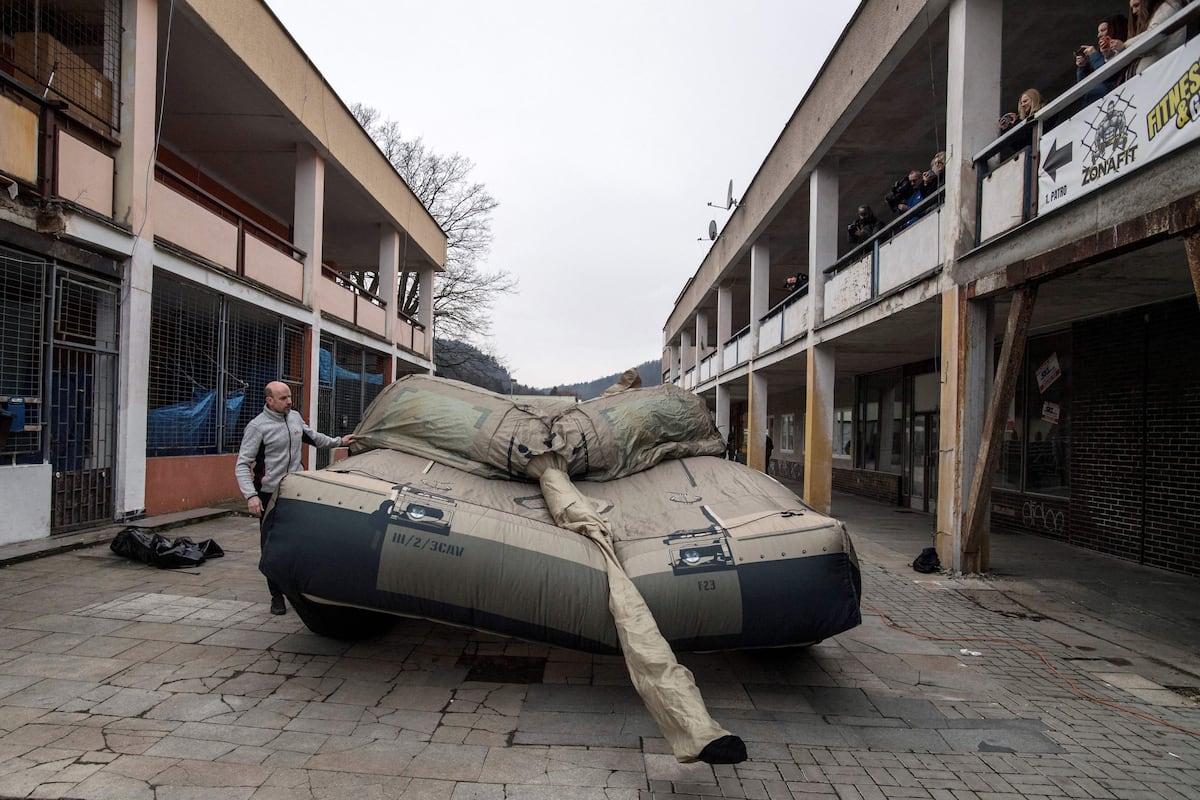
MILAN — Estonia has launched a competition to procure decoy equipment for luring enemy forces into attacks, the latest in a line of Tallinn’s defense investments animated by Russia’s invasion of Ukraine.
The Estonian Center for Defense Investments, the procurement arm for the military, published tender documents in mid-September inviting bids for mock-up platforms by the end of the month. Tallinn expects to spend $10 million on the purchase.
Officials are looking for models of real weapon systems, ammunition as well as communication and radar equipment, complete with training for setting up and maintaining the decoys, according to the notice.
No further details given regarding the specific types of decoys Estonia is looking for or which branches of its military will utilize them.
Estonian officials have been among the most adamant European NATO members in saying that Russian aspirations to seize territory could extend well beyond Ukraine.
In a recent interview with the Spanish national newspaper El Pais, Col. Mati Tikerpuu, the commander of one of the two brigades of the Estonian Army, said Tallinn “would be able to resist an invasion for a couple of weeks” before alliance reinforcements arrived.
Since the 2023 NATO summit in Vilnius, the Baltic states – Lithuania, Estonia and Latvia – have unveiled a series of plans to step up the protection of the region, given its proximity to Russian territory.
These have included the planned construction of a “drone wall” to defend against Moscow, in cooperation with Poland , Finland and Norway. Additionally, Estonia is in the process of building a fence along its 294 kilometers border with Russia that will be equipped with cameras and radars.
Ukraine has made use of a variety of fake military equipment since the beginning of Russia’s full-scale invasion.
In February, pictures emerged on social media reportedly showing Ukrainian dummies of ground-based air defense systems, including highly realistic replicas of German-provided Iris-T air-defense equipment and the U.S.-made AN/MPQ-64 Sentinel radar.
Other European countries have purchased similar equipment this year, including Germany, which awarded a €50 million ($54.4 million) contract to Rheinmetall for the supply of Birdie aerial infrared decoys.
These are to be fitted on German military aircraft to protect against air-to-air and surface-to-air missiles, by acting similar to flares that can emit heat and be deployed by pilots to confuse missiles about their target.
Elisabeth Gosselin-Malo was a Europe correspondent for Defense News. She covers a wide range of topics related to military procurement and international security, and specializes in reporting on the aviation sector. She is based in Milan, Italy.
米兰——爱沙尼亚启动了一项采购诱饵设备的竞赛,旨在引诱敌军发动攻击。这是受俄罗斯入侵乌克兰事件刺激,塔林进行的一系列国防投资中的最新一项。
爱沙尼亚国防投资中心(军方采购机构)于9月中旬发布招标文件,邀请各方在月底前提交模型平台的投标书。塔林方面预计将为此采购花费1000万美元。
根据公告,官员们正在寻找真实武器系统、弹药以及通信和雷达设备的模型,并要求提供设置和维护诱饵的培训。
没有提供关于爱沙尼亚正在寻找的具体类型的诱饵,也没有提供关于其军队的哪些部门将使用这些诱饵的更多细节。
爱沙尼亚官员是欧洲北约成员国中最坚定地表示俄罗斯夺取领土的野心可能远远超出乌克兰的成员国之一。
在最近接受西班牙国家报纸《国家报》采访时,爱沙尼亚陆军两个旅之一的指挥官马蒂·蒂克普上校表示,在盟军援军到达之前,塔林“能够抵抗入侵几个星期”。
自 2023 年维尔纽斯北约峰会以来,鉴于波罗的海三国——立陶宛、爱沙尼亚和拉脱维亚——与俄罗斯领土距离很近,它们公布了一系列加强该地区保护的计划。
这些计划包括与波兰、芬兰和挪威合作,修建一道“无人机墙”以防御莫斯科。此外,爱沙尼亚正在其与俄罗斯接壤的294公里长的边境线上修建一道围栏,该围栏将配备摄像头和雷达。
自俄罗斯全面入侵以来,乌克兰一直使用各种假冒军事装备。
今年 2 月,社交媒体上出现了一些照片,据称展示了乌克兰的地面防空系统模型,其中包括高度逼真的德国提供的 Iris-T 防空设备和美国制造的 AN/MPQ-64 Sentinel 雷达的复制品。
今年其他欧洲国家也购买了类似的设备,包括德国,德国与莱茵金属公司签订了一份价值 5000 万欧元(5440 万美元)的合同,用于供应 Birdie 空中红外诱饵。
这些装置将安装在德国军用飞机上,用于防御空空导弹和地空导弹,其作用类似于照明弹,可以释放热量,由飞行员投放以迷惑导弹,使其无法锁定目标。
伊丽莎白·戈斯林-马洛曾任《防务新闻》欧洲通讯员。她的报道涵盖军事采购和国际安全等广泛领域,尤其擅长航空领域的报道。她常驻意大利米兰。