How NATO make-believe artillerists get comfy with a real-world foe北约的假想炮兵如何与现实世界的敌人相处融洽
“At times, the cold and Arctic-like conditions found here can be more threatening to soldiers than combat situations,” said one Finnish officer.
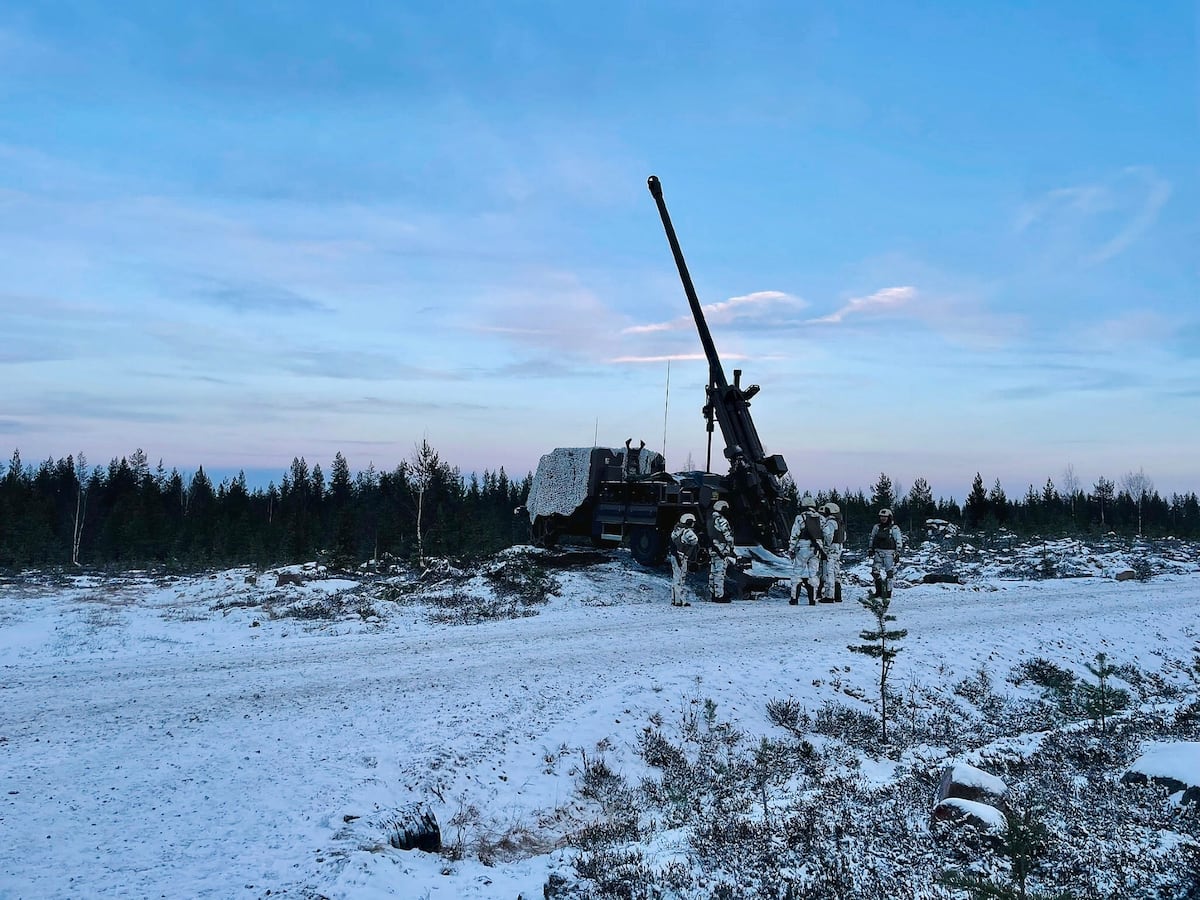
ROVANIEMI, Finland — As artillery units from several NATO countries confronted a fictitious enemy here last week, one adversary was very real: cold weather.
It’s an age-old reality for countries featuring extreme locales, including the European alliance nations of Norway, Finland, and Sweden plus member countries Canada and the United States across the Atlantic. For the Finns, the challenge of operating in Arctic conditions is woven into military doctrine, which teaches that inexperience with weather can be a greater threat to soldiers’ lives than lackluster fighting skills.
Nested in Finland’s dense coniferous forests of pine trees, north of the Arctic Circle, NATO artillery units convened here in mid-November to learn not only how to survive but how to thrive in this type of environment.
“At times, the cold and Arctic-like conditions found here can be more threatening to soldiers than combat situations,” Lieutenant Olli Taskinen, member of the Jaeger Brigade, a unit of the Finnish Army in charge of developing Arctic warfare tactics, told Defense News on Nov. 19.
During their stay here, in the context of Exercise Lightning Strike 24 focused on joint long-range fire capabilities, British, French, Swedish, and American artillerymen tested themselves in a setting a majority of them have not typically been exposed to.
The knowledge passed down by the Finns ranged from basic skills, such as putting newspaper under soldiers’ socks and boots to take off the moisture, to more complex elements, such as driving multi-ton armored vehicles on slippery roads and keeping howitzers running in temperatures capable of reaching -30 degrees Celsius (-22 Fahrenheit).
For example, Taskinen noted that some weapons have a tendency to jam more in the cold, which can be fatal in the face of an enemy attack.
“In the weather we see here, often we opt to keep our guns frozen by leaving them outside tents – if you take it inside, all the snow and ice gets inside of them and then if you go outside it freezes [again] completely… Keep it completely outside or inside the tent, no in-between,” Taskinen said.
For bigger pieces of equipment such as the K9 155mm self-propelled howitzers, a Finnish engineer said that there is a question of timing – knowing when to pre-start the engine to have it ready for action when needed.
Beyond forests, Finland is also famous for being a land of lakes, with a total of 188,000 spread out throughout its territory, a challenge alongside the cold that required participants to adapt their tactic sets to survive, British Lt. Col. Pete Winton, of the multinational field artillery brigade assembled for the exercise, said.
Out here, communication between the different artillery units at all times is fundamental, Brigadier Rob Alston, chief of joint fires and influence at NATO’s Allied Rapid Reaction Corps, said, explaining why the drill involved utilizing multiple means of transmitting data.
“[We do this] so that if our preferred option is not working, we are able to utilize a second or third option so that communications can always get through,” he said during an interview.
While the Finnish Army may have mastered the woods, this does not make it immune to problems in freezing conditions.
Four of the eight K9s deployed for the exercise had broken heaters, a K9 operator, who wished to remain anonymous for security reasons, told Defense News. That meant it was as cold inside the vehicle as outside, with temperatures falling well under the freezing point on that day.
Another challenge faced by participants included the long distances to cross here in Lapland. Taskinen explained that whereas many countries are accustomed to having military infrastructure located close to each other, in this region, often your destination is hundreds of kilometers away.
Elisabeth Gosselin-Malo was a Europe correspondent for Defense News. She covers a wide range of topics related to military procurement and international security, and specializes in reporting on the aviation sector. She is based in Milan, Italy.
芬兰罗瓦涅米——上周,来自几个北约国家的炮兵部队在这里与一个虚构的敌人交战,但有一个敌人却是真实存在的:寒冷的天气。
对于地处极端环境的国家来说,这早已是老生常谈,其中包括欧洲联盟国家挪威、芬兰和瑞典,以及大西洋彼岸的成员国加拿大和美国。对芬兰而言,在北极条件下作战的挑战已融入其军事理论,该理论认为,缺乏应对极端天气的经验比战斗技能不足对士兵的生命构成更大的威胁。
北约炮兵部队于 11 月中旬聚集在北极圈以北芬兰茂密的松树林中,学习如何在这种环境中生存,以及如何蓬勃发展。
“有时,这里寒冷和类似北极的条件对士兵的威胁可能比战斗情况更大,”芬兰陆军负责制定北极作战战术的猎兵旅成员奥利·塔斯基宁中尉于 11 月 19 日告诉《防务新闻》。
在驻扎期间,作为以联合远程火力能力为重点的“闪电打击 24”演习的一部分,英国、法国、瑞典和美国的炮兵在他们大多数人通常不会接触到的环境中进行了自我测试。
芬兰人传承下来的知识涵盖了从基本技能(例如在士兵的袜子和靴子下垫报纸以吸收水分)到更复杂的技能(例如在湿滑的道路上驾驶多吨重的装甲车辆以及在可达到零下 30 摄氏度(零下 22 华氏度)的温度下保持榴弹炮运转)。
例如,塔斯基宁指出,有些武器在寒冷的环境下更容易卡壳,这在面对敌人攻击时可能是致命的。
“在我们这里这样的天气下,我们经常选择把枪支放在帐篷外冷冻起来——如果你把它带进帐篷,所有的雪和冰都会进入枪支内部,然后如果你把它放到外面,它又会完全冻住……要么完全放在帐篷外,要么完全放在帐篷内,不要介于两者之间,”塔斯基宁说。
一位芬兰工程师表示,对于像 K9 155 毫米自行榴弹炮这样的大型装备来说,时机把握至关重要——要知道何时预先启动发动机,以便在需要时能够立即投入战斗。
除了森林,芬兰还以湖泊众多而闻名,其境内共有 188,000 个湖泊。英国中校皮特·温顿(Pete Winton)是参加此次演习的多国野战炮兵旅成员,他表示,除了寒冷的天气外,湖泊也是一项挑战,需要参与者调整战术才能生存下来。
北约盟军快速反应部队联合火力与影响力主管罗布·奥尔斯顿准将解释说,在这里,不同炮兵部队之间始终保持沟通至关重要,因此演习需要利用多种数据传输方式。
“(我们这样做)是为了确保,如果我们的首选方案行不通,我们还可以采用第二或第三种方案,从而保证沟通始终畅通无阻,”他在一次采访中说道。
虽然芬兰军队可能已经精通了森林作战,但这并不意味着它在冰冻条件下不会遇到问题。
一位出于安全考虑不愿透露姓名的警犬操作员告诉《防务新闻》,参与演习的八只警犬中有四只的暖气坏了。这意味着车内和车外一样冷,当天气温远低于冰点。
参赛者面临的另一项挑战是拉普兰地区路途遥远。塔斯基宁解释说,虽然许多国家习惯于将军事基础设施集中部署,但在这个地区,目的地往往远在数百公里之外。
伊丽莎白·戈斯林-马洛曾任《防务新闻》欧洲通讯员。她的报道涵盖军事采购和国际安全等广泛领域,尤其擅长航空领域的报道。她常驻意大利米兰。