Surprise, kill, vanish: ‘Jedburghs’ led way for US cyber, special ops出其不意,杀戮,消失:“杰德堡”为美国网络和特种作战开辟道路
WWII's "Jedburghs" show how an unconventional take on cross-functional partnerships can operate effectively in politically sensitive environment.
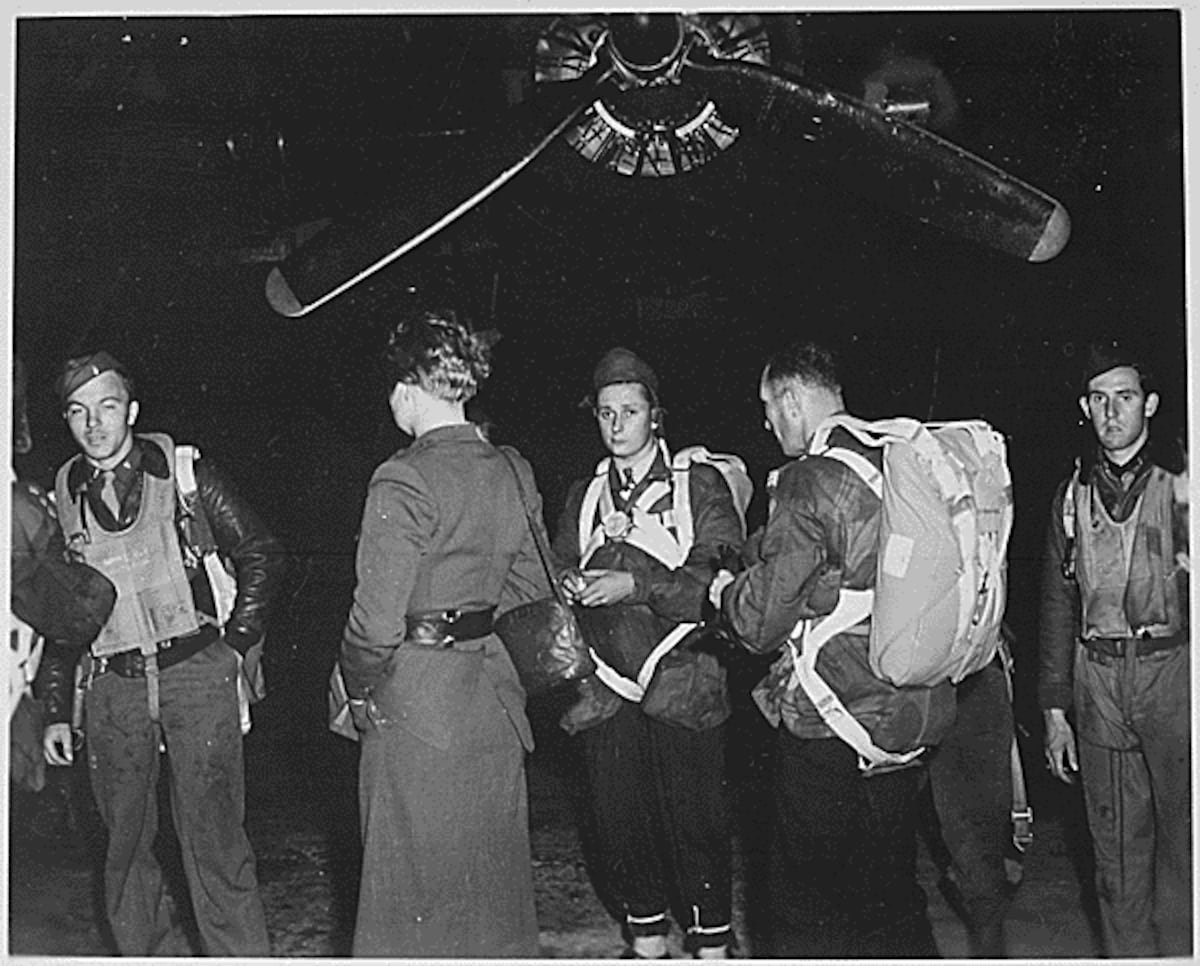
On military bases during World War II, the loudspeaker system often blared a curious message:
Wanted: Volunteers for immediate overseas assignment. Knowledge of French or another European language preferred; Willingness and ability to qualify as a parachutist necessary; Likelihood of a dangerous mission guaranteed.
Without any further instructions, the messages attracted a mix of individuals some of the the most creative and dangerous missions of WWII. Known as the Jedburghs, the small special purpose teams were a WWII phenomenon born out of the British Army and Sir Winston Churchill’s affinity for “ ungentlemanly warfare .”
The multi-national teams were trained in irregular warfare, maintained extensive foreign language skills, and excelled at subterfuge, sabotage and surveillance. Jedburghs were sent deep into Nazi-held territory to disrupt the German war effort by waging unconventional warfare. As a concept, they provide an example of how an unconventional take on cross-functional partnerships can affect a war zone and operate effectively in politically sensitive environments.
The Jedburgh legacy lives on within 1st Special Forces Command who recently revamped the concept as four-person operational detachments. Today’s Jedburgh program should serve as the model for a new type of multi-domain collaboration: the pairing of the Cyber Mission Force and Special Operations Forces, or the integration of lethal and non-lethal assets, to tackle some of the most vexing challenges associated with strategic competition.
While CMF and SOF capabilities are already employed together in the military’s Special Mission Unit concept, integrated Cyber-SOF assets are needed at scale if the US wants to compete with the persistent threat of Russia and the pacing threat of China.
Getting Out in Front of Conflict
In 2018, U.S. cyber strategy shifted from one of restraint to engagement when U.S. Cyber Command obtained additional authorities under the National Defense Authorization Act . A cornerstone of the Department of Defense Cyber Strategy (the next update is expected soon) is the 2018 Defend Forward policy and USCYBERCOM’s hunt forward initiative
Hunt Forward Operations are executed by teams from the Cyber National Mission Force, the offensive arm of USCYBERCOM, who engage with allies at their invitation to identify malicious cyber activity and observe adversary tradecraft and tools “in the wild.” Hunt Forward teams are therefore proactive measures that protect partner and U.S. networks. However, in addition to being a geographic concept, Hunt Forward is also temporal, as a teams’ activity enables an understanding of malicious cyber activity before it reaches US networks – much like the presence of SOF teams around the globe.
As a policy, Defend Forward is similarly temporal – it bridges short term tactical goals with over-the-horizon capabilities , as defined in ongoing counter-terrorism efforts – or capabilities and accesses developed in and through cyberspace today , that will enable the US to maintain the initiative and security of tomorrow. General Paul A. Nakasone, the commander of USCYBERCOM, describes the policy’s enabling activities as those that force an adversary to focus on defending their own assets, thereby inhibiting the adversary’s ability to go on the offensive.
The concept should sound familiar – especially after two decades of counter-terrorism operations – as it mirrors SOF activities: engage with the enemy, far from the US homeland, and constantly apply pressure to prevent the conditions necessary for an attack on the homeland – or strategic insecurity – from occurring.
In other words, the best defense is the continuous and relentless application of offense or, what some researchers call, “ initiative persistence .” Thus far, HFOs have paid off , with a few dozen successfully completed missions across at least 14 countries.
Collaboration for Multi-Domain Operations
As Nakasone recently explained , Hunt Forward missions include sharing threat indicators, providing warning, sharing personnel, and providing insight with a host nation’s forces. In this sense, the CNMF teams serve a function much like that of the SOF teams tasked with Security Force Assistance , where training between the host nation and US service members is designed as a skill and information exchange.
However, Hunt Forward could expand to include more components of the Irregular Warfare portfolio , including Stability Operations. Cross-functional teams are used in a variety of military contexts, and the integration of SOF operators into elements of the CNMF, or vice versa, should be considered a crucial next step for the strategy of integrated deterrence .
Within the joint force, the concept of integrating operational skill sets is used to counter irregular threats through a balanced approach for strategic advantage. And integration also brings a premier skill to a team that would otherwise lack the capability. For example, SOF teams consistently embed Air Force Close Combat Controllers to support small units of action because of their exquisite Joint Terminal Attack Controllers capabilities.
The Air Force JTACs are revered among SOF as the premier enabler for controlling terminal attacks – ground force commanders consider them to be both a force multiplier, by providing critical fire control measures, and a risk mitigator for coordinating airstrikes. While the other services encourage their own small units to organically develop the JTAC capability internally, the skill is often assigned as a secondary job or additional duty and therefore fails to deliver the same performance as a fully qualified Air Force CCT.
Working Smarter, Not Harder
Similarly, cyber work role qualification and certification, much like the JTACs, is something SOF doesn’t have to develop or provide internally and, conversely, the CNMF doesn’t have to develop or provide its own version of special warfare training. Instead, creating the concept for Cyber-SOF tactical teams is – like the Jedburghs and embedded JTACs – a joint solution to the joint problem of an increasingly hostile cyberspace.
Without question, the cultures of SOF and CMF units may seem wildly different but, in reality, they are quite similar: both hold expertise in high regard, train consistently for ongoing and continuous global operations, and understand the strategic and cumulative effect of their teams’ operations. Additionally, CNMF and SOF units are postured to respond quickly to shifting global priorities and to an attack on the homeland or allied nation.
While an integrated concept will take time to develop and implement, there are areas in which immediate coordination is needed and possible: 1) close-access requirements for high sensitivity network and infrastructure access, 2) language and cultural fluency in forward deployed regions, and 3) foreign partner training.
Because the Cyber Mission Force and Special Operations Forces are two of the most exquisite tools of national power the US has, there is bound to be resistance to coordination but, failing to collaborate and integrate will produce redundant efforts instead of a unified strategy that efficiently leverages US assets to affect global and national security.
Using the blueprint of the multi-functional Jedburghs and the lessons learned from the embedded JTACs – models known to work effectively – a joint Cyber-SOF effort could better thwart attacks from peer adversaries like China, and provide another layer of proactive defense to the strategy of integrated deterrence.
Nicholas Dockery is a Special Forces Officer and a General Wayne Downing Scholar. He is pursuing a Masters in Public Policy at the Jackson School for Global Affairs, Yale University. Captain Maggie Smith, PhD, is a US Army cyber officer assigned to the Army Cyber Institute at the U.S. Military Academy where she is a scientific researcher, an assistant professor in the Department of Social Sciences, and an affiliated faculty of the Modern War Institute. She is also the director of the Competition in Cyberspace Project .
二战期间,军事基地里的扩音器经常播放一条奇怪的信息:
招募:志愿者立即赴海外执行任务。懂法语或其他欧洲语言者优先;必须愿意并能够取得跳伞资格;保证执行危险任务。
在没有任何进一步指示的情况下,这些信息吸引了形形色色的人参与二战中最具创造性和最危险的一些任务。这些被称为“杰德堡”的小型特种作战小组是二战时期英国陆军的一个奇特现象,源于温斯顿·丘吉尔爵士对“非绅士战争”的偏爱。
这些多国小组接受过非常规战争训练,精通多种外语,并擅长潜伏、破坏和监视。他们被派往纳粹占领区深处,通过开展非常规战争来扰乱德军的战争行动。作为一种理念,他们展现了非常规的跨职能合作模式如何影响战区,并在政治敏感环境中有效运作。
杰德堡计划的精髓在第一特种部队司令部得以延续,该司令部近期对这一概念进行了改进,将其发展为四人作战分遣队。如今的杰德堡计划应成为一种新型多域协作的典范:网络任务部队与特种作战部队的联合,或致命性和非致命性资产的整合,以应对战略竞争中最棘手的一些挑战。
虽然美军的特种任务部队概念中已经同时运用了网络作战部队和特种作战部队的能力,但如果美国想要与俄罗斯持续的威胁和中国日益增长的威胁竞争,就需要大规模地整合网络特种作战部队资产。
先发制人,化解冲突
2018年,随着美国网络司令部根据《国防授权法案》获得额外授权,美国的网络安全战略从克制转向参与。国防部网络战略(预计很快将发布下一版)的基石是2018年的“前沿防御”政策和美国网络司令部的“前沿猎杀”计划。
“前沿猎杀行动”由美国网络司令部(USCYBERCOM)进攻部队——网络国家任务部队(Cyber National Mission Force)的团队执行。这些团队应盟友邀请与其合作,识别恶意网络活动,并“实地”观察敌方的网络技术和工具。因此,“前沿猎杀行动”是保护伙伴国和美国网络的主动措施。然而,“前沿猎杀行动”不仅具有地域性,也具有时间性,因为团队的活动能够帮助美国在恶意网络活动蔓延至自身网络之前就对其进行侦测——这与特种作战部队在全球各地的存在非常相似。
作为一项政策,“前沿防御”同样具有时间性——它将短期战术目标与超视距能力(如当前反恐行动中所定义的能力)联系起来,或者说,它指的是当今在网络空间开发和利用的能力和渠道,这些能力和渠道将使美国能够保持未来的主动权和安全。美国网络司令部司令保罗·A·中曾根将军将该政策的实施活动描述为迫使对手集中精力保护自身资产,从而抑制对手发动进攻的能力。
这个概念听起来应该很熟悉——尤其是在经历了二十年的反恐行动之后——因为它与特种作战部队的活动类似:在远离美国本土的地方与敌人交战,并不断施加压力,以防止出现攻击本土或造成战略不安全的情况。
换句话说,最好的防御就是持续不断地发起进攻,或者用一些研究人员的话来说,就是“主动性坚持”。迄今为止,高机动性部队已经取得了成效,在至少14个国家成功完成了数十次任务。
多域作战协作
正如中曾根最近解释的那样,“前沿狩猎”任务包括与东道国部队共享威胁指标、提供预警、共享人员和提供情报。从这个意义上讲,CNMF小组的功能与负责安全部队援助的特种作战部队小组非常相似,东道国和美国军人之间的训练旨在进行技能和信息交流。
然而,“前线猎捕”行动可能会扩展,纳入更多非常规战争领域的组成部分,包括稳定行动。跨职能团队在各种军事环境中都有应用,将特种作战部队人员整合到联合军事力量(CNMF)的各个组成部分,或反之亦然,应被视为一体化威慑战略的关键下一步。
在联合作战部队中,整合作战技能的概念旨在通过平衡的战略策略应对非常规威胁,从而获得战略优势。这种整合还能为原本缺乏相应能力的团队带来顶尖技能。例如,特种作战部队经常将空军近战控制员编入作战单元,以支援小型作战单位,因为这些控制员拥有卓越的联合终端攻击控制能力。
空军联合终端攻击控制员(JTAC)在特种作战部队中备受推崇,被视为控制末端攻击的首要力量——地面部队指挥官认为他们既能通过提供关键的火力控制措施来倍增战斗力,又能通过协调空袭来降低风险。虽然其他军种鼓励其小型部队自主发展JTAC能力,但这项技能通常被分配为辅助工作或额外职责,因此无法达到合格的空军战斗控制员(CCT)的水平。
事半功倍,而非事倍功半
同样,网络作战角色资格认证,就像联合终端攻击控制员(JTAC)一样,并非特种作战部队(SOF)必须自行开发或提供的内容;反之,网络作战部队(CNMF)也无需自行开发或提供其自身的特种作战训练。相反,创建网络特种作战战术小组的概念——就像“杰德堡”(Jedburgh)战术小组和嵌入式JTAC一样——是应对日益敌对的网络空间这一共同问题的联合解决方案。
毫无疑问,特种作战部队(SOF)和联合军事部队(CMF)的文化看似截然不同,但实际上却十分相似:两者都高度重视专业技能,持续进行全球行动训练,并深谙团队行动的战略性和累积性影响。此外,联合军事部队和特种作战部队都做好了快速应对不断变化的全球形势以及对本土或盟国的攻击的准备。
虽然制定和实施一体化方案需要时间,但在某些领域,立即进行协调是必要的,也是可能的:1)对高度敏感的网络和基础设施的密切访问要求;2)前沿部署地区的语言和文化熟练程度;以及3)外国合作伙伴培训。
由于网络任务部队和特种作战部队是美国拥有的两大最精妙的国家力量工具,因此在协调方面必然会遇到阻力,但是,如果不能合作和整合,就会产生重复劳动,而不是形成能够有效利用美国资产影响全球和国家安全的统一战略。
利用多功能“杰德堡”的蓝图和从嵌入式联合终端攻击控制员(JTAC)中吸取的经验教训(这些模型已被证明行之有效),联合网络特种作战部队可以更好地挫败来自中国等势均力敌对手的攻击,并为综合威慑战略提供另一层主动防御。
尼古拉斯·多克里是一名特种部队军官,也是韦恩·唐宁将军奖学金获得者。他目前正在耶鲁大学杰克逊全球事务学院攻读公共政策硕士学位。玛吉·史密斯上尉拥有博士学位,是美国陆军网络军官,现任职于美国西点军校陆军网络研究所,担任科研人员、社会科学系助理教授以及现代战争研究所附属教员。她同时也是网络空间竞争项目的负责人。