Malaysia’s OPR stays at 2.75pc: What does it mean for your loans, savings and spendings马来西亚隔夜政策利率维持在2.75%不变:这对您的贷款、储蓄和支出意味着什么?
KUALA LUMPUR, Sept 17 — Bank Negara Malaysia (BNM) has kept its Overnight Policy Rate (OPR) at 2.75 per cent, maintaining the rate for a seventh consecutive meeting.At 2.75 per...
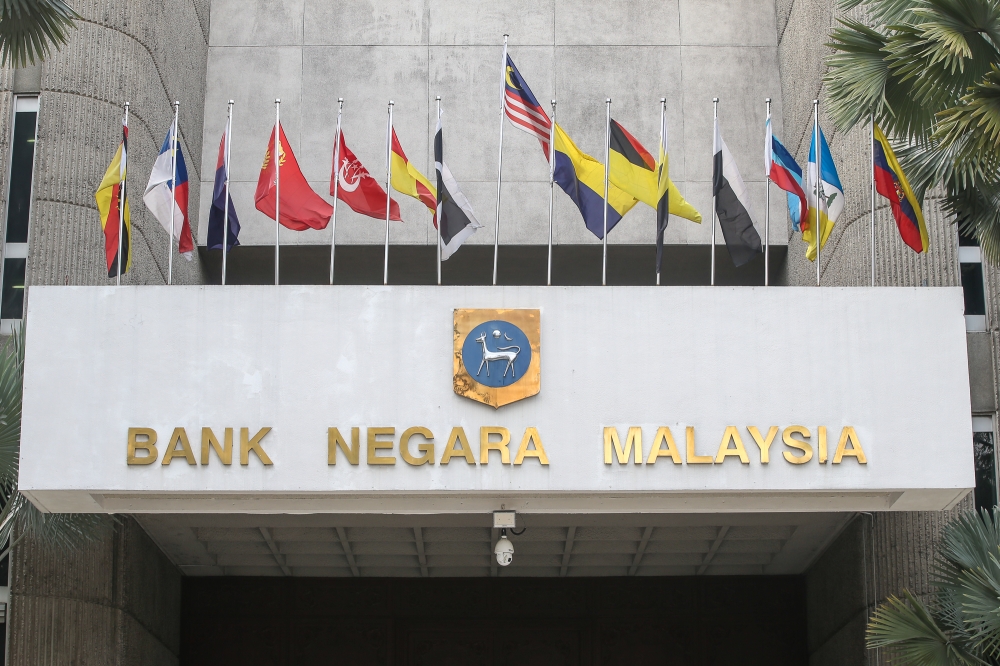
Bank Negara Malaysia has maintained the Overnight Policy Rate at 2.75 per cent for the seventh consecutive meeting, which is the lowest since the Covid-19 pandemic period.
The OPR influences interest rates for loans and deposits, affecting borrowing costs and savings returns, but changes do not directly translate to all financial products.
Bank Negara's decision to keep the OPR unchanged is consistent with the current economic conditions, prioritising price stability and sustainable growth, without directly setting rates based on inflation alone.
KUALA LUMPUR, Sept 17 — Bank Negara Malaysia (BNM) has kept its Overnight Policy Rate (OPR) at 2.75 per cent, maintaining the rate for a seventh consecutive meeting.
At 2.75 per cent, the OPR is now at its lowest since the Covid‑19 pandemic era, when it was cut to 1.75 per cent — a rate that remained in place until July 9, 2025, when it was raised back to 3 per cent.
With the OPR left unchanged at 2.75 per cent, the focus now shifts to what this means for borrowing costs, savings returns and day‑to‑day spending.
What does the OPR do
The OPR is Bank Negara’s key monetary policy rate.
It influences interest rates in the banking system, including rates for loans and deposits, although changes to the OPR do not necessarily translate one-for-one to every financial product.
Put simply, the OPR affects the cost of borrowing money and the returns on some forms of savings.
When the OPR is lowered, borrowing can become cheaper, which can support household and business spending and investment.
When it is raised, borrowing generally becomes more expensive, which can moderate demand in the economy.
How does Bank Negara decide the OPR?
The OPR is not calculated using a fixed formula.
Bank Negara’s Monetary Policy Committee (MPC) considers the outlook for inflation and economic growth, as well as risks to the economy, before deciding whether to raise, lower or maintain the rate.
It considers factors including economic growth, inflation, domestic demand, financial conditions and developments in the global economy.
Why did Bank Negara keep it at 2.75 per cent?
At its September 3 meeting, the MPC decided to maintain the OPR at 2.75 per cent.
Bank Negara said the current monetary policy stance was consistent with the outlook for continued price stability and sustainable economic growth.
Malaysia’s economy grew by 6 per cent in the second quarter of 2026, while headline inflation stood at 1.8 per cent in July, according to BNM.
BNM said the economy’s solid growth momentum was supported by stronger-than-expected export performance alongside sustained domestic demand.
It also said global growth remained resilient, supported by strong technology-sector expansion, improving supply conditions and stable labour markets.
Why doesn’t Bank Negara simply set the OPR based on inflation?
This is because the two measure different things.
Inflation measures how quickly the prices of goods and services are changing.
The OPR is a policy interest rate used by Bank Negara to influence economic and financial conditions.
So an inflation rate of 1.8 per cent does not mean the OPR should also be 1.8 per cent.
Bank Negara considers inflation alongside economic growth and the risks facing the economy.
How does it affect a home loan?
This is where the OPR can have a more direct effect on households.
For borrowers with a floating-rate or variable-rate home loan, the interest rate can change over time rather than remaining fixed throughout the loan period.
For new retail floating-rate loans in Malaysia, the Standardised Base Rate (SBR) is linked solely to the OPR.
Banks then add a spread that reflects factors such as the borrower’s credit risk and the bank’s costs.
So if the OPR falls, the SBR falls and the interest rate on a loan linked to it can fall as well, and if the OPR rises, the reverse can happen.
The exact effect on your monthly instalment depends on the terms of your loan.
Are car loans affected?
One should not assume that a car instalment will automatically change when the OPR moves.
The effect depends on the type of financing and the terms of the agreement.
What about credit cards and other debts
For individuals who are already carrying debt, interest rates matter because they determine how much it costs to borrow, and in the case of revolving credit card balances, how much interest can accumulate over time.
When interest rates rise, borrowers with loans or other credit facilities linked to variable rates may face higher repayment costs.
When rates fall, the cost can come down for those same types of borrowing.
However, the impact depends on the type of debt and the terms of the financing.
An unchanged OPR, therefore, does not mean every borrower’s monthly repayment will remain exactly the same, nor does a change in the OPR automatically affect every type of loan.
It affects savings accounts and fixed deposits
In this area, the OPR affects savers as well as borrowers.
Interest‑bearing deposits are accounts where a bank pays you a return for keeping your money with it.
Common examples include savings accounts and fixed deposits (FDs).
When interest rates are higher, banks may offer higher returns on some deposits, particularly FDs.
However, when rates fall, deposit rates may also decline.
The same broad principle applies to Islamic banking deposits, although their returns are structured differently from conventional interest.
However, deposit rates do not necessarily move by exactly the same amount as the OPR.
Banks also consider factors such as competition, funding requirements and their own pricing decisions.
What are some takeaways from the decision?
For households, the simplest takeaway is that there is no new OPR change following the latest decision.
For borrowers with rates linked to the OPR, that means there is no new OPR-driven increase or decrease in borrowing costs from this decision.
For savers, deposit rates will continue to depend on individual banks and products rather than moving automatically with the OPR.
An unchanged OPR also does not mean prices will stay the same, as the OPR influences overall demand and financial conditions rather than directly controlling the prices of goods and services.
BNM had said it would remain vigilant to developments affecting domestic inflation and growth, particularly given external risks such as geopolitical tensions and energy costs.
For now, the OPR remains at 2.75 per cent, with the next scheduled MPC decision on November 5, 2026.
Police confirm body found in Perak waters is missing angler
Diesel, RON97 and unsubsidised RON95 prices up by RM0.35 for Sept 17-23 period
PM Anwar: Malaysia supports and appreciates Saudi Arabia’s efforts following drone interception in Mecca
马来西亚国家银行连续第七次会议维持隔夜政策利率在2.75%不变,这是自新冠疫情爆发以来的最低利率。
隔夜政策利率 (OPR) 会影响贷款和存款利率,进而影响借贷成本和储蓄收益,但其变化并不会直接转化为所有金融产品。
马来西亚国家银行决定维持隔夜政策利率不变,这与当前的经济状况相符,优先考虑价格稳定和可持续增长,而不是仅仅根据通货膨胀直接设定利率。
吉隆坡,9月17日讯——马来西亚国家银行(BNM)将隔夜政策利率(OPR)维持在2.75%,这是该利率连续第七次会议保持不变。
目前隔夜政策利率 (OPR) 为 2.75%,是自新冠疫情爆发以来的最低水平。当时隔夜政策利率被下调至 1.75%,该利率一直维持到 2025 年 7 月 9 日,之后又上调至 3%。
由于隔夜政策利率 (OPR) 维持在 2.75% 不变,现在的重点转移到这对借贷成本、储蓄收益和日常支出意味着什么。
OPR 的作用是什么?
隔夜政策利率(OPR)是马来西亚国家银行的关键货币政策利率。
它会影响银行体系的利率,包括贷款利率和存款利率,尽管隔夜政策利率的变化并不一定会一一对应地影响到每一种金融产品。
简而言之,隔夜政策利率 (OPR) 会影响借贷成本和某些储蓄形式的回报。
当隔夜政策利率降低时,借贷成本会降低,这可以支持家庭和企业的支出和投资。
利率上升时,借贷成本通常会增加,这可能会抑制经济中的需求。
马来西亚国家银行如何决定隔夜政策利率(OPR)?
OPR并非使用固定公式计算。
马来西亚国家银行货币政策委员会(MPC)在决定是否提高、降低或维持利率之前,会考虑通胀和经济增长前景以及经济面临的风险。
它考虑了经济增长、通货膨胀、国内需求、金融状况和全球经济发展等因素。
为什么马来西亚国家银行将利率维持在2.75%?
在9月3日的会议上,货币政策委员会决定将隔夜政策利率维持在2.75%。
马来西亚国家银行表示,目前的货币政策立场与物价持续稳定和经济可持续增长的前景相符。
根据马来西亚国家银行的数据,马来西亚经济在2026年第二季度增长了6%,而7月份的总体通胀率为1.8%。
马来西亚国家银行表示,强劲的出口表现和持续的国内需求支撑了经济的稳健增长势头。
报告还指出,在全球科技行业强劲扩张、供应状况改善和劳动力市场稳定等因素的支撑下,全球经济增长依然保持韧性。
为什么马来西亚国家银行不直接根据通货膨胀率来设定隔夜政策利率(OPR)呢?
这是因为两者衡量的是不同的事物。
通货膨胀衡量的是商品和服务价格变化的速度。
隔夜政策利率(OPR)是马来西亚国家银行用来影响经济和金融状况的政策利率。
因此,1.8%的通货膨胀率并不意味着隔夜政策利率也应该为1.8%。
马来西亚国家银行在考虑经济增长和经济面临的风险的同时,也会考虑通货膨胀因素。
它对房屋贷款有何影响?
这正是OPR能够对家庭产生更直接影响的地方。
对于申请浮动利率或可变利率住房贷款的借款人来说,利率会随着时间推移而变化,而不是在整个贷款期限内保持不变。
在马来西亚,新的零售浮动利率贷款的标准化基准利率(SBR)仅与隔夜政策利率(OPR)挂钩。
银行随后会加上利差,以反映借款人的信用风险和银行的成本等因素。
因此,如果隔夜政策利率 (OPR) 下降,标准银行利率 (SBR) 也会下降,与其挂钩的贷款利率也会下降;如果隔夜政策利率 (OPR) 上升,则情况可能相反。
对您每月还款额的具体影响取决于您的贷款条款。
汽车贷款会受到影响吗?
不应想当然地认为,当车辆贷款利率 (OPR) 发生变化时,汽车分期付款金额也会自动改变。
其效果取决于融资类型和协议条款。
信用卡和其他债务怎么办?
对于已经背负债务的人来说,利率很重要,因为它决定了借贷成本,而且对于循环信用卡余额来说,还决定了随着时间的推移会累积多少利息。
当利率上升时,与浮动利率挂钩的贷款或其他信贷产品的借款人可能会面临更高的还款成本。
利率下降时,这类贷款的成本也会降低。
然而,其影响取决于债务类型和融资条款。
因此,OPR 不变并不意味着每个借款人的每月还款额都会完全相同,OPR 的变化也不会自动影响每种类型的贷款。
它会影响储蓄账户和定期存款。
在这个领域,隔夜政策利率(OPR)既影响储户也影响借款人。
计息存款是指银行会因为你把钱存在银行而支付你收益的账户。
常见的例子包括储蓄账户和定期存款(FD)。
当利率较高时,银行可能会对某些存款(尤其是定期存款)提供更高的回报。
然而,当利率下降时,存款利率也可能下降。
同样的原则也适用于伊斯兰银行存款,尽管其收益结构与传统利息不同。
然而,存款利率的变动幅度不一定与隔夜政策利率的变动幅度完全相同。
银行还会考虑竞争、资金需求以及自身的定价决策等因素。
从这项决定中我们能得出哪些结论?
对于家庭用户来说,最简单的结论是,最新决定之后,OPR 没有新的变化。
对于利率与隔夜政策利率 (OPR) 挂钩的借款人来说,这意味着这项决定不会导致 OPR 引发新的借款成本增加或减少。
对于储户而言,存款利率将继续取决于各个银行和产品,而不是随隔夜政策利率 (OPR) 自动变动。
即使隔夜政策利率不变,也不意味着价格会保持不变,因为隔夜政策利率影响的是整体需求和金融状况,而不是直接控制商品和服务的价格。
马来西亚国家银行曾表示,将继续密切关注影响国内通胀和经济增长的事态发展,特别是考虑到地缘政治紧张局势和能源成本等外部风险。
目前,OPR 仍维持在 2.75%,货币政策委员会下一次决定定于 2026 年 11 月 5 日做出。
警方证实,在霹雳州水域发现的尸体是一名失踪的垂钓者。
9月17日至23日期间,柴油、RON97汽油和非补贴RON95汽油价格上涨0.35令吉。
安华总理:马来西亚支持并赞赏沙特阿拉伯在麦加拦截无人机事件后所做的努力