In Ukraine, ‘shoot-and-scoot’ tactics helping Caesars survive在乌克兰,“打了就跑”的战术帮助凯撒队幸存下来
Nexter has increased monthly Caesar production to six from two before the war, and the target “in the time to come” is 12 cannons per month.
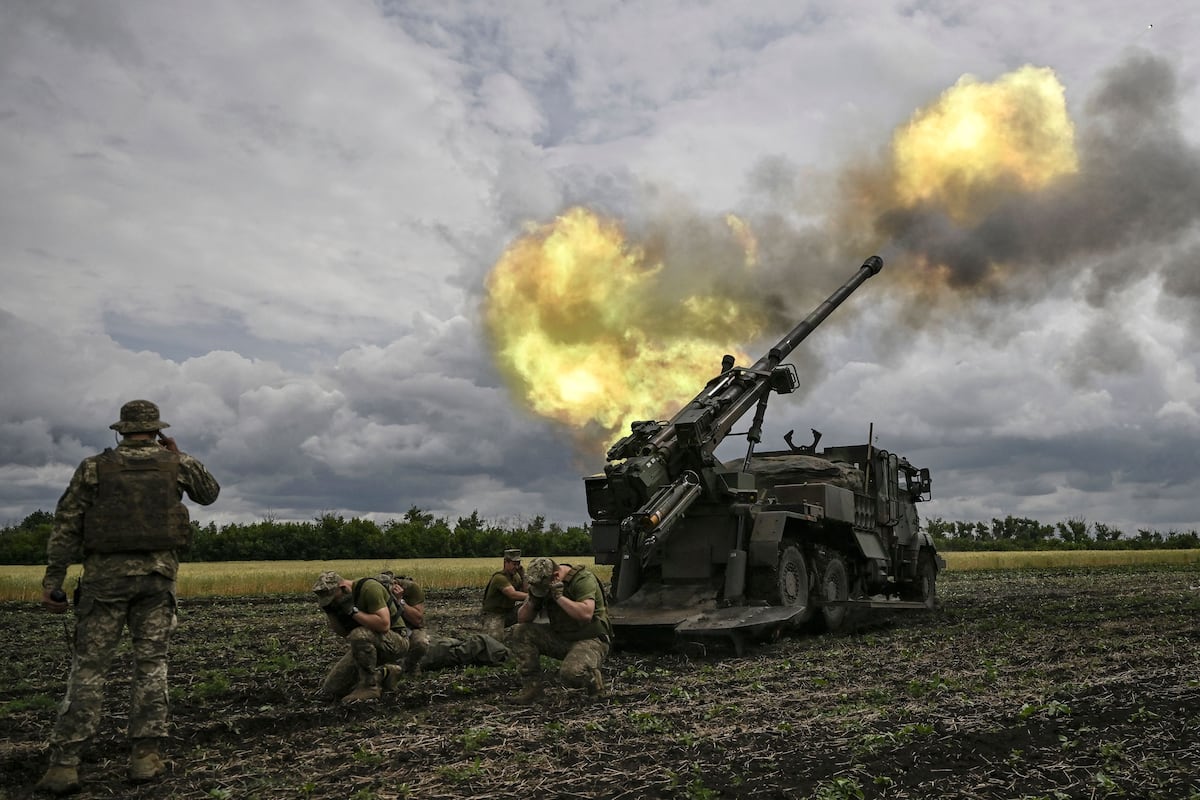
PARIS – Ukraine has lost less than 10% of the truck-mounted Caesar howitzers it received from France and Denmark, with greater mobility resulting in a higher survival rate than for some other self-propelled or towed systems, according French manufacturer KNDS Nexter.
Losses for some other self-propelled or towed systems in Ukraine’s war with Russia amount to nearly 30%, the company said in a statement to Defense News, without providing specifics.
The French-built Caesar is the world’s lightest 155mmm self-propelled gun at 18 metric tons, according to Nexter. The howitzer can fire six shells within a minute before packing up and moving away, an artillery tactic known as shoot-and-scoot, and evolving battlefield threats mean that mobility is the Caesar system’s best protection rather than the cannon’s range, Nexter said.
“Use of drones and loitering munitions has become a real threat 40 kilometers (25 miles) from the front, where the Caesar operates,” Nexter said in the statement. “Its light weight and ability to leave its position in less than a minute to avoid counter-battery fire are therefore major assets.”
Ukraine has received 55 of the truck-mounted systems, with 36 supplied by France, including six purchased this year, and another 19 donated by Denmark. Besides the French cannon, Ukraine operates 155mm artillery systems including the towed American M777 and self-propelled systems such as the German Panzerhaubitze 2000, the Polish Krab and Sweden’s Archer.
U.S. Secretary of State Antony Blinken and French Armed Forces Minister Sébastien Lecornu visited the Nexter site in Versailles outside Paris on Tuesday to discuss the French-U.S.-led coalition to supply artillery and ammunition to Ukraine.
France, Denmark and Ukraine have agreed on financing the purchase of 78 Caesar systems for Ukraine in 2024 as part of the coalition, Lecornu said last week. That includes the six already delivered this year.
Nexter has increased monthly Caesar production to six from two before the war, and the target “in the time to come” is 12 cannons per month, Lecornu said in a press conference following the visit. The target is to reach the new capacity within a year, and Nexter has already made investments to boost the output of the system’s components, the company said.
“For the time being, all Caesar production is earmarked for Ukraine and for replenishing stocks of the French Army, which may decide to make further divestments to Ukraine,” Nexter said.
France in December ordered 109 new-generation howitzers from Nexter for about €350 million, with first delivery expected in 2026. The updated cannon will have an armored cabin to protect against mines and small-caliber arms, based on the feedback from French deployments in Afghanistan and Africa’s Sahel region.
The Caesar MkII will get a new 460 HP engine more than double as powerful as the previous 215 HP one, a new six-wheel chassis from military-vehicle maker Arquus, and updated fire control software. The howitzer will keep its 155mm cannon, with a range of more than 40 kilometers, and will remain air-transportable, according to France’s armaments directorate.
After a Ukrainian advantage in artillery fire in the summer of 2023, Russia gained the upper hand, and Lecornu said in January the shell ratio was nearly one-to-six in favor of Russia. Artillery has been the greatest killer in the war in Ukraine, accounting for more than 70% of casualties.
Ukraine’s artillery deficit contributed to recent setbacks on the frontline, including the withdrawal from the city of Avdiivka in the Donetsk region in February. A stronger artillery capability is one of Ukraine’s key needs to win the war, Defense Minister Rustem Umerov said in January.
Rudy Ruitenberg is a Europe correspondent for Defense News. He started his career at Bloomberg News and has experience reporting on technology, commodity markets and politics.
巴黎——据法国制造商 KNDS Nexter 称,乌克兰从法国和丹麦接收的凯撒车载榴弹炮损失不到 10%,其机动性更强,因此比其他一些自行式或牵引式系统具有更高的生存率。
该公司在给《防务新闻》的一份声明中表示,乌克兰与俄罗斯的战争中,其他一些自行式或拖曳式系统的损失接近 30%,但没有提供具体细节。
据奈克斯特公司称,法国制造的凯撒自行榴弹炮重量仅为18吨,是世界上最轻的155毫米自行火炮。该炮可以在一分钟内发射六发炮弹,然后收起炮弹撤离,这种炮兵战术被称为“打了就跑”。奈克斯特公司表示,不断变化的战场威胁意味着机动性比射程才是凯撒系统最好的防御手段。
“在距离前线40公里(25英里)处,无人机和巡飞弹的使用已成为真正的威胁,而凯撒无人机正是在该区域作战,”奈克斯特公司在声明中表示。“因此,凯撒无人机的轻便性和不到一分钟即可脱离阵地以躲避反炮兵火力的能力是其主要优势。”
乌克兰已接收55套车载式火炮系统,其中36套由法国提供(包括今年购买的6套),另有19套由丹麦捐赠。除法国火炮外,乌克兰还装备有155毫米火炮系统,包括美国M777牵引式火炮以及德国Panzerhaubitze 2000、波兰Krab和瑞典Archer等自行火炮系统。
周二,美国国务卿安东尼·布林肯和法国武装部队部长塞巴斯蒂安·勒科尔努访问了位于巴黎郊外凡尔赛的奈克斯特工厂,讨论由法国和美国领导的向乌克兰提供火炮和弹药的联盟。
勒科尔努上周表示,法国、丹麦和乌克兰已达成协议,作为联盟的一部分,将在2024年为乌克兰购买78套凯撒防空系统提供资金。这其中包括今年已经交付的6套。
奈克斯特公司已将凯撒火炮的月产量从战前的两门提高到六门,莱科尔努在访问后的新闻发布会上表示,“未来一段时间内”的目标是每月生产十二门。该公司称,目标是在一年内达到新的产能,并且已经进行投资以提高该系统组件的产量。
“目前,凯撒的所有产品都指定用于供应乌克兰和补充法国军队的库存,法国军队可能会决定进一步向乌克兰出售资产,”奈克斯特说。
法国去年12月向奈克斯特公司订购了109门新一代榴弹炮,总价值约3.5亿欧元,预计首批将于2026年交付。根据法国在阿富汗和非洲萨赫勒地区的部署经验,升级后的火炮将配备装甲炮舱,以抵御地雷和小口径武器的攻击。
据法国军备局称,凯撒MkII型榴弹炮将配备一台功率超过400马力的全新发动机,功率是之前215马力发动机的两倍多;此外,还将采用军用车辆制造商Arquus提供的新型六轮底盘,并升级火控软件。该炮将保留其155毫米火炮,射程超过40公里,并继续保持空运能力。
2023年夏季,乌克兰在炮火方面一度占据优势,但随后俄罗斯反超。莱科尔努在1月份表示,炮弹数量与乌克兰的比值接近1:6,俄罗斯占据绝对优势。炮火一直是乌克兰战争中最大的杀伤因素,造成的伤亡占总伤亡的70%以上。
乌克兰炮兵力量的不足导致了近期前线的挫败,包括2月份从顿涅茨克州阿夫迪伊夫卡市的撤退。乌克兰国防部长鲁斯捷姆·乌梅罗夫在1月份表示,增强炮兵能力是乌克兰赢得战争的关键需求之一。
鲁迪·鲁伊滕贝格是《防务新闻》的欧洲记者。他的职业生涯始于彭博新闻社,拥有报道科技、大宗商品市场和政治方面的经验。