Open letter stirs debate over UK defense spending一封公开信引发关于英国国防开支的辩论
Advocates of higher military budgets point to Russia's war on Ukraine and other global crises as evidence that Britain must improve its defensive posture.
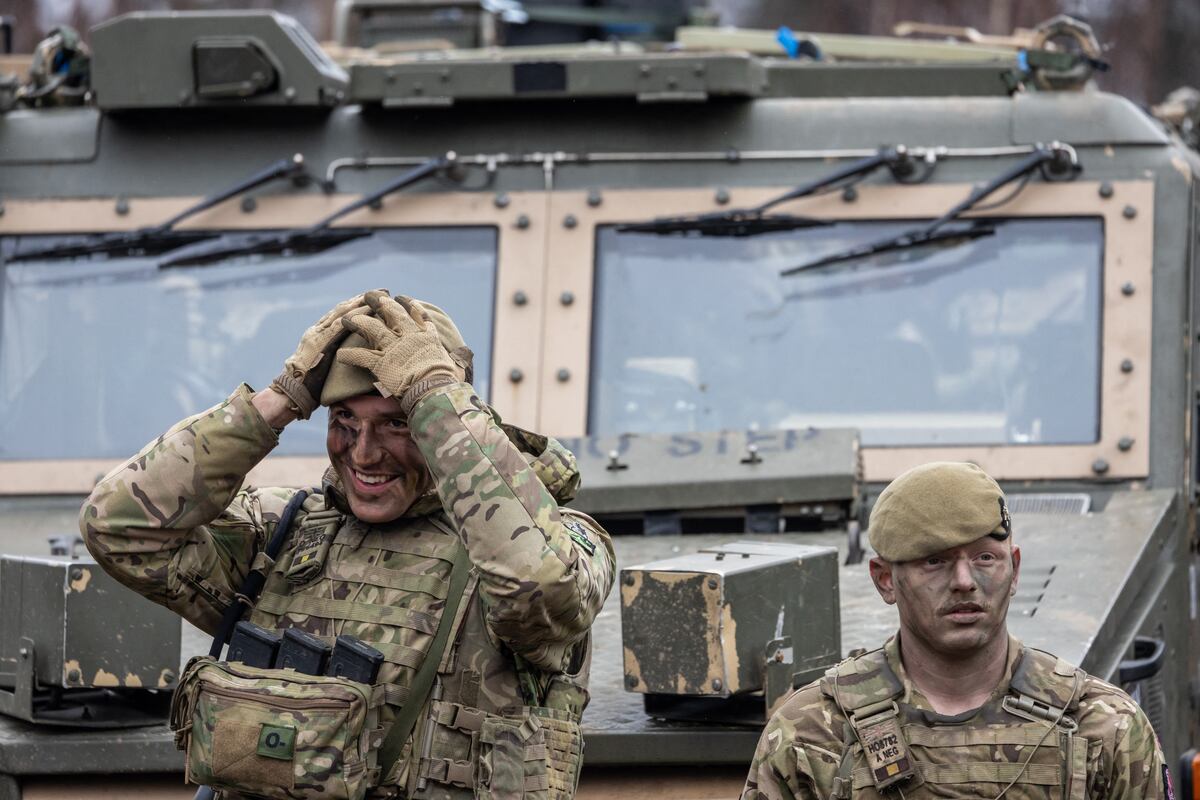
LONDON — U.K. lawmakers and former defense officials have urged Britain’s political parties to invest more in the military so the country can defend itself and contribute to international alliances.
Michael Fallon, defense secretary from 2014 to 2017, made the appeal in an April 2 letter co-signed by 24 current and former defense officials and published by the Council on Geostrategy think tank.
While the letter acknowledged the country has met NATO’s target of spending 2% of gross domestic product by 2024 — a pledge made by all alliance members in 2014 but not yet attained by some — it also stated that the U.K.’s current level of spending is not sufficient to respond to the “gravest threats” the countries has faced since the end of the Cold War.
According to NATO’s latest report on allies’ defense expenditures, the U.K.’s defense spending in 2023 was 2.07% of its GDP, or around $65 billion, down from 2.14% in 2014.
Current and former British officials noted Russia’s invasion of Ukraine and the dangers the Kremlin posed to democracies through election interference, cyber attacks and assassinations, saying Russian President Vladimir Putin will not “relent” and may see Britain as an “absolute enemy.”
They also cited militants’ attacks on international shipping in the Red Sea, Iran’s and North Korea’s growing nuclear capabilities and China’s rearmament drive as well as the threat of a military conflict in Taiwan and in the South China Sea, which could spread throughout the Indo-Pacific region and potentially the whole world.
Together, these threats have put Britain’s energy supplies, subsea cables and international trade routes at “greater risk than at any time this century,” causing food and energy prices to rise, putting its borders in jeopardy, and increasing people trafficking, the letter said.
Because of the risk to Britain and its allies, all U.K. political parties should pledge to invest a minimum of 2.5% of GDP in defense over the long run, with the goal of reaching 3% by 2030, the letter stated.
Among the letter’s signatories are members of the parliamentary Defence Committee who clashed with Defence Secretary Grant Shapps last week over cuts to next year’s core defense spending.
British leaders have previously pegged a defense spending rate of 2.5% of GDP as the new objective. Prime Minister Rishi Sunak outlined a longer-term goal to raise defense spending to that level as part of the Integrated Review Refresh 2023, though the guidance is tied to the country’s economic situation.
Thibault Spirlet was the United Kingdom correspondent for Defense News. Thibault previously covered the Russia-Ukraine and Israel-Hamas wars at Business Insider. He also has experience reporting on the European Union and U.K. politics.
伦敦——英国议员和前国防官员敦促英国各政党加大对军事的投入,以便英国能够保卫自身并为国际联盟做出贡献。
2014 年至 2017 年担任国防部长的迈克尔·法伦在 4 月 2 日的一封信中提出了这一呼吁,该信由 24 位现任和前任国防官员联署,并由地缘战略委员会智库发表。
信中承认,英国已达到北约在 2024 年前将国内生产总值 (GDP) 的 2% 用于军事开支的目标——这是所有联盟成员国在 2014 年做出的承诺,但有些成员国尚未实现——但信中也指出,英国目前的军事开支水平不足以应对冷战结束以来各国面临的“最严重威胁”。
根据北约关于盟国国防开支的最新报告,英国 2023 年的国防开支占其 GDP 的 2.07%,约合 650 亿美元,低于 2014 年的 2.14%。
现任和前任英国官员指出,俄罗斯入侵乌克兰,克里姆林宫通过干预选举、网络攻击和暗杀对民主国家构成威胁,并表示俄罗斯总统弗拉基米尔·普京不会“让步”,可能会将英国视为“绝对敌人”。
他们还提到武装分子袭击红海国际航运、伊朗和朝鲜日益增长的核能力、中国的重新武装行动,以及台湾和南海发生军事冲突的威胁,这些冲突可能会蔓延到整个印太地区,甚至可能蔓延到全世界。
信中指出,这些威胁加在一起,使英国的能源供应、海底电缆和国际贸易路线面临“本世纪以来最大的风险”,导致食品和能源价格上涨,危及英国边境安全,并加剧人口贩运。
信中指出,鉴于英国及其盟友面临的风险,英国所有政党都应承诺长期将国内生产总值的至少 2.5% 用于国防,目标是到 2030 年达到 3%。
联署这封信的人士包括议会国防委员会的成员,他们上周曾与国防大臣格兰特·沙普斯就削减明年核心国防开支的问题发生冲突。
英国领导人此前已将国防开支占GDP的2.5%设定为新的目标。首相里希·苏纳克在2023年综合评估更新报告中概述了将国防开支提高到这一水平的长期目标,但该目标与英国的经济状况密切相关。
蒂博·斯皮尔莱特曾任《防务新闻》英国记者。此前,他曾在《商业内幕》报道过俄乌战争和以哈战争。此外,他还拥有报道欧盟和英国政治的经验。