The U.S. Coast Guard May Be Flying a Unique Stealthy Spy Plane美国海岸警卫队可能正在使用一种独特的隐形间谍飞机
The service's Manned Covert Surveillance Aircraft project has connections to decades of secretive work on "quiet aircraft."
新闻视频
By Joseph Trevithick
Updated Jul 5, 2020 7:09 PM EDT
When you think of U.S. military and stealth aircraft what probably springs to mind is the U.S. Air Force and planes such as the F-117 Nighthawk, F-22 Raptor, and B-2 Spirit. But low-observable technology isn’t limited just to cutting an aircraft’s radar signature and can involve other factors, such reducing aircraft’s infrared or visual profiles or cutting how much noise it makes in flight. As it turns out, the U.S. Coast Guard – which is technically a uniformed military service, despite not being part of the Department of Defense – has actually been a pretty serious operator of acoustically stealthy designs based on powered gliders, culminating in its most recent project, the Manned Covert Surveillance Aircraft (MCSA).
On July 30, 2013, Sikorsky Aviation completed the first MSCA prototype after years of delays and technical difficulties. The Department of Homeland Security’s (DHS) budget for the 2005 fiscal year had first spelled out this requirement for a “covert surveillance aircraft.”
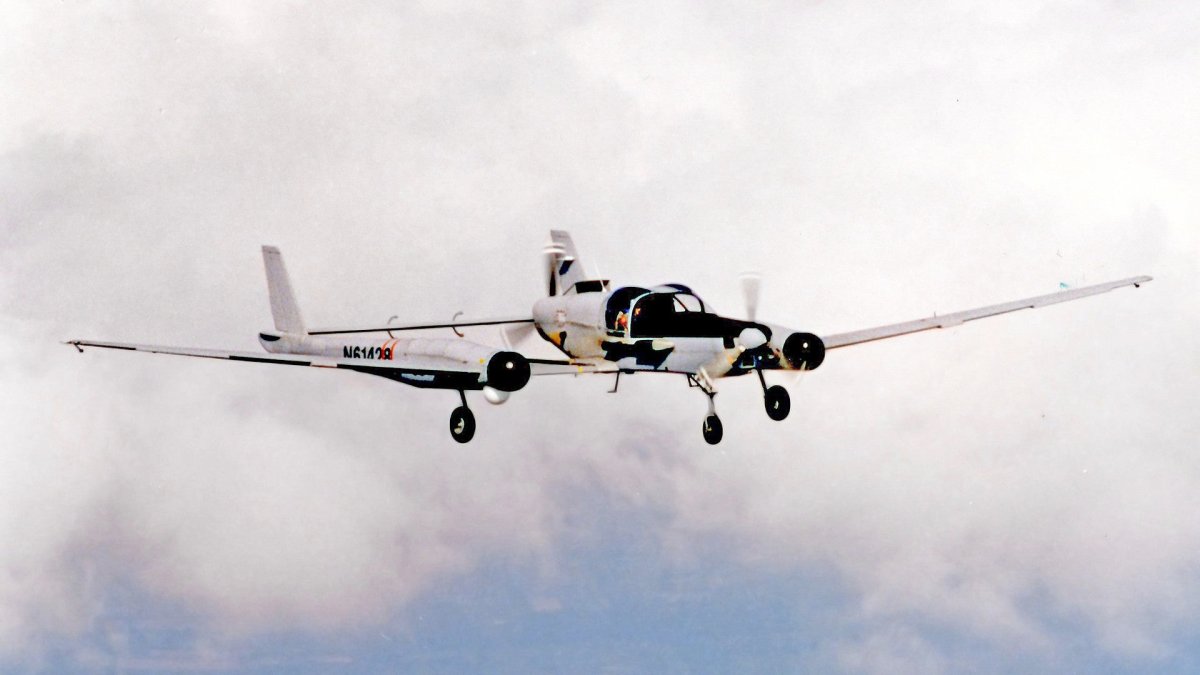
We know very little about this aircraft, how many there are or were, what sort of sensors or other equipment it might have, or the status of the program in general at the time of writing. DHS’ original $8 million budget line item, which called for a joint project between Coast Guard and Customs and Border Protection, described the MCSA as a “medium to short range, fixed wing surveillance aircraft” with “the capability to operate quietly and surreptitiously enough to enable the surveillance, detection, classification and identification of a maritime target without the target’s inhabitants becoming aware of the aircraft’s presence.” Subsequent plans called for at least three aircraft, with the first flying at least 1,000 hours annually from the Coast Guard station in Miami, Florida.
We do know that Sikorsky put everything on hold between October 2012 and March 2013 as it tried to determine why there were “significant discrepancies” in both wings on the first prototype – a clue that it has a traditional layout – and moved the project as a whole from a plant in Elmira, New York to one in Fort Worth, Texas.
An undated image of a Schweizer RU-38B, which may be the basis for the new MCSA., via airwar.ru
“Aeronautical analysis subsequently revealed that the non-conformed wings were safe to fly,” according to a historical note about the work of the U.S. Air Force’s 645th Aeronautical Systems Group, better known as Big Safari, for the 2013 fiscal year. “However, the ongoing technical issues and Sikorsky’s repeated failure to meet milestones led program managers to pursue options with Sikorsky, including termination,” the overview of Big Safari’s activities during the next fiscal year explained.
DHS, on behalf of the Coast Guard, had turned to the 645th to oversee the work. For decades, the Big Safari office has run numerous special aircraft projects, focusing primarily on spy planes, for American military and federal law enforcement customers and foreign allies. We obtained these historical entries via the Freedom of Information Act.
But despite this general lack of information, we actually have a pretty good idea of what Sikorsky’s design looks like. Since the Vietnam War, the U.S. military developed and fielded a number of these “quiet airplanes,” taking the inherent qualities of gliders and turning them into stealthy surveillance planes. The Coast Guard itself has flown some of these types, which seem offer many of the features outlined in the MCSA’s basic description.
An unmodified U.S. Navy SGS 2-32 glider., USN
Powered gliders over South Vietnam
The first requirement for such an aircraft came from U.S. Army commanders in South Vietnam, who wanted a way to snoop on Viet Cong insurgents and their North Vietnamese benefactors after dark. At the time, the service was limited to traditional fixed wing aircraft and helicopters for this job, both of which made sufficient noise as to alert enemy personnel on the ground that they were under surveillance. The subsequent classified Quiet Aircraft Program called for a plane that could persistently spy on targets below at night without giving away that it was there at all.
The Advanced Research Projects Agency (ARPA), now known as the Defense Advanced Research Projects Agency (DARPA), led the program, which involved personnel from both the U.S. Navy and Army. With a budget of $250,000, ARPA reached out to the Navy in order to quickly obtain a pair of unpowered Schweizer Aircraft Corporation SGS 2-32 gliders. These were situated at the U.S. Navy Test Pilot School to give students “experience with yaw-roll coupling,” according to a DARPA history .
An X-26 powered glider, which served as the basis for the QT-2PC., via the San Diego Air and Space Museum
ARPA then turned over the aircraft to Lockheed and its Skunk Works special projects office, who had already proposed a conversion of the powered version of the glider, known as the X-26, for the Army requirement. Skunk works is perhaps best known for developing larger spy planes like the U-2 Dragon Lady and the SR-71 Blackbird. The final product was known as the QT-2PC, with the last two letters standing for the project’s official nickname, Prize Crew.
“The major modifications included an acoustically insulated and muffled Volkswagen air-cooled engine, connected to a large, low-speed, high-efficiency propeller by a long line shaft, together with an up-to-date sensor suite,” according to the DARPA historical review. “Extensive use of radar-absorbing paints and other materials was also proposed to reduce radar signature.”
With the main focus being on reducing the aircraft’s noise, ARPA never followed through with the modifications to reduce the plane’s radar signature. The pair of QT-2PCs arrived in January 1968, just in time to be thrown into action in the aftermath of the Tet Offensive, tracking enemy movements at night using handheld “Starlight” image-enhancing scopes.
In April 1968, the Army sent the Prize Crew aircraft back to Lockheed for additional modifications based on this operational experience. “In particular, the tests had revealed the need for a quieter propeller, expanded view ports, and greater strength in the wing structure,” according to one annual Military Assistance Command, Vietnam (MACV) report .
The planes were back flying over South Vietnam two months later. They made such an impression that MACV issued its own contract for another 40 improved “quiet airplanes” or QT-3s, which it planned to distribute between the U.S. Air Force, Army, Navy, and Marine Corps throughout the country. These purchases never materialized. However, with the lessons it had learned from the Prize Crew program, Lockheed set to work on a revised design that, while still derived from the SGS 2-32, looked much more like a traditional aircraft.
A low quality diagram of the YO-3A’s noise reduction features., USAF
“The results led to design and construction of a new Lockheed surveillance aircraft, the YO-3A, which had new wing sections, new landing gear, a modified fuselage, and improved engine and drive system,” according to DARPA’s historical overview. “The sensor technology in the YO-3A was largely determined by lessons learned using the QT-2PC’s in Vietnam.”
The sensor upgrade was significant, replacing the hand-held optics with a turreted night vision camera, a precursor to the designs that are nearly ubiquitous today on surveillance aircraft, spy planes, and drones. YO-3As flew with three- and six-bladed propellers, with a slow-turning, variable pitch three-blade design being the most consistently quiet configuration, even during landing and takeoff, according to U.S. Air Force tests . On top of that, the planes had other noise reduction features, including a long exhaust system that cooled the gasses and then passed them through a muffler in the tail, as well as various other “acoustic absorption treatments.”
via Western Museum Of Flight
The company finished the design for these aircraft, also known as the “Quiet Star” or “Q/Star,” in 1969 and had the first prototypes ready for operations in Southeast Asia by the next year. The original Prize Crew powered gliders ultimately went back to the Navy Test Pilot School to resume their previous training role. Lockheed built a total of 11 YO-3As, all of which went to the Army. The service only lost one, but in an accident rather than to the enemy. With a cruising speed of just 80 miles per hour, the aircraft continued to gather valuable intelligence at night in South Vietnam until the United States formally ended its participation in the conflict in 1973.
One of the YO-3As NASA subsequently obtained for search purposes., NASA
Coast Guard takes the lead on “quiet aircraft”
After the end of the Vietnam War, the Army steadily retired the YO-3As, turning them over to agencies as varied as NASA, the Federal Bureau of Investigation (FBI), and the Louisiana Department of Fish and Game for research and law enforcement purposes. Still, the service never fully abandoned the idea and revived the concept in the 1980s as part of a new airborne surveillance program nicknamed Grisly Hunter.
This project was focused on developing a discreet aircraft to carry an improved, turreted electro-optical sensor system. The Army tested the proposed system on a variety of different planes, including twin-engine CASA 212 and four-engine De Havilland Canada DHC-7 light cargo aircraft, as well as the mysterious UV-23A and at least one test involving a Short C-23C Sherpa. In addition, they mounted the camera on yet another powered glider, the Schweizer 2-37A, designating the resulting aircraft the RG-8A. One of the prototypes crashed during tests in Arizona in 1986.
The Army ultimately chose DHC-7s with civilian-style paint jobs for what evolved into the Airborne Reconnaissance Low program, losing interest in the much stealthier RG-8A. Secretive activities in Latin America, especially American support to the government of El Salvador and Contra rebels in Nicaragua, appear to have been major drivers of the Grisly Hunter program, so there are reports that the Central Intelligence Agency subsequently operated some RG-8As or similarly modified 2-37 aircraft on covert operations. There are also reports that, as with the YO-3A, similar aircraft flew with agencies under the Department of Justice, possibly the FBI or DEA.
A low quality scan of the C-23C test aircraft used during the Airborne Reconnaissance Low program., US Army via FOIA
Sensors turrets underneath the C-23C test plane., US Army via FOIA
But this is also where the Coast Guard comes into the picture and things start sounding very familiar. With the War on Drugs in full swing, the service had the job of trying to intercept smugglers using small speed boats, popularly known as “go-fasts,” and light aircraft, generally at night. “They were transferred from the Air Force which developed the RG-8 after the Army, which originated the project, decided not to continue the aircraft’s development,” according to the Coast Guard’s own official history of the program. It “first took notice of the aircraft during a counter-narcotics program sponsored by … ‘Big Safari.’”
In 1988, the two “Condors” began flying missions from Coast Guard Air Station Miami, with planned sorties equivalent to 2,500 flights hours per year. With a cruise speed of approximately 115 miles per hour, each RG-8A could keep aloft for 8 hours while still covering a 500 mile range. After four years of operation, they had aided in saving 10 lives, helped seize almost 8,600 pounds of cocaine and approximately 19,000 pounds of marijuana, and steered other personnel to 21 smuggling vessels, leading to the conviction of 33 individuals for drug-related crimes. By that time, the aircraft were also flying off the coast New York State. The Coast Guard even put them to work spotting illegal fishing and oil dumping activities.
The Coast Guard was pleased with the planes, but wanted to expand their capabilities. The single-engine 2-37A was sensitive to the weather, unable to take-off in high winds and could be dangerous to ditch at sea if the motor gave out. The latter issue was a major concern, since the motors in the two planes had failed a number of times, though the pilots in each case had been able to make it back safely to base. An enlarged, more powerful design would also mean more range and greater payload capacity for improved or additional sensors.
One of the Coast Guard’s RG-8A Condors., RuthAS via Wikimedia
In the early 1990s, Congress approved plans for a $450,000 program to convert the existing RG-8As into new, twin-engine aircraft, as well as build a third from spare parts. Schweizer would perform the work at its Elmira, New York facility. Unfortunately, the Air Force decided it was no longer interested in supporting the project and there appears to have been a falling out between the service and the Coast Guard over the entire affair. This is particularly apparent in a passive-aggressive message regarding the new plane’s official nomenclature.
For unknown reasons, the Coast Guard had already begun using the designation RU-38A and the nickname Twin Condor for the revised design, which featured a twin-boom tail and a pusher-puller engine configuration reminiscent of the Cessna O-2A observation plane. The Air Force, which is in charge of approving all new aircraft and missile designations, was incensed that the service had been using these without its consent.
The improved RU-38A Twin Condor, USCG
On top of that, RU-38A moniker was wildly out of sequence with other utility aircraft in the “U” series. Though they ultimately approved the RU-38A designation, Air Force officials made the relatively petty decision not to make the Twin Condor name official and said they were putting the Coast Guard effectively “on notice” over the incident.
“Our records … indicate that the next ‘U’ designator available for assignment is 28 vice the request 38,” Air Force Major General John Handy, then head of the service’s Directorate of Programs and Evaluation, wrote in a 1995 memorandum. “However, the costs and manpower associated with changing the documentation to reflect a different number outweigh the benefits in this case. Unauthorized use of the RU-38A designator will be included on the metric prescribed by [Air Force Policy Directive] 16-4 for tracking compliance with … designator policy since the designator was used by the Coast Guard prior to approval.”
Despite this admonishment and without Air Force support, the Coast Guard pushed ahead with the conversion program. Schweizer ultimately only converted one of the RG-8As, with the other crashing in December 1995. It did also build the additional RU-38A from spares as planned, finish the program completely in 1997. The new aircraft had an AN/APN-215 weather radar in one of their tail booms, as well as a sensor turret with both day- and infrared cameras. Capable of longer flights, there was room for an additional crew member to help with increased pilot fatigue, too.
Unfortunately, though we don’t know why, the Coast Guard decided in 2000 that the RU-38A did not meet the mission requirements. The fate of both planes is unclear, but it is entirely possible that they served as the basis for the new MCSAs. In 2004, none other than Sikorsky bought Schweizer and its Elmira, New York site. This is undoubtedly the same location in Elmira where it designed and built the MCSA prototype before moving that program to Texas in 2012. Schweizer had never given up the quiet aircraft concept, either, having delivered modified 2-37Bs to the Colombian and Mexican Air Forces, in the late 1990s. These were single-engine planes visually similar to the RG-8A, which the Colombians dubbed “ Vampiros ,” or vampires.
One of the Mexican Air Force’s modified 2-37B surveillance aircraft., Zahpo75 via Wikimedia
The company did design a further improved “ RU-38B ” aircraft, as well, reportedly delivering two the U.S. Department of Justice between 2004 and 2005. This new variant had two Rolls Royce Allison 250-B17F turboprops, which greatly improved the aircraft’s overall performance. The aircraft had a modular payload bay, able to accept palletized sensor packages weighing up to 800 pounds. According to the manufacturer, the B model could quietly cruise over a target area on just one propeller running at an especially low 1000 revolutions per minute.
The final MCSA design may have leveraged some or all of these developments, or simply used the basic concept as a jumping off point. There have been significant advancements in lightweight composite airframes, efficient multi-blade propellers, and small engines since the Coast Guard and Schweizer first conceived of the Twin Condor.
All in all, it seems safe to say that the Coast Guard’s MCSA was or is related in some way to these earlier designs. If you have any additional information, or pictures of the prototype or prototypes, please feel free to let us know in the comments or an Email.
Contact the author: joe@thedrive.com
Comments couldn’t be loaded. Please refresh the page.
作者:约瑟夫·特雷维西克
更新于美国东部时间2020年7月5日晚上7:09
提到美国军方和隐形飞机,人们首先想到的可能是美国空军以及F-117“夜鹰”、F-22“猛禽”和B-2“幽灵”等机型。但低可探测性技术并非仅限于降低飞机的雷达反射截面积,它还涉及其他因素,例如降低飞机的红外或可见光特征,或者减少飞行噪音。事实上,美国海岸警卫队——尽管不隶属于国防部,但严格来说也是一个制服部队——一直在积极运用基于动力滑翔机的声学隐形设计,其最新项目便是载人隐蔽监视飞机(MCSA)。
2013年7月30日,西科斯基航空公司在经历了多年的延误和技术难题后,终于完成了第一架MSCA原型机。美国国土安全部(DHS)2005财年的预算中首次明确提出了对“隐蔽监视飞机”的需求。
截至撰写本文时,我们对这种飞机知之甚少,包括其数量、可能配备的传感器或其他设备,以及该项目的总体进展情况。国土安全部最初800万美元的预算项目要求海岸警卫队和海关与边境保护局联合开展该项目,其中将MCSA描述为“中短程固定翼监视飞机”,具备“足够安静和隐蔽的运行能力,能够在不被目标人员察觉的情况下,对海上目标进行监视、探测、分类和识别”。后续计划至少需要三架飞机,第一架每年至少从佛罗里达州迈阿密的海岸警卫队基地飞行1000小时。
我们知道,西科斯基公司在 2012 年 10 月至 2013 年 3 月期间暂停了所有工作,试图确定为什么第一架原型机的两个机翼存在“重大差异”(这表明它采用了传统的布局),并将整个项目从纽约州埃尔迈拉的一家工厂转移到了德克萨斯州沃思堡的一家工厂。
一张未注明日期的施韦策RU-38B照片,该机可能是新型MCSA的基础机型。(图片来自airwar.ru)
根据美国空军第645航空系统大队(俗称“大狩猎行动”)2013财年的历史记录,“航空分析随后表明,不符合标准的机翼可以安全飞行”。“然而,持续存在的技术问题以及西科斯基公司屡次未能按时完成里程碑,导致项目经理不得不与西科斯基公司协商各种方案,包括终止合作,”下一财年“大狩猎行动”活动概述中解释道。
国土安全部代表海岸警卫队委托第645侦察中队负责这项工作。几十年来,这个名为“大狩猎”(Big Safari)的办公室为美国军方、联邦执法部门及其外国盟友执行了众多特种飞机项目,主要集中在间谍飞机方面。我们通过《信息自由法》获得了这些历史记录。
尽管信息总体匮乏,但我们对西科斯基的设计其实已经有了相当清晰的了解。自越南战争以来,美军研发并部署了多架此类“静音飞机”,它们利用滑翔机的固有特性,将其改造为隐蔽侦察机。海岸警卫队也曾使用过其中一些机型,这些飞机似乎具备MCSA基本描述中概述的许多特征。
一架未经改装的美国海军SGS 2-32滑翔机。
动力滑翔机飞越南越
这种飞机的最初需求来自驻南越的美军指挥官,他们希望在夜间监视越共游击队及其北越支持者的动向。当时,美军只能使用传统的固定翼飞机和直升机执行这项任务,而这两种飞机都会发出足够的噪音,足以让地面上的敌方人员察觉到自己正被监视。随后启动的“静音飞机计划”要求研制一种能够在夜间持续监视下方目标而不暴露自身位置的飞机。
高级研究计划局(ARPA,现更名为国防高级研究计划局DARPA)主导了该项目,参与者包括美国海军和陆军的人员。ARPA拥有25万美元的预算,并联系海军以尽快获得两架施韦策飞机公司(Schweizer Aircraft Corporation)生产的SGS 2-32型无动力滑翔机。根据DARPA的历史记载,这些滑翔机被安置在美国海军试飞员学校,用于让学员“体验偏航-滚转耦合”。
一架X-26动力滑翔机,它是QT-2PC的基础机型。(图片来自圣地亚哥航空航天博物馆)
ARPA随后将这架飞机移交给洛克希德公司及其臭鼬工厂特别项目办公室。臭鼬工厂此前已提出将动力滑翔机版本(即X-26)改装以满足陆军的需求。臭鼬工厂最著名的项目或许是开发了U-2“龙夫人”和SR-71“黑鸟”等大型间谍飞机。最终产品被命名为QT-2PC,其中最后两个字母代表该项目的官方昵称“奖品小组”(Prize Crew)。
根据DARPA的历史回顾,“主要改进包括采用一台经过隔音和消音处理的大众汽车风冷发动机,通过长轴连接到一个大型低速高效螺旋桨,以及一套先进的传感器套件。此外,还提议广泛使用雷达吸波涂料和其他材料来降低雷达反射截面积。”
由于主要目标是降低飞机噪音,ARPA并未继续推进降低飞机雷达反射截面积的改进工作。这两架QT-2PC于1968年1月交付,恰好赶上春节攻势结束后投入使用,利用手持式“星光”图像增强望远镜在夜间追踪敌军动向。
1968年4月,陆军将“战利品机组”飞机送回洛克希德公司,根据此次作战经验进行进一步改进。据驻越美军司令部(MACV)的一份年度报告显示,“特别是,测试表明需要更安静的螺旋桨、更大的观察窗和更坚固的机翼结构。”
两个月后,这些飞机再次飞越南越上空。它们的表现令人印象深刻,以至于驻越美军司令部(MACV)另行签订了一份合同,订购了40架改进型“静音飞机”(QT-3),计划将其分配给美国空军、陆军、海军和海军陆战队在全国各地使用。然而,这些采购最终未能实现。不过,吸取了“奖赏机组”计划的经验教训后,洛克希德公司着手研发一种改进型飞机。虽然该机仍基于SGS 2-32,但外观更接近传统飞机。
YO-3A降噪功能的低质量示意图,美国空军
根据DARPA的历史概述,“研究成果促成了洛克希德公司新型侦察机YO-3A的设计和建造,该机采用了新的机翼翼段、新的起落架、改进的机身以及改进的发动机和驱动系统。YO-3A的传感器技术很大程度上得益于在越南使用QT-2PC的经验教训。”
传感器升级意义重大,它用炮塔式夜视摄像机取代了手持式光学设备,这种设计是如今几乎普及到侦察机、间谍飞机和无人机上的夜视摄像机的雏形。YO-3A 飞机配备三叶和六叶螺旋桨,根据美国空军的测试,低转速、变距的三叶螺旋桨设计最为安静,即使在起降过程中也是如此。此外,这些飞机还采用了其他降噪措施,包括一套长长的排气系统,该系统可以冷却废气,然后将其导入尾部的消音器,以及其他各种“吸声处理”。
通过西部飞行博物馆
该公司于1969年完成了这些飞机的设计,这些飞机也被称为“静星”(Quiet Star)或“Q/Star”,并在次年完成了首批原型机的制造,投入东南亚的作战行动。最初的“奖赏小组”(Prize Crew)动力滑翔机最终返回海军试飞员学校,继续执行之前的训练任务。洛克希德公司共生产了11架YO-3A,全部交付给陆军。陆军仅损失了一架,但并非被敌方击落,而是事故造成的。该机巡航速度仅为每小时80英里,在南越持续进行夜间情报搜集工作,直至1973年美国正式结束在南越的军事行动。
美国宇航局随后获得了其中一架YO-3A飞机用于搜寻。
美国海岸警卫队在“静音飞机”项目上发挥主导作用
越战结束后,陆军逐步退役了YO-3A侦察机,并将它们移交给包括美国国家航空航天局(NASA)、联邦调查局(FBI)和路易斯安那州渔猎部在内的各个机构,用于研究和执法用途。尽管如此,陆军从未完全放弃YO-3A的构想,并在20世纪80年代将其重新启用,作为一项名为“恐怖猎手”(Grisly Hunter)的新型空中监视计划的一部分。
该项目旨在研发一种隐蔽式飞机,用于搭载改进型炮塔式光电传感器系统。陆军在多种飞机上测试了该系统,包括双引擎的CASA 212和四引擎的德哈维兰加拿大DHC-7轻型货机,以及神秘的UV-23A,并至少使用肖特C-23C“夏尔巴”运输机进行了一次测试。此外,他们还将该摄像机安装在另一架动力滑翔机——施韦策2-37A上,并将由此产生的飞机命名为RG-8A。其中一架原型机于1986年在亚利桑那州的测试中坠毁。
陆军最终选择了涂装成民用风格的DHC-7飞机,用于后来发展成为低空空中侦察计划的项目,而对隐蔽性更强的RG-8A失去了兴趣。在拉丁美洲的秘密活动,特别是美国对萨尔瓦多政府和尼加拉瓜反政府武装的支持,似乎是“恐怖猎手”计划的主要推动因素。因此,有报道称,中央情报局随后使用了一些RG-8A或类似改装的2-37飞机执行秘密行动。另有报道称,与YO-3A一样,类似的飞机也曾服役于司法部下属机构,可能是联邦调查局或缉毒局。
这是一张低质量的C-23C测试飞机扫描图,该飞机曾用于低空空中侦察计划。图片来自美国陆军,依据《信息自由法》提供。
C-23C 测试飞机下方的传感器炮塔。(美国陆军通过《信息自由法》提供)
但正是在这里,海岸警卫队介入了,事情开始变得似曾相识。随着禁毒战争的全面展开,海岸警卫队的任务是拦截使用小型快艇(俗称“高速艇”)和轻型飞机的走私者,通常是在夜间行动。根据海岸警卫队官方的项目历史记载,“RG-8飞机是由空军研发的,而陆军作为该项目的发起者,决定不再继续研发,之后这些飞机就被移交给了空军。”海岸警卫队“最初是在‘大型狩猎行动’(Big Safari)赞助的一项禁毒行动中注意到这种飞机的。”
1988年,两架“秃鹰”飞机开始从迈阿密海岸警卫队航空站执行任务,计划每年飞行2500小时。每架RG-8A的巡航速度约为每小时115英里,可以连续飞行8小时,航程达500英里。服役四年后,它们协助挽救了10条生命,缴获了近8600磅可卡因和约19000磅大麻,并引导其他人员找到21艘走私船只,最终导致33人因涉毒犯罪被定罪。当时,这些飞机也开始在纽约州沿海飞行。海岸警卫队甚至安排它们执行侦察非法捕鱼和倾倒石油活动的任务。
海岸警卫队对这些飞机很满意,但希望提升其性能。单引擎的2-37A型飞机对天气非常敏感,强风天气下无法起飞,而且如果发动机发生故障,海上迫降会非常危险。后一个问题尤其令人担忧,因为这两架飞机的发动机都曾多次发生故障,尽管每次飞行员都安全返回了基地。更大、更强劲的设计也意味着更远的航程和更大的有效载荷能力,从而可以搭载改进型或额外的传感器。
美国海岸警卫队的一架RG-8A“秃鹰”直升机。(图片来自Wikimedia,RuthAS提供)
上世纪90年代初,国会批准了一项耗资45万美元的计划,旨在将现有的RG-8A飞机改装成新型双引擎飞机,并利用备件组装第三架。施韦泽公司将在其位于纽约州埃尔迈拉的工厂进行改装工作。然而,不幸的是,空军决定不再支持该项目,而且空军和海岸警卫队之间似乎也因此事产生了分歧。这一点在关于新飞机正式命名的一条充满敌意的信息中尤为明显。
出于不明原因,海岸警卫队已经开始使用RU-38A的编号和“双秃鹰”的昵称来指代改进型设计。该设计采用双尾撑尾翼和类似塞斯纳O-2A侦察机的推拉式发动机布局。负责审批所有新型飞机和导弹编号的空军对海岸警卫队未经其同意擅自使用这些名称感到愤怒。
改进型 RU-38A 双秃鹰,美国海岸警卫队
此外,RU-38A 的命名与其他“U”系列通用飞机的命名顺序严重不符。尽管空军最终批准了 RU-38A 的命名,但他们却做出了一个相对琐碎的决定,即不将“双秃鹰”(Twin Condor)作为正式名称,并表示他们已就此事向海岸警卫队发出“警告”。
“我们的记录……表明,下一个可供分配的‘U’编号是28,而不是申请的38,”时任空军项目与评估局局长的约翰·汉迪少将在1995年的一份备忘录中写道。“然而,在这种情况下,更改文件以反映不同编号所涉及的成本和人力超过了收益。由于海岸警卫队在获得批准之前使用了RU-38A编号,因此未经授权使用RU-38A编号将被纳入[空军政策指令]16-4规定的指标中,用于跟踪……编号政策的遵守情况。”
尽管受到警告且未获得空军支持,海岸警卫队仍推进了改装计划。施韦泽公司最终只改装了一架RG-8A,另一架于1995年12月坠毁。该公司还按计划利用备件组装了额外的RU-38A,并于1997年彻底完成了该项目。新飞机在尾梁上安装了AN/APN-215气象雷达,以及一个配备昼间和红外摄像机的传感器转塔。由于能够执行更长时间的飞行任务,该机还可容纳一名额外的机组人员,以减轻飞行员的疲劳。
遗憾的是,尽管我们不知道具体原因,但海岸警卫队在2000年认定RU-38A不符合任务要求。这两架飞机的最终命运尚不明朗,但它们很可能成为了新型MCSA的基础。2004年,西科斯基公司收购了施韦泽公司及其位于纽约州埃尔迈拉的工厂。毫无疑问,西科斯基公司正是在埃尔迈拉的同一地点设计和制造了MCSA原型机,之后才于2012年将该项目转移到德克萨斯州。施韦泽公司也从未放弃过静音飞机的研发理念,早在20世纪90年代末,他们就向哥伦比亚和墨西哥空军交付了改进型的2-37B型飞机。这些单引擎飞机在外观上与RG-8A非常相似,哥伦比亚人将其戏称为“Vampiros”(吸血鬼)。
墨西哥空军改装的2-37B侦察机之一。(图片来自Wikimedia,Zahpo75提供)
该公司还设计了一款进一步改进的“RU-38B”飞机,据报道在2004年至2005年间向美国司法部交付了两架。这款新型号配备了两台罗尔斯·罗伊斯艾利逊250-B17F涡轮螺旋桨发动机,极大地提升了飞机的整体性能。该机拥有模块化有效载荷舱,可搭载重达800磅的托盘式传感器组件。据制造商称,B型飞机仅需一个螺旋桨以每分钟1000转的超低转速即可安静地巡航于目标区域上空。
最终的MCSA设计可能借鉴了部分或全部上述发展成果,也可能只是以基本概念为起点。自海岸警卫队和施韦泽最初构思“双秃鹰”飞机以来,轻型复合材料机身、高效多叶螺旋桨和小尺寸发动机都取得了显著进步。
总而言之,可以肯定地说,海岸警卫队的MCSA在某种程度上与这些早期设计有关。如果您有任何其他信息,或者有原型机的照片,请随时在评论区或通过电子邮件告知我们。
联系作者:joe@thedrive.com
评论加载失败,请刷新页面。