Russian lawmakers vote to revoke ratification of nuclear test ban俄罗斯议员投票撤销对核试验禁令的批准
The bill will now go to the upper house, the Federation Council.
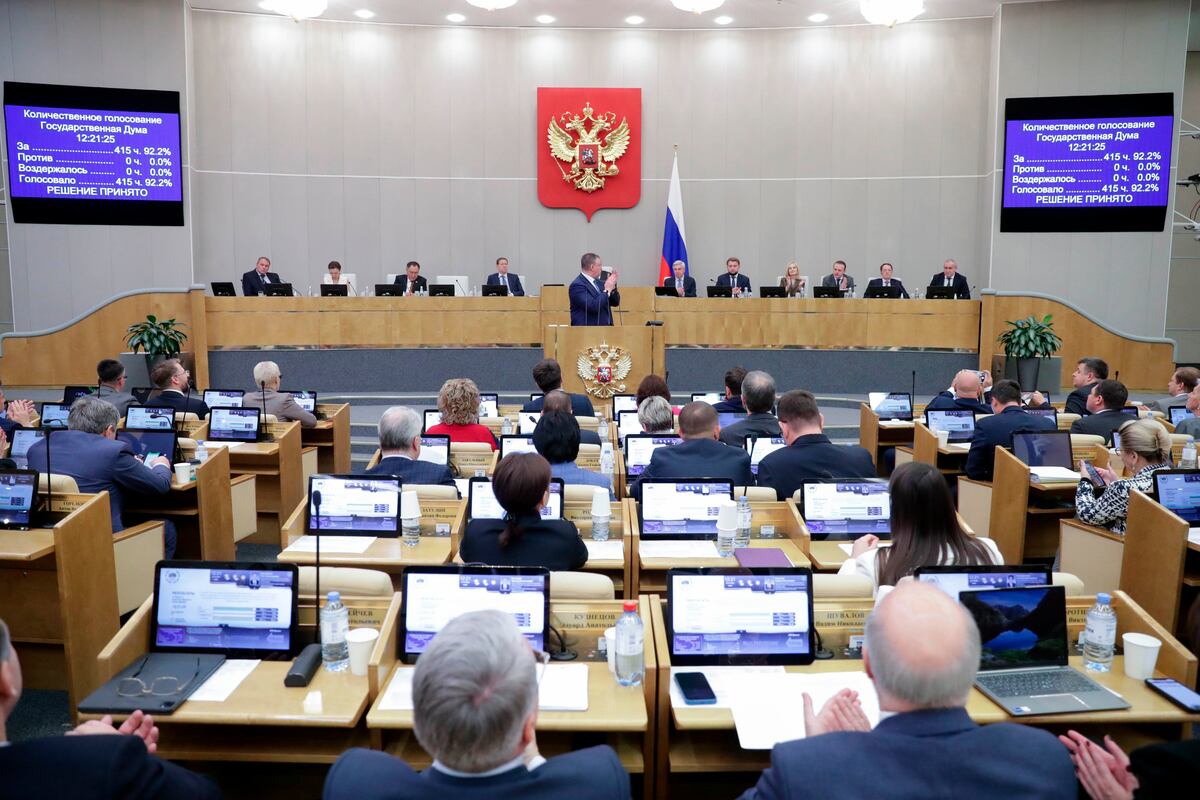
MOSCOW — The lower house of Russia’s parliament on Wednesday gave its final approval to a bill revoking the ratification of a global nuclear test ban treaty , a move Moscow described as putting it on par with the United States.
The State Duma lawmakers voted unanimously to revoke the ratification of the Comprehensive Nuclear-Test-Ban Treaty in the third and final reading on Wednesday. The bill will now go to the upper house, the Federation Council, which will consider it next week. Federation Council lawmakers have already said they will support the bill.
The legislation was introduced to parliament following a statement from Russian President Vladimir Putin, who warned earlier this month that Moscow could revoke its 2000 decision to ratify the treaty to “mirror” the stand taken by the United States, which has signed but not ratified the nuclear test ban.
The treaty, adopted in 1996, bans all nuclear explosions anywhere in the world, although it has never fully entered into force. In addition to the U.S., it is yet to be ratified by China, India, Pakistan, North Korea, Israel, Iran and Egypt.
There are widespread concerns that Russia could resume nuclear tests to try to discourage the West from offering military support to Ukraine . Many Russian hawks have spoken in favor of a resumption.
Putin has said that while some experts have talked about the need to conduct nuclear tests, he hasn’t yet formed an opinion on the issue.
Deputy Foreign Minister Sergei Ryabkov said last week that Moscow will continue to respect the ban and will only resume nuclear tests if Washington does so first.
Even after de-ratifying the treaty, Russia will remain a signatory, which “means that they still agree to abide by the terms of the treaty,” so “it’s not clear that we’re looking at the immediate restart of nuclear testing,” said Patricia Lewis, research director for international security at Chatham House, a London-based think tank.
But Russia is indeed challenging “the whole legislation that they helped set up on in terms of arms control, in terms of nonproliferation, in terms of stability, strategic stability, regional stability,” Lewis said.
“From the bigger picture, what we’re seeing is an unraveling of the constraints and the checks and balances that we have in the system for controlling these horrific, inhumane weapons,” the analyst added.
莫斯科——俄罗斯议会下院周三最终批准了一项法案,撤销了对全球核试验禁令条约的批准。莫斯科称此举使其与美国处于同等地位。
国家杜马议员周三在三读表决中一致投票通过撤销对《全面禁止核试验条约》的批准。该法案现在将提交至联邦委员会,联邦委员会将于下周进行审议。联邦委员会议员已表示将支持该法案。
在俄罗斯总统弗拉基米尔·普京本月早些时候发表声明警告称,莫斯科可能会撤销其在 2000 年批准该条约的决定,以“效仿”美国采取的立场(美国已签署但尚未批准该核试验禁令),之后该立法被提交至议会。
该条约于1996年通过,禁止在世界任何地方进行任何核爆炸,但从未完全生效。除美国外,中国、印度、巴基斯坦、朝鲜、以色列、伊朗和埃及尚未批准该条约。
人们普遍担心俄罗斯可能会恢复核试验,以阻止西方向乌克兰提供军事支持。许多俄罗斯鹰派人士都表示支持恢复核试验。
普京表示,虽然一些专家谈到了进行核试验的必要性,但他尚未就此问题形成自己的看法。
俄罗斯外交部副部长谢尔盖·里亚布科夫上周表示,莫斯科将继续尊重禁令,只有在华盛顿首先恢复核试验的情况下才会恢复核试验。
伦敦智库查塔姆研究所国际安全研究主任帕特里夏·刘易斯表示,即使俄罗斯取消批准该条约,它仍将是缔约国,“这意味着他们仍然同意遵守该条约的条款”,因此“目前还不清楚我们是否会立即重启核试验”。
刘易斯说:“但俄罗斯确实在挑战他们帮助建立的整个法律体系,包括军备控制、防扩散、稳定、战略稳定和地区稳定等方面的法律。”
“从更宏观的角度来看,我们看到的是,我们现有的用于控制这些可怕的、不人道的武器的约束和制衡机制正在瓦解,”这位分析人士补充道。