Australia makes decision on Chinese firm’s lease of critical port澳大利亚就中国公司租赁关键港口一事作出决定
The U.S. is concerned that foreign control could be used to spy on its military forces.
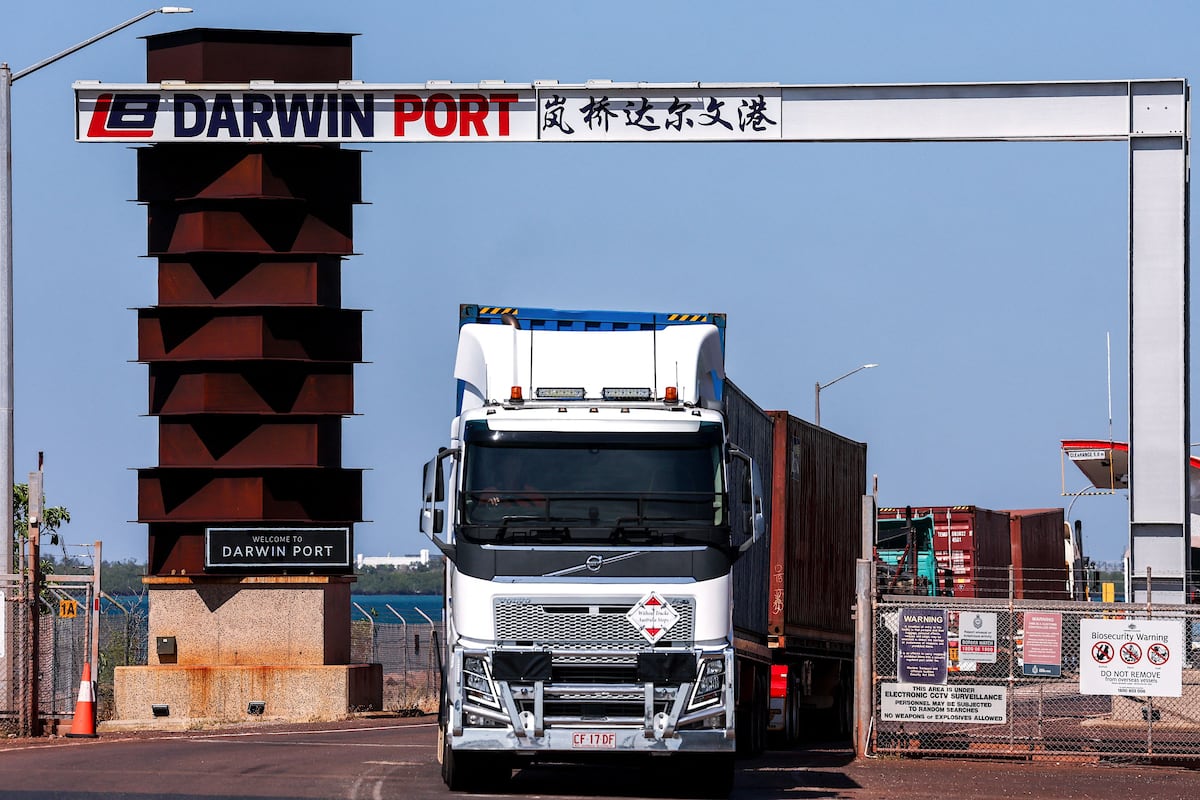
CANBERRA, Australia — The Australian government announced Friday it has decided not to cancel a Chinese company’s 99-year lease on the strategically important Darwin Port, despite U.S. concerns that the foreign control could be used to spy on its military forces.
The Department of Prime Minister and Cabinet said it decided after an investigation of the 8-year-old lease that current monitoring and regulation measures are sufficient to manage security risks for critical infrastructure, such as the port in the northern garrison city of Darwin.
“Australians can have confidence that their safety will not be compromised while ensuring that Australia remains a competitive destination for foreign investment,” it said in a statement.
Landbridge Industry Australia, a subsidiary of Rizhao-based Shandong Landbridge Group, signed the lease with the debt-laden Northern Territory government in 2015. That was three years after U.S. Marines began annual rotations through Darwin as part of the U.S. pivot to Asia .
The United States has raised concerns that Chinese port access in Darwin would enhance intelligence gathering on nearby U.S. and Australian military forces.
Landbridge said in a statement it hopes the decision will end security concerns.
Prime Minister Anthony Albanese’s center-left Labor Party was in opposition at the time, and he had argued the lease should never have been allowed due to security concerns.
After Labor won elections last year, Albanese directed his department to investigate whether the lease should be changed or canceled.
The Australian decision comes before Albanese flies to Washington, D.C., next week to meet President Joe Biden. Albanese also plans to soon become the first Australian prime minister to visit China in seven years.
Neil James, executive director of the Australia Defence Association think tank, said regulation cannot solve the security risk posed by Chinese control of the port.
“Our problem is going to be if there’s ever any increased strategic tension with China and if we have to do something, even if it’s regulatory, it’s going to be escalatory and make the tension worse,” James said. “The only way to avoid this problem is not to have the lease in the first place, and they should bite the bullet and get rid of it.”
Landbridge far outbid 32 other potential private investors with a AU$506 million (U.S. $320 million) offer for the aging infrastructure, the provincial government based in Darwin said at the time.
A month after the deal was announced, then-U.S. President Barack Obama chided then-Prime Minister Malcolm Turnbull during a meeting in the Philippines over a lack of consultation with the United States. Obama told Turnbull that Washington should have been given a “heads up about these sorts of things,” the Australian Financial Review newspaper reported, citing unidentified sources.
“Let us know next time,” Obama was quoted as saying.
Turnbull told reporters the port’s privatization had not been a secret.
“The fact that Chinese investors were interested in investing in infrastructure in Australia is also hardly a secret,” Turnbull said. “And under our legislation, the Department of Defence or this federal government can step in and take control of infrastructure like this in circumstances where it’s deemed necessary for purposes of defense.”
The Defence Department and the Australian Security Intelligence Organisation, the main domestic spy agency, have since publicly supported the contract, which was signed a year after Chinese President Xi Jinping visited Australia in a highwater mark in bilateral relations.
Relations have plummeted since, although there have been signs of stabilization since the current Australian government’s election.
A parliamentary committee recommended in 2021 that the government at the time consider restoring Australian control of the port if the lease is contrary to the national interest. The government responded by holding a review that found no grounds for ending the lease.
But the federal regulator of foreign ownership, the Foreign Investment Review Board, gained new powers to block similar deals in the future. The board could not intervene in the Darwin Port deal because the asset was owned by the government rather than a private entity, and was leased rather than sold.
澳大利亚堪培拉——澳大利亚政府周五宣布,尽管美国担心外国控制权可能被用来监视其军队,但澳大利亚政府已决定不取消一家中国公司对具有重要战略意义的达尔文港的99年租赁权。
总理和内阁部表示,经过对这份已有 8 年历史的租赁协议的调查,他们认为目前的监控和监管措施足以管理关键基础设施(例如北部驻军城市达尔文的港口)的安全风险。
声明中表示:“澳大利亚人可以放心,他们的安全不会受到损害,同时澳大利亚仍将保持对外国投资的竞争力。”
总部位于日照的山东陆桥集团旗下子公司陆桥工业澳大利亚公司于 2015 年与负债累累的北领地政府签署了租赁协议。三年前,作为美国重返亚洲战略的一部分,美国海军陆战队开始每年轮换驻扎在达尔文。
美国方面担忧,中国在达尔文港的通行权将加强对附近美国和澳大利亚军队的情报收集。
陆桥公司在一份声明中表示,希望这一决定能够消除安全方面的担忧。
当时,总理安东尼·阿尔巴尼斯的中间偏左工党处于反对党地位,他认为出于安全考虑,根本不应该允许这项租赁。
去年工党赢得大选后,阿尔巴尼斯指示其部门调查是否应该更改或取消租赁合同。
澳大利亚做出这一决定之前,阿尔巴尼斯将于下周飞往华盛顿特区会见美国总统乔·拜登。阿尔巴尼斯还计划很快成为七年来首位访问中国的澳大利亚总理。
澳大利亚国防协会智库执行董事尼尔·詹姆斯表示,监管无法解决中国控制该港口所带来的安全风险。
詹姆斯说:“我们的问题在于,如果与中国的战略紧张局势加剧,而我们不得不采取行动,即使是监管措施,也会使局势升级,加剧紧张局势。避免这个问题的唯一办法就是一开始就不要签订租赁协议,他们应该咬牙取消协议。”
当时,达尔文省政府表示,Landbridge 以 5.06 亿澳元(3.2 亿美元)的报价,远远击败了其他 32 位潜在的私人投资者,成功收购了这座老旧的基础设施。
协议宣布一个月后,时任美国总统奥巴马在菲律宾会见时任总理特恩布尔时,就菲律宾方面缺乏与美国的磋商问题对其提出批评。《澳大利亚金融评论报》援引匿名消息人士的话报道称,奥巴马告诉特恩布尔,华盛顿方面应该“事先了解这类事情”。
据报道,奥巴马说:“下次再告诉我们吧。”
特恩布尔告诉记者,港口私有化并不是秘密。
特恩布尔表示:“中国投资者有意投资澳大利亚基础设施建设,这几乎已是公开的秘密。根据我们的法律,在出于国防目的需要时,国防部或联邦政府可以介入并接管此类基础设施。”
此后,国防部和澳大利亚安全情报组织(国内主要间谍机构)公开表示支持这项合同。该合同是在中国国家主席习近平访问澳大利亚一年后签署的,当时正值中澳双边关系的高峰期。
此后两国关系急剧恶化,尽管自澳大利亚现任政府当选以来,两国关系出现了一些趋于稳定的迹象。
2021年,一个议会委员会建议当时的政府,如果租约违背国家利益,则应考虑恢复澳大利亚对该港口的控制权。政府随后进行了审查,结果发现没有理由终止租约。
但负责监管外国所有权的联邦监管机构——外国投资审查委员会——获得了新的权力,可以阻止未来类似的交易。由于达尔文港的资产归政府所有而非私人实体所有,且是租赁而非出售,因此该委员会无法干预达尔文港的交易。