Canada could use EU loans for next-gen warplane, submarine purchases加拿大可能利用欧盟贷款购买下一代战机和潜艇。
The admission into the bloc's loan scheme comes after Canadian leaders pushed to get closer to the European Union, as ties with Trump's USA have soured.
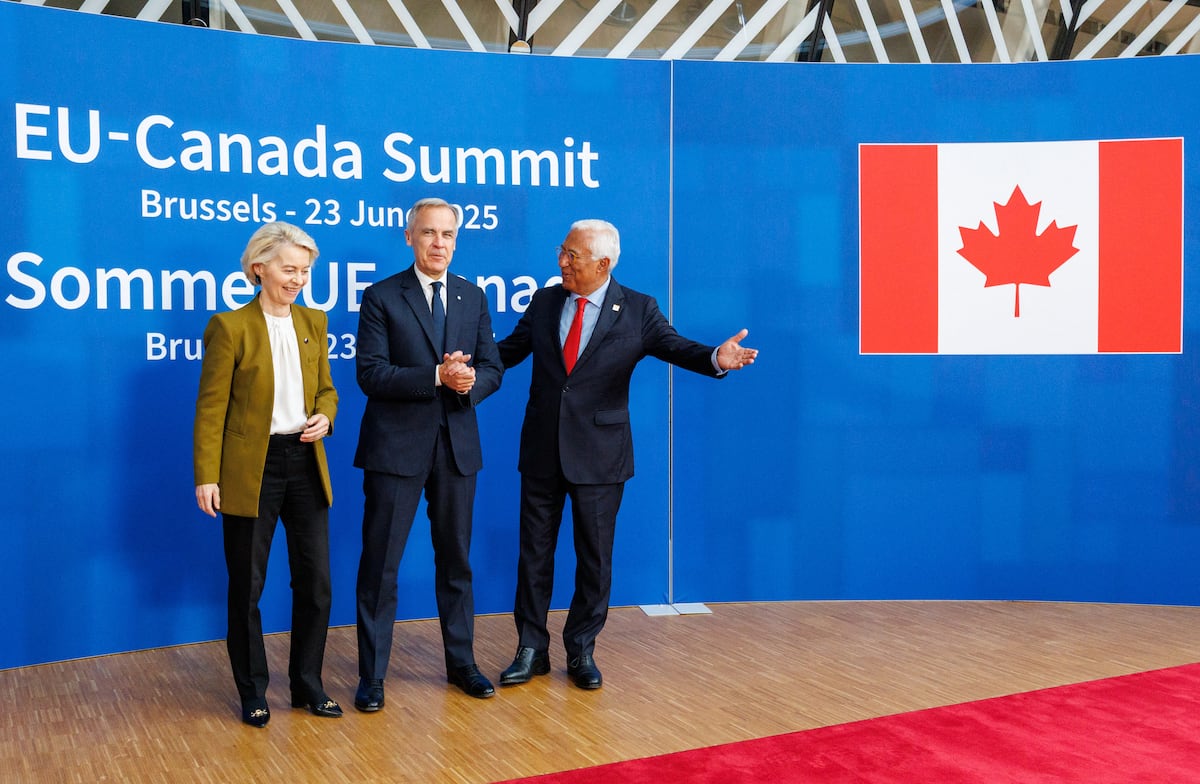
MILAN — Canada has become the first non-EU country to join the bloc’s flagship rearmament program, Security Action for Europe (SAFE), whose funds could support Ottawa’s fighter jet and submarine procurement.
Canadian Prime Minister Mark Carney announced this week that his government struck a deal to join the EU’s €150 billion initiative that provides loans for joint military procurement to boost readiness.
“Participation in SAFE will unlock billions of dollars in potential defense opportunities for Canadian businesses, attract new reliable suppliers for our Armed Forces, and open massive new opportunities for national manufacturers to build and export Canadian-made capabilities,” Carney said in a statement.
Canada is in a review stage of its next-generation fighter jet purchase. It has committed funds for 16 initial F-35s, but is assessing the possibility of a mixed fleet where the Swedish-made Gripen aircraft is also a top contender.
Many details regarding the North American country’s involvement in the SAFE program still need to be hashed out over the coming weeks. Ottawa and the EU are currently working on ratifying a bilateral agreement that will expedite the process and may exempt the country from certain rules.
Under SAFE regulations, no more than 35% of a project’s component costs can originate from outside the European Union, the European Economic Area or Ukraine to be eligible for funding. However, nations can buy their way in, through a financial contribution in exchange for more access.
It remains unclear how much Canada has agreed to provide and whether the entry-fee is a one-time payment or tied to procurement commitments. Issues around this clause were responsible for stalling negotiations for the United Kingdom to join the program last month.
In that case, parties were unable to agree on the size of London’s financial support. The EU’s proposal was that the amount could range between €4 billion and €6.5 billion, while the U.K. was ready to commit only around €200 million to €300 million.
As Ottawa has big-ticket procurement targets underway, Roger Hilton, a Canadian defense fellow at the Bratislava-based think tank GLOBSEC, said financing could extend to next-generation fighter aircraft, conventional submarines and maritime domain awareness systems.
He expects that the country is also likely to explore SAFE options for drones, anti-submarine warfare platforms and secure satellite communications.
SAFE-funded projects also require at least two partners, generally two member-states, or one member country and Ukraine or an EFTA/EEA nation, a pool that includes all EU nations plus Norway, Iceland, Liechtenstein and Switzerland.
According to Hilton, Canada is likely to team up with European partners based on specific considerations, including countries that are ideologically open to its involvement in the program and share overlapping strategic priorities such as Arctic security and North Atlantic defense.
“It is very probable that it will also gravitate towards states with the deepest aerospace and naval industries – notably France, Germany, Italy, Sweden, and Spain, as they have the industrial mass, design authority, and consortium models that SAFE favors,” Hilton said.
Elisabeth Gosselin-Malo was a Europe correspondent for Defense News. She covers a wide range of topics related to military procurement and international security, and specializes in reporting on the aviation sector. She is based in Milan, Italy.
米兰——加拿大已成为第一个加入欧盟旗舰重整军备计划“欧洲安全行动”(SAFE)的非欧盟国家,该计划的资金可以支持渥太华采购战斗机和潜艇。
加拿大总理马克·卡尼本周宣布,加拿大政府已达成协议,加入欧盟1500亿欧元的联合军事采购计划,该计划旨在为联合军事采购提供贷款,以提高战备水平。
卡尼在一份声明中表示:“参与SAFE项目将为加拿大企业释放数十亿美元的潜在国防机遇,吸引新的可靠供应商为我们的武装部队服务,并为国家制造商创造大量新机遇,以生产和出口加拿大制造的产品。”
加拿大正处于下一代战斗机采购的评估阶段。该国已承诺拨款购买首批16架F-35战斗机,但同时也在评估组建混合机队的可能性,瑞典制造的“鹰狮”战斗机也是主要竞争者之一。
关于这个北美国家参与SAFE计划的诸多细节仍需在未来几周内敲定。渥太华和欧盟目前正在努力批准一项双边协议,该协议将加快进程,并可能使该国免受某些规则的约束。
根据SAFE条例,项目组成部分成本中来自欧盟、欧洲经济区或乌克兰以外的部分不得超过35%,方可获得资助。然而,一些国家可以通过提供财政捐助来换取更大的资助份额。
目前尚不清楚加拿大同意提供多少资金,也不清楚这笔入会费是一次性支付还是与采购承诺挂钩。上个月,正是由于围绕这一条款的问题,导致英国加入该计划的谈判陷入僵局。
在这种情况下,各方未能就伦敦提供的财政支持规模达成一致。欧盟提议的金额在40亿欧元至65亿欧元之间,而英国只愿意承诺提供约2亿欧元至3亿欧元。
由于渥太华正在进行大宗采购目标,位于布拉迪斯拉发的智库 GLOBSEC 的加拿大国防研究员罗杰·希尔顿表示,融资可能会扩展到下一代战斗机、常规潜艇和海上态势感知系统。
他预计该国也可能探索无人机、反潜作战平台和安全卫星通信方面的安全选项。
SAFE 资助的项目也至少需要两个合作伙伴,通常是两个成员国,或者一个成员国和乌克兰或欧洲自由贸易联盟/欧洲经济区国家,该联盟包括所有欧盟国家以及挪威、冰岛、列支敦士登和瑞士。
希尔顿表示,加拿大可能会基于一些具体考虑与欧洲伙伴合作,包括那些在意识形态上对加拿大参与该计划持开放态度,并且与加拿大有着共同战略重点的国家,例如北极安全和北大西洋防御。
希尔顿表示:“它很可能也会向航空航天和海军工业实力最强的国家靠拢——特别是法国、德国、意大利、瑞典和西班牙,因为它们拥有SAFE所青睐的工业规模、设计权威和联合体模式。”
伊丽莎白·戈斯林-马洛曾任《防务新闻》欧洲通讯员。她的报道涵盖军事采购和国际安全等广泛领域,尤其擅长航空领域的报道。她常驻意大利米兰。