How the US plans to expand its submarine industrial base for AUKUS美国计划如何扩大其奥库斯潜艇工业基地
The Defense Department and Congress will need to pour billions of dollars into the submarine industrial base to prepare to sell Australia AUKUS submarines.
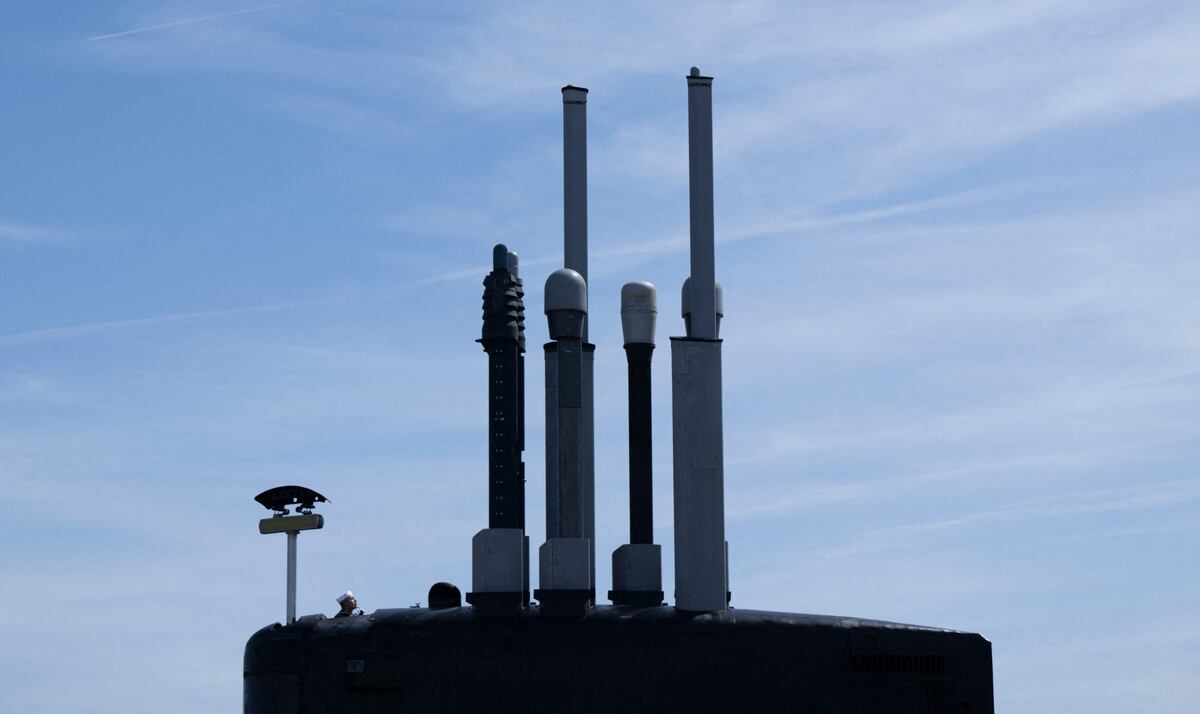
WASHINGTON — Defense officials are optimistic that billions of dollars of investments in the U.S. submarine industrial base will increase capacity to and even above the required two-a-year attack sub construction rate, allowing the U.S. to build for Australia under a new international agreement without restricting the American fleet.
On Monday, the U.S., Australia and the United Kingdom unveiled new details about their partnership to produce for Australia its own nuclear-powered submarine by 2040, known as the SSN AUKUS. The U.S. is offering an interim capability of three to five Virginia-class submarines, either newly built or used, in the 2030s.
To meet the U.S. Navy’s undersea warfare needs under a 2021 force structure assessment, the submarine industrial base must sustain a minimum construction rate of two Virginia-class attack submarines and one Columbia-class ballistic missile submarine per year throughout this decade and into the next — without counting any additional submarines for Australia. So far, builders have not been able to keep up with that workload and are years behind schedule on some Virginia submarines.
This week, senior defense officials, granted anonymity to discuss sensitive matters, told Defense News a series of investments from Congress and Australia, with the AUKUS pact in mind, are meant to help industry “get to that 2.0 delivery cadence that we’re expecting” on the Virginia program and even achieve rates “north of 2.0″ while working on the Australian boat or boats.
However, one of those officials said the Navy was not expecting to see “sustained 3.0 production” of these attack submarines in the long run.
Chief of Naval Operations Adm. Mike Gilday on Wednesday said the investment would help the shipbuilders and their suppliers “sustain that 2.0 cadence, which by the way needs to go above 2.0 attack boats a year if we’re going to be in a position to sell any to the Australians.”
And Naval Sea Systems Command commander Vice Adm. Bill Galinis confirmed industry is still delivering about 1.2 submarines a year — reflecting that the Navy is buying two a year and industry is delivering them late.
At a Pentagon press conference Tuesday, the assistant secretary of defense for strategy, plans and capabilities, Mara Karlin, said the pact would “lift all three nations’ submarine industrial bases and undersea capability, enhancing deterrence and promoting stability in the region.”
“Australia’s acquisition of SSNs will bolster the capabilities of one of our strongest allies by increasing the Royal Australian Navy’s range, survivability and striking power, thus strengthening deterrence in the Indo-Pacific,” Karlin said.
Before Australia acquires its own Virginia-class subs, a new collaborative entity known as Submarine Rotational Forces-West will establish a rotational presence of one UK Astute class submarine and up to four U.S. Virginia-class SSNs at Australia’s Stirling military base near Perth.
Amid the concerns of U.S. lawmakers that AUKUS will make it more difficult to meet U.S. submarine needs, defense officials say the industrial base investments will also cut maintenance timelines, making the submarines the U.S. Navy has more operationally available.
A history of industrial base challenges
The Navy was already ramping up its financial support of the submarine industrial base well before AUKUS was decided. The sea service spent more than $1 billion between fiscal 2018 and 2022 on bolstering the two nuclear shipbuilding yards and their thousands of suppliers, and kicked off another five-year, $2.4 billion investment in FY23 — on top of the annual cost of procuring submarines.
The Navy this year is also launching a separate $2.2 billion investment in Virginia-class maintenance and readiness, which will also benefit many of the same parts suppliers.
The industrial base is facing a range of challenges after shrinking by about 70% when the Navy took a break from buying submarines following the end of the Cold War. A smaller industrial base began Virginia-class construction in 1998 at a rate of one boat a year, but in FY11, the Navy moved to a two-a-year rate, and by 2019, it was clear industry had fallen behind.
Attack sub construction fell even further behind as the Navy asked industry to prioritize the growing Columbia-class workload. And the COVID-19 pandemic and subsequent labor market disruption left the Virginia production line in a dire situation, with industry delivering no submarines to the Navy between April 2020 and February 2022.
The attack submarine fleet has shrunk to 49, compared to a 2021 assessment’s requirement for 66 to 72. For the fleet to reach that required size, industry would need to get back on track and then increase its production rate to something closer to three a year.
There was a time when Navy officials thought a couple-billion-dollar infusion into the submarine industrial base could help expand production from two Virginias a year to three. In June 2021, then-acting Assistant Secretary of the Navy for Research, Development and Acquisition Jay Stefany told senators it would take “a major investment of effort, capital and workforce” and cited an internal study that called for $1.5 billion to $2 billion – plus industry’s own investments – to get to that higher rate.
The Navy will ultimately spend more than that just to secure on-time production of two Virginias a year.
But AUKUS could change that.
A senior administration official told Defense News last week the Navy investments so far “are down payments on what needs to be done for the U.S. submarine industrial base,” adding the administration would “work with Congress to get very substantial lifts in the U.S. submarine industrial base, lifts that go significantly beyond the $4.6 billion we will have submitted with the president’s budget submission,” referring to the $2.4 billion effort that began last year and the $2.2 billion effort kicked off with this week’s FY24 request.
“In an unprecedented move, Australia has agreed to make a proportional contribution to the U.S. submarine industrial base to help lift our production and maintenance capabilities to offset the loss of those submarines,” the official added, noting this undisclosed sum would come on top of paying the “full and fair price” for the used and the new submarines.
The official called the American and Australian investments “generational” and said they would have “a huge impact on our overall defense posture.”
Though the senior administration official would not say the amount of Australia’s contribution to the industrial base, Reuters reported Australia would invest $3 billion in the U.S. and U.K. submarine industrial bases over the next four years. That includes funds for U.S. workers to help Australia set up its own nascent submarine industrial base in Adelaide and for their Australian counterparts to work in U.S. shipyards across the country.
Here’s a closer look at what’s been invested so far:
Submarine industrial base and workforce development
The Navy last year made the first payments of a five-year, $2.4 billion investment in industrial base and workforce development support, including nearly $750 million in FY23 for the submarine industrial base.
Rep. Joe Courtney, the top Democrat on the House Armed Services Committee’s seapower panel, noted the newly released FY24 budget proposal seeks $647 million more to expand the submarine industrial base.
Courtney’s Connecticut district includes the General Dynamics Electric Boat submarine construction yard, one of only two shipyards in the nation that build nuclear-powered submarines. (The other is HII’s Newport News Shipbuilding in Virginia.)
“I’ve been in Congress now 17 years, we’ve never seen a number like that in terms of workforce, supply chain and facility” investments, Courtney told reporters on a Tuesday call, noting previous submarine capacity investments ranged from $100 to $200 million per year prior to FY23.
The FY23 funding included $541 million for supplier development, workforce development, shipyard infrastructure and strategic outsourcing to other shipyards – which Courtney noted benefitted not just the Connecticut and Virginia shipyards, but suppliers around the country.
For instance, Austal USA’s Alabama shipyard recently started to build Command and Control Systems Modules and Electronic Deck Modules for Virginia- and Columbia-class submarines.
“The strategic outsourcing like what’s happening down in Alabama can be replicated in other parts of the country to take some of the pressure off of man hours” at the construction yards that don’t have the workforce or the facilities to accept more work, said Courtney.
During the Tuesday interview, the senior administration official said some of these investments are aimed at vendors deep in the supply chain, for hard-to-get metals, machine tooling or, say, an air conditioning unit unique to nuclear-powered ships.
“The supplier base investment goes all the way down [the supply chain] to better access to the right types of alloys, the right types of metals for material procurement,” one senior administration official said.
Congress designated the remaining $207 million in FY23 submarine industrial base funding for workforce development initiatives to help the shipyards cope with labor shortages that have hindered production.
“The pursuit of people and investments is almost like The Hunger Games out there right now,” said Courtney, referencing the dystopian novels and movies. He noted Electric Boat made almost 4,000 new hires last year and has set an ambitious target to hire an additional 5,700 workers this year alone.
The Department of Labor has also funds a manufacturing pipeline program that trains the welders, mechanists and electricians that shipyards rely on in as little as eight to 10 weeks.
Virginia-class readiness spending
Another challenge stemming from the industry output is the lack of spare parts for in-service Virginia submarines, leading the Navy to have to cannibalize parts from one submarine to finish up another boat’s repairs.
In fact, a 2021 Congressional Budget Office report showed the number of parts taken from one Virginia submarine to complete maintenance on another skyrocketed in 2019 and remained high since.
That’s where the new $2.2 billion investment in Virginia-class spares and maintenance will come into play.
The Navy is asking for $541 million in FY24 for spare parts, according to Rear Adm. John Gumbleton, the deputy assistant secretary of the Navy for budget and director of fiscal management.
“This is a dramatic increase that we’ve never done before,” he said, noting the remainder of the investment will come across the next five years.
Gumbleton said the Navy did not want to wait to start fixing the problem. Even as Congress works through the FY24 budget process, the service will use its Navy Working Capital Fund to purchase $200 million to $350 million in spare parts so that they’re waiting on the shelves in FY24 and the Navy can use its appropriated funds to buy those parts for immediate use.
This funding is meant to give parts suppliers an increased but stable demand while also helping address widespread maintenance delays. These delays have led to 18 submarines in or awaiting maintenance, instead of what should be 10 under operations and maintenance planning assumptions.
This means the Navy has 31 attack subs available to conduct training, global operations and tactics development work, compared to 39 if today’s fleet saw on-time maintenance, or 53 to 58 if the submarine fleet was the required size.
Megan Eckstein is the naval warfare reporter at Defense News. She has covered military news since 2009, with a focus on U.S. Navy and Marine Corps operations, acquisition programs and budgets. She has reported from four geographic fleets and is happiest when she’s filing stories from a ship. Megan is a University of Maryland alumna.
Joe Gould was the senior Pentagon reporter for Defense News, covering the intersection of national security policy, politics and the defense industry. He had previously served as Congress reporter.
Bryant Harris is the Congress reporter for Defense News. He has covered U.S. foreign policy, national security, international affairs and politics in Washington since 2014. He has also written for Foreign Policy, Al-Monitor, Al Jazeera English and IPS News.
华盛顿——国防部官员乐观地认为,对美国潜艇工业基地数十亿美元的投资将使产能达到甚至超过每年建造两艘攻击型潜艇的要求,从而使美国能够根据一项新的国际协议为澳大利亚建造潜艇,而不会限制美国舰队。
周一,美国、澳大利亚和英国公布了三国合作建造澳大利亚自主研发的核动力潜艇(代号SSN AUKUS)的最新细节,该潜艇计划于2040年前交付澳大利亚。美国方面则承诺在2030年代提供三到五艘弗吉尼亚级潜艇作为过渡方案,这些潜艇可以是新建的,也可以是二手的。
为了满足美国海军在2021年兵力结构评估中提出的水下作战需求,潜艇工业基地必须在本十年及下一个十年内保持每年至少建造两艘弗吉尼亚级攻击型核潜艇和一艘哥伦比亚级弹道导弹核潜艇的最低速度——这还不包括为澳大利亚建造的任何额外潜艇。迄今为止,建造商尚未能完成这一建造任务,部分弗吉尼亚级潜艇的建造进度已落后数年。
本周,几位不愿透露姓名的高级国防官员向《防务新闻》透露,国会和澳大利亚的一系列投资,考虑到 AUKUS 协议,旨在帮助业界在弗吉尼亚级潜艇项目上“达到我们预期的 2.0 交付节奏”,甚至在建造澳大利亚潜艇的同时,实现“超过 2.0”的交付速度。
然而,其中一位官员表示,海军预计从长远来看,不会看到这些攻击型潜艇的“持续3.0型生产”。
海军作战部长迈克·吉尔迪海军上将周三表示,这项投资将帮助造船商及其供应商“维持每年2.0艘攻击艇的建造速度,顺便说一句,如果我们想向澳大利亚人出售任何攻击艇,这个速度就需要超过每年2.0艘。”
海军海上系统司令部司令比尔·加利尼斯中将证实,业界每年仍交付约 1.2 艘潜艇——这反映出海军每年购买两艘潜艇,而业界交付却有所延迟。
周二,五角大楼举行新闻发布会,负责战略、计划和能力的助理国防部长玛拉·卡林表示,该协议将“提升三国潜艇工业基地和水下能力,增强威慑力,促进地区稳定”。
卡林表示:“澳大利亚购置攻击型核潜艇将增强我们最强大盟友之一的能力,提高澳大利亚皇家海军的航程、生存能力和打击力量,从而加强在印太地区的威慑力。”
在澳大利亚获得自己的弗吉尼亚级潜艇之前,一个名为“西部潜艇轮换部队”的新合作实体将在澳大利亚珀斯附近的斯特灵军事基地建立一艘英国机敏级潜艇和至多四艘美国弗吉尼亚级攻击型核潜艇的轮换驻扎。
尽管美国立法者担心 AUKUS 项目会使满足美国潜艇需求变得更加困难,但国防官员表示,工业基础投资还将缩短维护时间,使美国海军的潜艇在作战方面更加可用。
工业基础挑战的历史
早在奥库斯计划决定之前,海军就已经开始加大对潜艇工业基地的财政支持。在2018至2022财年间,海军投入超过10亿美元用于加强两家核动力造船厂及其数千家供应商的实力,并在2023财年启动了另一项为期五年、总额达24亿美元的投资计划——这还不包括每年采购潜艇的成本。
今年,海军还将启动一项单独的 22 亿美元投资,用于弗吉尼亚级战舰的维护和战备,许多相同的零部件供应商也将从中受益。
冷战结束后,海军暂停采购潜艇,导致工业基础萎缩了约70%,面临一系列挑战。规模较小的工业基础于1998年开始建造弗吉尼亚级潜艇,当时的建造速度为每年一艘。但到了2011财年,海军将建造速度提高到每年两艘,到2019年,很明显,工业已经落后于进度。
由于海军要求工业界优先满足日益增长的哥伦比亚级潜艇的生产需求,攻击型潜艇的建造进度进一步落后。而新冠疫情及其引发的劳动力市场混乱,更使弗吉尼亚级潜艇生产线陷入困境,导致工业界在2020年4月至2022年2月期间未能向海军交付任何潜艇。
攻击型潜艇舰队已缩减至 49 艘,而 2021 年的评估要求为 66 至 72 艘。要使舰队达到所需规模,工业界需要重回正轨,然后将其生产速度提高到接近每年三艘。
曾几何时,海军官员认为向潜艇工业基地注入数十亿美元资金,就能将弗吉尼亚级潜艇的年产量从两艘提高到三艘。2021年6月,时任海军研究、开发和采购代理助理部长杰伊·斯特凡尼告诉参议员,这需要“大量的人力、物力和人力投入”,并援引一项内部研究指出,要达到更高的产量,需要15亿至20亿美元的投入——外加业界自身的投资。
海军最终将花费更多,仅仅是为了确保每年按时生产两架弗吉尼亚级战列舰。
但 AUKUS 或许能改变这一切。
一位高级政府官员上周告诉《防务新闻》,海军迄今为止的投资“只是美国潜艇工业基础所需工作的预付款”,并补充说,政府将“与国会合作,大幅提升美国潜艇工业基础,其提升幅度将远远超过我们将在总统预算案中提交的 46 亿美元”,他指的是去年启动的 24 亿美元项目和本周 2024 财年预算申请中启动的 22 亿美元项目。
“澳大利亚史无前例地同意向美国潜艇工业基地提供按比例的资金,以帮助提升我们的生产和维护能力,从而弥补这些潜艇的损失,”这位官员补充道,并指出这笔未公开的款项将在支付二手和新潜艇的“全部和公平价格”之外另行支付。
这位官员称美国和澳大利亚的投资是“世代性的”,并表示这些投资将“对我们的整体国防态势产生巨大影响”。
尽管这位高级政府官员拒绝透露澳大利亚对两国潜艇工业基地的具体投入金额,但路透社报道称,澳大利亚将在未来四年内向美国和英国的潜艇工业基地投资30亿美元。这笔资金包括用于资助美国工人帮助澳大利亚在阿德莱德建立其新兴的潜艇工业基地,以及资助澳大利亚工人到美国各地的造船厂工作。
以下是迄今为止的投资概览:
潜艇工业基础和劳动力发展
去年,海军首次支付了五年内 24 亿美元工业基础和劳动力发展支持投资的款项,其中包括 2023 财年近 7.5 亿美元用于潜艇工业基础。
众议院军事委员会海权小组的首席民主党议员乔·考特尼指出,新发布的 2024 财年预算提案寻求增加 6.47 亿美元,以扩大潜艇工业基地。
考特尼所在的康涅狄格州选区包括通用动力电船公司的潜艇建造厂,这是美国仅有的两家建造核动力潜艇的造船厂之一。(另一家是位于弗吉尼亚州的HII纽波特纽斯造船厂。)
“我在国会工作了 17 年,我们从未见过如此巨额的劳动力、供应链和设施投资,”考特尼在周二的电话会议上告诉记者,并指出在 2023 财年之前,潜艇产能投资每年在 1 亿至 2 亿美元之间。
2023 财年的拨款包括 5.41 亿美元,用于供应商发展、劳动力发展、造船厂基础设施以及向其他造船厂进行战略外包——考特尼指出,这不仅使康涅狄格州和弗吉尼亚州的造船厂受益,也使全国各地的供应商受益。
例如,奥斯塔美国公司位于阿拉巴马州的造船厂最近开始为弗吉尼亚级和哥伦比亚级潜艇建造指挥控制系统模块和电子甲板模块。
Courtney表示:“像阿拉巴马州正在发生的这种战略外包模式,可以复制到美国其他地区,以减轻那些缺乏劳动力或设施来承接更多工作的建筑工地的工时压力。”
在周二的采访中,这位高级政府官员表示,其中一些投资的目标是供应链深处的供应商,用于采购难以获得的金属、机床,或者例如核动力船舶特有的空调装置。
一位高级政府官员表示:“对供应商基础的投资一直延伸到供应链的下游,以便更好地获得合适的合金类型和合适的金属类型,用于材料采购。”
国会指定将 2023 财年潜艇工业基础资金中剩余的 2.07 亿美元用于劳动力发展计划,以帮助造船厂应对阻碍生产的劳动力短缺问题。
“如今对人才和投资的追逐几乎就像《饥饿游戏》一样,”考特尼说道,他指的是那部反乌托邦小说和电影。他指出,通用动力电船公司去年新招了近4000名员工,并设定了一个雄心勃勃的目标,仅今年一年就再招聘5700名员工。
美国劳工部还资助了一项制造业人才培养计划,该计划只需八到十周即可培训造船厂赖以生存的焊工、机械师和电工。
弗吉尼亚级战备支出
工业产量带来的另一个挑战是现役弗吉尼亚级潜艇缺乏备件,导致海军不得不从一艘潜艇上拆下零件来完成另一艘潜艇的维修。
事实上,2021 年国会预算办公室的一份报告显示,2019 年从一艘弗吉尼亚级潜艇上拆卸下来用于另一艘潜艇维护的零部件数量激增,并且此后一直居高不下。
这时,对弗吉尼亚级战列舰备件和维护方面新增的 22 亿美元投资就派上用场了。
据海军预算副助理部长兼财政管理主任约翰·甘布尔顿少将称,海军在 2024 财年申请 5.41 亿美元用于备件。
“这是我们以前从未做过的大幅增长,”他说道,并指出剩余的投资将在未来五年内完成。
甘布尔顿表示,海军不想再拖延解决问题的进程。即使国会仍在审议2024财年预算,海军也将动用其海军营运资金采购价值2亿至3.5亿美元的备件,以便在2024财年这些备件到货时即可使用,海军也可以立即动用拨款购买这些备件投入使用。
这笔资金旨在为零部件供应商提供稳定且增长的需求,同时帮助解决普遍存在的维护延误问题。这些延误导致目前有18艘潜艇处于维护或等待维护状态,而根据运行和维护计划的假设,这一数字应为10艘。
这意味着海军目前有 31 艘攻击型潜艇可用于进行训练、全球行动和战术发展工作,而如果今天的舰队能够按时进行维护,则有 39 艘;如果潜艇舰队达到所需规模,则有 53 至 58 艘。
梅根·埃克斯坦是《防务新闻》的海军作战记者。自2009年以来,她一直从事军事新闻报道,主要关注美国海军和海军陆战队的行动、采购项目和预算。她曾报道过四个不同地理区域的舰队,最喜欢在舰艇上进行新闻报道。梅根毕业于马里兰大学。
乔·古尔德是《防务新闻》的资深五角大楼记者,负责报道国家安全政策、政治和国防工业的交汇点。他此前曾担任国会记者。
布莱恩特·哈里斯是《防务新闻》的国会记者。自2014年以来,他一直在华盛顿报道美国外交政策、国家安全、国际事务和政治。他还曾为《外交政策》、《Al-Monitor》、《半岛电视台英语频道》和IPS新闻撰稿。