Anutin urged officials to expel undesirable foreigners. On cemeteries, the PM urged them to die at home阿努廷敦促官员驱逐不受欢迎的外国人。关于墓地问题,总理敦促他们在家中去世。
Anutin tells governors to use new deportation powers without hesitation as Thailand targets troublesome foreigners, illegal businesses, nominee firms and landholding while warning: “If you’re… Read More ›
新闻视频
September 18, 2026 at 1:10 am
in Crime , Living , Media , Politics , Thailand
Prime Minister Anutin Charnvirakul has ordered governors across Thailand to move swiftly against troublesome foreigners and use new deportation procedures without hesitation. His nationwide directive targets aggressive behaviour, illegal businesses, nominee companies, landholding, unauthorised work and foreign religious premises. Crucially, deportation can proceed through a separate public-order route without always waiting for criminal proceedings. Mr Anutin ordered officials into “fifth gear”, told them not to fear appeals and said provinces could advance airfares to remove foreigners. Then came his bluntest warning. “If you’re going to die, go die back home,” he said while targeting foreign private cemeteries. The crackdown is already underway, with an Israeli and Frenchman on Koh Samui fighting the first deportation orders issued under the new framework.
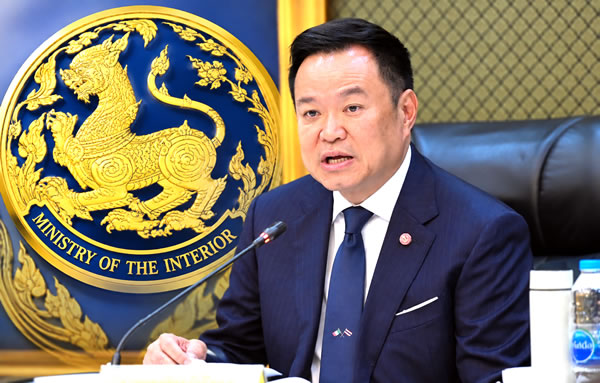
Prime Minister and Minister of the Interior Anutin Charnvirakul orders governors to fast-track action against troublesome foreigners, warning on private cemeteries: “If you’re going to die, go die back home.” ( Source: Khaosod )
Prime Minister Anutin Charnvirakul has ordered governors to move quickly against foreigners who cause trouble or exploit Thai people. Crucially, officials need not always await criminal proceedings before examining deportation. Thailand’s new rules provide a separate public-order route for removal. Mr Anutin also questioned spending national resources on foreign offenders who could lawfully be sent home.
The directive came during a nationwide Interior Ministry video conference on Thursday, September 17. Mr Anutin addressed governors in his concurrent role as Minister of the Interior. District chiefs and administrative officials nationwide also joined the meeting. Its wider agenda covered ministry policies during the final quarter of 2026. However, enforcement against errant foreigners became a major focus.
Mr Anutin drew a clear distinction between law-abiding foreigners and those causing problems. Foreigners living honestly and not exploiting Thai people could continue living alongside them, he said.
Governors ordered to use new deportation machinery as Anutin demands decisive action against foreigners
By contrast, aggressive foreigners and those intimidating local people should face action. The same applied to foreigners exploiting Thais through money, businesses or other arrangements. He also targeted what he termed “undesirable behaviour”.
Accordingly, governors and district chiefs were ordered to act decisively when legal requirements were satisfied. “The new deportation regulation of the Prime Minister’s Office has already taken effect. Please take action,” Mr Anutin said. His message was that provincial officials already possessed the necessary legal machinery.
“I have signed the Interior Ministry notice on the deportation of individuals. You have all the mechanisms necessary to take this action. Enforce the law strictly if their behaviour meets the criteria.”
Notably, the intervention follows a significant overhaul of procedures surrounding Thailand’s longstanding deportation powers. The Prime Minister’s Office Regulation on Deportation B.E. 2569 took effect on August 28. Mr Anutin signed it two days earlier, on August 26. Yet the regulation did not create Thailand’s underlying power to deport foreigners.
That power principally rests on the Deportation Act B.E. 2499, enacted in 1956. Instead, the August regulation created clearer procedures for applying the existing law. It identifies how cases can move through the Interior Ministry. It also establishes procedures involving convicted foreigners approaching release. Separately, it covers foreigners whose conduct creates public-order concerns.
New rules separate criminal prosecution from deportation as governors are told to identify cases quickly
As a result, criminal prosecution and administrative deportation are not necessarily the same process. That distinction lies at the centre of Thursday’s order. The Department of Provincial Administration has already explained the new framework. It said the regulation fills procedural gaps surrounding powers contained in the 1956 law.
At the same time, the rules establish clearer criteria for officials preparing deportation cases. The department says this should produce faster and more consistent enforcement. Thursday’s intervention now pushes that machinery directly into provincial government. Governors have effectively been told to identify qualifying cases and start using it.
Mr Anutin made clear that bureaucratic hesitation would no longer be acceptable. Indeed, he said officials already possessed the mechanisms necessary to act. His instruction also went considerably beyond troublesome tourists involved in fights or public disturbances. Instead, the drive extends into businesses, employment, landholding, licensing and foreign-controlled activities.
In parallel, foreigners illegally occupying land are among those facing closer scrutiny. Foreigners operating businesses without permission are another target. Those working without permits are also covered. Foreign nominee arrangements involving Thai nationals have meanwhile become another major enforcement priority.
Such structures have already become the subject of extensive government investigations. Officials have examined thousands of foreign-linked businesses across Thailand’s main tourism and investment centres. Against this background, Mr Anutin told provincial officials to enforce existing laws strictly. He also addressed foreigners who fail to respect Thai traditions and culture.
Phuket and Surat Thani put in focus as foreign businesses, landholding and employment face scrutiny
The order applies to tourists, expatriates and longer-term foreign residents. Nevertheless, several southern tourism centres received particular attention. Phuket was specifically identified. So was Surat Thani, including Koh Samui and Koh Phangan. Both provinces have substantial foreign populations and large international tourism industries.
More recently, both provinces have faced operations involving foreign businesses, employment and property. Koh Samui has already become a testing ground for the new deportation procedures. Koh Phangan has faced separate investigations involving foreign-linked companies and land. Phuket has likewise seen extensive inspections of foreign-controlled businesses.
As part of this, Mr Anutin praised Deputy Interior Minister Polapee Suwunchwee for leading recent enforcement efforts. He said the measures had received a strongly positive response. He also demanded closer coordination between governors, district chiefs and the Department of Provincial Administration.
Police remain involved where suspected criminal offences require investigation. Even so, Mr Anutin made clear that provincial officials should not simply pass responsibility elsewhere. Governors are expected to use the procedures available to them. The Interior Ministry, he stressed, has already provided the necessary mechanism.
Governors told to examine foreign religious premises and cemeteries amid recent local controversies
On another front, Mr Anutin turned to foreign religious facilities. He instructed governors to examine religious premises established within their jurisdictions. Foreign groups could not simply create such facilities without complying with Thai requirements, he said. Premises approved for one purpose could not automatically be converted for another use.
Private cemeteries were also raised. Mr Anutin instructed governors to examine such developments while protecting Thai interests. His comments followed controversy surrounding a Jewish cemetery in Chachoengsao. The facility had already attracted official scrutiny over its operating status and burials.
Its licence expired in 2023. Subsequently, inspections identified problems involving required distances from surrounding areas. Officials also found three unlawful burials. Removal of those burials was ordered.
Elsewhere, another controversy recently developed in Phuket. A planned Jewish New Year observance was cancelled after Thai protesters gathered near the venue. However, Mr Anutin did not confine Thursday’s instruction to Israelis or any other nationality. He said problems involved foreigners from several countries and regions.
Anutin questions cost of jailing foreign offenders as separate deportation routes come into sharper focus
Nor was the order restricted to any particular religion. Rather, the government demanded compliance with Thai rules covering businesses, property, employment and premises. The most consequential part of Thursday’s intervention, however, concerned deportation itself.
Mr Anutin told officials not to assume criminal punishment must always come before removal. Senior officials had discussed the question one day earlier. In particular, they considered whether certain foreigners first had to serve criminal sentences before leaving Thailand.
In response, Mr Anutin questioned the value of imprisoning such offenders where another lawful route existed. Thailand then had to provide their food, water and accommodation, he said. Those costs ultimately consumed national resources. He therefore urged officials to examine faster lawful removal where circumstances permitted.
His instruction did not cancel sentences imposed by Thai courts. Nor does the new regulation automatically allow every foreign suspect to leave before prosecution. Instead, it establishes separate procedures applying to different circumstances. That legal distinction is important.
Clause 5 specifically deals with foreigners convicted of designated criminal offences. Under this route, a final criminal judgment is relevant. The offences include illegal entry or residence. Illegal employment and illegal business operations are also covered. Furthermore, document offences can trigger the procedure.
Public-order route allows separate deportation process while final decisions remain with Interior Ministry
Serious criminal offences and participation in specified offences are included as well. In such cases, information can reach the Interior Ministry before a foreign prisoner’s release. Officials can therefore prepare deportation proceedings while the individual remains imprisoned. Removal can then proceed promptly once the sentence has been completed.
Clause 4, however, establishes another route. It concerns a foreigner’s behaviour or circumstances. Specifically, it covers conduct contrary to public order, good morals or the welfare of the people. This provision is particularly relevant to Thursday’s nationwide directive.
Under Clause 4, the Interior Ministry permanent secretary can report a case to the Interior Minister. An official authorised by the permanent secretary can also make that referral. The Interior Minister can then consider issuing a deportation order. The provision additionally encompasses people who instigate or support such conduct.
Consequently, public-order deportation is not simply another form of criminal punishment. Neither must every case necessarily await the completion of criminal proceedings. The administrative process can operate separately where its legal requirements are satisfied. That gives officials another route for dealing with qualifying foreign conduct.
Importantly, provincial governors do not personally acquire unrestricted deportation powers. A governor cannot simply remove somebody because that person is considered troublesome. Provincial officials instead identify the conduct, gather information and develop the case. The matter then moves through the Interior Ministry system.
Ultimately, the formal deportation decision remains governed by the relevant legislation and procedures. Thursday’s directive nevertheless changes the enforcement emphasis. Officials previously could treat deportation mainly as something following prosecution, conviction and punishment. Now, the Interior Ministry has provided a clearer parallel administrative process.
Anutin tells provinces to fund airfares if needed and uses blunt language on foreign private cemeteries
Beyond that, Mr Anutin personally ordered governors to use it. His intervention therefore combines the August regulatory change with a direct political instruction. The rules provide the mechanism. Thursday’s order demands its application.
Mr Anutin also tackled another obstacle raised by provincial officials. The issue concerned the cost of physically removing foreigners from Thailand. In particular, officials had questioned who should pay airline fares. The Prime Minister said such arguments should not obstruct a lawful deportation.
Instead, provincial authorities could advance the necessary money. Afterwards, they could seek repayment through the appropriate process. The immediate priority was getting the foreigner out of Thailand. Disputes over tickets should not hold up removal.
Mr Anutin used particularly blunt language while discussing foreigners establishing private cemeteries in Thailand. “If you come here, come and earn a living honestly. If you’re going to die, go die back home. You don’t need to come and die here,” he said. The remark came as he ordered governors to examine foreign religious premises and cemeteries more closely.
There was no immediate public response from major Western embassies in Bangkok following Thursday’s remarks. However, the language came as Thailand continues courting foreign tourists, investors, retirees and long-stay residents. Mr Anutin’s wider instruction to governors was equally firm. “If the behaviour meets the criteria, take action immediately,” he told provincial officials.
Governors told not to fear appeals as first deportation cases test Thailand’s new public-order machinery
Likewise, Mr Anutin told governors not to be intimidated by possible appeals. Foreigners subject to deportation retain access to the prescribed appeal process. Yet the prospect of an appeal should not prevent officials from taking initial action. The deportation order can be issued before the foreigner exercises that right.
Recent cases already demonstrate how the machinery works. Thailand has issued its first two deportation orders under the new framework. Both cases arose on Koh Samui. They involve Israeli national Yaacov Ohayon and French national Kevin Dimino.
Mr Ohayon’s case followed a dispute involving Mr Dimino’s Samui Exotic Park. Mr Ohayon visited the attraction with his family before a confrontation developed. His family was subsequently barred from the attraction. Afterwards, Mr Ohayon was accused of sending threatening messages.
Eventually, the case reached Koh Samui Provincial Court. Mr Ohayon was convicted in connection with the threats. The court fined him ฿5,000. He also received a 15-day prison sentence, which was suspended. Yet the criminal judgment did not end the matter.
On September 5, Mr Anutin signed a separate deportation order against Mr Ohayon. The order cited conduct contrary to public order, good morals or public welfare. Mr Ohayon was then taken into custody while challenging the decision. He was given seven days to appeal.
French national becomes second target as Koh Samui cases show new deportation framework now operating
In practice, the case demonstrates the separation between criminal punishment and administrative deportation. A suspended prison sentence did not prevent the Interior Ministry from pursuing removal. The public-order framework supplied a separate basis for that action.
Mr Dimino became the second foreigner targeted under the new procedures. The French national operated Samui Exotic Park. Officials cited complaints involving violence, knife threats and public nuisance. Another cited incident was connected with a flight.
Separately, officials cited conduct they said stirred religious division and conflict. Mr Dimino has publicly supported the Palestinian cause. The deportation action, however, concerned conduct cited by officials. He was informed of the order on September 8.
Mr Dimino was subsequently held at Bo Phut Police Station. Both foreigners challenged their deportation orders. As of Thursday, both remained in Thailand while their appeals were considered. Police confirmed that neither had yet departed.
Those cases show that the August framework is already operating. Thursday’s meeting therefore did not merely announce a future policy. Instead, Mr Anutin ordered governors nationwide to expand an enforcement mechanism already being used.
Governors take larger role as nationwide probes target foreign-linked firms, land and condominium units
For provincial government, that significantly increases the operational focus on foreigner cases. Previously, many such cases could fall primarily to police or immigration officers. Now, governors and district chiefs have been placed firmly inside the enforcement structure. They are expected to identify foreign conduct affecting their communities.
In turn, provincial officials must coordinate evidence and the administrative response. That includes commercial activities alongside individual behaviour. Illegal foreign landholding remains one prominent area. Thailand generally restricts direct foreign ownership of land.
Nationwide, the Department of Business Development has reviewed 36,277 companies involving foreign participation. Those businesses were connected with 305,838 plots. Together, the properties covered 1,064,265.38 rai.
Meanwhile, a narrower investigation covered about 14,000 companies. Approximately 5,800 plots worth around ฿60 billion came under examination. Investigators identified roughly 1,500 companies linked with illegal landholding.
In the condominium sector, officials identified 7,082 foreign-linked companies. Those companies were connected with 76,840 units. Altogether, the properties covered more than 4.1 million square metres.
Tourist centres face widening enforcement on foreign businesses, landholding and unauthorised employment
Regionally, Phuket, Koh Samui, Koh Phangan and Pattaya have featured prominently in recent operations. On Koh Samui alone, officials reviewed 12,906 companies. Of these, 8,254 had foreign shareholders. Another 875 were flagged for closer scrutiny.
Investigators identified 60 cases during the Koh Samui work. They also examined 37 plots valued at approximately ฿1.2 billion. The figures show the scale of the commercial enforcement already underway in the island province.
Nearby, Koh Phangan has faced a separate examination of foreign-linked landholding. Officials flagged 112 entities. The investigation covered 124 plots totalling approximately 86 rai. Eight cases have already been decided. Nine plots were subsequently sold.
Phuket has experienced another major enforcement operation. More than 100 companies were examined during an August crackdown. Those businesses generated more than ฿5 billion in revenue. Sixteen were prosecuted.
Foreign employment has come under similar scrutiny. On August 20, six foreign diving instructors were arrested on Koh Tao. Officials also checked 110 entities during that operation. Pattaya has separately faced raids involving a suspected Israeli nominee network.
Taken together, those operations show the wider enforcement setting behind Thursday’s order. Officials were already examining businesses, land, employment and foreign-controlled commercial structures. Deportation now sits alongside those existing measures where individual foreigners meet the relevant criteria.
Anutin demands fifth-gear enforcement as deportation operates separately from Thailand’s criminal courts
At the administrative level, Mr Anutin made clear that he expects faster action. The necessary legal machinery was already available, he said. The Interior Ministry had also issued rules following recommendations from officials. He therefore expected provincial officers to use those powers.
To underline the point, Mr Anutin contrasted slow administrative handling with the pace now required. He urged officials to move from “neutral” into “fifth gear”. The Department of Provincial Administration was also instructed to support governors and drive implementation.
Thailand’s criminal courts will continue operating independently of that process. Foreigners accused of offences can still be arrested and prosecuted. Those convicted can still receive fines and prison sentences. Deportation, however, can create a separate administrative consequence.
Under the August framework, officials now have clearer procedures for pursuing that outcome. The public-order route also extends beyond cases involving completed criminal convictions. Its wording covers behaviour or circumstances affecting public order, good morals or public welfare.
At the same time, cases remain subject to Thai law and applicable regulations. The framework also refers to relevant Cabinet resolutions and Thailand’s international obligations. Foreigners can challenge deportation orders through the prescribed appeal process.
Even then, the existence of an appeal does not stop officials from initially preparing a case. Mr Anutin made that position explicit on Thursday. Governors should not be deterred by the prospect of a challenge. They should act when the legal criteria are satisfied.
Anutin holds both top roles as governors are told to use deportation powers wherever legal criteria apply
There is also an unusual concentration of responsibility at the top. Mr Anutin holds the posts of Prime Minister and Minister of the Interior. He signed the regulation as Prime Minister. Now, as Interior Minister, he is directing provincial officials to implement it.
For governors, Thursday’s instruction was unequivocal. Aggressive foreigners should face action where their conduct violates the law. Foreigners intimidating or exploiting Thai people should similarly be investigated for possible removal.
Alongside this, illegal employment, unauthorised businesses and unlawful landholding remain major targets. Foreign-controlled premises must comply with their licences and Thai law. Religious sites and private cemeteries will also face provincial scrutiny where regulatory questions arise.
Operational obstacles are no longer accepted as reasons for delay. Airline fares should not prevent removal. Appeals should not discourage officials from beginning proceedings. Nor should criminal prosecution automatically postpone a separate public-order deportation process where the law permits one.
The first orders have already been signed. The first foreigners targeted under the new system are already challenging them. Mr Anutin now wants the same machinery available across every province.
Thursday’s directive therefore moves responsibility squarely onto governors and district chiefs. They must identify cases, enforce existing laws and refer qualifying foreigners into the deportation process. Where the legal criteria are met, Mr Anutin’s instruction was direct.
“Please take action.”
Koh Samui Israeli expat the first to be deported under Prime Minister Anutin’s new deportation regime
Nationalist group meets Minister urging probes into illegal activity linked to foreigners on Koh Samui
100 Phuket firms with revenues of 5 billion using naturalised citizens investigated after police raids
Raids in Pattaya on Friday led by two ministers targeting Israeli business networks and legal advisors
Frenchman’s Koh Samui business empire enmeshed in knotty police probe of nominee firms and pot farm
Drive against foreign owned property and business on Koh Samui and Koh Phangan now targets leases
International reservations system used by hotels targeted in latest Koh Phangan swoop by ministers
Anutin visits Koh Phangan as nominee crackdown shows 68% of firms with foreign ownership links
Blitzkrieg on foreign firms and enterprises on Koh Phangan continues with French owned resort busted
35-year-old Frenchman arrested on Koh Phangan on Sunday for rape as island-wide swoop nets 6 suspects
Ten foreign Poker players arrested in a police swoop on a rented house in Koh Phangan on Tuesday night
Russian-Chinese Koh Phangan alliance to sell drugs to foreigners. Accused entered Thailand illegally
Sex, drugs, business and work abuses linked to expats targeted this week by police raids on Koh Phangan
Ten arrested and two illegal hostels shuttered on Koh Phangan as fierce crackdown continues on the island
Joseph Anthony is an expat from Ireland who has lived in Thailand for the last decade. He has worked extensively in the media including editorial positions in Ireland and Thailand. He is focused on economic and business stories in Thailand as well as the expat lifestyle.
All posts by Joseph O' Connor
PM Anutin accompanies King and Queen on a historic visit to Vietnam for three days hours before verdict September 14, 2026 King and Queen begin historic Hanoi State Visit as
Election Commission creates more questions than answers as it refers 77 people to the Supreme Court September 14, 2026 Senate scandal heads for court as EC targets 77
Gauntlet thrown down to the Election Commission before it votes on explosive Senate collusion scandal cases September 14, 2026 Monday’s Senate showdown could open a new political
Police raids on nightlife venues in Bangkok’s Wang Thonglang area as clandestine foreign control grows September 14, 2026 Bangkok police swoop on 17 venues in Wang
TH AI plan runs into problems and bottlenecks. New AIS deal offering cheap 29 baht per month internet September 13, 2026 Thailand’s flagship ฿1.6 billion AI scheme hits
Prime Minister scrambles to get data centre sector back on track after energy and regulatory hiatus September 13, 2026 Thailand’s data centre boom hits a regulatory wall
Mystery Chinese man used lost phone to lure Thai woman into trap at his condo and sexually attack her September 12, 2026 Pattaya woman Beam Mukassara claims a Chinese man
Former Ayutthaya abbot and his mistress sent to jail as court denies them bail as police probe finances September 12, 2026 Sex, cash and gold engulf a royal Ayutthaya temple as
Rising concerns in tourist hotspots about unruly tourists from Middle Eastern countries refusing to pay September 12, 2026 Foreign tourist mocks a Phuket motorcycle rider and
American wanted for sex offences against female minors arrested at Chiang Mai Buddhist retreat September 11, 2026 Thai police infiltrate a Chiang Mai meditation retreat
PM Anutin’s mission to Oslo to represent Thailand at the funeral of King Harald V amid budget scrutiny by the opposition September 11, 2026 Royal mission puts Anutin among monarchs and world
Bank of Thailand warns economic potential is falling with a severe crisis in the small business sector September 11, 2026 Thailand faces a widening economic split as exports
Masked man stages armed robbery in Pathum Thani netting 1.5 million baht before torching getaway car September 10, 2026 Gunman seals six people inside a Talat Thai bank,
Police officer bursts into tears as he surrenders to police led by son a day after murdering his wife September 10, 2026 Kindergarten killing ends in a dramatic dawn surrender
Court denies mercy to savage killer who bludgeoned a hotel worker to death in a drug crazed robbery in Hua Hin September 9, 2026 Death for Hua Hin hotel killer Rattikorn “Sam”
Summonses and criminal charges considered by DSI in probe into substantial Israeli network in Pattaya September 9, 2026 Israeli businessman Maimon David Marsiano faces a DSI
Dutch man entered into a mediated settlement after assaulting a young Thai woman at a Koh Samui bar September 9, 2026 CCTV catches a Dutch man repeatedly striking a Thai
Chinese man arrested after he fled to Thailand in 1991. Firm’s capital raised weeks before his shock downfall September 14, 2026
Thailand’s K-shaped economy sees a large number of people cut back on food and meals to make ends meet September 14, 2026
Opinion poll shows public concern about Israeli misbehaviour in Thailand amid a febrile political mood September 14, 2026
Ex Pheu Thai minister warns Commission members that soon they could be judged as crunch vote looms September 13, 2026
Sex and financial scandal at famous monastery rocks Thailand. Abbot and girlfriend amassed huge wealth September 13, 2026
Thailand hailed as a haven for retirees and digital nomads but officials breed doubt and uncertainty September 12, 2026
Commerce Minister Suphajee responds to Sondhi Limthongkul’s attack on new liberal investment rules September 12, 2026
Pressure movement against Israel in Thailand gains momentum as it combines with street protests September 12, 2026
Bank bandit arrested at a Bangkok resort. 54 year old Saifa Kasemut has a history of armed robbery crime September 12, 2026
Former Prime Minister and Democrat Party leader cites a lack of public trust in the Election Commission September 11, 2026
Foreign nominee companies down by 81.77% as government seizes or freezes assets of over 20 billion September 11, 2026
Ayutthaya abbot disrobes as top temple official is arrested by police who worked undercover for months September 10, 2026
Veteran protest leader and media boss Sondhi begins his street protest campaign at Israel’s Embassy September 10, 2026
Substantial US Thai trade deal ready to be finalised by a call between Anutin and Trump says Minister September 10, 2026
Pattaya police officer clinically executed his wife at a kindergarten and was later surrounded at home September 9, 2026
Thailand gets ready to enter the age of nuclear power with plans for two small modular reactors by 2037 September 9, 2026
Petrol and diesel rise as inflation for August comes in at 2.53%. However confidence is also seen rising September 9, 2026
Nationwide probe targeting over 36K foreigner linked firms with land and a further 7k which own condos September 8, 2026
Sex network boss arrested in shock police home raid on Sunday after probe exposed child porn racket September 8, 2026
Activist lawyer wants action on corruption which pilfers lottery revenue for the disabled for the rich September 8, 2026
Interior Ministry is now moving to enforce the law regarding Jewish burials and grave sites in Thailand September 7, 2026
Chaos still reigns at the NBTC as Chairman wins right to court review. Board members move to work on September 7, 2026
© 2026 Thai Examiner. All rights reserved.
2026年9月18日凌晨1点10分
在“犯罪”、“生活”、“媒体”、“政治”、“泰国”等类别中
泰国总理阿努廷·查恩维拉库尔已下令全国各府府尹迅速采取行动,严惩扰民外国人,并毫不犹豫地启用新的驱逐程序。这项全国性指令针对的是侵略性行为、非法经营、名下公司、非法占有土地、未经授权的工作以及外国宗教场所。至关重要的是,驱逐程序可以通过单独的公共秩序途径进行,无需等待刑事诉讼。阿努廷总理命令官员们“全力以赴”,并告知他们不要害怕上诉,还表示各府可以预付机票遣返外国人。随后,他发出了最直白的警告:“如果你们注定要死,那就回你们的家乡去死吧。”他同时还提到了外国私人墓地。打击行动已经开始,一名以色列人和一名法国人在苏梅岛就正在对根据新框架发出的首批驱逐令进行抗争。
总理兼内政部长阿努廷·查恩维拉库尔命令各省省长加快对麻烦的外国人采取行动,并就私人墓地发出警告:“如果注定要死,就回老家死。”(来源:考索德报)
泰国总理阿努廷·查恩维拉库尔已下令各府迅速采取行动,惩处那些制造麻烦或剥削泰国人民的外国人。至关重要的是,官员们不必总是等到刑事诉讼程序结束才能考虑遣返。泰国的新规为维护公共秩序提供了一条单独的遣返途径。阿努廷总理还质疑,为何要将国家资源浪费在那些本可以合法遣返的外国违法者身上。
该指令是在9月17日(星期四)举行的全国内政部视频会议上发布的。内政部长阿努廷先生在会上向各省省长发表了讲话。全国各地的区长和行政官员也参加了会议。会议议程涵盖了内政部2026年第四季度的各项政策。然而,打击非法入境的外国人成为会议的重点。
阿努廷先生明确区分了守法的外国人与那些制造麻烦的外国人。他说,诚实生活、不剥削泰国人的外国人可以继续与他们和平共处。
阿努廷要求对外国人采取果断行动,各州州长奉命启用新的驱逐机制
相比之下,那些具有攻击性或恐吓当地居民的外国人应该受到处罚。同样,那些通过金钱、商业或其他手段剥削泰国人的外国人也应受到处罚。他还将他所谓的“不良行为”列为打击目标。
因此,各省省长和地区行政长官被命令在满足法律要求后果断采取行动。“总理办公室新的驱逐出境条例已经生效。请立即采取行动。”阿努廷先生说道。他的意思是,省级官员已经掌握了必要的法律程序。
“我已经签署了内政部关于驱逐出境人员的通知。你们拥有采取这项行动所需的一切机制。如果他们的行为符合相关标准,请严格执法。”
值得注意的是,此次干预是在泰国对其长期存在的驱逐出境权相关程序进行重大改革之后进行的。总理府颁布的《2026年驱逐出境条例》于8月28日生效。阿努廷先生于两天前的8月26日签署了该条例。然而,该条例并未赋予泰国驱逐外国人的根本权力。
这项权力主要依据1956年颁布的《驱逐法》(BE 2499)。而8月份的这项规定则制定了更为清晰的现行法律适用程序,明确了案件在内政部内部的流转流程,并制定了即将获释的已定罪外国人的相关程序。此外,该规定还专门针对那些行为引发公共秩序问题的外国人。
新规将刑事诉讼与驱逐出境分开,并要求各州州长迅速识别案件。
因此,刑事诉讼和行政驱逐并非同一程序。这一区别正是周四命令的核心所在。省行政部门已对新框架进行了解释。该部门表示,这项规定填补了1956年法律中有关权力的程序性空白。
与此同时,这些规定为准备遣返案件的官员制定了更明确的标准。该部门表示,这将有助于更快、更一致地执行遣返程序。周四的干预措施将这一机制直接下放到了省政府。各省省长实际上已被告知要确定符合条件的案件并开始使用这一机制。
阿努廷先生明确表示,官僚主义的犹豫不决将不再被接受。事实上,他指出,官员们已经掌握了采取行动所需的机制。他的指示也远不止于处理参与斗殴或扰乱公共秩序的麻烦游客。相反,这项行动的范围扩大到商业、就业、土地持有、许可证发放以及外资控股等各个领域。
与此同时,非法占用土地的外国人也受到更严格的审查。未经许可经营企业的外国人是另一项重点打击对象。无证工作的人员也包含在监管范围内。涉及泰国公民的外国代理人安排也成为另一项重要的执法重点。
此类机构已成为政府广泛调查的对象。官员们已对泰国主要旅游和投资中心的数千家外资关联企业进行了审查。在此背景下,阿努廷先生指示各省官员严格执行现行法律。他还谴责了不尊重泰国传统和文化的外国人。
普吉岛和素叻他尼成为关注焦点,外国企业、土地持有和就业情况面临审查。
该命令适用于游客、外籍人士和长期居住的外国居民。然而,一些南部旅游中心受到了特别关注。普吉岛被明确点名,素叻他尼府(包括苏梅岛和帕岸岛)也被列入其中。这两个府都拥有大量的外国人口和国际旅游业。
最近,这两个省份都面临着涉及外国企业、雇佣和财产的行动。苏梅岛已成为新遣返程序的试验场。帕岸岛也面临着涉及外国关联公司和土地的单独调查。普吉岛同样也对外国控股企业进行了广泛的检查。
为此,阿努廷先生赞扬了内政部副部长波拉佩·苏温奇维领导的近期执法行动。他表示,这些措施得到了积极的响应。他还要求各省省长、地区行政长官和省级行政部门之间加强协调。
警方仍会在涉嫌犯罪需要调查时介入。即便如此,阿努廷先生明确表示,省级官员不应简单地推卸责任。省长们应运用现有的程序。他强调,内政部已经提供了必要的机制。
鉴于近期当地发生的争议,各州州长被要求审查外国宗教场所和墓地。
另一方面,阿努廷先生将目光转向了外国宗教场所。他指示各省省长审查辖区内设立的宗教场所。他表示,外国团体不能在不遵守泰国相关规定的情况下擅自设立此类场所。获准用于某一用途的场所不能自动改作他用。
私人墓地问题也被提及。阿努廷先生指示各府府尹在保护泰国利益的前提下,对这类事态发展进行审查。此前,北柳府一座犹太人墓地引发争议,阿努廷先生的这番言论正是对此的回应。该墓地的运营状况和墓葬情况此前已引起官方的密切关注。
该场所的营业执照于2023年到期。随后,检查发现其与周边区域保持的距离存在问题。官员们还发现了三处非法墓地,并下令清除这些墓地。
此外,普吉岛近期也发生了一起争议事件。一场原定的犹太新年庆祝活动因泰国抗议者聚集在活动场地附近而被取消。然而,阿努廷先生周四的指示并非仅针对以色列人或其他任何国籍的人。他表示,问题涉及来自多个国家和地区的外国人。
阿努廷质疑监禁外国罪犯的成本,因为不同的遣返途径正日益受到关注。
这项命令并非针对任何特定宗教。相反,政府要求遵守泰国有关商业、财产、就业和场所的各项规定。然而,周四干预行动中最具决定性意义的部分,还是与驱逐出境本身有关。
阿努廷先生告诉官员们,不要想当然地认为必须先执行刑事处罚才能被驱逐出境。高级官员们前一天已经讨论过这个问题。他们尤其考虑了某些外国人是否必须先服刑完毕才能离开泰国。
对此,阿努廷先生质疑,既然有其他合法途径,监禁这些罪犯的意义何在。他指出,泰国还必须为他们提供食物、水和住宿,这些费用最终会消耗国家资源。因此,他敦促官员们在条件允许的情况下,研究如何更快地合法遣返这些罪犯。
他的指示并未撤销泰国法院的判决。新规也并非自动允许所有外国嫌疑人在受审前离境。相反,它针对不同的情况制定了不同的程序。这种法律上的区别至关重要。
第5条专门针对被判犯有特定刑事罪行的外国人。根据该条款,最终刑事判决具有法律效力。这些罪行包括非法入境或居留、非法就业和非法经营活动。此外,文件犯罪也可能触发该程序。
公共秩序途径允许单独的驱逐程序,最终决定权仍归内政部所有。
严重刑事犯罪和参与特定犯罪也包含在内。在这种情况下,相关信息可以在外国囚犯获释前送达内政部。因此,官员可以在该人服刑期间准备遣返程序。一旦刑期结束,遣返程序即可迅速进行。
然而,第4条规定了另一条途径。它涉及外国人的行为或情况。具体而言,它涵盖了违反公共秩序、良好道德或人民福祉的行为。这一条款与周四发布的全国性指令尤为相关。
根据第4条规定,内政部常务秘书可以向内政部长报告案件。经常务秘书授权的官员也可以进行此类报告。内政部长随后可以考虑签发驱逐令。该条款还涵盖煽动或支持此类行为的人员。
因此,公共秩序驱逐并非仅仅是另一种形式的刑事处罚。也并非所有案件都必须等到刑事诉讼程序结束才能进行。在符合法律要求的情况下,行政程序可以独立运作。这为官员处理符合条件的外国行为提供了另一种途径。
重要的是,省长并不拥有不受限制的驱逐出境权。省长不能仅仅因为某人被认为“麻烦”就将其驱逐出境。省级官员需要查明相关行为,收集信息并展开调查。之后,案件将由内政部系统处理。
最终,正式的驱逐出境决定仍须遵循相关法律法规和程序。然而,周四的指令改变了执法重点。此前,官员们主要将驱逐出境视为起诉、定罪和处罚之后的事情。现在,内政部提供了一套更为清晰的平行行政程序。
阿努廷指示各省在必要时承担机票费用,并对外国私人墓地使用了直言不讳的措辞。
除此之外,阿努廷先生还亲自下令各州州长使用这项规定。因此,他的干预将8月份的监管变更与直接的政治指令结合起来。规则提供了机制,而周四的命令则要求执行该机制。
阿努廷先生还回应了省级官员提出的另一个障碍。这个问题涉及将外国人遣返出境的费用。特别是,官员们质疑谁应该支付机票费用。总理表示,这些争论不应阻碍合法的遣返程序。
相反,省级政府可以先行垫付所需款项。之后,他们可以通过适当程序追讨欠款。当务之急是让这名外国人离开泰国。机票纠纷不应阻碍遣返。
阿努廷先生在谈到外国人在泰国设立私人墓地时措辞尤为直白。他说:“如果你来这里,就来这里诚实地谋生。如果你注定要死,就回你的家乡去死。你没必要来这里死。” 与此同时,他还下令各省省长更加严格地审查外国宗教场所和墓地。
周四的讲话发表后,曼谷的主要西方国家大使馆并未立即做出公开回应。然而,泰国正持续吸引外国游客、投资者、退休人士和长期居民,而阿努廷的这番言论正是在此背景下发布的。他对各省省长的指示同样强硬。“如果相关行为符合标准,立即采取行动,”他告诉省级官员。
泰国各省省长被告知不要害怕上诉,首批遣返案件将考验泰国新的公共秩序机制。
同样,阿努廷先生告诫各省省长不要因可能的上诉而畏惧。面临驱逐出境的外国人仍有权按照规定的上诉程序进行上诉。然而,上诉的可能性不应阻止官员采取初步行动。驱逐令可以在外国人行使该权利之前发出。
最近的案例已经展现了这套机制的运作方式。泰国已根据新框架发出了首批两份驱逐令。这两起案件均发生在苏梅岛,涉及以色列公民雅科夫·奥哈永和法国公民凯文·迪米诺。
奥哈永先生的案件源于与迪米诺先生的苏梅岛异域公园有关的纠纷。奥哈永先生携家人游览该景点后发生冲突,随后他的家人被禁止进入该景点。之后,奥哈永先生被指控发送威胁信息。
最终,此案上诉至苏梅岛省法院。奥哈永先生因威胁罪被判有罪,法院判处其罚款5000泰铢,并缓刑15天。然而,刑事判决并未就此结束。
9月5日,阿努廷先生签署了一份针对奥哈永先生的单独驱逐令。该驱逐令列举了其违反公共秩序、良好道德或公共福利的行为。奥哈永先生随后被拘留,期间他对该决定提出异议。他有七天时间提出上诉。
苏梅岛的案例表明新的遣返框架正在实施,一名法国公民成为第二个目标。
实际上,该案例表明刑事处罚与行政驱逐出境是分开的。缓刑判决并未阻止内政部采取驱逐行动。公共秩序框架为该行动提供了单独的法律依据。
迪米诺先生成为新规实施后第二位被列为调查对象的外国人。这位法国公民经营着苏梅岛异域公园。官员们列举了多起涉及暴力、持刀威胁和扰乱公共秩序的投诉。另一起事件则与航班有关。
此外,官员们还指出,迪米诺先生的行为煽动了宗教分裂和冲突。迪米诺先生曾公开支持巴勒斯坦事业。然而,此次驱逐行动是基于官员们所列举的行为。他于9月8日被告知了驱逐令。
迪米诺先生随后被拘留在波普警察局。两名外国人均对离境令提出异议。截至周四,两人仍留在泰国,等待上诉结果。警方证实,两人尚未离境。
这些案例表明,8月份的框架已经开始发挥作用。因此,周四的会议并非仅仅宣布一项未来政策。相反,阿努廷先生命令全国各州州长扩大一项已经在使用的执法机制。
随着全国范围内的调查针对涉外企业、土地和公寓单元展开,各州州长发挥着越来越重要的作用。
对省级政府而言,这显著提升了其在处理外国人案件方面的工作力度。此前,许多此类案件主要由警察或移民官员负责。如今,省长和区长已被牢牢纳入执法体系。他们肩负着识别影响其所在社区的外国人行为的重任。
省级官员必须协调证据收集和行政应对措施,这包括商业活动和个人行为。非法外国人持有土地仍然是一个突出领域。泰国通常限制外国人直接拥有土地所有权。
全国范围内,商业发展部已审查了36,277家涉及外资参股的公司。这些公司与305,838块地皮相关,总占地面积达1,064,265.38莱(约1,064,265.38公顷)。
与此同时,一项范围较小的调查涵盖了约14000家公司。调查人员审查了约5800块地皮,总价值约600亿泰铢。调查人员确认了约1500家与非法土地持有有关的公司。
在公寓领域,官方查明了7082家外资关联公司,这些公司涉及76840套公寓单元,总建筑面积超过410万平方米。
旅游中心面临着针对外国企业、土地持有和非法就业的执法力度不断加大的局面。
在区域层面,普吉岛、苏梅岛、帕岸岛和芭堤雅是近期行动的重点区域。仅在苏梅岛,官员就审查了12906家公司,其中8254家有外国股东,另有875家被列为重点审查对象。
调查人员在苏梅岛的行动中查明了60起案件,并检查了37块地皮,总价值约12亿泰铢。这些数字表明,该岛省份已开展大规模的商业执法行动。
附近的帕岸岛也因涉嫌与外国有关联的土地持有问题接受了单独调查。官员们标记了112个实体。调查涉及124块地,总面积约86莱(约13.5公顷)。其中8起案件已结案。另有9块地随后被售出。
普吉岛再次开展大规模执法行动。8月份的突击检查中,超过100家公司受到审查,这些公司的总营业额超过50亿泰铢。其中16家公司被起诉。
外籍劳工也受到了类似的审查。8月20日,六名外籍潜水教练在涛岛被捕。执法部门在这次行动中还检查了110家机构。芭堤雅也曾因涉嫌与以色列代理人网络有关而遭到突击检查。
综合来看,这些行动展现了周四命令背后更广泛的执法背景。官员们此前已在审查企业、土地、就业情况以及外资控制的商业结构。如今,对于符合相关标准的外国人,驱逐出境措施与现有的其他措施并行实施。
阿努廷要求全力以赴执行遣返程序,因为遣返程序独立于泰国刑事法庭之外运作。
阿努廷先生在行政层面明确表示,他希望看到更迅速的行动。他说,必要的法律机制已经到位。内政部也根据官员的建议颁布了相关规定。因此,他希望各省官员能够行使这些权力。
为了强调这一点,阿努廷先生将以往缓慢的行政处理速度与现在所需的速度进行了对比。他敦促官员们从“中立”状态迅速切换到“全速前进”。他还指示省行政部门支持各省省长并推动政策落实。
泰国刑事法院将继续独立于该程序运作。外国人被控犯罪仍可能被逮捕和起诉。被判有罪者仍可能面临罚款和监禁。然而,驱逐出境可能产生单独的行政后果。
根据8月份的框架,官员们现在有了更清晰的程序来追求这一结果。维护公共秩序的途径也不仅仅适用于已定罪的案件。其措辞涵盖了影响公共秩序、良好道德或公共福利的行为或情况。
同时,案件仍须遵守泰国法律及相关法规。该框架还参考了相关内阁决议和泰国的国际义务。外国人可通过规定的上诉程序对驱逐令提出异议。
即便如此,上诉机制的存在并不妨碍官员们事先准备案件。阿努廷先生周四明确表达了这一立场。各州州长不应因可能面临的挑战而退缩。他们应当在满足法律条件后采取行动。
阿努廷同时担任这两个最高职务,因为各省省长被告知,只要符合法律规定,就可以动用驱逐出境的权力。
此外,责任高度集中于高层的情况也十分罕见。阿努廷先生同时担任总理和内政部长。他以总理身份签署了这项法规。如今,作为内政部长,他又指示各省官员执行该法规。
对于各省省长而言,周四的指示非常明确:任何具有攻击性的外国人,如果其行为违反法律,都应受到处罚;任何恐吓或剥削泰国人的外国人,也应接受调查,并可能被驱逐出境。
与此同时,非法雇佣、未经授权的商业活动和非法土地持有仍然是重点打击对象。外资控制的场所必须遵守其许可证和泰国法律。宗教场所和私人墓地在出现监管问题时也将面临省级政府的审查。
操作上的障碍不再被接受为延误的理由。机票价格不应成为遣返的阻碍。上诉不应阻止官员启动程序。刑事诉讼也不应自动中止法律允许的单独的公共秩序遣返程序。
首批订单已经签署。新制度下首批被针对的外国人已经开始提出质疑。阿努廷先生现在希望在每个省份都配备同样的机制。
因此,周四的指令将责任明确地赋予了各省省长和地区行政长官。他们必须查明案件,执行现行法律,并将符合条件的外国人移交遣返程序。阿努廷先生的指示非常明确:只要符合法律标准,就必须遣返。
请采取行动。
苏梅岛一名以色列侨民成为总理阿努廷新驱逐政策实施后首位被驱逐出境的人员。
民族主义团体会见部长,敦促调查苏梅岛上与外国人有关的非法活动。
警方突击搜查后,对普吉岛100家年营业额达50亿比索、涉嫌使用入籍公民的公司展开调查。
周五,两名部长领导的突击搜查行动在芭堤雅展开,目标是以色列商业网络和法律顾问。
法国人在苏梅岛的商业帝国卷入了一起错综复杂的警方调查,调查内容涉及代理公司和大麻种植场。
针对苏梅岛和帕岸岛外国所有房产和企业的打击行动,现在重点针对租赁合同。
部长们最近突击检查帕岸岛酒店时,目标酒店使用的国际预订系统
阿努廷访问帕岸岛,与此同时,打击代理人犯罪的行动显示,68%的公司与外国所有权有关联。
对帕岸岛外国公司和企业的闪电战仍在继续,一家法国拥有的度假村被查封。
周日,一名35岁的法国男子在帕岸岛因涉嫌强奸被捕,全岛范围的突击行动共抓获6名嫌疑人。
周二晚间,警方突袭帕岸岛一处出租屋,逮捕了十名外国扑克玩家。
俄罗斯与中国在帕岸岛结盟,向外国人贩卖毒品。被告非法入境泰国。
本周,警方突击搜查了帕岸岛上的外籍人士,调查内容涉及性侵、毒品、商业和工作方面的侵权行为。
帕岸岛持续开展严厉打击行动,十人被捕,两家非法旅馆被查封。
约瑟夫·安东尼是一位来自爱尔兰的侨民,过去十年一直居住在泰国。他曾在爱尔兰和泰国的媒体行业担任过编辑职务,拥有丰富的媒体从业经验。他主要关注泰国的经济和商业新闻,以及侨民的生活方式。
约瑟夫·奥康纳的所有帖子
阿努廷总理陪同国王和王后对越南进行为期三天的历史性访问,就在2026年9月14日判决公布前几个小时。国王和王后开始了对河内的历史性国事访问。
选举委员会将77人移交最高法院,引发更多疑问而非解答(2026年9月14日) 参议院丑闻将诉诸法庭,选举委员会将目标对准77人
在选举委员会就爆炸性的参议院勾结丑闻案进行投票之前,各方已向其发出挑战。2026年9月14日星期一,参议院的摊牌可能会开启新的政治局面。
2026年9月14日,曼谷警方突击搜查旺通朗区夜生活场所,外国势力暗中控制该地区的现象日益严重。警方突击搜查了旺通朗区的17家场所。
泰国人工智能计划遭遇困境和瓶颈。新的AIS协议提供每月29泰铢的低价互联网服务,预计于2026年9月13日生效。泰国耗资16亿泰铢的旗舰人工智能计划遭遇挫折。
泰国总理紧急采取措施,力图在能源和监管停滞后重振数据中心行业(2026年9月13日) 泰国数据中心热潮遭遇监管壁垒
2026年9月12日,芭堤雅女子Beam Mukassara称,一名神秘中国男子利用丢失的手机将一名泰国女子诱骗至其公寓并对其进行性侵。
前阿瑜陀耶寺住持及其情妇因涉嫌财务纠纷被法院拒绝保释并送入监狱(2026年9月12日) 性、现金和黄金充斥着阿瑜陀耶皇家寺庙
旅游热点地区日益关注来自中东国家的游客拒付车费等不文明行为。2026年9月12日,一名外国游客在普吉岛嘲笑一名摩托车骑手。
2026年9月11日,一名因性侵未成年女性而被通缉的美国男子在清迈佛教静修中心被捕。泰国警方渗透了清迈的一处冥想静修中心。
2026年9月11日,在反对党对预算进行审查之际,阿努廷总理将代表泰国前往奥斯陆参加哈拉尔五世国王的葬礼。此次皇家访问使阿努廷与君主和世界各国领导人齐聚一堂。
泰国央行警告称,小企业部门面临严重危机,经济潜力正在下降(2026年9月11日) 随着出口下滑,泰国面临日益扩大的经济分化
2026年9月10日,一名蒙面男子在巴吞他尼实施武装抢劫,劫走150万泰铢后焚毁了逃跑车辆。同日,一名持枪男子将六人困在一家泰泰银行内。
2026年9月10日,一名警官在儿子带领下向警方投降,他痛哭流涕,此前一天他刚刚杀害了自己的妻子。幼儿园枪击案以黎明时分的戏剧性投降告终。
2026年9月9日,华欣一名酒店凶手拉提科恩·“萨姆”·阿特金斯被判死刑,此前他因吸毒后神志不清而抢劫并残忍地将一名酒店员工殴打致死。
2026年9月9日,泰国特别调查局(DSI)考虑对芭堤雅一个庞大的以色列人网络展开调查,并考虑发出传票和提出刑事指控。以色列商人迈蒙·大卫·马尔西亚诺(Maimon David Marsiano)面临泰国特别调查局的调查。
2026年9月9日,一名荷兰男子在苏梅岛一家酒吧殴打一名年轻的泰国女子后,经调解达成和解。监控录像显示,该荷兰男子多次殴打一名泰国女子。
一名中国男子于1991年逃往泰国后被捕。该公司在他于2026年9月14日突然倒闭前几周筹集了资金。
泰国经济呈K型波动,许多人为了维持生计不得不减少食物和餐饮开支。(2026年9月14日)
民意调查显示,在当前紧张的政治氛围下,公众对以色列在泰国的不当行为表示担忧 2026年9月14日
前为泰党部长警告欧盟委员会成员,关键投票即将到来,他们可能很快就会受到评判(2026年9月13日)
泰国著名寺院爆出性丑闻和财务丑闻。住持及其女友聚敛巨额财富。2026年9月13日
泰国被誉为退休人士和数字游民的天堂,但官员们却散布疑虑和不确定性 2026年9月12日
商务部长苏帕吉回应桑迪·林通库对新自由投资规则的抨击 2026年9月12日
泰国针对以色列的施压运动与街头抗议活动相结合,势头强劲 2026年9月12日
曼谷一家度假村逮捕了一名银行劫匪。54岁的赛法·卡塞穆特曾有持械抢劫前科。2026年9月12日
前总理兼民主党领袖指出公众对选举委员会缺乏信任 2026年9月11日
2026年9月11日,由于政府查封或冻结超过200亿美元的资产,外国代理公司数量下降了81.77%。
阿瑜陀耶寺住持脱去僧袍,此前警方秘密潜伏数月后逮捕了寺庙高级官员 2026年9月10日
资深抗议领袖兼媒体大佬桑迪于2026年9月10日在以色列大使馆前发起街头抗议活动。
泰国部长阿努廷表示,美泰实质性贸易协议有望在阿努廷与特朗普通话后最终敲定(2026年9月10日)
2026年9月9日,芭堤雅一名警察在幼儿园内残忍地枪杀了妻子,随后在家中被警方包围。
泰国准备进入核电时代,计划在2037年前建成两座小型模块化反应堆(2026年9月9日)
受8月份通胀率2.53%的影响,汽油和柴油价格上涨。然而,市场信心预计在2026年9月9日也会上升。
全国范围内的调查目标是超过3.6万家与外国人有关联的土地公司和另外7000家拥有公寓的公司 2026年9月8日
2026年9月8日,一名性交易网络头目因涉嫌儿童色情犯罪活动于周日被警方突袭逮捕。
维权律师呼吁对挪用残疾人彩票收入、为富人谋利的腐败行为采取行动 2026年9月8日
泰国内政部将于2026年9月7日开始执行有关犹太人葬礼和墓地的法律。
国家广播电视和电信委员会(NBTC)内部依然混乱,主席赢得诉诸法庭的权利。委员会成员将于2026年9月7日开始工作。
© 2026 Thai Examiner。版权所有。