In Italy, a bridge to Sicily may offer piece to NATO spending puzzle在意大利,一座通往西西里的桥梁或许能为北约的开支难题提供一线生机。
A portion of the alliance's defense spending requirements are likely to spur some creative accounting among member nations.
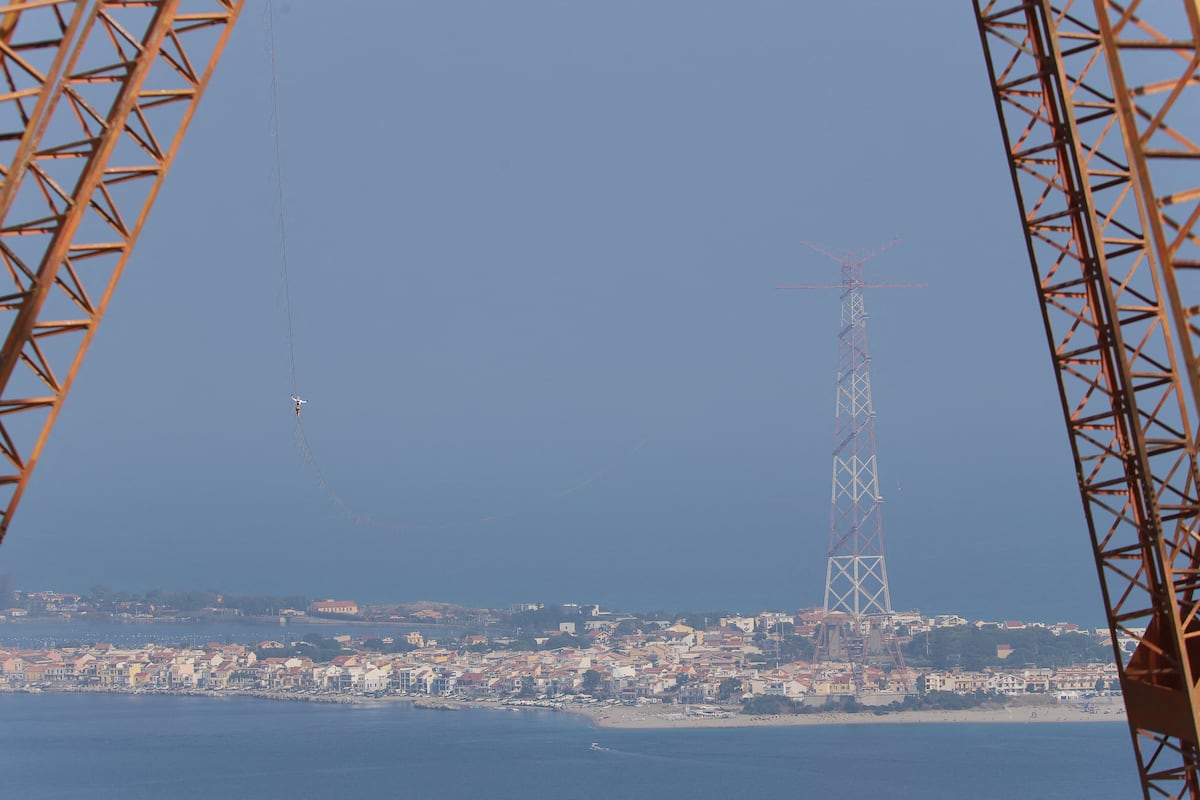
ROME — An Italian plan to build the world’s longest suspension bridge could boost Italy’s bid to reach NATO spending targets if it is defined as defense spending, experts have said.
Government approval is expected this month for a €13.5 billion ($15.8 billion) project to build a 3.6 km (2.2 miles) bridge linking the Italian mainland with the Italian island of Sicily.
At the same time, Rome committed at the June NATO summit to increasing its defense spending to 5% of GDP by 2035 from the 2% percent it says it will reach this year.
Of the 5% percent of GDP target, NATO members agreed that 3.5% should be true defense spending while the remaining 1.5% could be made up of strategic infrastructure programs to strengthen national economies.
That 1.5% corresponds to about €30 billion according to Italy’s current GDP.
It is the spending category into which Italian officials are considering inserting the bridge to Sicily, and Italian investment bank Equita said in a new report last week that spending on the bridge could represent 0.2 percent of GDP a year – around €4 billion – during the peak construction period.
“According to government documentation submitted to Brussels, the bridge is being positioned as a strategic logistics corridor for rapid troop and equipment deployment to NATO’s southern flank,” the report stated.
Inserting its cost into the 1.5% of GDP to be spent on strategic infrastructure was an example of “opportunistic accounting,” which could avoid “politically sensitive increases to core defense spending and deficit,” it added.
“Several countries – notably Italy, France, and Germany – have already signaled their intent to channel the new 1.5% target into strategic national infrastructure,” the report said.
“Many governments already have substantial infrastructure investments in place. By reclassifying portions of these investments under defense-related categories, countries can raise their defense spending metrics without increasing actual public deficits or launching new projects,” it added.
The report also cited Italian deputy transport minister Edoardo Rixi stating that Italy could throw in the upgrade and expansion of its rail network to meet the NATO 5% target.
An official in the Italian port city of Genoa has also said the government plans to include a new breakwater which would allow more military vessels to dock.
Before Italy can focus on finding infrastructure programs to fill the 1.5% category, it will first need to figure out how to boost real defense spending from the current declared two percent to 3.5% in ten years.
“That means adding spending worth 0.15% of GDP a year until 2035, which is about €3.2 billion a year or more if GDP increases,” said Carlo Cottarelli, an economist at Milan’s Catholic University.
“That won’t be easy considering that health and pension spending are expected to soak up an extra 1.4% of GDP by 2035,” he added.
Making life more complicated for Italian prime minister Giorgia Meloni is the widespread public opposition to extra defense spending with his shared by members of her own government.
Rather than going shopping for new kit to hit 3.5%, Italy should accelerate payments on existing programs, said Alessandro Marrone, who heads the defense, security and space program at Rome think tank IAI.
“The Italian army has launched programs with long time lines and could increase the tranches,” he said.
“Italy could also accelerate research and development work on the GCAP fighter program which currently extends out to 2050,” he added.
If Italy is looking for a brand new purchase it should consider better integrated air and missile defense systems, he said, particularly if the U.S. no longer supports European capabilities.
Meanwhile, in the short term, Italy is yet to spell out exactly how it will get defense spending to 2% of GDP this year.
Italy’s finance minister said 2% would be achieved in 2025 – up from 1.54% last year – hours before Meloni visited U.S. President Trump in April, sparing her blushes over Italy’s low defense spending.
Overall spending reached €29.18 billion last year, and getting to 2% this year means finding an extra €8.7 billion this year to reach a new total of €37.9 billion.
Since Meloni’s Washington visit, no official statement has been made about where the money will come from.
Sources have told Defense News that parts of the Italian coast guard’s operation could be reclassified as defense spending to reach 2%.
Another solution may be classifying Italy’s tax police as a military unit thanks to an existing law which allows the tax police to fall under military command in times of war.
“We have not been told yet what the solution will be, and whether it will be accepted by NATO,” said Cottarelli.
Marrone said he thought NATO would not kick up a fuss over creative accounting.
“My educated guess is that Italy has already talked to NATO to mitigate the risk of surprises – and that applies also to other nations,” he said.
Tom Kington is the Italy correspondent for Defense News.
罗马——专家表示,如果将意大利建造世界最长悬索桥的计划定义为国防开支,那么该计划可能会提升意大利达到北约开支目标的努力。
预计本月政府将批准一项耗资 135 亿欧元(158 亿美元)的项目,该项目将建造一座 3.6 公里(2.2 英里)长的桥梁,连接意大利大陆和意大利西西里岛。
与此同时,罗马在 6 月的北约峰会上承诺,到 2035 年将其国防开支提高到 GDP 的 5%,而该公司表示,今年将达到这一目标的国防开支占 GDP 的 2%。
在占GDP 5%的目标中,北约成员国一致认为,3.5%应该是真正的国防开支,而剩余的1.5%可以由战略基础设施计划构成,以加强国家经济。
根据意大利目前的GDP计算,这1.5%相当于约300亿欧元。
意大利官员正在考虑将连接西西里岛的大桥纳入这一支出类别。意大利投资银行 Equita 上周在一份新报告中表示,在建设高峰期,这座大桥的支出可能占到每年 GDP 的 0.2%——约 40 亿欧元。
报告指出:“根据提交给布鲁塞尔的政府文件,这座桥梁被定位为向北约南翼快速部署部队和装备的战略后勤走廊。”
报告补充说,将这笔费用计入占GDP 1.5%的战略基础设施支出中,是一种“机会主义会计”的做法,可以避免“在政治上敏感的核心国防开支和赤字增加”。
报告称:“一些国家——特别是意大利、法国和德国——已经表示有意将新的 1.5% 目标投入到国家战略基础设施建设中。”
报告还指出:“许多国家的政府已经投入了大量基础设施。通过将部分投资重新归类到国防相关类别,各国可以在不增加实际公共赤字或启动新项目的情况下提高国防开支指标。”
该报告还援引意大利交通部副部长埃多阿尔多·里克西的话说,意大利可以投入铁路网络的升级和扩建,以达到北约 5% 的目标。
意大利港口城市热那亚的一位官员也表示,政府计划修建新的防波堤,以便更多军舰停靠。
意大利在集中精力寻找基础设施项目来填补 1.5% 的预算缺口之前,首先需要弄清楚如何在十年内将实际国防开支从目前公布的 2% 提高到 3.5%。
“这意味着到 2035 年,每年需要增加相当于 GDP 0.15% 的支出,大约每年 32 亿欧元,如果 GDP 增长,则还会更多,”米兰天主教大学的经济学家卡洛·科塔雷利说。
“考虑到到 2035 年,医疗和养老金支出预计将额外占 GDP 的 1.4%,这并非易事,”他补充道。
意大利总理乔治娅·梅洛尼面临的困境在于,公众普遍反对增加国防开支,而她自己的政府成员也持相同立场。
罗马智库 IAI 的国防、安全和太空项目负责人亚历山德罗·马罗内表示,意大利与其购买新设备以达到 3.5% 的增长率,不如加快现有项目的付款。
他说:“意大利军队已经启动了一些周期较长的项目,而且可能会增加交付批次。”
他还补充说:“意大利还可以加快GCAP战斗机项目的研发工作,该项目目前的期限是到2050年。”
他表示,如果意大利想要采购全新的防空和导弹防御系统,就应该考虑更完善的一体化防空和导弹防御系统,尤其是在美国不再支持欧洲能力的情况下。
与此同时,短期内,意大利尚未明确说明今年将如何把国防开支提高到GDP的2%。
意大利财政部长表示,到 2025 年,意大利国防开支将达到 2%——高于去年的 1.54%——几个小时后,梅洛尼将访问美国总统特朗普,这避免了意大利国防开支过低而令她尴尬。
去年总支出达到 291.8 亿欧元,今年要达到 2% 的增长率,就意味着今年需要额外筹集 87 亿欧元,才能达到 379 亿欧元的新总额。
自梅洛尼访问华盛顿以来,官方尚未就资金来源发表任何声明。
有消息人士告诉《防务新闻》,意大利海岸警卫队的部分行动可能会被重新归类为国防开支,以达到 2% 的国防开支目标。
另一种解决方案可能是将意大利税务警察归类为军事单位,因为现行法律允许税务警察在战时接受军事指挥。
科塔雷利说:“我们还没有被告知解决方案是什么,也不知道北约是否会接受它。”
马龙表示,他认为北约不会对这种创造性的会计手段大惊小怪。
他说:“我的合理推测是,意大利已经与北约进行过沟通,以降低发生意外的风险——其他国家也同样如此。”
汤姆·金顿是《防务新闻》驻意大利记者。